In five minutes: the Triple Intervention
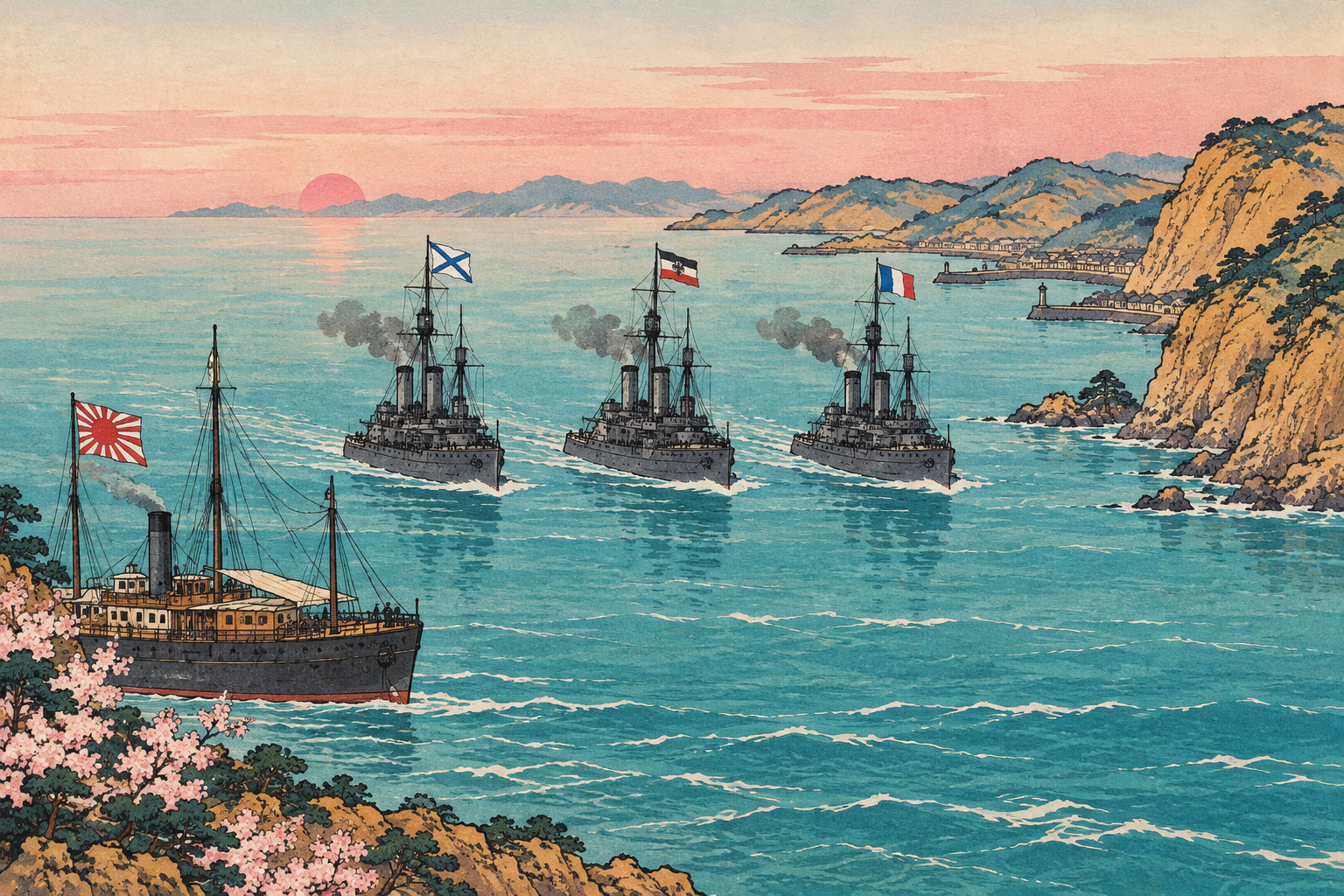
The Triple Intervention was the joint demand, made on 23 April 1895, by Russia, Germany and France that Japan give back the Liaodong Peninsula to China. Japan had taken the peninsula only six days earlier in the Treaty of Shimonoseki, which ended the First Sino-Japanese War. The three powers called their move "friendly advice", but it came with warships and the threat of war. Japan, worn out by the fighting and with no ally willing to help, accepted on 5 May 1895.
The episode matters because it showed that winning a war did not let a new power keep what it had won. Russia led the move, and within three years it leased the very ports Japan had been made to leave. The anger this left in Japan is one of the roots of the Russo-Japanese War of 1904–05. The story belongs to the wider picture in Qing China, Japan and the West (1793–1912).
Background: Japan wins, China loses
The First Sino-Japanese War began in 1894 over influence in Korea. Japan's modern army and navy beat Qing forces on land and at sea. Japanese troops took Port Arthur (now Lüshun) at the tip of the Liaodong Peninsula in November 1894, and in February 1895 the Qing northern fleet surrendered at Weihaiwei on the Shandong coast. For how the war looked to a French observer at the time, see The First Sino-Japanese War Through Bigot's Cartoon.
Peace talks took place in Shimonoseki, in western Japan. Japan was represented by Prime Minister Itō Hirobumi and Foreign Minister Mutsu Munemitsu, China by the senior statesman Li Hongzhang. The treaty was signed on 17 April 1895.
What the Treaty of Shimonoseki said
- China recognised Korea as fully independent, ending its old claim of overlordship.
- China gave Japan the Liaodong Peninsula, Taiwan and the Penghu (Pescadores) islands.
- China agreed to pay an indemnity of 200 million Kuping taels.
- China opened more ports and rivers to Japanese trade, including Shashi, Chongqing, Suzhou and Hangzhou.
The Liaodong Peninsula was the clause that caused trouble. It sits on the north side of the Yellow Sea, close to Beijing, and its southern tip holds Port Arthur, a natural naval harbour. Japan's army saw it as a foothold on the continent. Other powers saw it as a threat to their own plans.
Why three powers acted
Russia
Russia had the most to lose. It had begun building the Trans-Siberian Railway in 1891, and its Pacific port of Vladivostok freezes in winter. Russian leaders, among them Finance Minister Sergei Witte, wanted influence over Manchuria and eventually a harbour that stayed open all year. A Japanese-held Port Arthur would block that. Russia also feared that a strong Japan on the mainland could threaten Korea and the route to China.
Germany
Germany, under Kaiser Wilhelm II, had fewer direct interests in northern China. Its reasons were mixed. It wanted to please Russia and to draw Russian attention towards Asia and away from Europe's borders. It also hoped to be rewarded with a base of its own in China. That hope was met in 1897–98, when Germany seized and then leased Jiaozhou Bay on the Shandong coast.
France
France had signed an alliance with Russia in 1894 and wanted to show that it stood by its new partner. It also had colonial interests in Indochina, on China's southern border, and did not want a rising Japan to disturb the balance in the region.
Britain stayed out
Britain was asked to join and declined. Britain traded heavily with China and did not want to make an enemy of Japan, but it also would not fight the three powers for Japan. Japan's requests for support from Britain and the United States also came to nothing.
23 April 1895: "friendly advice"
On 23 April 1895, the Russian, German and French ministers in Tokyo each visited the Japanese foreign ministry and delivered notes with very similar wording. Their message was that Japanese possession of the Liaodong Peninsula would endanger the Chinese capital, make Korea's independence meaningless, and disturb peace in the Far East. They advised Japan to give up the peninsula.
The note was polite in tone, but nobody in Tokyo missed what stood behind it. Russia had a strong squadron in Asian waters, and Japan's forces had just finished a long campaign. Japanese leaders weighed three options: refuse and risk war, call an international conference, or give way. A conference found no support, and the powers that might have helped stayed neutral.
Japan gives way
On 5 May 1895 Japan announced that it would give up the Liaodong Peninsula. It tried to keep as much as it could, and in the end it won an extra payment from China in exchange. The ratifications of the Treaty of Shimonoseki were exchanged at Chefoo (now Yantai) on 8 May. A separate convention signed in Beijing on 8 November 1895 fixed the return of the peninsula and an additional indemnity of 30 million taels.
Japan kept Taiwan, the Penghu islands and the main indemnity. Its leaders drew a hard lesson, however. Mutsu Munemitsu, who handled the crisis, later wrote that Japan had to accept because it lacked the strength to resist, and the government turned to a large military build-up.
Consequences
Japanese public feeling
Many Japanese felt humiliated: the country had won the war, yet three European powers had taken part of the prize. Newspapers and speakers urged the public to endure hardship and prepare for the future. The phrase for this was gashin-shōtan, taken from an old Chinese tale of a man who made himself suffer to keep a grudge alive until he could take revenge. The slogan helped win public support for higher taxes and military spending.
The powers move into China
The powers did not give China its land back out of kindness. In 1896 Russia and China made a defensive agreement, and Russia gained the right to build a railway across Manchuria. In 1897–98 the scramble for concessions began:
- Germany took Jiaozhou Bay (1897–98).
- Russia leased Port Arthur and Dalian in March 1898, for 25 years.
- Britain leased Weihaiwei and extra land at Kowloon in 1898.
- France leased Guangzhouwan in 1899.
Japan watched Russia settle into Port Arthur, the very place it had been told to leave.
The road to 1904
Japan looked for a partner against Russian expansion and signed the Anglo-Japanese Alliance in 1902; see The Anglo-Japanese Alliance (1902). When talks with Russia over Korea and Manchuria failed, Japan went to war in February 1904. In the Treaty of Portsmouth of 1905, Japan took over Russia's lease of the southern Liaodong Peninsula, including Port Arthur and Dalian.
China's position
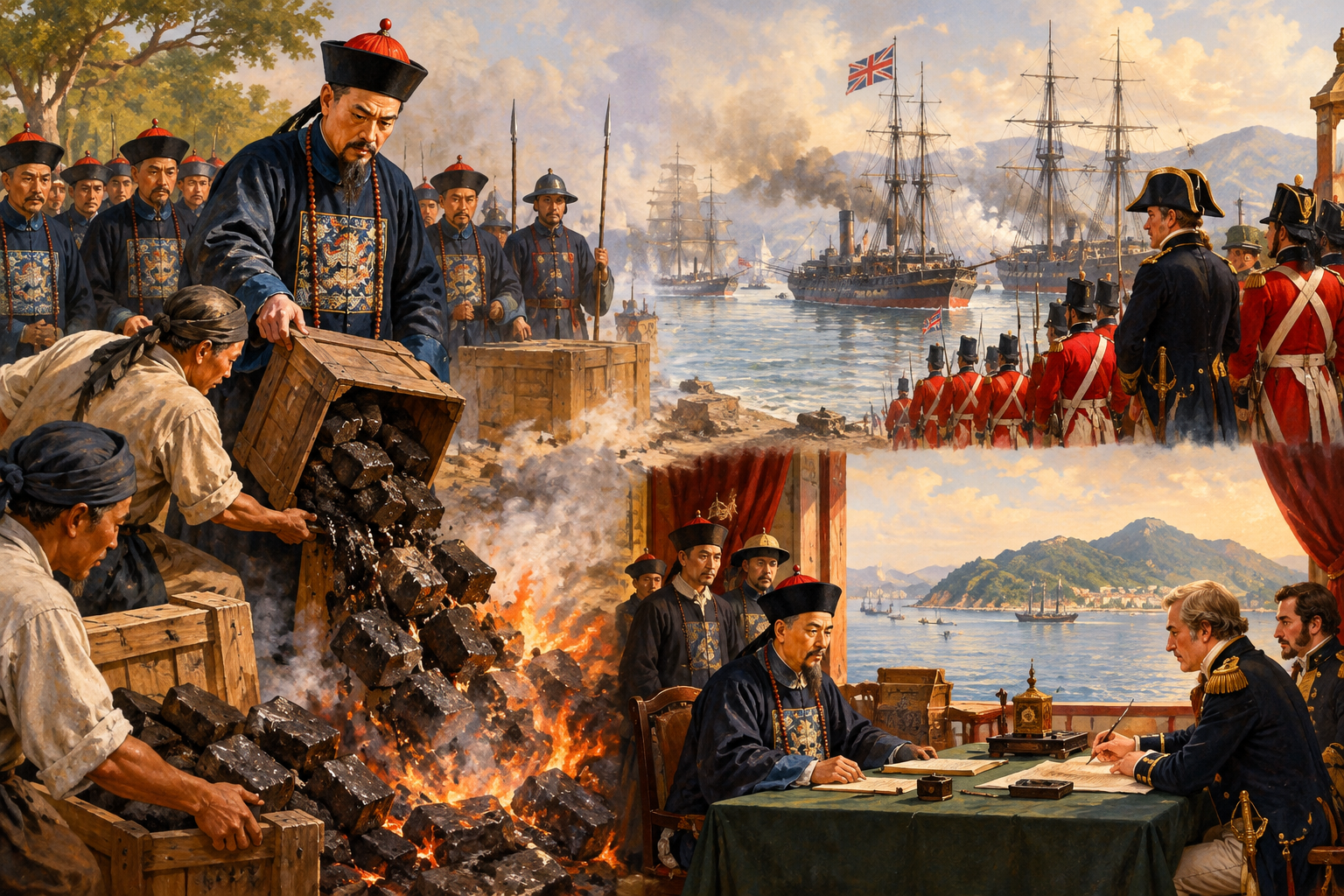
For the Qing government, the intervention brought relief in the short term, since the peninsula returned to Chinese rule. In the long term it showed how weak the dynasty was, because the powers who had "helped" soon demanded their own rewards. This pattern of pressure from outside was already familiar from the First Opium War; see The First Opium War (1839–1842).
What exams ask
- The three powers: Russia, Germany and France. Britain and the United States did not join.
- The trigger: the Treaty of Shimonoseki (17 April 1895) gave Japan the Liaodong Peninsula; the intervention followed on 23 April.
- Japan's response: it accepted on 5 May and received an extra 30 million taels from China.
- Long-term effect: gashin-shōtan, Russian leases at Port Arthur and Dalian (1898), the Anglo-Japanese Alliance (1902) and the Russo-Japanese War (1904–05).
- Typical AP-style question: explain how great-power rivalry limited Japan's gains and increased Western imperialism in China in the 1890s.
Read next
- The First Sino-Japanese War Through Bigot's Cartoon: the war that led to Shimonoseki, seen through a contemporary cartoon.
- The Anglo-Japanese Alliance (1902): how Japan answered the Russian threat by finding a partner.
- The First Opium War (1839–1842): the earlier conflict that opened China to Western pressure.