0% • 8 min left

The Russo-Japanese War (1904–1905)

November 08, 2026
The Russo-Japanese War (1904–1905) was fought between the Russian Empire and Japan over Korea and southern Manchuria. Japan won at Port Arthur, Mukden and Tsushima, and the US-brokered Treaty of Portsmouth (5 September 1905) ended it. An Asian power had beaten a European great power, and the result reshaped Korea, Manchuria and Russia itself.

Part of: Qing China, Japan and the West (1793–1912)

The Russo-Japanese War (1904–1905)

Key facts

When
8–9 February 1904 to 5 September 1905
Where
Korea, southern Manchuria (Liaodong), the Yellow Sea and the Korea Strait
Who
Japan (Ōyama, Nogi, Kuroki, Tōgō) against the Russian Empire (Kuropatkin, Stoessel, Rozhestvensky)
Key battles
Port Arthur (siege ended 2 Jan 1905), Liaoyang, Mukden, Tsushima (27–28 May 1905)
Outcome
Japanese victory; Treaty of Portsmouth, 5 September 1905, no indemnity
Why it matters
First modern defeat of a European great power by an Asian one; Japan gains Korea and southern Manchuria; Russia's 1905 revolution

Timeline

Tap a step for details. Arrow keys move between steps.

  1. 30 January 1902

    Britain and Japan sign the Anglo-Japanese Alliance

    Each promises neutrality if the other fights one enemy, and help if a second power joins that enemy. This protects Japan from a French or German intervention. It is the diplomatic base for the war.

  2. 1903 – 6 February 1904

    Talks over Korea and Manchuria fail

    Japan offers Russia a free hand in Manchuria in return for Korea. Russia will not give up its interests in Korea and suggests a neutral zone in the north. On 6 February 1904 Japan breaks off relations.

    Also in 1903:More from 1903

  3. 8–9 February 1904

    Torpedo attack on Port Arthur and the fight at Chemulpo

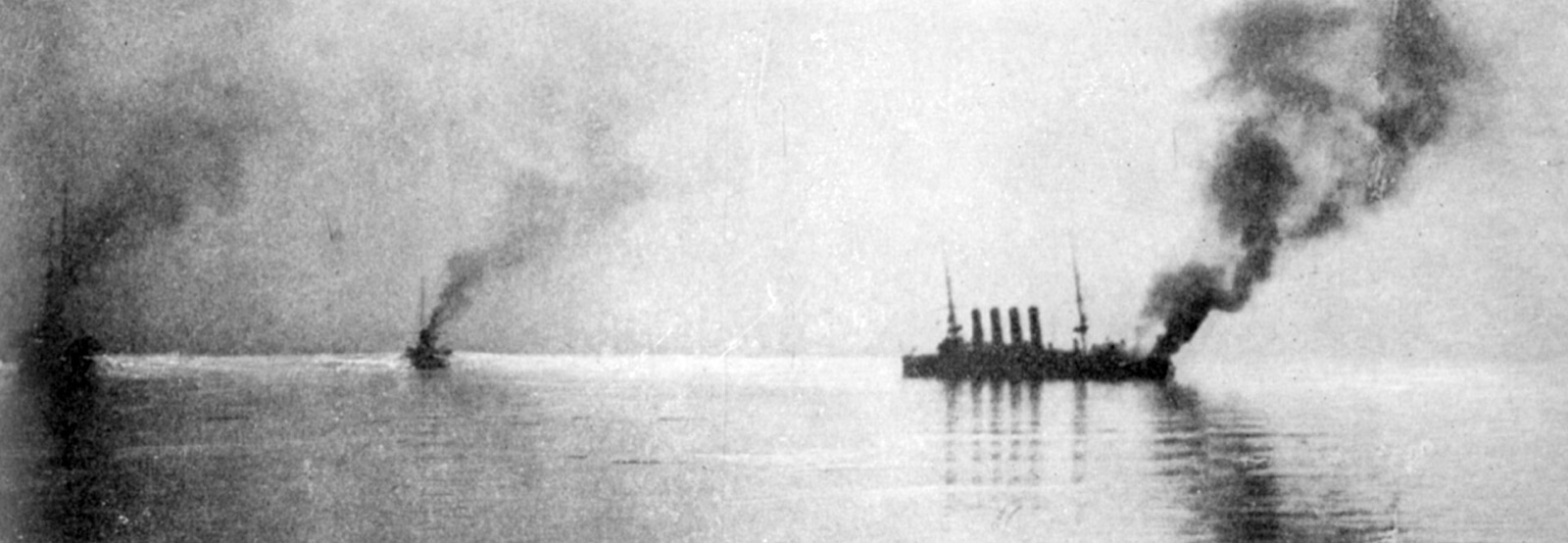
    The burning Russian cruiser Varyag in Chemulpo harbour
    Uncredited - probably Robert L. Dunn, public domain, via Wikimedia Commons

    Japanese torpedo boats damage Russian ships at anchor outside Port Arthur on the night of 8–9 February. On 9 February the cruiser Varyag and gunboat Koreets fight a larger squadron at Chemulpo and are destroyed by their own crews. Formal declarations of war follow on 10 February.

  4. 13 April 1904

    Admiral Makarov dies at Port Arthur

    The flagship Petropavlovsk hits a mine and sinks. Makarov, the Russian navy's most energetic commander, is lost with her, and the squadron becomes more passive.

  5. 30 April–1 May 1904

    Battle of the Yalu River

    The Japanese First Army under Kuroki crosses the river and drives back the Russians. It is the first major Japanese land victory and shows that the war will not be easy for Russia.

  6. August 1904

    Port Arthur besieged; Battle of the Yellow Sea

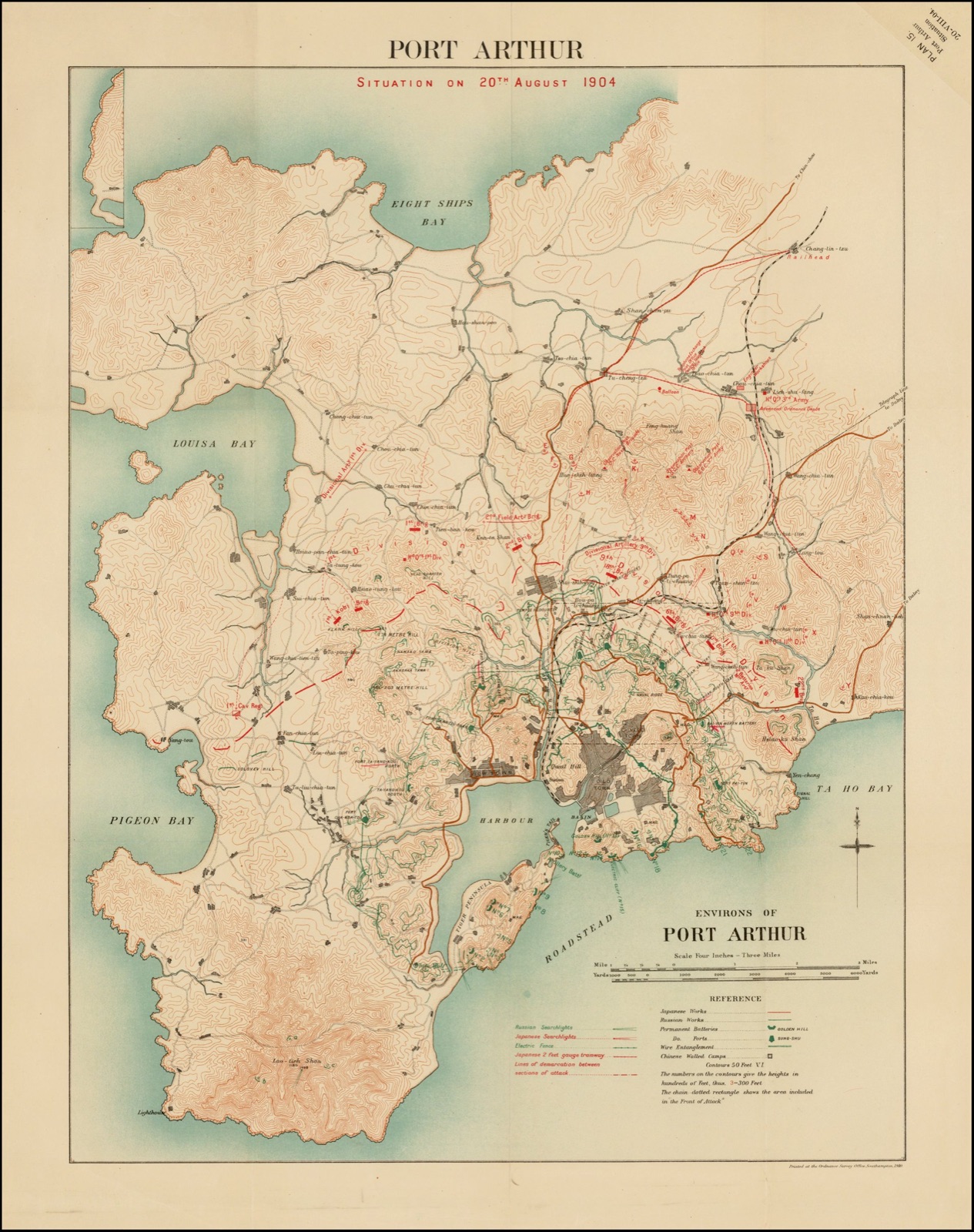
    Map-style plan of the situation at Port Arthur on 20 August 1904
    Unknown author, public domain, via Wikimedia Commons

    On 10 August the Russian squadron tries to escape to Vladivostok and fails, losing its commander Vitgeft. From 19 to 24 August the Japanese Third Army launches its first general assault on the fortress and suffers heavy losses.

  7. Late August–early September 1904

    Battle of Liaoyang

    About 125,000 Japanese attack a Russian army of more than 150,000. Japan loses heavily but Kuropatkin retreats to Mukden, giving Japan the field.

  8. 5 December 1904

    Japan takes 203 Metre Hill

    From the hill, Japanese artillery can see the harbour and shell the Russian ships. Most of the Pacific Squadron is sunk at its moorings in the following days.

  9. 2 January 1905

    Port Arthur surrenders

    General Stoessel capitulates after a siege lasting months. The siege costs Japan more than 50,000 casualties, but it frees the Third Army to join the main force.

  10. 22 January 1905

    Bloody Sunday in St Petersburg

    Troops fire on a peaceful procession of workers, and strikes spread across the empire. The revolution of 1905 weakens Russia's ability to keep fighting.

  11. 20 February–10 March 1905

    Battle of Mukden

    The largest land battle before 1914: between about 270,000 and 330,000 men on each side. Japan outflanks the Russian right and Kuropatkin retreats north. Japan loses about 75,000 men and Russia about 90,000.

  12. 27–28 May 1905

    Battle of Tsushima

    Tōgō's Combined Fleet meets the Russian Second Pacific Squadron in the Korea Strait. By 28 May almost every Russian ship is sunk or captured, with about 4,500 Russians killed and about 6,000 taken prisoner.

  13. 5 September 1905

    Treaty of Portsmouth signed

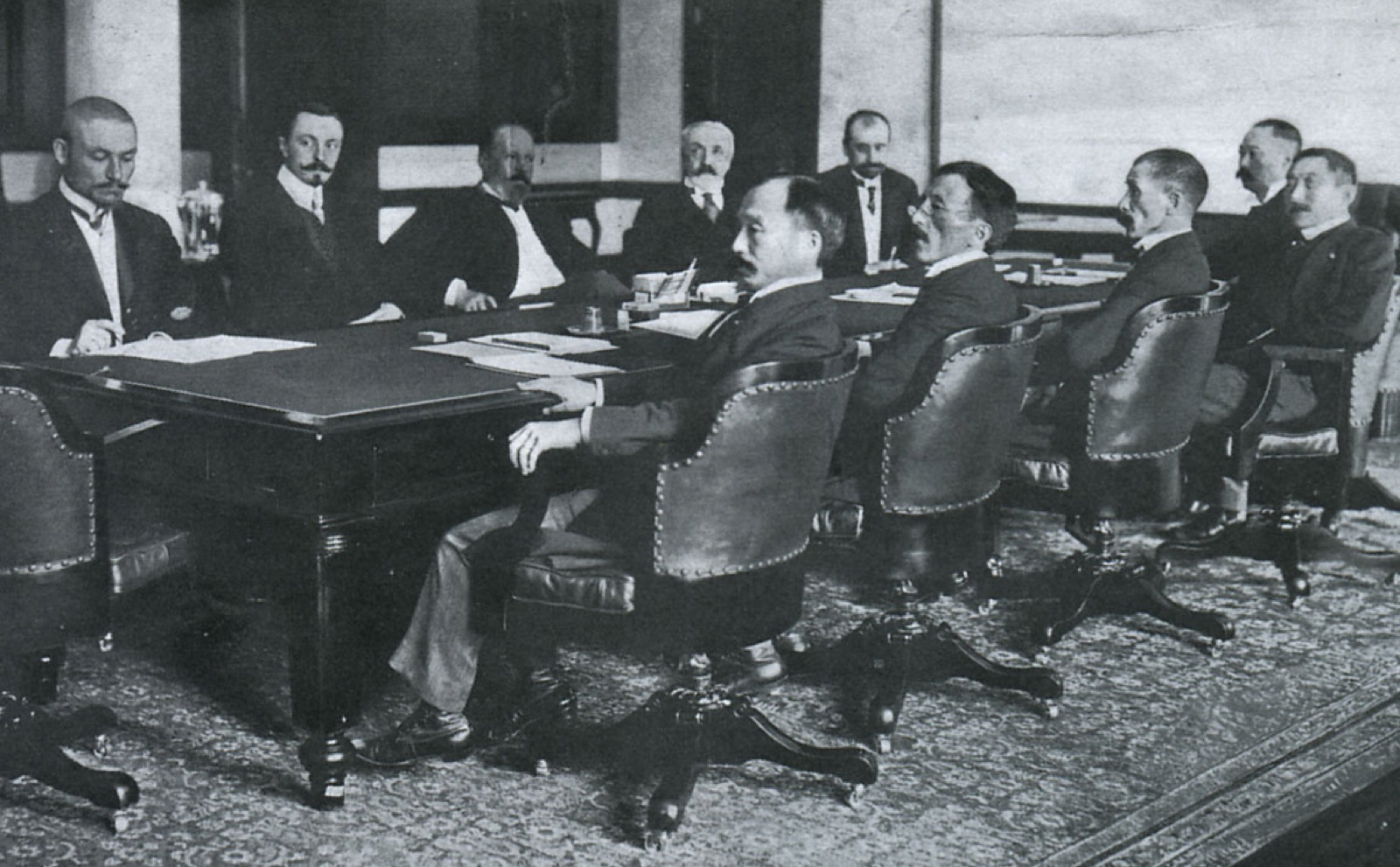
    The Russian and Japanese delegations at the Portsmouth peace conference, 1905
    P. F. Collier & Son, public domain, via Wikimedia Commons

    Russia recognises Japan's paramount interests in Korea and hands over the Liaodong lease, the southern Manchurian railway and southern Sakhalin, with no indemnity. Riots break out in Tokyo the same day.

  14. November 1905

    Korea becomes a Japanese protectorate

    Japan forces the Second Japan–Korea Agreement on Seoul, taking control of Korean foreign policy. Formal annexation follows in 1910.

Maps

Tap a map to zoom

  • Encyclopaedia Britannica 1911 map of the land forces around Port Arthur in the Russo-Japanese War

    Positions of the Japanese and Russian land forces around Port Arthur, 1904–05, from the 1911 Encyclopaedia Britannica.

    unknown cartographer; engraved by Emery Walker, public domain, via Wikimedia Commons

  • Encyclopaedia Britannica 1911 map of the arrangement of forces at Mukden, 1905

    The armies at Mukden, February–March 1905, from the 1911 Encyclopaedia Britannica.

    unknown cartographer; engraved by Emery Walker, public domain, via Wikimedia Commons

  • Map of the Battle of Tsushima, 27–28 May 1905, showing the Japanese and Russian fleet tracks

    Course of the Battle of Tsushima, 27–28 May 1905.

    historicair, CC BY-SA 3.0, via Wikimedia Commons

  • Encyclopaedia Britannica 1911 map of the forces around Liaoyang in the Russo-Japanese War

    The armies around Liaoyang, August–September 1904, from the 1911 Encyclopaedia Britannica.

    unknown cartographer; engraved by Emery Walker, public domain, via Wikimedia Commons

In five minutes

The Russo-Japanese War (1904–1905) was a war between the Russian Empire and Japan for control of Korea and southern Manchuria. Japan struck first, on the night of 8–9 February 1904, and went on to win on land at Port Arthur, Liaoyang and Mukden and at sea at Tsushima. Peace came through American mediation in the Treaty of Portsmouth, signed on 5 September 1905. It was the first time in the modern era that an Asian state defeated a European great power. Japan came out as the dominant power in Korea and southern Manchuria, but it was nearly out of money and men. Russia came out humiliated and shaken by the revolution of 1905. For the wider story of Qing China, Japan and the Western powers, see the hub article Qing China, Japan and the West (1793–1912).

Causes: why did the Russo-Japanese War start?

The war grew out of a collision of two empires in the same place. Russia was building the Trans-Siberian Railway, begun in 1891, and wanted a warm-water port on the Pacific. Japan, which had beaten Qing China in 1894–95, saw Korea as the land bridge to its own islands and could not accept a rival power on it.

In 1895 Russia, backed by France and Germany, forced Japan to give back the Liaodong Peninsula it had won from China (the Triple Intervention). In 1898 Russia itself leased Port Arthur and Dalny on that same peninsula and made Port Arthur a naval base. When the Boxer Rebellion broke out in 1900, Russian troops moved into Manchuria and did not leave. By 1903 Russia was also pushing timber concessions along the Yalu River on the Korean border.

Japanese leaders offered a trade: Russia would have a free hand in Manchuria, Japan in Korea. Talks ran from mid-1903 into early 1904, but Russia would not give up its interest in Korea, and proposed a neutral zone in northern Korea instead. Many in St Petersburg believed Japan would not dare to fight, and that if it did it would lose.

Japan had one important advantage: the Anglo-Japanese Alliance of 30 January 1902. Britain agreed to stay neutral if Japan fought one enemy, and to join in if a second power sided with that enemy. That kept France, Russia's ally, out of the war. On 6 February 1904 Japan broke off diplomatic relations.

1904: the war opens at Port Arthur and Chemulpo

On the night of 8–9 February 1904, Japanese torpedo boats attacked the Russian Pacific Squadron anchored outside Port Arthur and damaged two battleships and a cruiser. The formal declarations of war came on 10 February. On 9 February, at Chemulpo (Incheon) in Korea, the Russian cruiser Varyag and the gunboat Koreets sailed out against a larger Japanese squadron, were badly damaged, and were destroyed by their own crews. With the Russian fleet bottled up, Japan could land armies in Korea. Its First Army, under General Kuroki Tamemoto, won the first big land battle at the Yalu River on 30 April–1 May 1904.
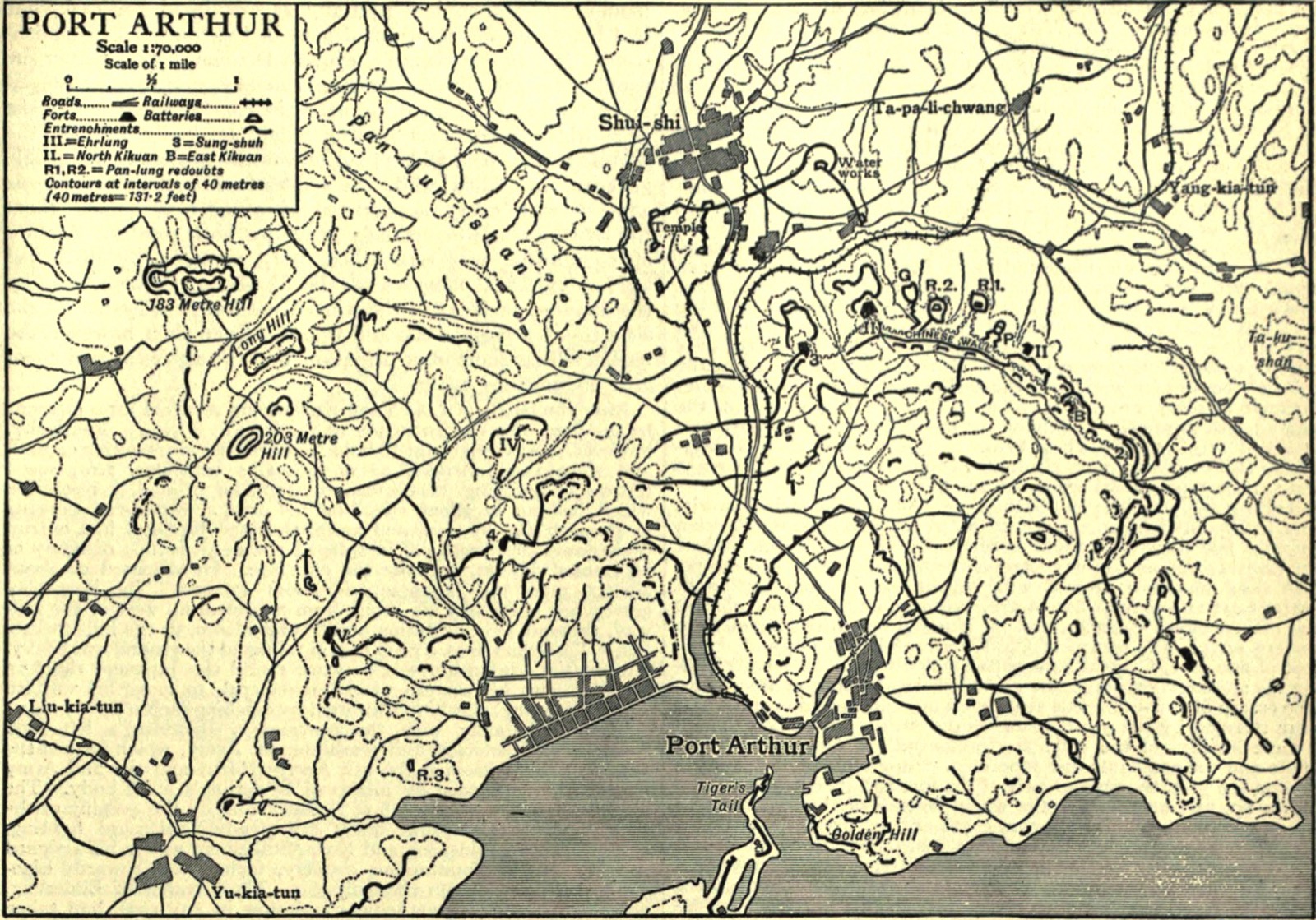
Encyclopaedia Britannica 1911 map of the land forces around Port Arthur in the Russo-Japanese War
Positions of the Japanese and Russian land forces around Port Arthur, 1904–05, from the 1911 Encyclopaedia Britannica. unknown cartographer; engraved by Emery Walker, public domain, via Wikimedia Commons

Port Arthur: the siege that cost Japan most

The Russian fleet's base had to fall, or Japan's sea lanes would never be safe. Admiral Makarov, the Russian squadron's best commander, was killed on 13 April 1904 when his flagship hit a mine. On 10 August the squadron tried to break out toward Vladivostok at the Battle of the Yellow Sea; its commander, Admiral Vitgeft, was killed and the ships scattered or turned back.

The Japanese Third Army under General Nogi Maresuke then besieged the fortress. Its first general assault in August 1904 was a costly failure: infantry charged forts protected by barbed wire, machine guns and trenches, and Japan lost something like 15,000 men in a few days. Nogi switched to heavy artillery and, from late November, concentrated on 203 Metre Hill, which overlooked the harbour. Once it fell on 5 December 1904, Japanese gunners could see the Russian ships and sank most of them at their moorings. General Stoessel surrendered the fortress on 2 January 1905. The whole siege cost Japan more than 50,000 casualties, including the sick.

Liaoyang and Mukden: the great land battles

While Port Arthur held out, Field Marshal Ōyama Iwao's armies pushed north against General Kuropatkin. At Liaoyang, from late August to early September 1904, about 125,000 Japanese attacked a Russian force of more than 150,000. Japan lost heavily but forced Kuropatkin to retreat to Mukden. Fighting at the Sha-ho in October and at Sandepu in January 1905 changed little.
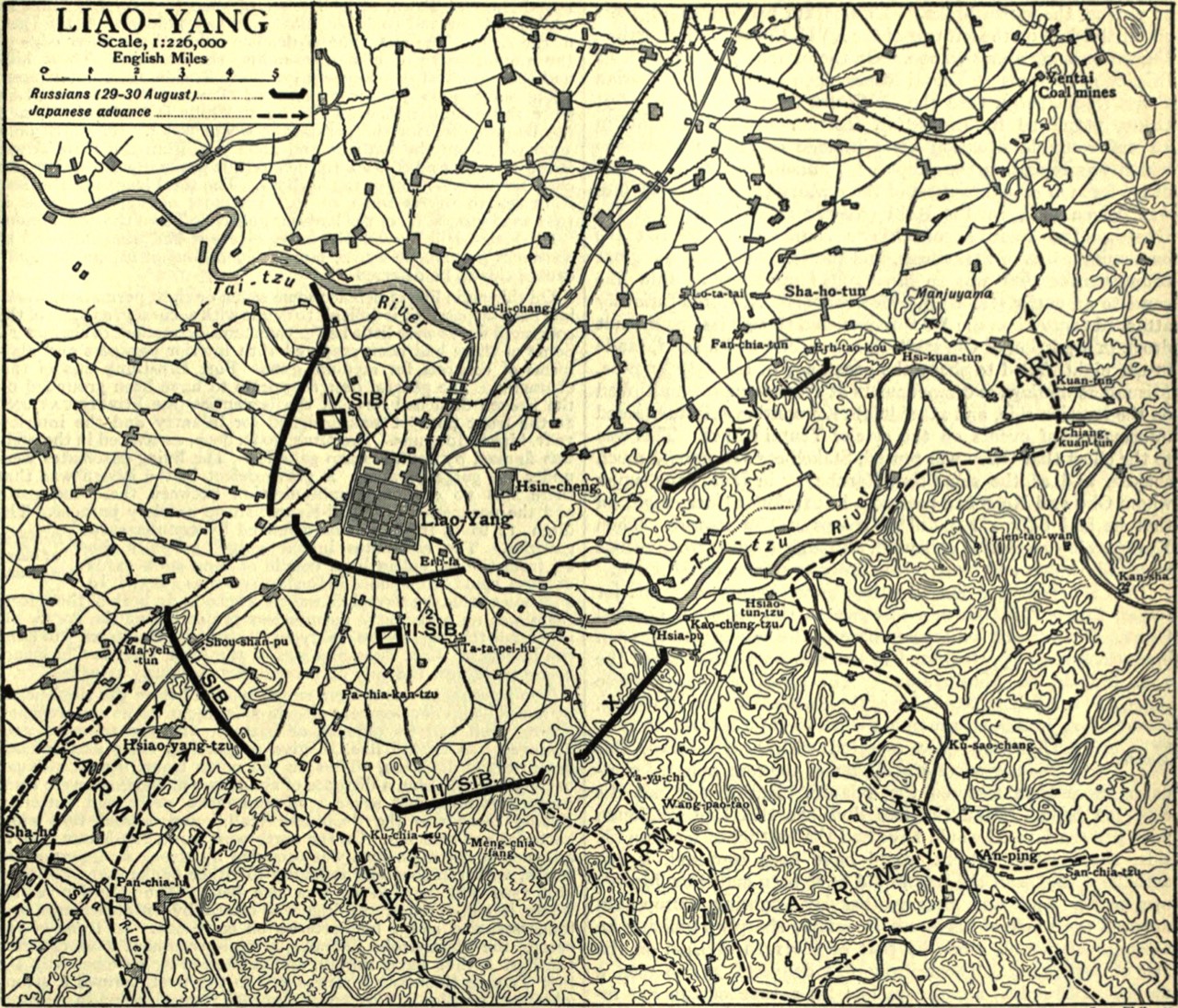
Encyclopaedia Britannica 1911 map of the forces around Liaoyang in the Russo-Japanese War
The armies around Liaoyang, August–September 1904, from the 1911 Encyclopaedia Britannica. unknown cartographer; engraved by Emery Walker, public domain, via Wikimedia Commons

The Battle of Mukden, 20 February to 10 March 1905, was the largest land battle the world had seen before the First World War. Depending on the count, each side had between about 270,000 and 330,000 men. Nogi's army, freed by the fall of Port Arthur, swung around the Russian right flank, and Kuropatkin ordered a retreat north. Japan lost about 75,000 men and Russia about 90,000, including prisoners. Neither side could land a final blow: Japan's army was exhausted and its supplies stretched, and Russia still had men but little will to fight on.
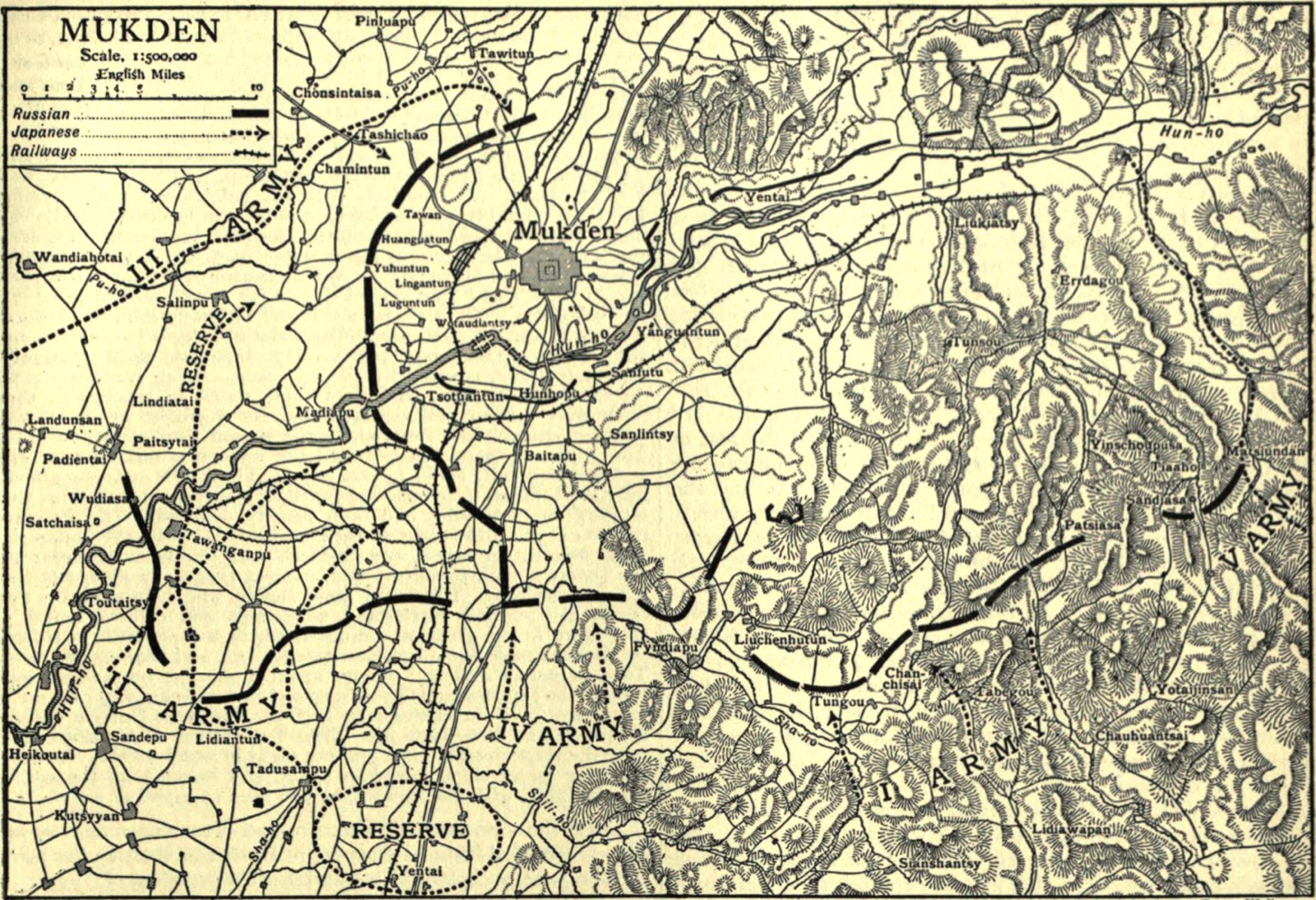
Encyclopaedia Britannica 1911 map of the arrangement of forces at Mukden, 1905
The armies at Mukden, February–March 1905, from the 1911 Encyclopaedia Britannica. unknown cartographer; engraved by Emery Walker, public domain, via Wikimedia Commons

Tsushima: the voyage and the battle

Russia's last card was its Baltic Fleet, renamed the Second Pacific Squadron under Admiral Zinovy Rozhestvensky. It left Libau in October 1904, and its voyage around Africa and across the Indian Ocean covered about 18,000 nautical miles. On the way it fired on British fishing boats at the Dogger Bank on the night of 21–22 October, nearly causing a war with Britain. In May 1905 it reached the Korea Strait, taking the shortest route to Vladivostok.

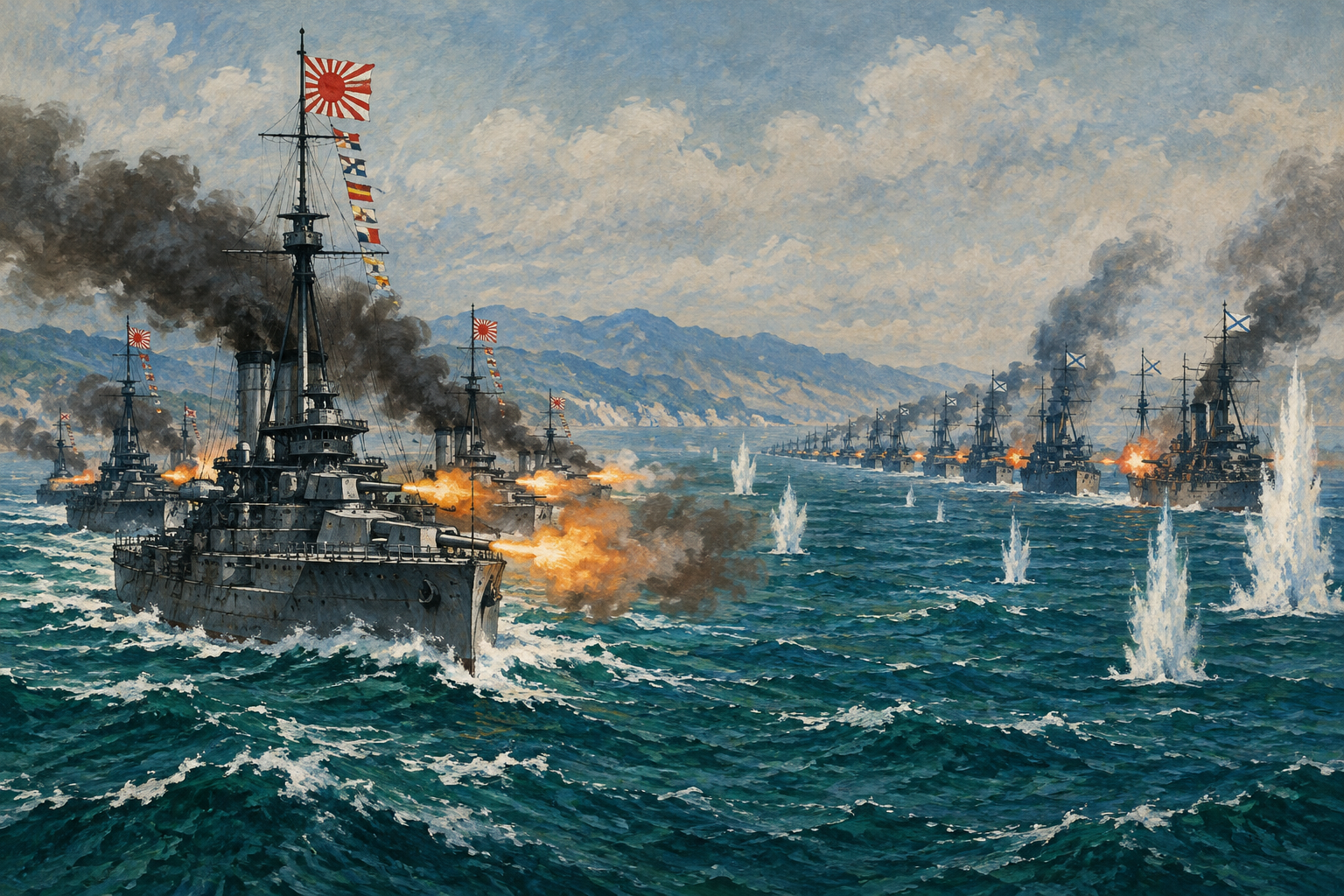
Admiral Tōgō Heihachirō was waiting with the Combined Fleet. Japan had four modern battleships against Russia's eight, but Japanese ships were faster, better gunned in practice, and used better shells and signalling. On 27 May 1905, Tōgō turned his line across the head of the Russian column so that his ships could concentrate fire on the leaders. The flagship Knyaz Suvorov was knocked out, Rozhestvensky was wounded, and by evening several battleships were sinking. Torpedo boats attacked through the night, and on 28 May the remaining ships under Admiral Nebogatov surrendered. Every Russian battleship was sunk or captured; only a handful of vessels reached Vladivostok. Russia lost about 4,500 men killed and about 6,000 captured. Japan lost three torpedo boats and fewer than 150 men.
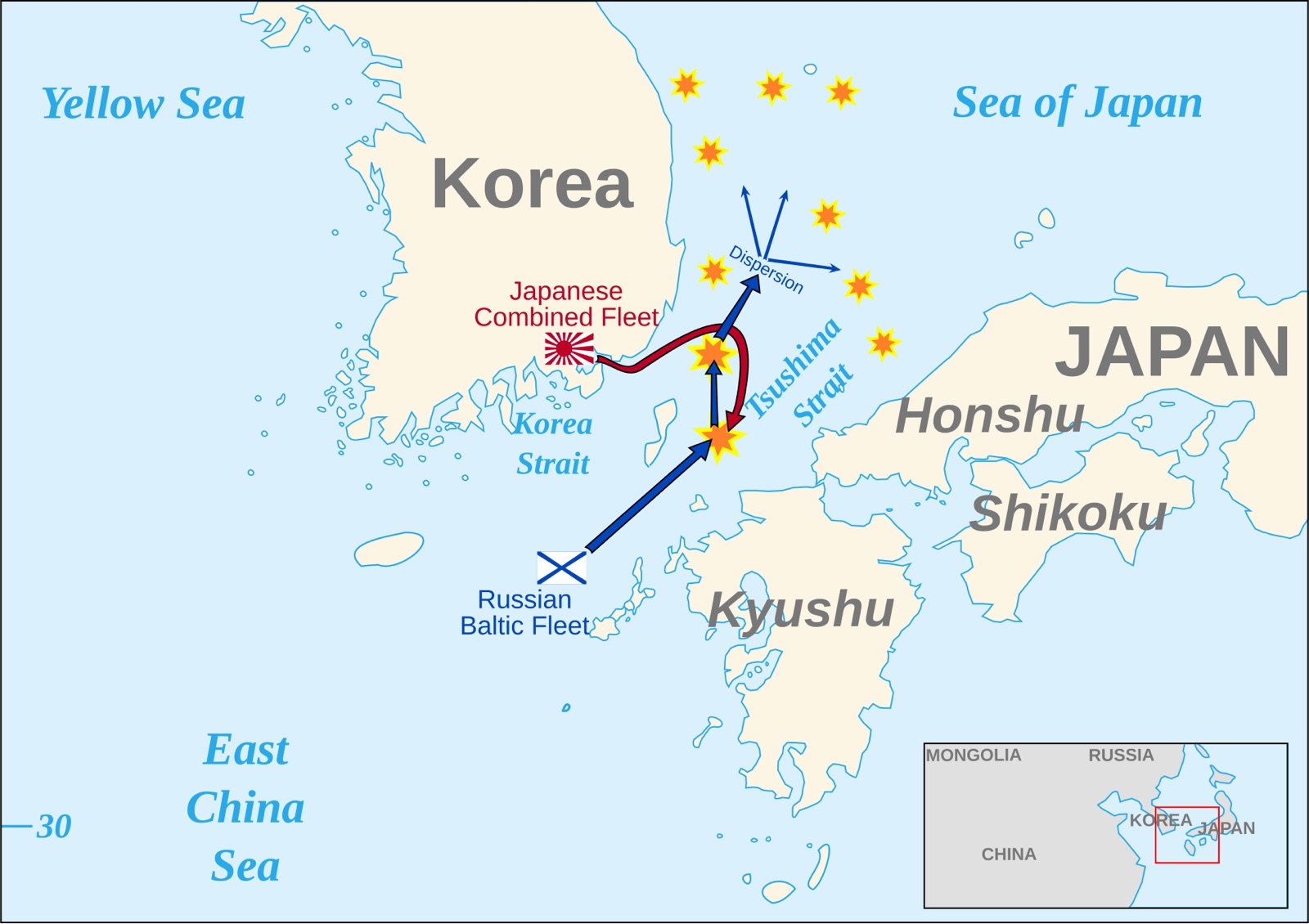
Map of the Battle of Tsushima, 27–28 May 1905, showing the Japanese and Russian fleet tracks
Course of the Battle of Tsushima, 27–28 May 1905. historicair, CC BY-SA 3.0, via Wikimedia Commons

The Treaty of Portsmouth: who won the Russo-Japanese War?

Japan won the war, but it could not afford to keep fighting. It had borrowed heavily abroad, including from American and British banks, and its army was spent. Russia, meanwhile, was shaken by Bloody Sunday on 22 January 1905 and the strikes and mutinies that followed. President Theodore Roosevelt offered to mediate, and the talks opened at Portsmouth, New Hampshire, in August 1905. The Japanese delegate was Komura Jutarō; the Russian was Sergei Witte. The full story is in The Treaty of Portsmouth (1905) and Theodore Roosevelt.

The treaty, signed on 5 September 1905, gave Japan recognition of its paramount interests in Korea, the Russian lease of the Liaodong Peninsula (Port Arthur and Dalny), the railway in southern Manchuria, and the southern half of Sakhalin. Russia paid no indemnity. Many Japanese had expected one, and riots broke out in Tokyo on the day of signing (the Hibiya incendiary incident). Roosevelt received the Nobel Peace Prize in 1906.

Consequences: Korea, Russia and Asia

For Korea the result was loss of independence. Japan had already forced agreements on Seoul in 1904, and in November 1905 it made Korea a protectorate; formal annexation followed in 1910. For Russia, defeat helped ignite the revolution of 1905 and forced Tsar Nicholas II to issue the October Manifesto. It also turned Russian attention back toward the Balkans, with consequences in 1914. For Japan the victory brought great-power status, but also huge debts, a stronger army and a growing belief that force could secure the empire on the continent.

Across Asia the news spread as proof that a non-European country could modernise and win. Reformers and nationalists in China, India, Vietnam and elsewhere took heart, even though Japan itself was becoming an imperial power. Military observers saw machine guns, barbed wire, trenches and long-range artillery do their work, a rehearsal for the First World War.

What exams ask

  • Significance: the first victory of an Asian power over a European great power in the 20th century; Japan emerges as a regional imperial power.
  • Key terms: Anglo-Japanese Alliance (1902); Port Arthur; Mukden; Tsushima; Treaty of Portsmouth; Roosevelt's Nobel Peace Prize (1906).
  • Link to Russia: defeat plus Bloody Sunday gave rise to the 1905 revolution and the October Manifesto.
  • Link to Korea: the 1905 protectorate and 1910 annexation.
  • Typical question: explain why Japan won, and why it did not get everything it wanted at Portsmouth.

Read next

Armies and units

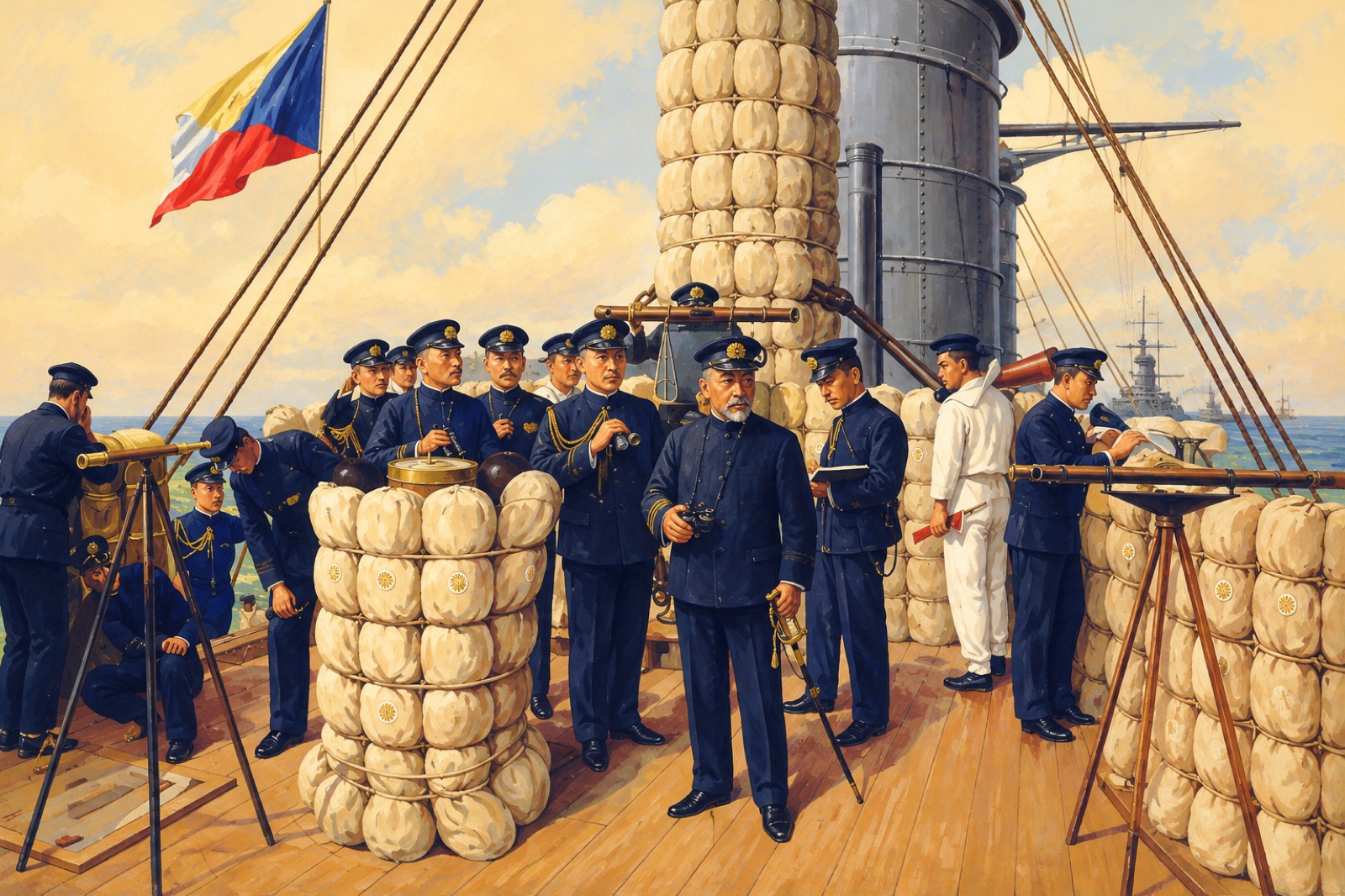
  • Painting of Admiral Tōgō and his staff on the bridge of the battleship Mikasa (illustration) Ship Illustration

    Japan

    Battleship Mikasa, Admiral Tōgō's flagship

    Flagship of Japan's Combined Fleet. From her bridge Tōgō led the battle line at Tsushima; the image is a painting of him and his staff by Tōjō Shōtarō.

    Illustration after Tōjō Shōtarō, public domain · Original

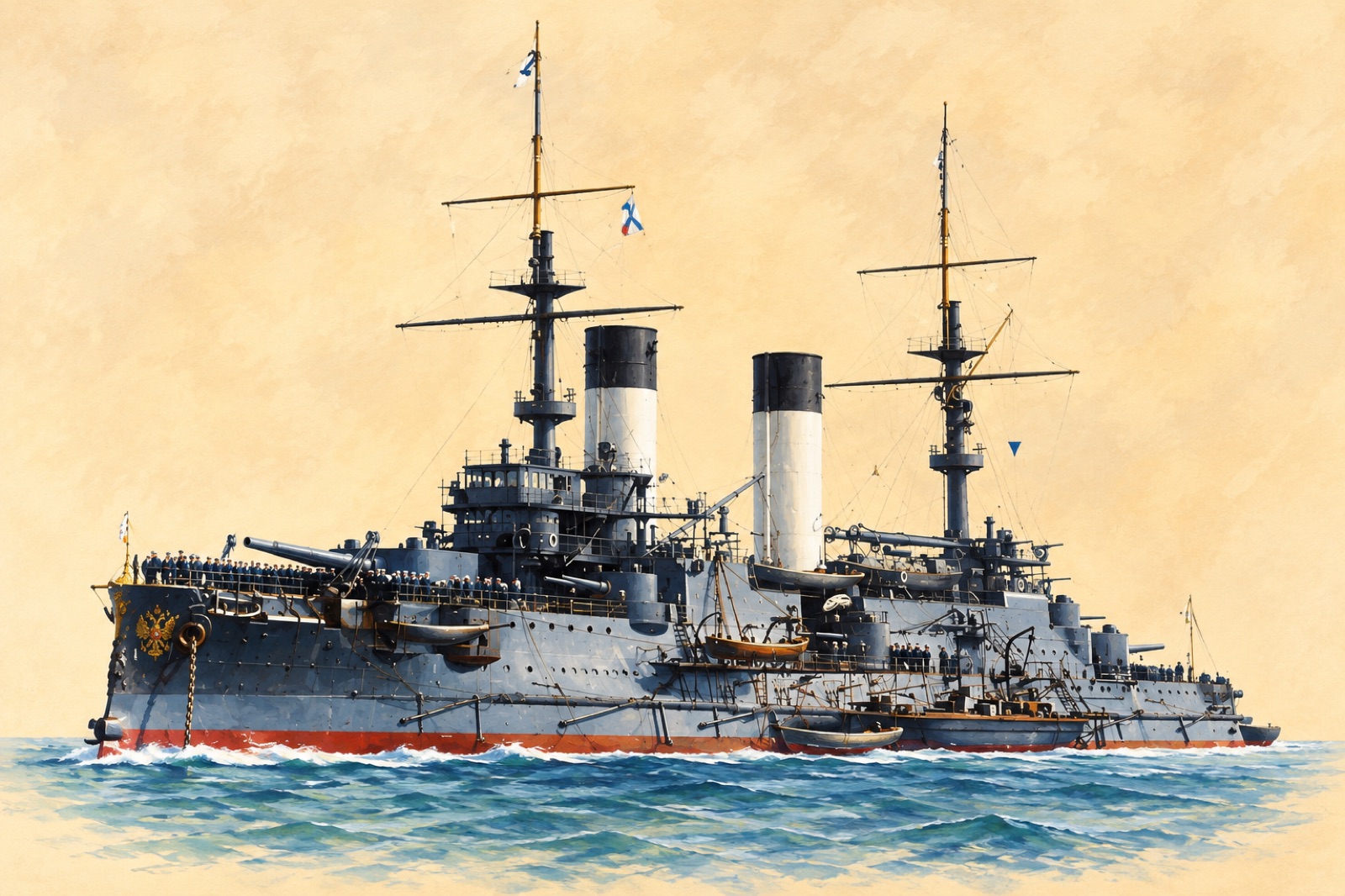
  • Photograph of the Russian battleship Knyaz Suvorov at Kronstadt in 1904 (illustration) Ship Illustration

    Russia

    Battleship Knyaz Suvorov, Rozhestvensky's flagship

    Flagship of the Russian Second Pacific Squadron, shown at Kronstadt in 1904 before the voyage east. She was disabled early at Tsushima and sank that evening.

    Illustration after Неизвеитен, public domain · Original

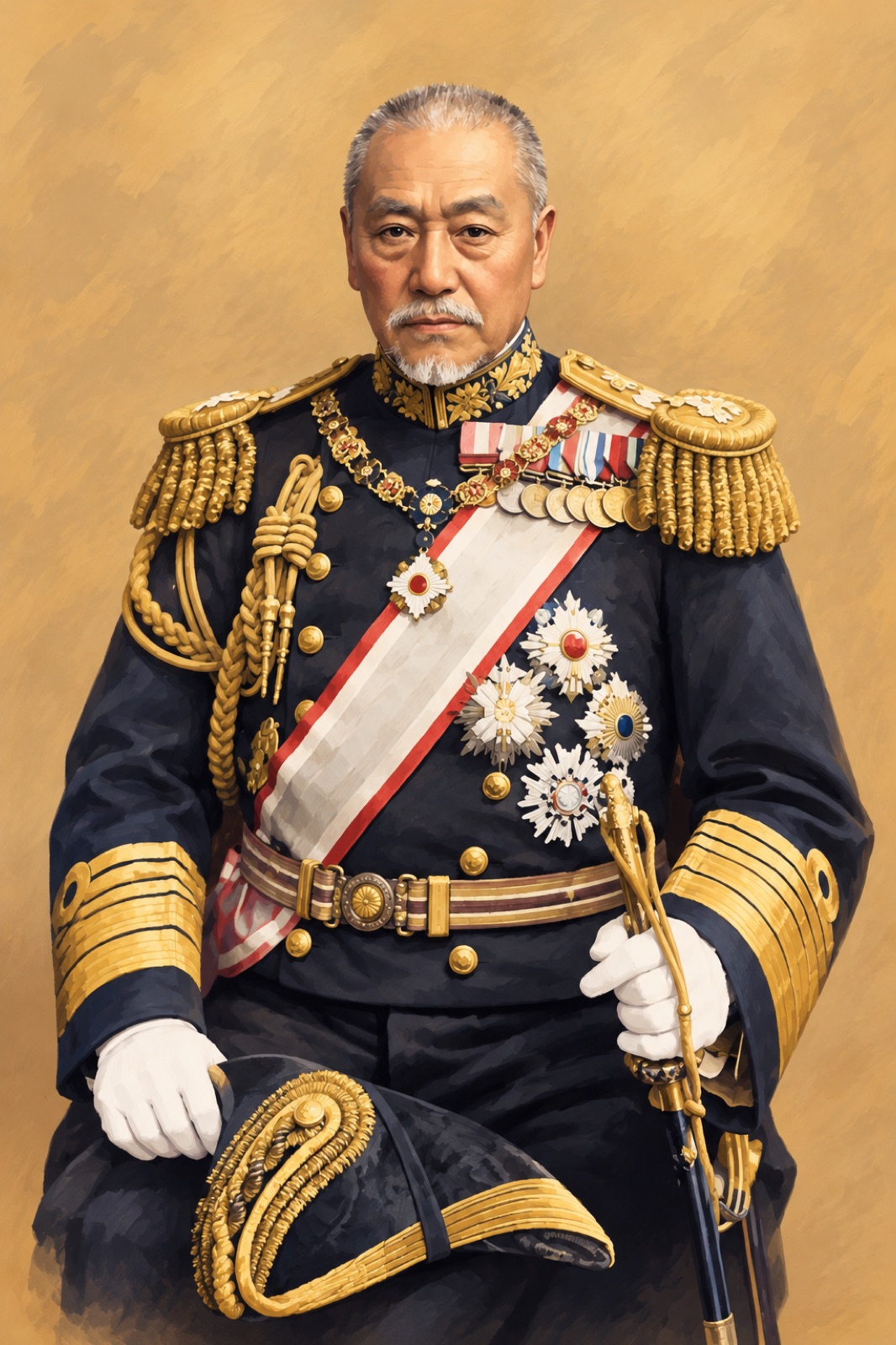
  • Portrait photograph of Admiral Tōgō Heihachirō in uniform with the Order of the Chrysanthemum (illustration) Commander Illustration

    Japan

    Admiral Tōgō Heihachirō

    Commander of Japan's Combined Fleet. He blockaded Port Arthur and then destroyed the Russian Baltic Fleet at Tsushima.

    Illustration after Unknown author, public domain · Original

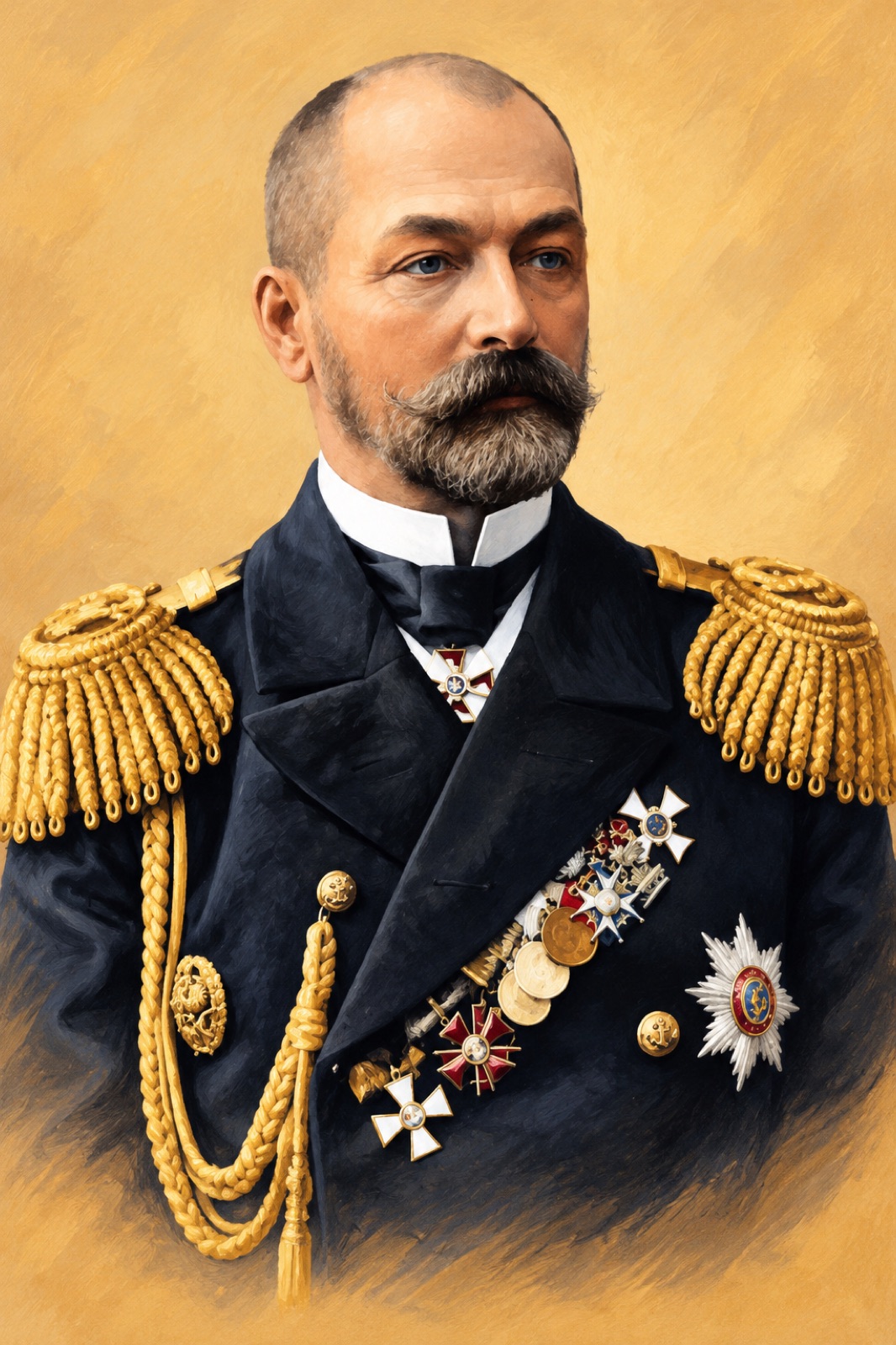
  • Portrait of Admiral Zinovy Rozhestvensky (illustration) Commander Illustration

    Russia

    Admiral Zinovy Rozhestvensky

    Commander of the Second Pacific Squadron, which sailed from the Baltic around Africa. He was wounded at Tsushima and taken prisoner.

    Illustration after Unknown author, public domain · Original

  • Portrait photograph of General Nogi Maresuke (illustration) Commander Illustration

    Japan

    General Nogi Maresuke

    Commander of the Japanese Third Army, which besieged Port Arthur and then joined the battle of Mukden.

    Illustration after Unknown author Unknown author - restored by User:Adam Cuerden, public domain · Original

  • Photograph of a Russian six-inch howitzer battery at Port Arthur (illustration) Artillery Illustration

    Russia

    Russian six-inch howitzer battery at Port Arthur

    A Russian howitzer battery in the fortress defences during the siege of Port Arthur, 1904–05.

    Illustration after Unknown author, public domain · Original

  • Photograph of Japanese soldiers near Chemulpo, Korea, in 1904 (illustration) Infantry Illustration

    Japan

    Japanese infantry in Korea, 1904

    Japanese soldiers near Chemulpo (Incheon) in August–September 1904, after the first landings in Korea.

    Illustration after Anonymous Unknown author, public domain · Original

  • Photograph of the burning Russian cruiser Varyag in Chemulpo harbour, 1904 (illustration) Ship Illustration

    Russia

    Cruiser Varyag at Chemulpo

    The Russian cruiser Varyag burning in Chemulpo harbour after her fight with a Japanese squadron in February 1904.

    Illustration after Uncredited - probably Robert L. Dunn, public domain · Original

Frequently Asked Questions

When was the Russo-Japanese War?

It began with the Japanese attack on Port Arthur on the night of 8–9 February 1904, with formal declarations on 10 February. Fighting ended after the Battle of Mukden in March 1905 and the Battle of Tsushima in May 1905. The Treaty of Portsmouth was signed on 5 September 1905.

Why did the Russo-Japanese War start?

Russia and Japan both wanted control of Korea and southern Manchuria. Russia had leased Port Arthur, kept troops in Manchuria after 1900 and was building the Trans-Siberian Railway. Japan feared a Russian-controlled Korea. Talks failed in early 1904, and Japan, protected by its alliance with Britain, chose to attack.

Who won the Russo-Japanese War?

Japan won on land and at sea. It took Port Arthur, forced the Russians back at Liaoyang and Mukden, and destroyed Russia's Baltic Fleet at Tsushima. But Japan was financially exhausted, so it accepted American mediation and received no indemnity at Portsmouth.

What was the Battle of Tsushima?

A naval battle in the Korea Strait on 27–28 May 1905. Admiral Tōgō's Combined Fleet met Russia's Second Pacific Squadron, which had sailed from the Baltic. Almost the whole Russian fleet was sunk or captured, while Japan lost only three torpedo boats.

What did Japan gain from the Treaty of Portsmouth?

Recognition of its paramount interests in Korea, the Liaodong lease including Port Arthur and Dalny, the southern Manchurian railway and the southern half of Sakhalin. It received no money from Russia. This disappointed many Japanese and led to the Hibiya riots.

Why does the Russo-Japanese War matter?

An Asian country beat a European great power, which changed how both sides saw the world. It brought Korea under Japanese control, weakened tsarist Russia and helped cause its 1905 revolution, and showed the effects of modern firepower before the First World War.

Check Your Understanding

Pick an answer for each question to see if you were right.

  1. Which agreement of 1902 kept other European powers from joining the war against Japan?

  2. Which hill, captured on 5 December 1904, let Japanese guns hit the Russian fleet at Port Arthur?

  3. Which commander led the Japanese Combined Fleet at Tsushima?

  4. Which US president mediated the peace and won a Nobel Peace Prize in 1906?

  5. What did Russia NOT pay under the Treaty of Portsmouth?

More in Asia & the West

See the full topic guide →
Share:

About the Writer

Alex Ng
Alex Ng

Software Engineer & Writer

Software engineer with a passion for distilling complex ideas into actionable insights. Writes about finance, investment, entrepreneurship, and technology.

Read more →

Keep reading

Explore the topic: Asia & the West

Articles

Summaries