American imperialism in five minutes
American imperialism is the name historians give to the United States' expansion overseas around the turn of the twentieth century. In 1898 the country went to war with Spain and ended up with the Philippines, Puerto Rico and Guam. In the same year it annexed Hawaii. Over the next sixteen years it built the Panama Canal, set up protectorates in the Caribbean and claimed a voice in China's trade.
This page sits inside the wider story told in Imperialism: What It Was, Why It Happened, What It Left Behind. What made the American case unusual was the argument at home. The United States had been born in a revolt against an empire, yet it now ruled people who had not agreed to be ruled. Supporters talked about markets, naval power and a duty to spread civilisation. Critics said this was exactly what the Declaration of Independence had rejected.
Why the United States looked overseas
Historians usually point to three motives that worked together: economic, strategic and ideological.
Economy
The census of 1890 reported that the old frontier line, beyond which few settlers lived, was gone. The historian Frederick Jackson Turner wrote about the meaning of this in 1893, and many Americans took it to mean that the era of cheap new land was over. That same year a severe depression hit. Factories and farms were producing more than the home market could buy, so merchants and politicians began to look at export markets, above all China.
Sea power
Captain Alfred Thayer Mahan argued in The Influence of Sea Power upon History (1890) that great nations needed a strong fleet, overseas bases, coaling stations and a canal linking the oceans. The US Navy had started building steel warships in the 1880s, and Mahan gave that programme a theory. Theodore Roosevelt was among his admirers.
Ideas
Many Europeans and Americans of the time believed that Anglo-Saxons were naturally fitted to lead other peoples. Ministers such as Josiah Strong spoke of a Christian mission to the world. In 1899 the British poet Rudyard Kipling published The White Man's Burden, addressed to Americans who were deciding about the Philippines. These ideas are racist, and they were widely used to excuse conquest. Meanwhile, Britain, France, Germany and Japan were all gaining territory, and some Americans feared being left behind.
1898: Hawaii and the war with Spain
Hawaii
American-descended planters and businessmen held great economic power in the Kingdom of Hawaii. In January 1893 they overthrew Queen Liliʻuokalani with the support of US Marines who had landed in Honolulu. President Grover Cleveland thought the act unjust and refused to annex the islands. But in July 1898, during the war with Spain, Congress voted to annex Hawaii under President William McKinley. The war had shown how valuable a Pacific stopping point could be.
Cuba and the Maine
Cubans were in revolt against Spanish rule, and American newspapers gave heavy coverage to Spain's harsh measures. On 15 February 1898 the US battleship Maine blew up in Havana harbour, killing about 260 men. Public opinion turned sharply against Spain. In April Congress authorised war, and the Teller Amendment declared that the United States had no intention of annexing Cuba.
A short war
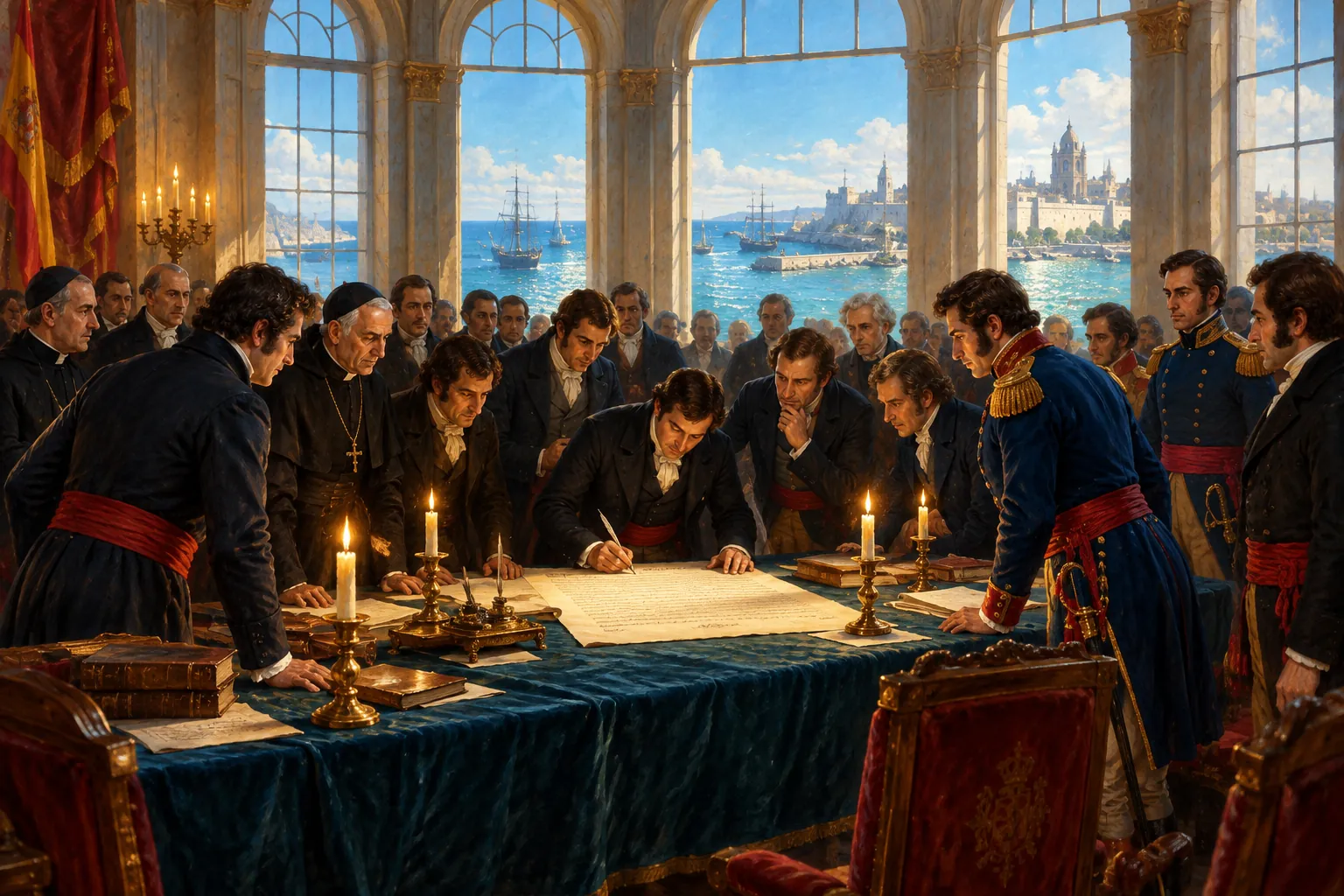
On 1 May Commodore George Dewey destroyed the Spanish squadron in Manila Bay. In July another Spanish fleet was beaten off Santiago, Cuba. The fighting ended in August, and diplomat John Hay called it a splendid little war. By the Treaty of Paris, signed on 10 December 1898, Spain gave up Cuba and handed Puerto Rico, Guam and the Philippines to the United States. Washington paid Spain 20 million dollars for the Philippines.
The Philippines: the hardest test
Filipino revolutionaries led by Emilio Aguinaldo had been fighting Spain already. They declared independence in June 1898 and founded a republic in January 1899. President McKinley decided to keep the islands. He argued that they could not go back to Spain or be left to another European power, and that Filipinos were not ready to govern themselves. The Senate approved the treaty in February 1899 by only a narrow margin.
Fighting between American and Filipino forces began near Manila on 4 February 1899. The Philippine-American War started as a conventional conflict and turned into guerrilla warfare. Aguinaldo was captured in March 1901, and Roosevelt declared the war over on 4 July 1902, though fighting went on in some areas afterwards. About 4,200 American soldiers died. Filipino losses were far higher, and some estimates put civilian deaths, mostly from disease and hunger, at 200,000 or more. Reports of torture by US troops led to Senate hearings.
At home, the Anti-Imperialist League was founded in 1898. Members included the writer Mark Twain and the industrialist Andrew Carnegie, and they argued that governing people without their consent betrayed American principles.
Ruling the new territories
The United States did not treat all its new possessions alike.
- Puerto Rico: the Foraker Act of 1900 set up a civil government headed by a governor appointed by the US president. Supreme Court rulings in 1901, known as the Insular Cases, held that the Constitution did not apply in full to such territories. Puerto Ricans became US citizens in 1917.
- Hawaii: an Organic Act of 1900 made it a US territory, and its residents became citizens.
- Cuba: the island became formally independent in May 1902, but the Platt Amendment of 1901, written into its constitution, gave the US a right to intervene and a naval base at Guantánamo Bay.
- The Philippines: William Howard Taft became civil governor in 1901. The United States described its rule as training Filipinos for self-government, and it built schools, roads and health services.
Roosevelt, the canal and the Caribbean
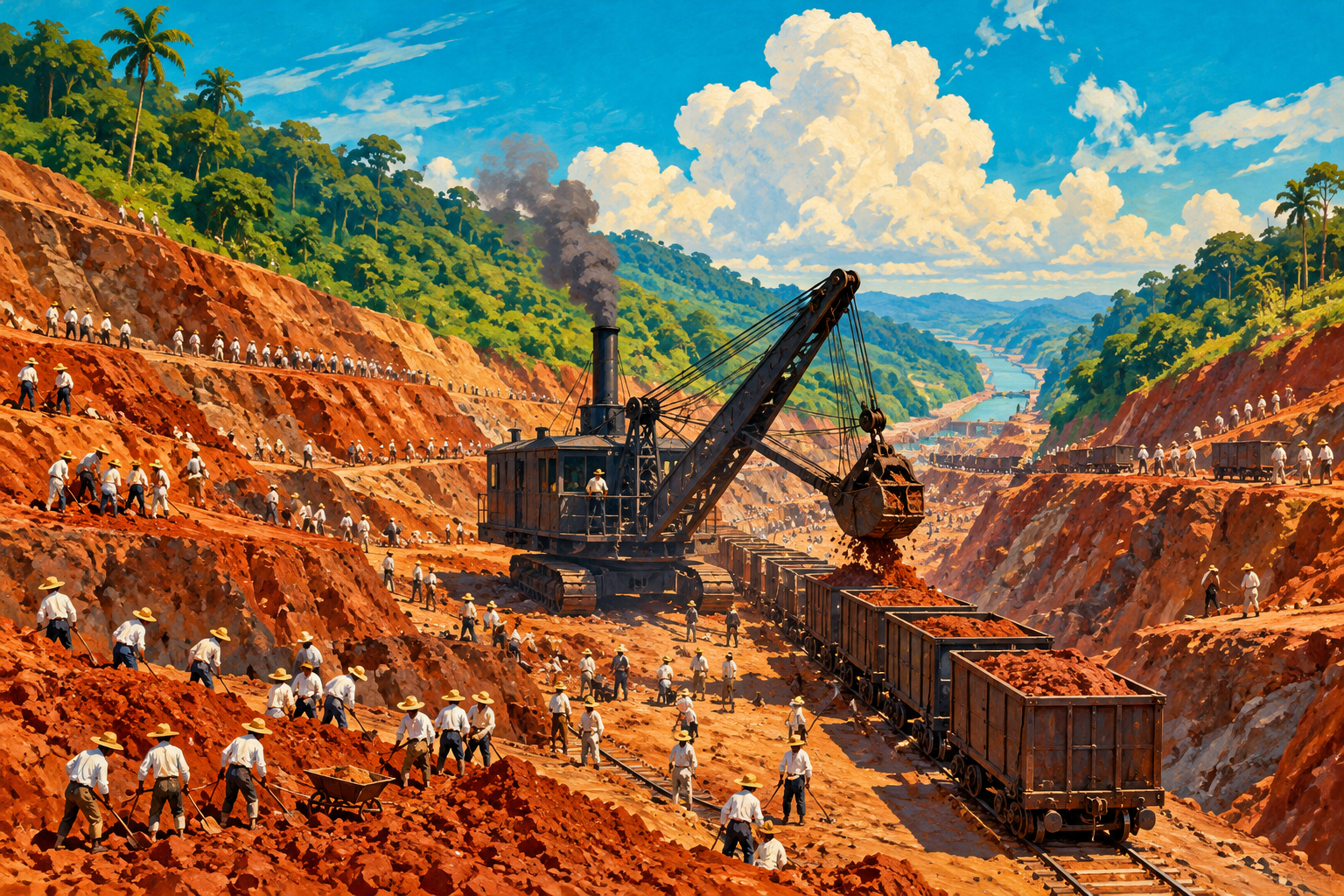
Theodore Roosevelt became president in September 1901 after McKinley was assassinated. He wanted a canal across Central America. When Colombia's congress rejected a treaty, a revolt broke out in Panama in November 1903, and American warships stood off the coast to discourage Colombian troops. Washington recognised the new country within days and signed a treaty giving it control of a Canal Zone. Digging began in 1904, and the canal opened on 15 August 1914. The work was also a fight against yellow fever and malaria, and many labourers died. The canal played the part for the Americas that the Suez Canal had played for Asia, which is told in The Suez Canal: Why It Mattered to Empires.
In December 1904 Roosevelt added a new idea to the Monroe Doctrine. If a Latin American country fell into chaos or could not pay its debts, he said, the United States might act as an international police power, so that European navies would have no excuse to step in. This is the Roosevelt Corollary. In 1905 the US took over the customs houses of the Dominican Republic under it. His motto about speaking softly and carrying a big stick gave the approach its nickname, big stick diplomacy. In 1907–1909 sixteen white-painted battleships, the Great White Fleet, sailed around the world to show American naval power.
President Taft, who followed Roosevelt, preferred investment to troops, a policy called dollar diplomacy. In 1914 President Woodrow Wilson ordered the occupation of Veracruz, Mexico.
China, the Open Door and East Asia
The United States held no colony in China. When European powers and Japan carved out spheres of influence there in the late 1890s, Secretary of State John Hay sent notes in 1899 asking each power to keep trade open to all. In 1900 he added a call to respect China's territorial integrity. American troops joined the international force sent to relieve the foreign legations during the Boxer Rising in 1900. The Philippines gave the US Navy a base near Chinese waters.
In 1905 Roosevelt mediated the peace between Russia and Japan, signed at Portsmouth, New Hampshire. That year Taft and the Japanese prime minister Katsura Taro also exchanged views in a private memorandum: Japan would not threaten the Philippines, and the US would accept Japan's leading role in Korea. The other side of the story is in Japanese Imperialism in World History.
Why it mattered
The United States became a Pacific and Caribbean power with bases, protectorates and a canal. The Philippines gained independence on 4 July 1946. Guantánamo is still a US naval base, Puerto Rico is still a US territory, and the Panama Canal was handed over to Panama at the end of 1999.
Historians disagree about how to read the period. Some see 1898 as a turning point from isolation to world power. Others see a continuation of earlier expansion across North America. Many stress that American influence often worked through investment, treaties and military threat rather than formal colonies, a kind of informal empire. The racial ideas behind the empire also belong to a decade in which segregation was hardening at home. The earlier struggle over who counts as free, and who as a citizen, is told in The Abolition of the Slave Trade and Slavery.
What exams ask
- Causes: be ready to rank economic, strategic and ideological motives and to give evidence for each (the closed frontier, Mahan, the White Man's Burden).
- Turning point: explain whether 1898 changed American foreign policy or continued earlier trends.
- Documents: know the Teller and Platt amendments, the Open Door notes and the Roosevelt Corollary, and what each added to US power.
- Comparison: compare American imperialism with European and Japanese empires, and note where it differed, such as the open debate at home and the use of protectorates.
- Perspectives: use the Anti-Imperialist League and the Filipino resistance to show that the empire was contested.
Read next
- Imperialism: What It Was, Why It Happened, What It Left Behind: the big picture that this page fits into.
- The Suez Canal: Why It Mattered to Empires: a good comparison with the Panama Canal.
- Japanese Imperialism in World History: the rising Pacific power that America met in Korea, Manchuria and China.
- The Abolition of the Slave Trade and Slavery: earlier debates about freedom and citizenship.