In five minutes
The Cu Chi tunnels were a network of underground passages in Cu Chi district, northwest of Saigon (now Ho Chi Minh City). Digging began during the war against France, and the network grew through the American war. Viet Cong forces used it to hide, shelter, fight and move supplies close to the capital.
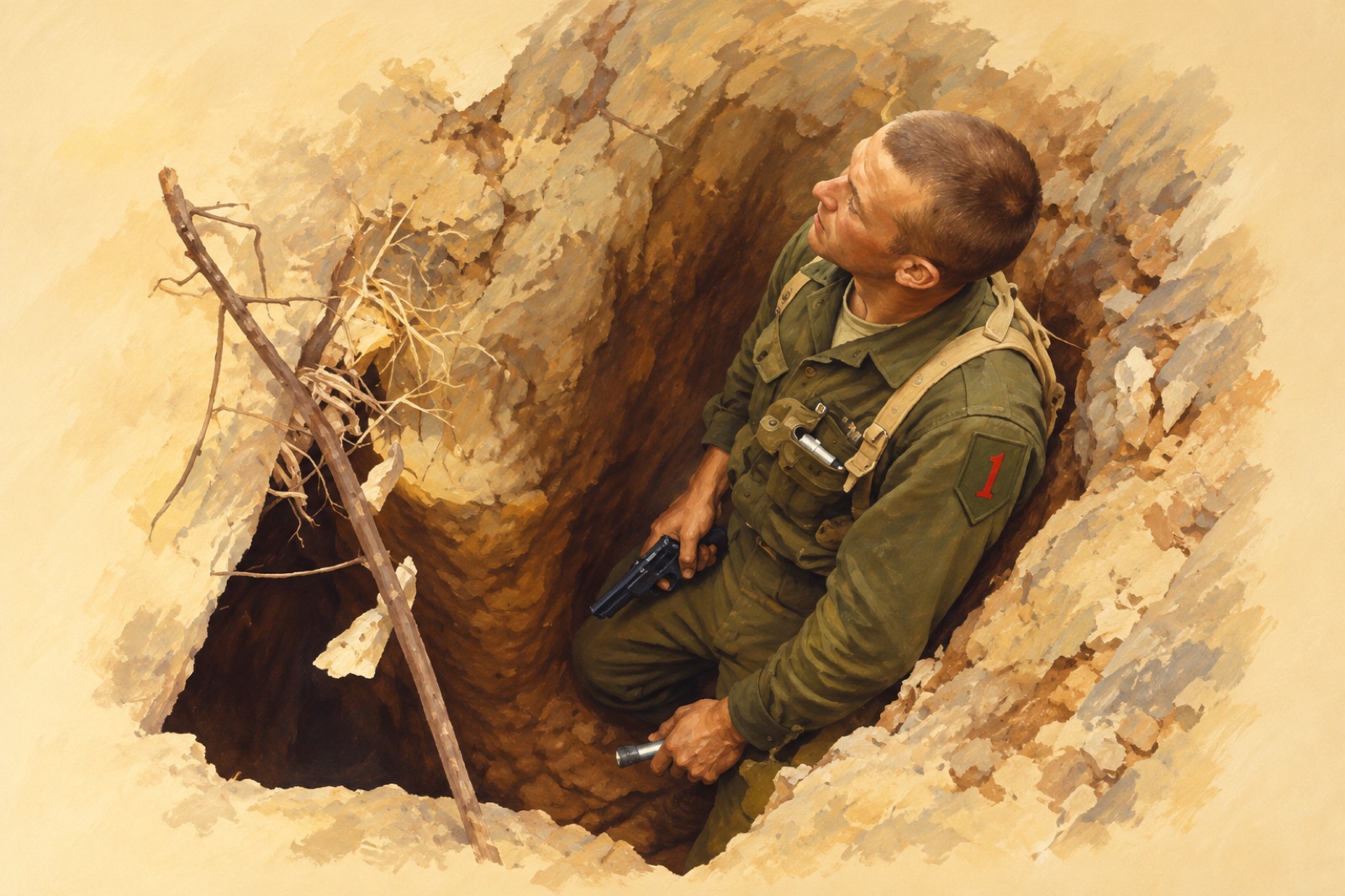
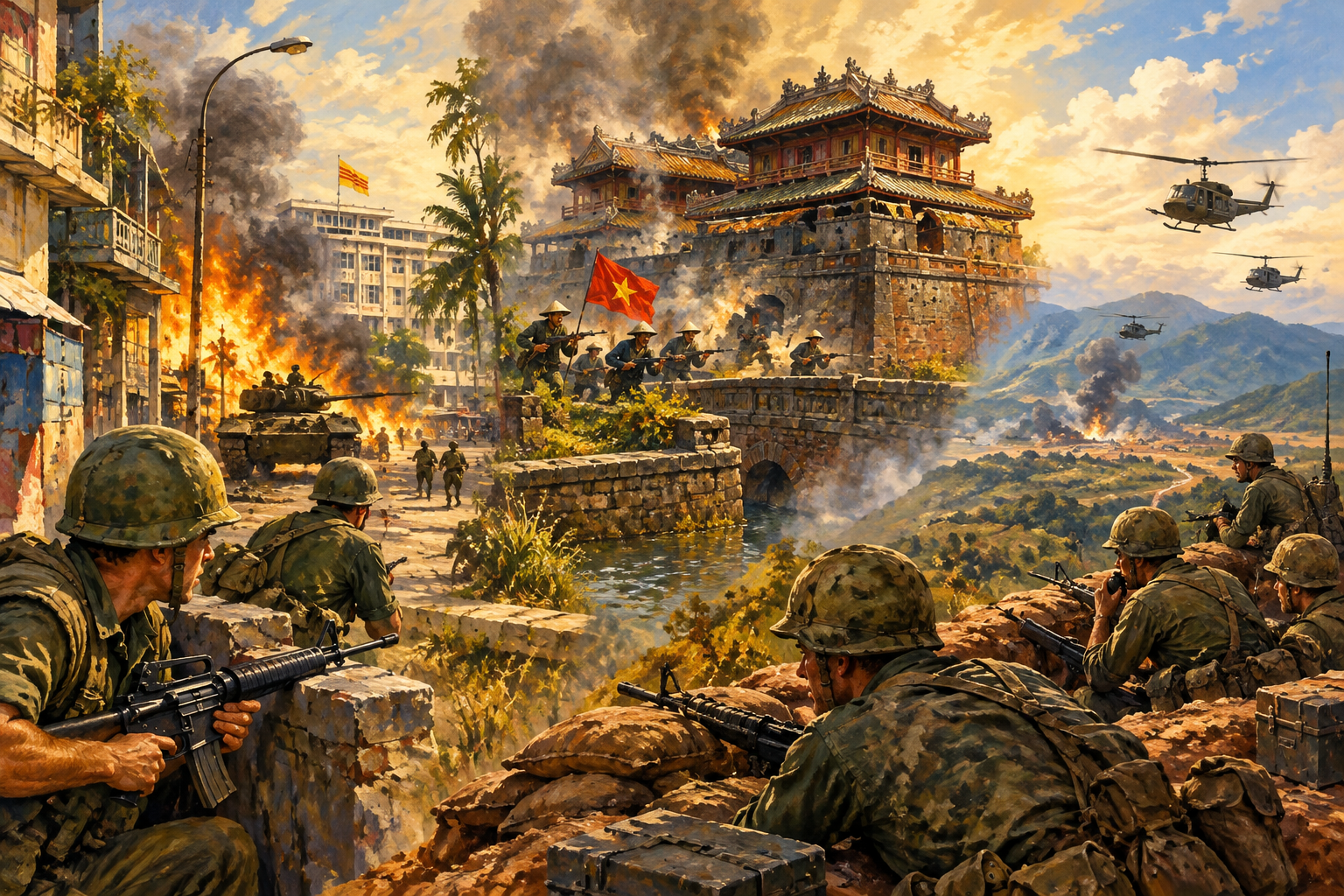
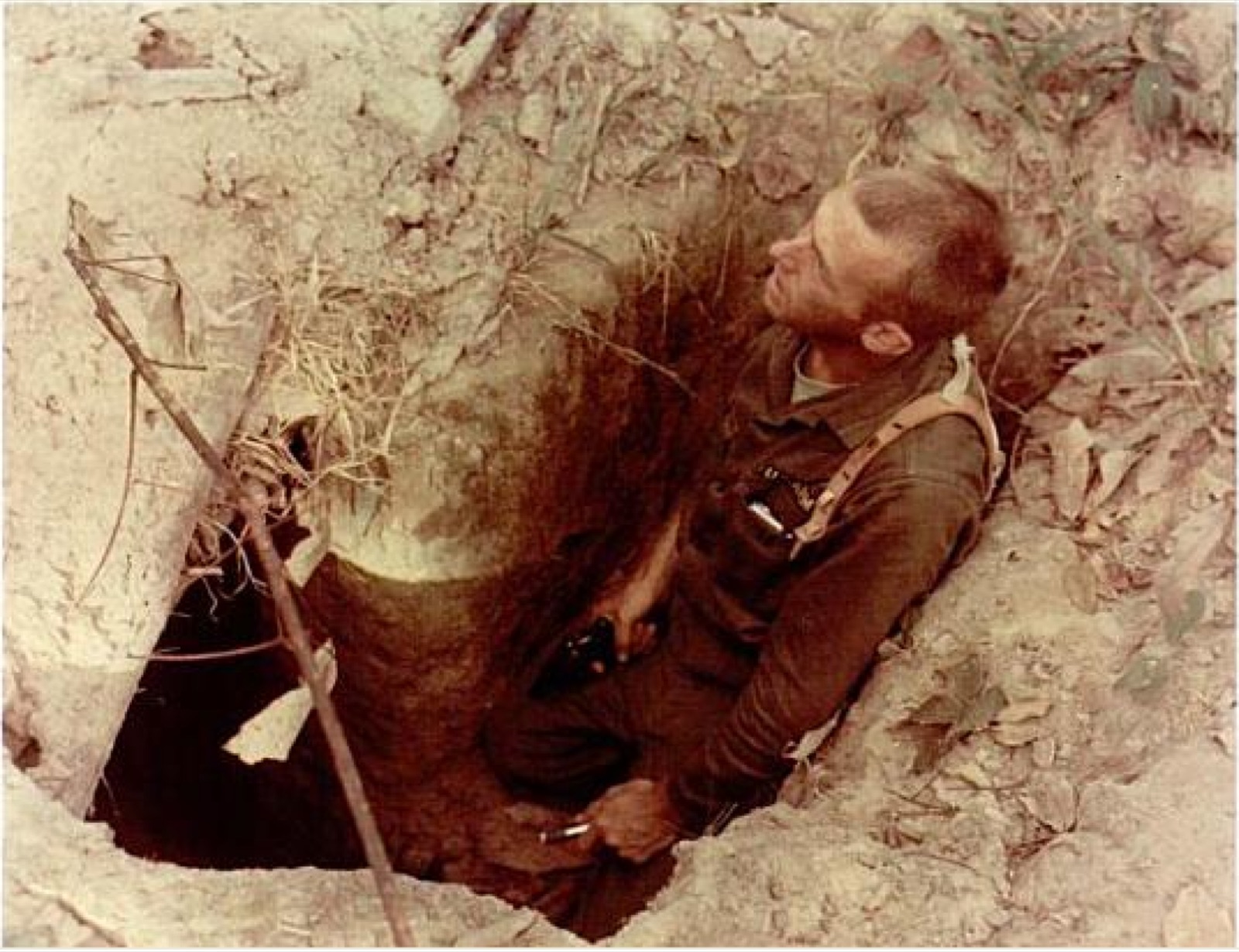
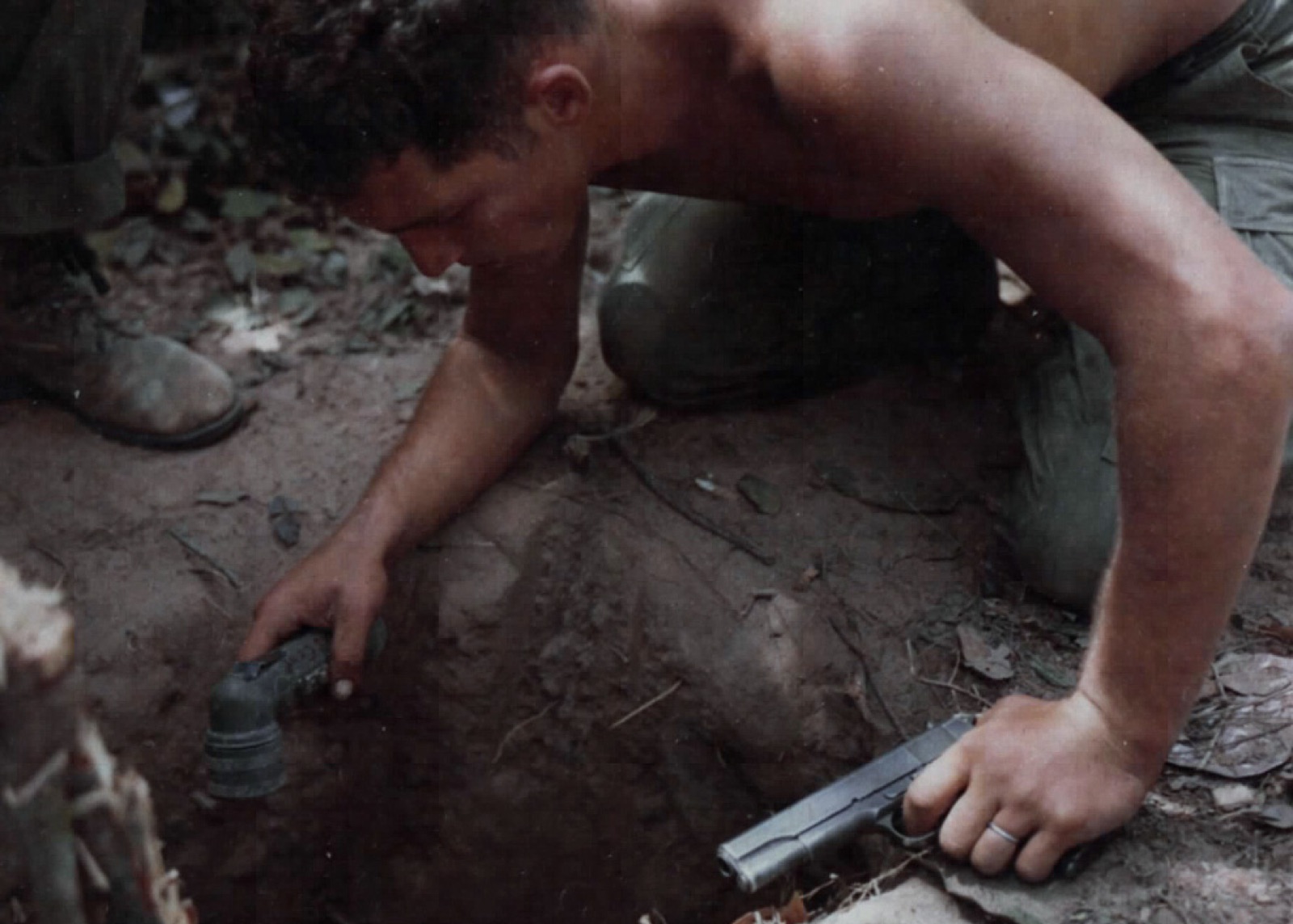
In January 1966 and January 1967, US, Australian and South Vietnamese forces launched large sweeps into the area. Operation Crimp searched the Ho Bo Woods, and Operation Cedar Falls cleared the village of Ben Suc and pushed through the neighboring Iron Triangle. Inside the tunnels, the searchers were small volunteers known as tunnel rats, who went down with a pistol, a knife and a flashlight.
This page covers where the tunnels came from, how they were built and used, what the tunnel rats did, what the two sweeps achieved and what remains today. The timeline gives the main dates, and the wider story of the city is in Saigon and Southern Vietnam: A History from Funan to 1975.
Where the Cu Chi tunnels came from
The tunnels grew out of the struggle against France. The earliest were small hidden shelters, dug by local residents. UNESCO's tentative-list entry for the site dates the first shelters to 1946, in two communes of Cu Chi district. By 1947, the same entry says, two of these tunnels had been linked into a system of about 17 kilometers. Other accounts place the start of the main Viet Minh digging at about 1948, when the Viet Minh were still fighting French colonial rule. Whichever start date you use, the digging began during the war against France.
Over time, shelters were joined into passages, and passages into a network that ran beneath villages and fields across the district. Estimates of its total length vary widely, from about 120 to 250 kilometers. The sections open to visitors are much smaller. UNESCO gives about 4 kilometers of preserved tunnels at Bến Dược and Bến Đình combined.
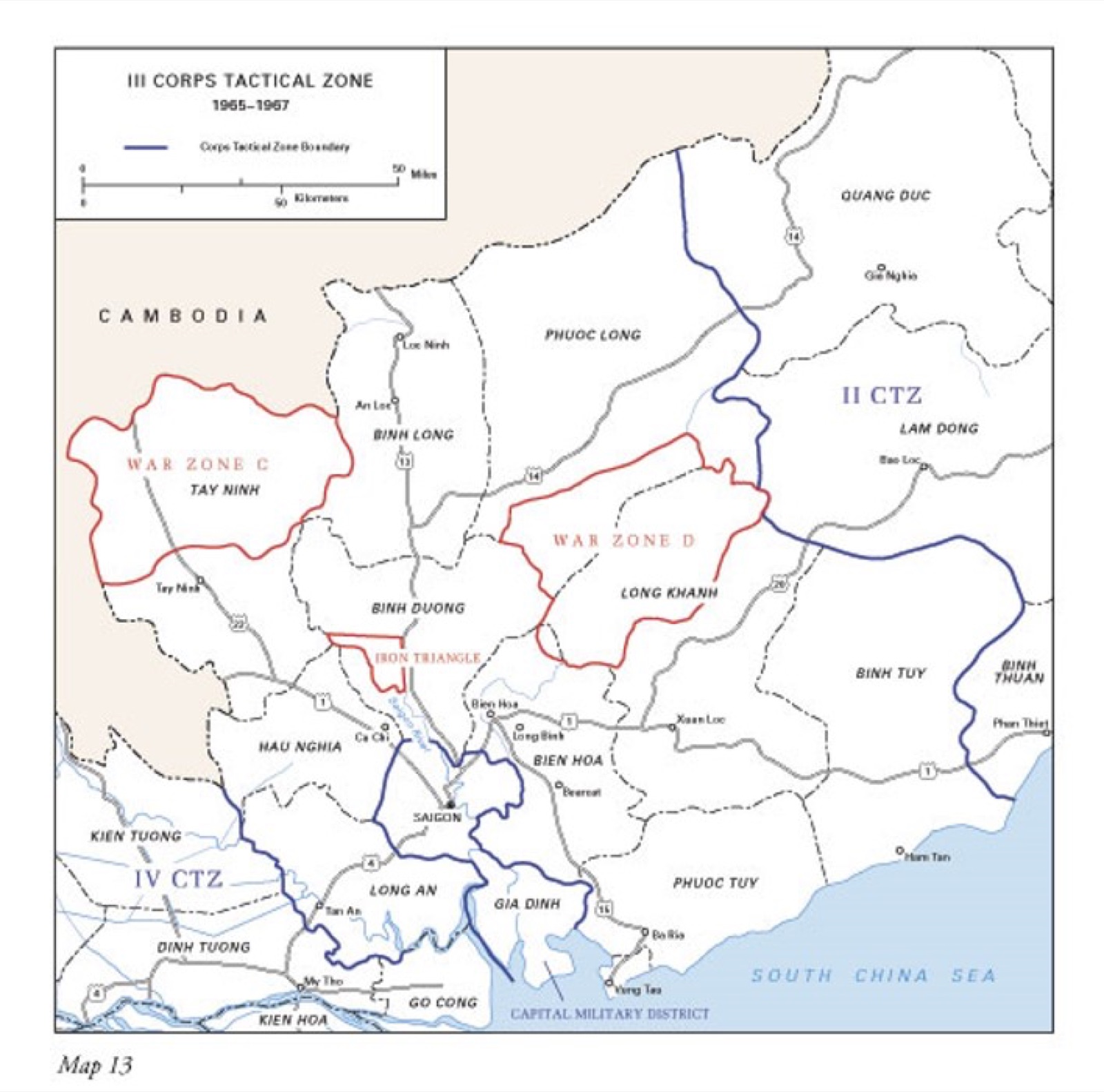
The Iron Triangle lay northwest of Saigon, close to Cu Chi district. Several of the sweeps described below targeted that same ground, so the map shows where the later operations took place.
How the tunnels worked
The main passage had up to three levels, joined by hatches that opened up and down. UNESCO describes the top level at about 4 meters below the surface and the third level at about 7 to 10 meters. Passages between levels were built in zigzags, both for concealment and for defence, so an intruder could not follow them easily.
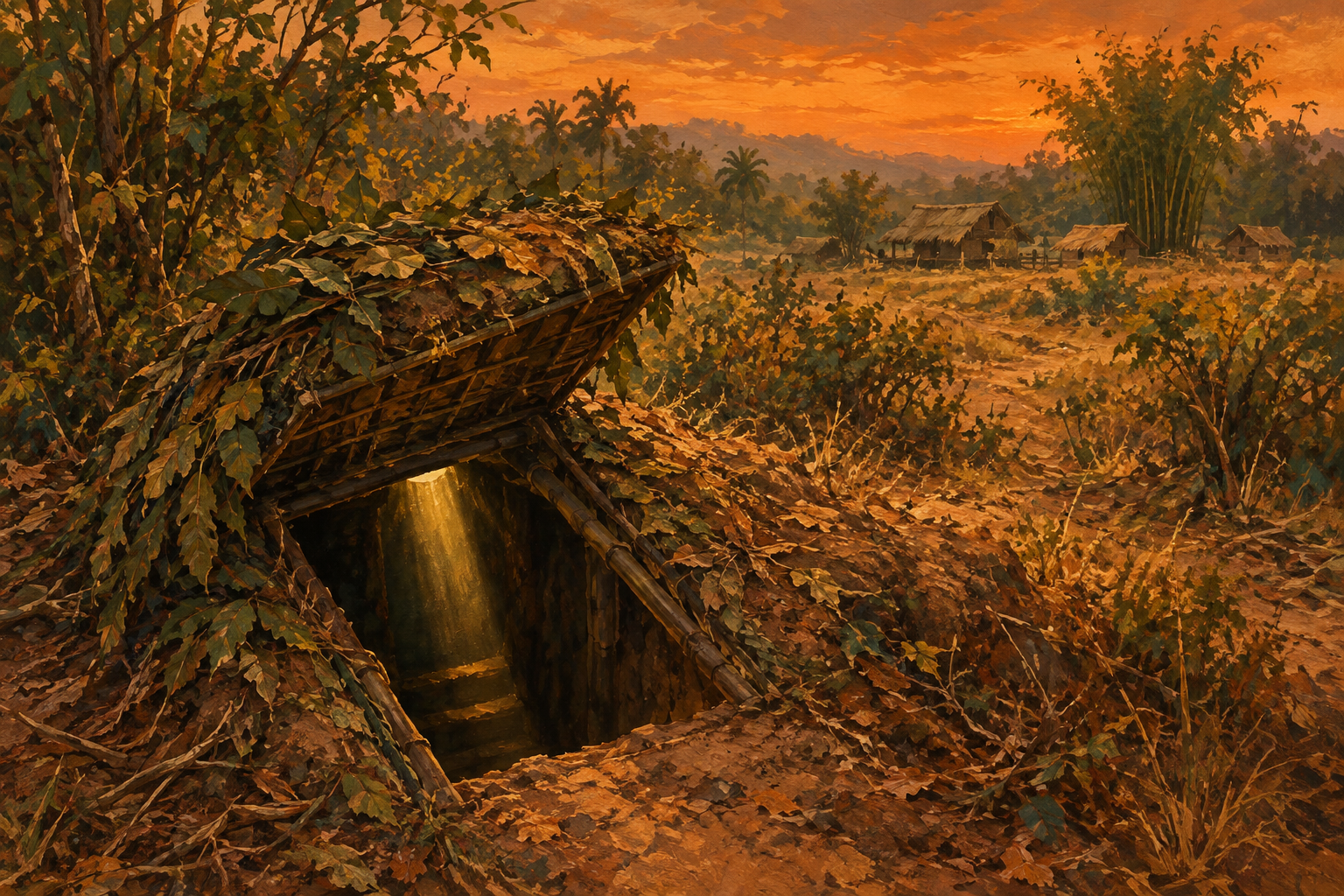
The underground spaces held hiding places, meeting rooms, stores of food and weapons, and living quarters. Some sections were wide enough to work in; others were narrow crawl spaces. Entrances were trapdoors hidden under leaves or soil, and ventilation shafts carried away smoke and poisonous gas. Some shafts were disguised as termite mounds.
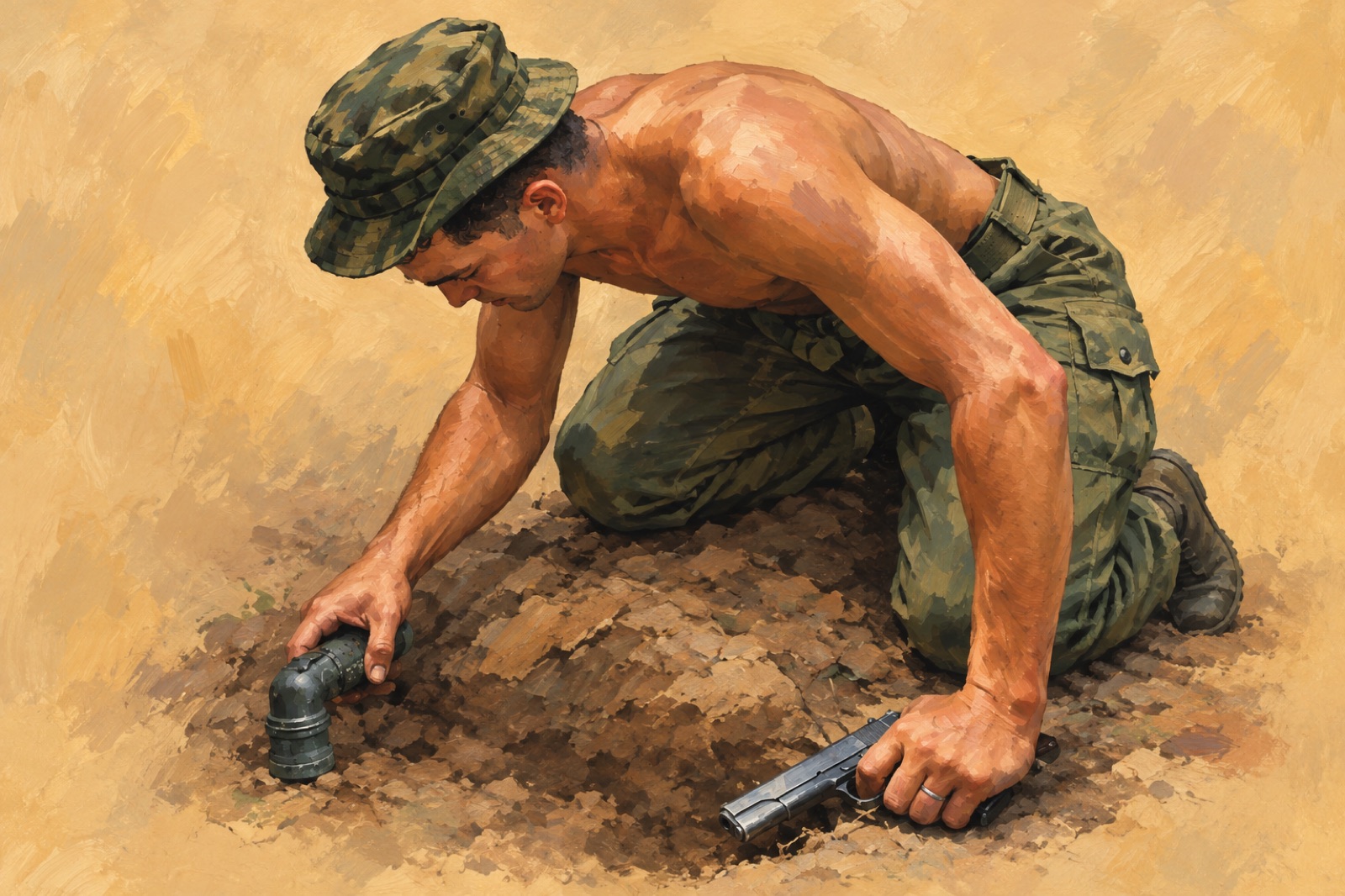
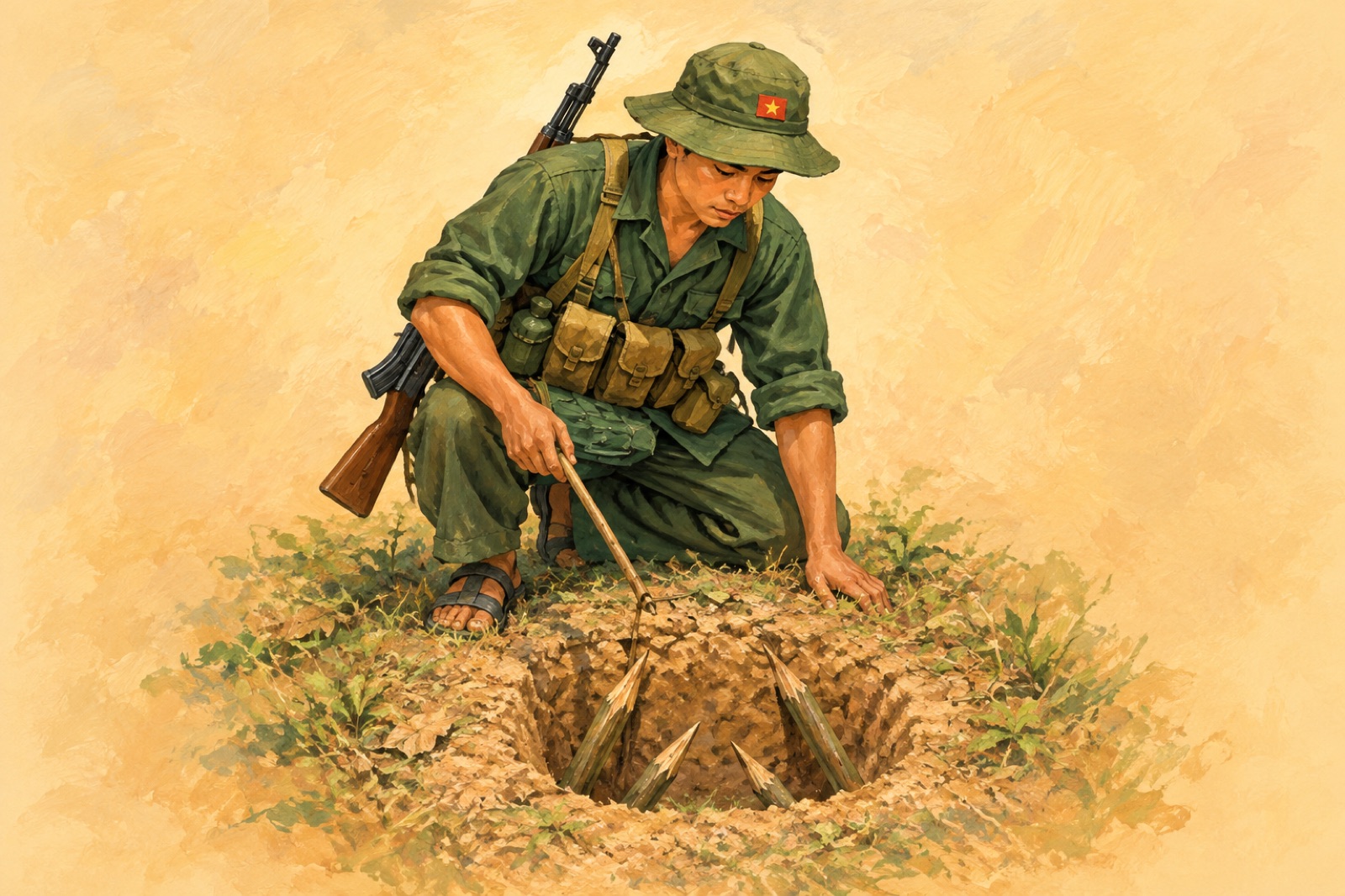
The passages were also protected by traps, including sharpened spikes set in pits and booby traps that could catch anyone moving through the dark. A soldier entering the tunnels could not know where the next trap waited.
The design served one clear purpose. A force with artillery and aircraft could hit the surface hard, but finding an entrance, a shaft or a side passage meant searching underground, where any turn might hold a trap. That gap between surface firepower and underground concealment is the key to the whole story.
Tunnel rats: fighting underground
Bombing and artillery could wreck the surface but could not reliably reach the network below. Finding an entrance, a shaft or a side passage meant going underground, so US units turned to volunteers, who became known as tunnel rats. There was no single doctrine. Each unit worked out its own methods, equipment and training as it went.
Tunnel rats were usually small men. The National Museum of the United States Army describes most of them as under about 5 feet 5 inches, or 165 centimeters, because the passages were narrow. Most were American, but the volunteers also included Australian and New Zealand men.
Their basic kit was a pistol, a knife and a flashlight. They often went in alone, and below ground the dangers were traps, poisonous gas and collapsing earth. Each decision about where to search and how far to go was their own.
Searching was not only the tunnel rats' job. Army accounts of Operation Cedar Falls describe a team that used a new technique in tunnel destruction, with demolition charges strung through the whole tunnel system.
The sweeps: Operation Crimp and Operation Cedar Falls
Operation Crimp, 8 to 14 January 1966
Operation Crimp ran from 8 to 14 January 1966 in the Ho Bo Woods, an area of mixed open terrain and thick jungle near Saigon, in what is now Binh Duong Province. A US Army command historian puts the force at 8,000 troops of the 1st Infantry Division. The 173rd Airborne Brigade inserted three battalion-size units on the first day, and the 1st Battalion, Royal Australian Regiment (1RAR), was attached to the brigade.
The strongest resistance came in the 1RAR area, which the same historian identifies as the enemy's regional headquarters. Around 11 January, searchers found part of a large tunnel complex that ran from the Saigon area toward the Cambodian border. Australian soldiers searched the tunnels and recovered thousands of documents, weapons and supplies, according to the Australian War Memorial.
By the end of the operation on 14 January, the same historian counts about 600 detainees and about 1.5 million documents. The complex was only partly destroyed. The operation showed that a surface sweep could find the tunnels but could not clear the network on its own.
Operation Cedar Falls, 8 to 26 January 1967
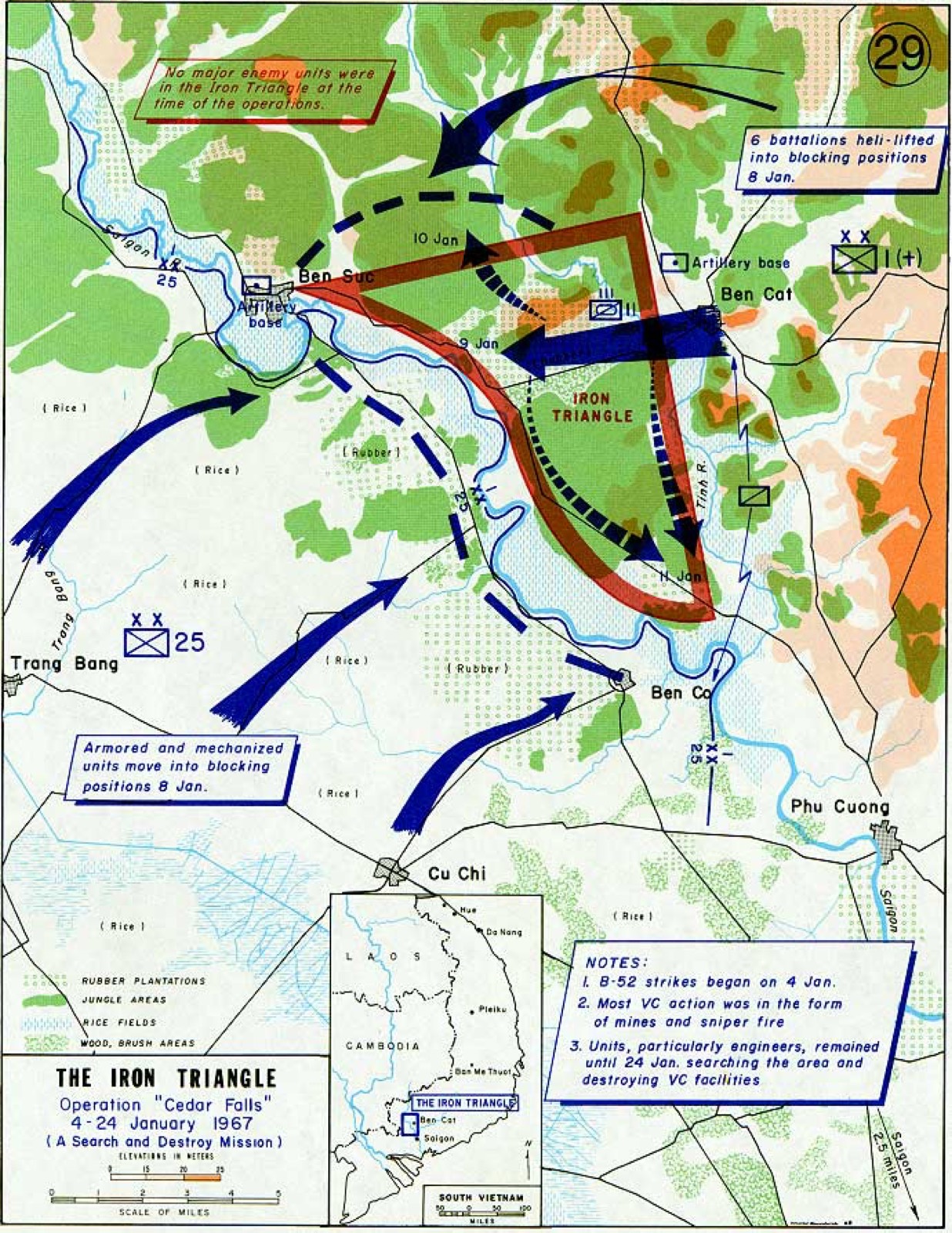
Operation Cedar Falls ran from 8 to 26 January 1967, according to the American Battle Monuments Commission. The 25th Infantry Division sealed the west side of the Iron Triangle, while the 1st Infantry Division, the 173rd Airborne Brigade and the 11th Armored Cavalry Regiment swept in from the north and east. South Vietnamese troops took part as well.
Ben Suc: the village in the sweep
The first large action was at Ben Suc. The 1st Battalion, 26th Infantry, landed by helicopter on 8 January 1967 and had the village secure by 10:30 that morning. The Army history estimates that nearly 3,500 people lived in Ben Suc and another 2,500 in the nearby villages.
The Army's count of people evacuated was 5,987: 582 men, 1,651 women and 3,754 children. After interrogation and screening, 106 people were detained, of whom 28 were classed as Viet Cong. The Army history also records about 40 enemy killed in the first two and a half hours of the assault.
On 10 January, two battalions of the South Vietnamese 1st Airborne Task Force arrived to take over the evacuation and screening. That freed the 1st Infantry Division for other parts of the operation, and its remaining task was to raze the village. Bulldozers crushed the ruins, and demolition charges were used on the tunnel network beneath.
For the people of Ben Suc, the sweep meant losing their homes. Most of those moved were women and children, and the figures show how far a battle fought underground reached into the lives of people living on the surface. US reports at the time claimed about 700 enemy dead across the whole operation.
The two sweeps compared
| Item | Operation Crimp | Operation Cedar Falls |
|---|---|---|
| Dates | 8 to 14 January 1966 | 8 to 26 January 1967 |
| Place | Ho Bo Woods, near Saigon | Cu Chi district and the Iron Triangle |
| Main units | 1st Infantry Division and 173rd Airborne Brigade, with 1RAR attached | 25th and 1st Infantry Divisions, 173rd Airborne Brigade, 11th Armored Cavalry Regiment |
| Notable event | Part of a large tunnel complex found; about 600 detainees | Ben Suc cleared; 5,987 people evacuated |
| Outcome | Complex only partly destroyed | US reports claimed about 700 enemy dead |
Why it matters
The tunnels let Viet Cong forces stay close to Saigon, hiding, storing supplies and meeting underground, even while US and South Vietnamese units moved across the surface. The 1966 and 1967 sweeps show the limits of surface power against a network that could be entered from many points.
Cu Chi was also one of the bases used in the 1968 Tet Offensive. See The Tet Offensive (1968) for the wider picture. Later in the war, heavy B-52 bombing struck the district and damaged the upper levels, but parts of the network survived.
After 1975, Bến Dược and Bến Đình came under management and protection, as UNESCO's entry records. Bến Đình was recognized as a national historic site by a Ministry of Culture decision dated 15 December 2004, and Bến Dược is also recognized as a national historic site. Both sites are open to visitors today.
What exams ask
Three points matter most for study. First, why a guerrilla force used an underground network close to the capital. Second, what Crimp and Cedar Falls aimed to do, and how far they succeeded. Third, how tunnel rats fought, and what that shows about the war on the ground. Keep the dates 1946, 1947, 1948, 1966, 1967 and 1968 in order, and the rest of the story falls into place.
Read next
- The Tet Offensive (1968): Saigon, Huế and Khe Sanh: how the 1968 offensive unfolded across the country, and where Cu Chi fits into it.
- A History Walk Through Ho Chi Minh City: a route through the city's historic sites, from the war years and before.
- Saigon and Southern Vietnam: A History from Funan to 1975: the longer background to Cu Chi and the city beside it.