The realism art movement in five minutes
The realism art movement was a current in art and literature, strongest from about 1848 to the 1870s, that set out to show ordinary life as it really looked. Earlier painting and fiction had kept their biggest stage for saints, myths, kings and heroes. Realism turned that around. It gave the same serious attention to a stonebreaker on a country road, a woman gleaning grain after the harvest, or a doctor's bored wife in a provincial town.
Realism began in France and spread to Russia, Britain, the United States and Japan. It is one chapter in the larger story told in 19th-Century Art and Culture: From Romanticism to the Belle Époque. Three ideas hold the movement together: choose subjects from your own time, observe them closely, and refuse to prettify them.
Why realism appeared
Two things set the stage. The first was the art world itself. In France the state-run Salon decided which painters were seen and sold, and its taste favoured history painting: scenes from the Bible, classical myth or national glory, done in a smooth, polished style. Romanticism had loosened those rules by prizing emotion, drama and faraway places, but it still looked away from everyday life. The differences are laid out in Romanticism vs Realism vs Naturalism, and the Romantic side of the story is in Victor Hugo and French Romanticism.
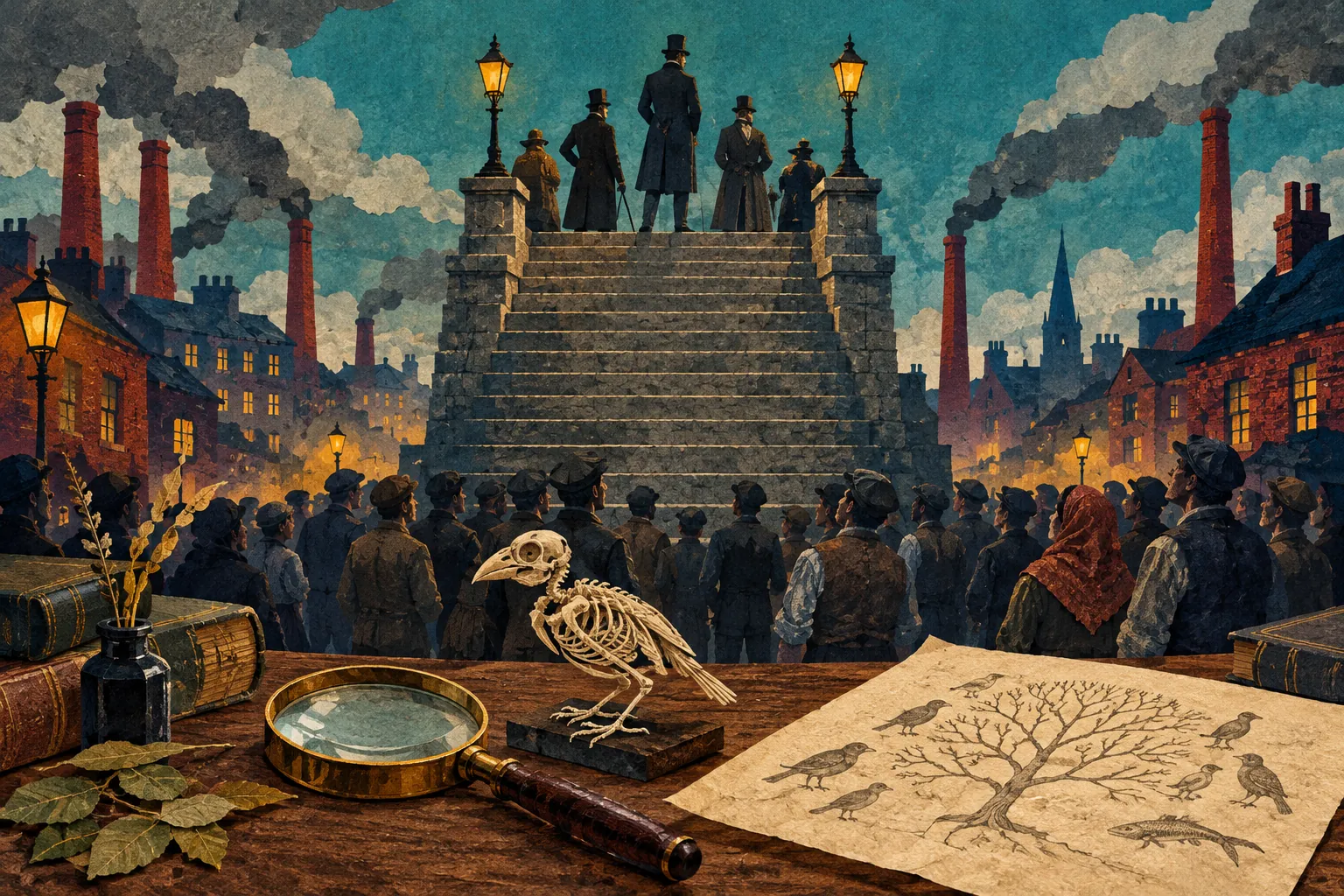
The second was society. By the 1840s factories, railways and growing cities were changing France fast. Many writers and artists lost patience with grand stories and wanted to describe the world they could actually see. The Revolution of 1848 pushed this further. It drove King Louis-Philippe from the throne, created the Second Republic, and made the lives of workers and peasants a public political question.
The word itself began as an insult. Critics used "realist" to mean ugly, coarse or politically dangerous. Gustave Courbet and his friends later accepted the label and made it a banner.
Courbet and the painting that shocked the Salon
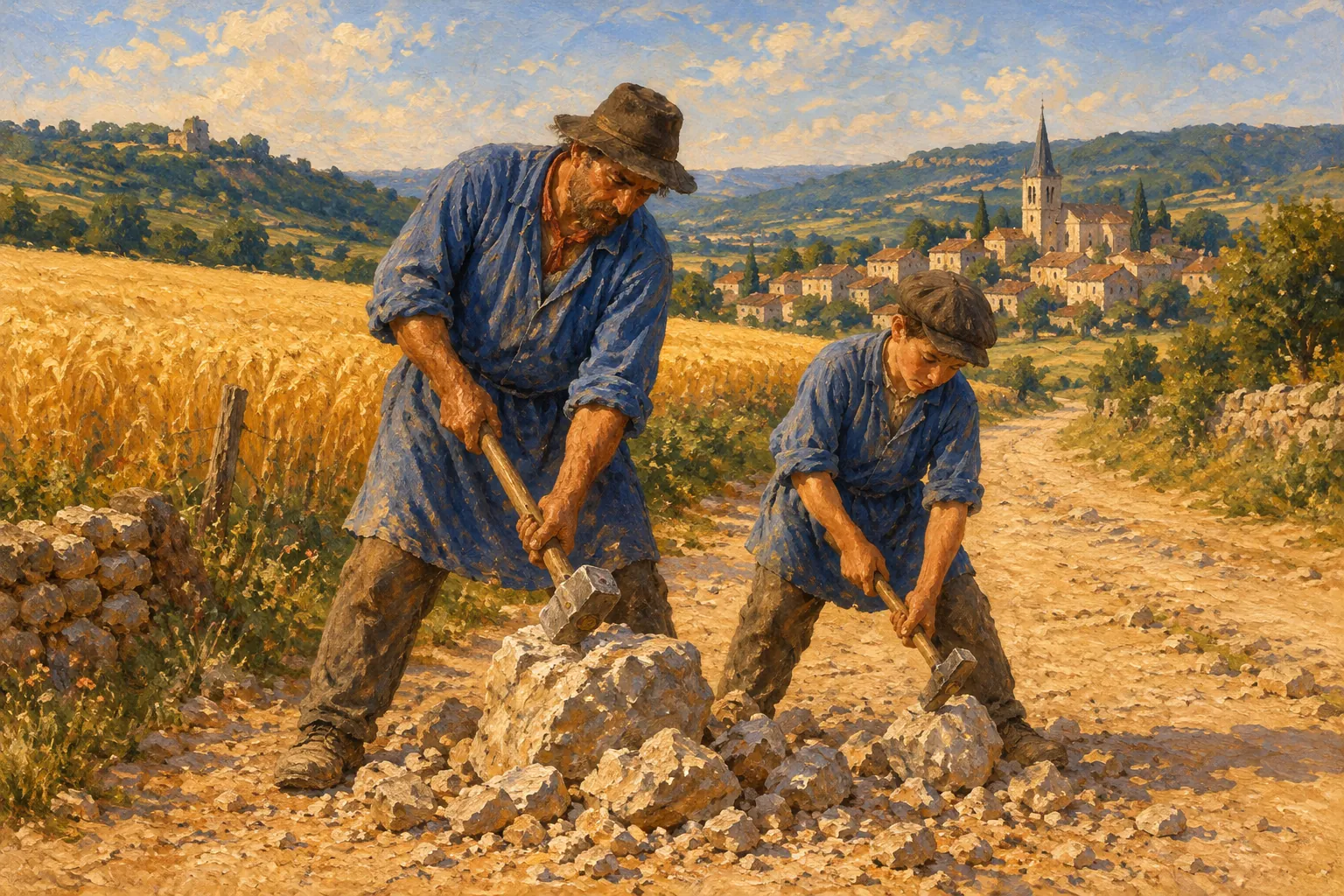
Gustave Courbet (1819–1877), from Ornans in eastern France, became the movement's leading figure. At the Salon of 1850–51 he showed The Stonebreakers (1849), a life-size picture of an old man and a boy breaking rocks for road repairs. He also showed A Burial at Ornans, a funeral in his home town painted on a canvas more than six metres wide. That size was normally reserved for history painting. The scale was the point: ordinary villagers, none of them idealised, were given the space of a battle scene. Many critics were offended. The Stonebreakers was lost in 1945, during the Second World War.
In 1855 Paris held a great international fair, the Exposition Universelle. Its jury accepted some of Courbet's paintings but refused several large ones, including The Painter's Studio and A Burial at Ornans. Courbet built his own pavilion near the fair, hung dozens of his works inside, and put the word "Realism" on the entrance. The show lost money, but it is often treated as the movement's founding moment, because it showed that an artist could present his work without the approval of the official jury.
Courbet's friend, the writer Champfleury, defended the new approach in essays, collected in 1857 as Le Réalisme.
Millet and Daumier: painting working lives
Jean-François Millet (1814–1875), who lived in the village of Barbizon near the Forest of Fontainebleau, painted farm work with dignity rather than sentiment. The Sower (1850) shows a peasant striding across a field. The Gleaners (1857) shows three women bending to pick up the grain left behind after the harvest, a task allowed to the poorest villagers. Millet was not a political campaigner, but some conservative critics felt that giving poor farm workers such large, solemn pictures was itself a challenge to the social order.
Honoré Daumier (1808–1879) worked in a different way. He made thousands of lithographs for newspapers, mocking politicians, lawyers and judges, and also painted city life. The Third-Class Carriage (about 1862–64) shows tired passengers packed on a wooden train bench, with no hero and no story beyond the journey itself.
Realism in literature
The novel got there before painting did. Stendhal's The Red and the Black (1830) followed an ambitious young man through the class tensions of restoration France. Honoré de Balzac spent the 1830s and 1840s building The Human Comedy, a linked group of novels that mapped French society from moneylenders to country nobles.
Gustave Flaubert's Madame Bovary (1857) is the classic example. Emma Bovary, a country doctor's wife in Normandy, longs for the glamour she has read about in romantic novels. Real marriage disappoints her, and she slides into affairs and debt. Flaubert never lectures the reader. He keeps his own voice out of the story and works to find the exact word for each detail. After the book appeared in a magazine in 1856, the state put him on trial for offending public morals. He was acquitted in February 1857, and the publicity helped the book become famous.
The same approach showed up elsewhere. Charles Dickens in Britain exposed poverty and bad institutions in a lively way. George Eliot's Middlemarch (1871–72) examined a whole provincial town with careful psychological detail. In Russia, Ivan Turgenev's A Sportsman's Sketches (1852) portrayed serfs as individuals, and Leo Tolstoy's Anna Karenina (published as a book in 1878) followed the pressures of society on private lives.
Realism beyond France
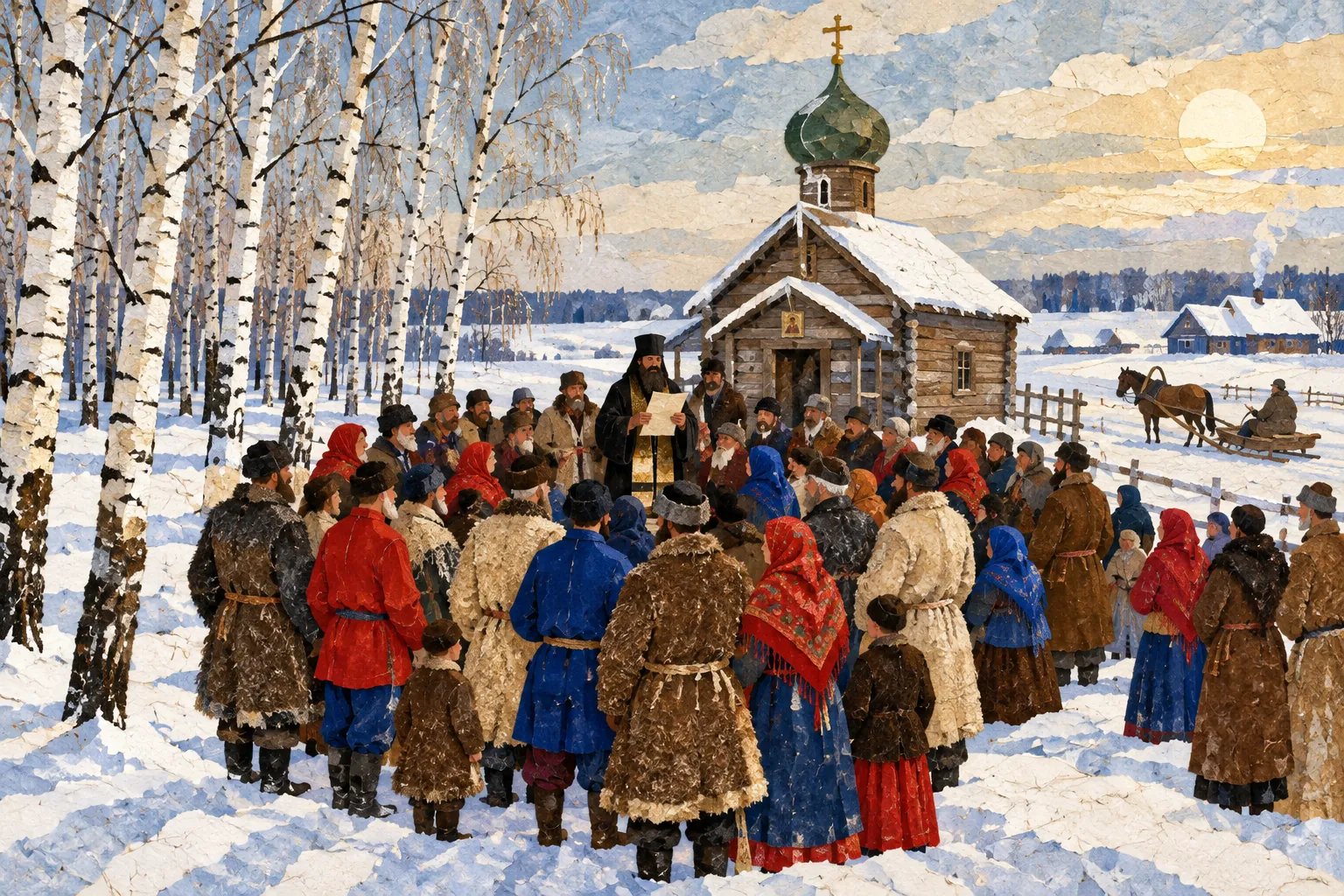
In Russia, a group of painters known as the Wanderers (Peredvizhniki) broke from the official academy in 1870 and sent travelling exhibitions around the country from 1871. Ilya Repin's Barge Haulers on the Volga (1870–73) shows a line of exhausted men dragging a boat upriver.
In the United States, Winslow Homer painted ordinary working people and the sea, and Thomas Eakins's The Gross Clinic (1875) showed a surgeon operating in front of his students, with unflinching detail. The novelist William Dean Howells argued for realism in American fiction.
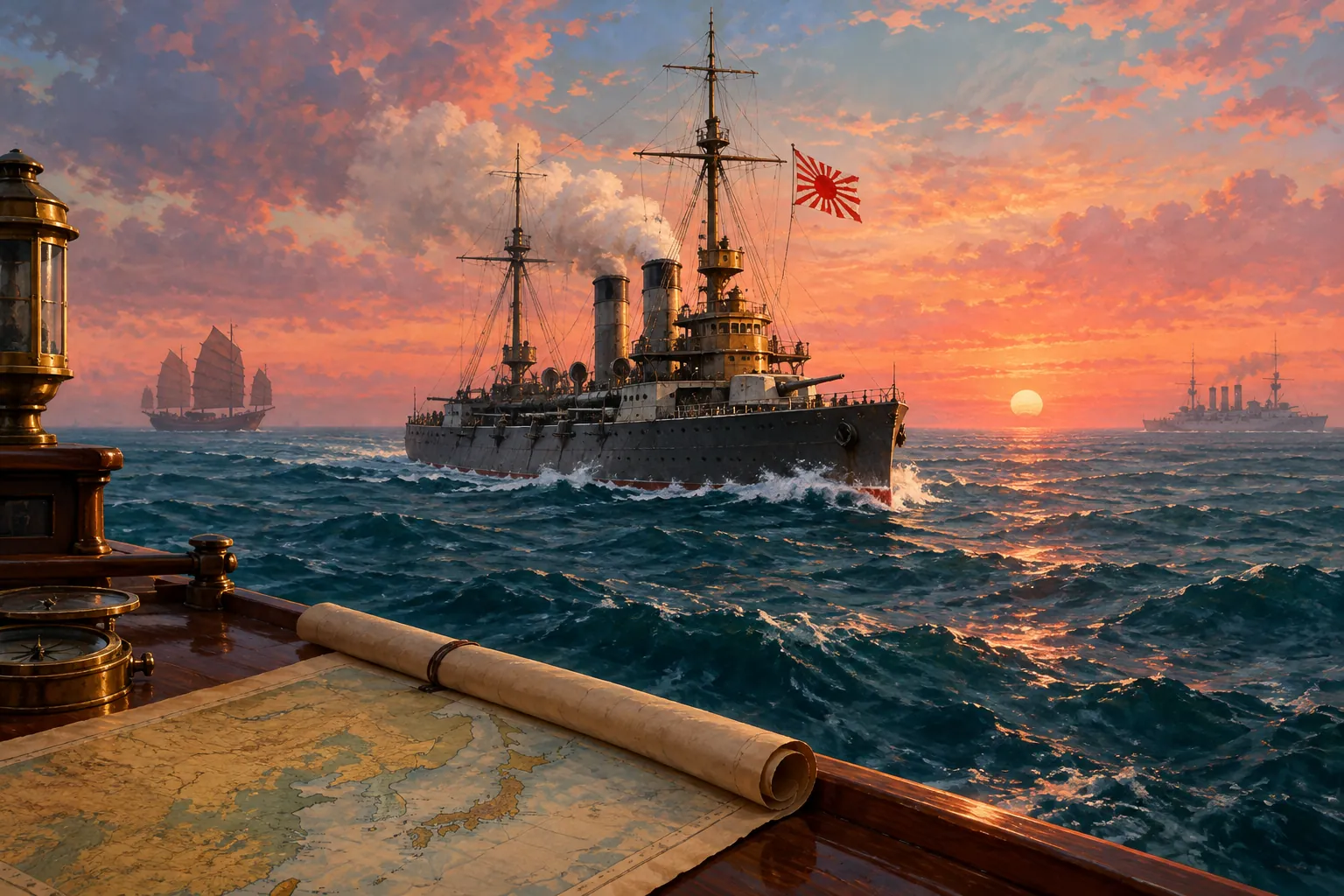
Japan met Western realism in the Meiji era. The painter Takahashi Yuichi studied Western oil technique and painted a hanging salmon (about 1877) with a close attention to texture that was new to Japanese art. In literature, Tsubouchi Shōyō's The Essence of the Novel (1885–86) argued that fiction should portray human feelings and society as they are, and Futabatei Shimei's Ukigumo (begun 1887) put that idea into practice in a style close to everyday speech.
What came next
Realism did not mean a mirror held up to the world. Realists chose their subjects and framed them with a purpose. Still, their insistence on modern life opened the way for later movements. Édouard Manet and the painters who became known as the Impressionists kept painting contemporary Paris but shifted attention to light and the act of seeing; see What Is Impressionism?. In literature, Émile Zola took realism further into Naturalism, treating novels almost like experiments on how heredity and environment shape people, in Thérèse Raquin (1867) and the twenty-novel Rougon-Macquart cycle (1871–93).
Photography, announced in 1839, also changed the question. If a camera could record appearances, painters had to decide what else art could do. Realism answered by looking at society and people, not just surfaces.
What exams ask
For AP-style questions, the significance of realism can be argued in a few points:
- Definition: a mid-19th-century movement that rejected idealisation and chose contemporary, ordinary subjects.
- Context: industrialisation, the 1848 revolutions, a growing middle class and the arrival of photography.
- Examples: Courbet, Millet and Daumier in painting; Stendhal, Balzac, Flaubert, Dickens and Eliot in fiction.
- Contrast: Romanticism stressed emotion and imagination; realism stressed observation and social conditions.
- Legacy: it prepared the ground for Impressionism and Naturalism, and it spread worldwide, including Russia and Meiji Japan.
Read next
- Romanticism vs Realism vs Naturalism: a side-by-side comparison, useful before an exam.
- Victor Hugo and French Romanticism: the movement realism reacted against.
- What Is Impressionism?: what painters did with modern life next.