In five minutes: what the Communist Manifesto is
The Communist Manifesto is a pamphlet of only a few dozen pages, written in German by Karl Marx and Friedrich Engels and printed in London in February 1848. It was not planned as a famous book. It was the public statement of a small group, the Communist League, explaining what communists believed and what they wanted. Its core claim is simple. All history so far has been a history of struggle between classes. Modern capitalism has created a new class, the industrial working class. That class will one day take power and end private ownership of factories, land and other means of production.
The pamphlet is one of the central texts in the story told in Ideas That Shaped the 19th Century, alongside liberalism, nationalism and Darwin's theory of evolution. Its opening line says that a spectre is haunting Europe, the spectre of communism. Its closing line calls on workers of all countries to unite.
Why it was written: Europe before 1848
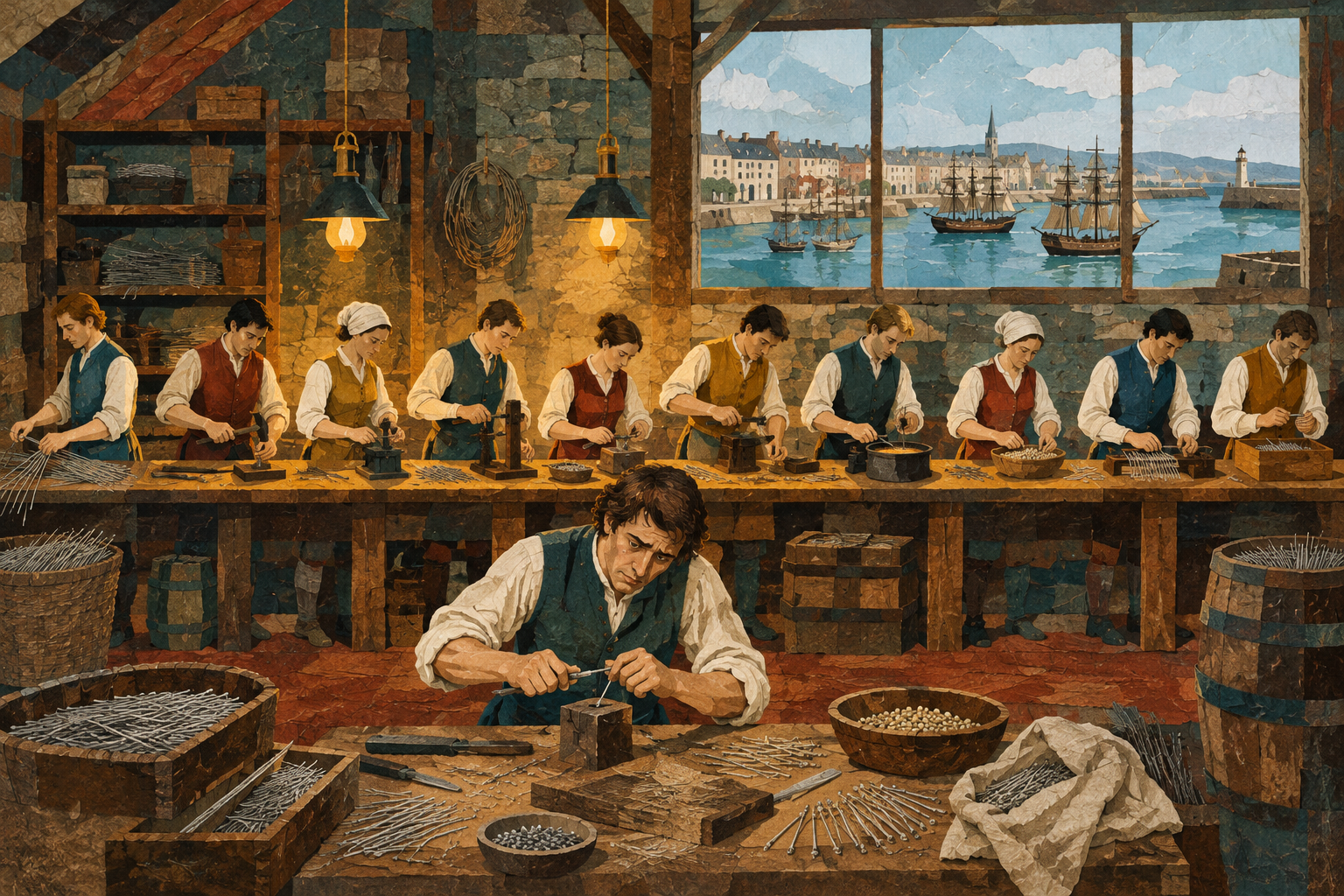
By the 1840s, factories, railways and coal mines were changing parts of Britain, France, Belgium and the German states. Cities filled with workers who earned low wages, worked long hours and had almost no say in politics. Most could not vote. In much of continental Europe, kings and nobles still held power under the order set up after Napoleon's defeat in 1815.
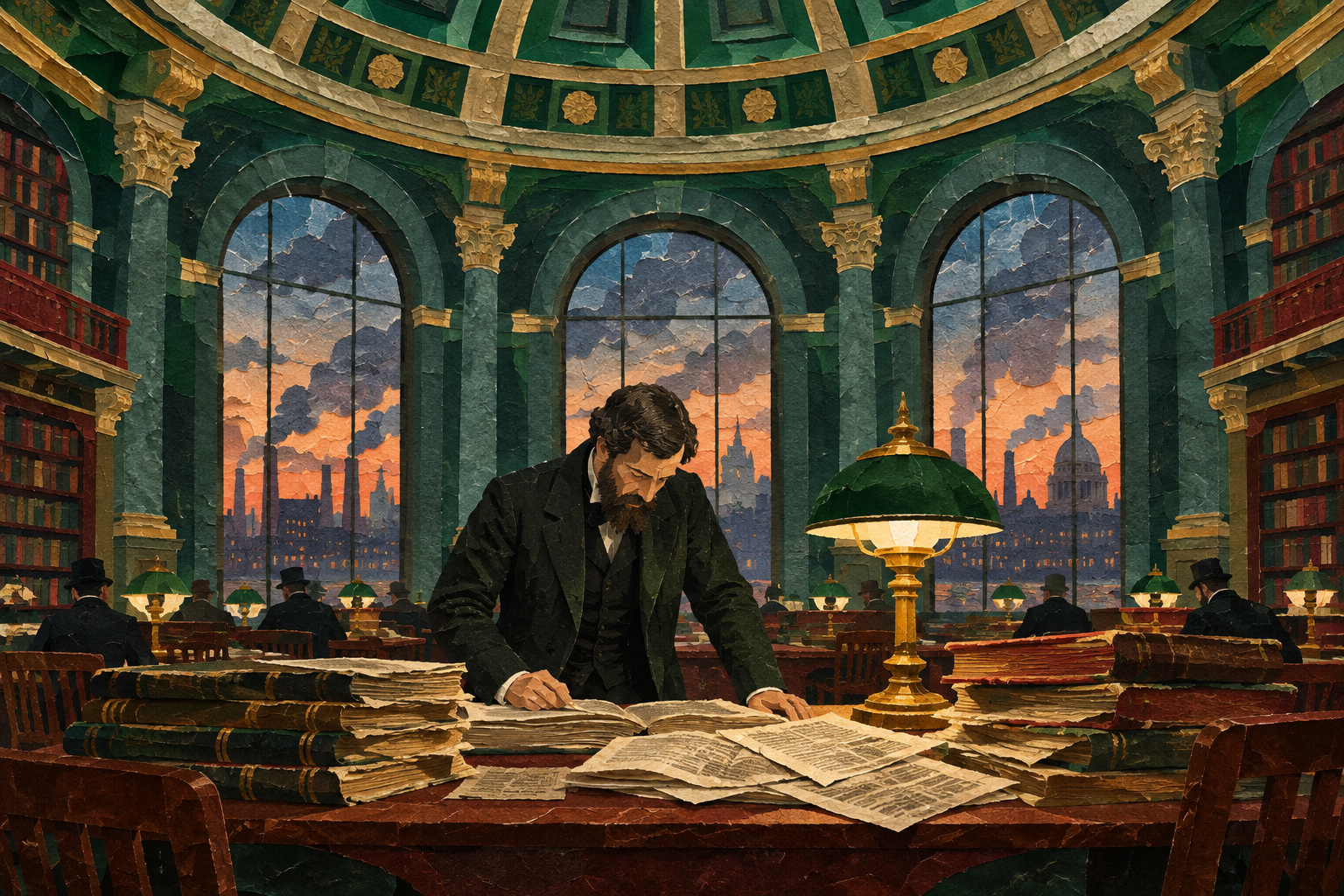
Many thinkers were looking for answers. Early socialists such as Saint-Simon, Fourier and Robert Owen imagined fairer communities, but they mostly hoped the wealthy would be persuaded to help. Marx and Engels wanted something different: a theory that explained how societies change and who has the power to change them. Engels had studied the factory districts of Manchester and published a book on the English working class in 1845. Marx, a young philosopher and journalist from Trier, had been pushed out of Germany and then France, and settled in Brussels in 1845.
How the Manifesto was written
The Communist League was formed in London in June 1847 out of an older society of German exiles and craftsmen, the League of the Just. Its members replaced the old motto "All men are brothers" with "Workers of all countries, unite!" In autumn 1847 Engels drafted a question-and-answer statement called the Principles of Communism. At the League's second congress in London, held from late November to early December 1847, delegates asked Marx and Engels to write the party's full programme.
Engels's catechism format was dropped, and Marx did most of the final writing in Brussels over the winter of 1847 to 1848. The League's London leaders pressed him to hurry, and the text reached London around the end of January 1848. It was printed in German in February, only days before revolution broke out in Paris. The title was Manifest der Kommunistischen Partei, "Manifesto of the Communist Party". There was no real party yet in the modern sense, only the small League.
What the Manifesto says
I. Bourgeois and Proletarians
The longest and best-known part sets out the theory. The authors argue that the history of society is the history of class struggles: free person against slave, lord against serf, guild master against journeyman. In their own time, the two great classes are the bourgeoisie, who own factories, ships and banks, and the proletariat, who own nothing but their ability to work for wages.
The text praises capitalism's power. It says the bourgeoisie has built bigger and more productive forces than all earlier generations together, has linked the world by trade and has swept away old feudal ties. But it also argues that capitalism swings into crises of overproduction, and that in creating a mass of wage workers it creates the people who will overthrow it.
II. Proletarians and Communists
This part explains what communists want. They have no interests apart from the working class as a whole. Their main aim is to abolish bourgeois private property, meaning ownership of capital that lives by employing wage labour, not a person's own clothes or home. The authors also answer common charges, such as that communists want to destroy the family or the nation.
The section ends with a list of measures for the most advanced countries. They include a heavy progressive income tax, the end of inheritance rights, public ownership of land, credit and transport, and free public education for all children. Several, such as progressive taxes and public schooling, later became ordinary policy in countries that never became communist.
III. Socialist and Communist Literature
Here the authors sort rival socialisms and criticise them. Feudal and conservative socialists, they say, only long for the past. Others want to cure social problems without touching the basis of capitalism. The "critical-utopian" socialists, such as Saint-Simon, Fourier and Owen, receive more respect, but Marx and Engels think they ignore the working class as an active political force.
IV. Position of the Communists in Relation to the Various Opposition Parties
The short last section says communists should support any movement against the existing order, such as the Chartists in Britain or radical reformers in France, Switzerland and Poland, while keeping their own goals clear. In Germany they should back the middle class when it fights the monarchy and nobility. The Manifesto ends by saying communists openly state that their aims can be reached only by overthrowing the existing social order by force.
What happened next
The Manifesto had almost no effect on the revolutions of 1848. In February the French king fell, and in March uprisings spread through the German states and the Habsburg lands. Those revolutions were led mostly by liberals, students, craftsmen and nationalists, and most were crushed or faded within a year or two. The Communist League itself broke up in 1852 after a trial of its members in Cologne.
The pamphlet was little known for about two decades. The first English translation, by Helen Macfarlane, appeared in a radical newspaper in 1850. Interest rose after Marx published the first volume of Capital in 1867 and after the Paris Commune of 1871. A new German preface in 1872 and the English edition of 1888, translated by Samuel Moore and checked by Engels, helped it spread, and it was soon translated into dozens of languages. In Japan, a partial translation appeared in 1904 in the socialist newspaper Heimin Shimbun, and the authorities punished the paper.
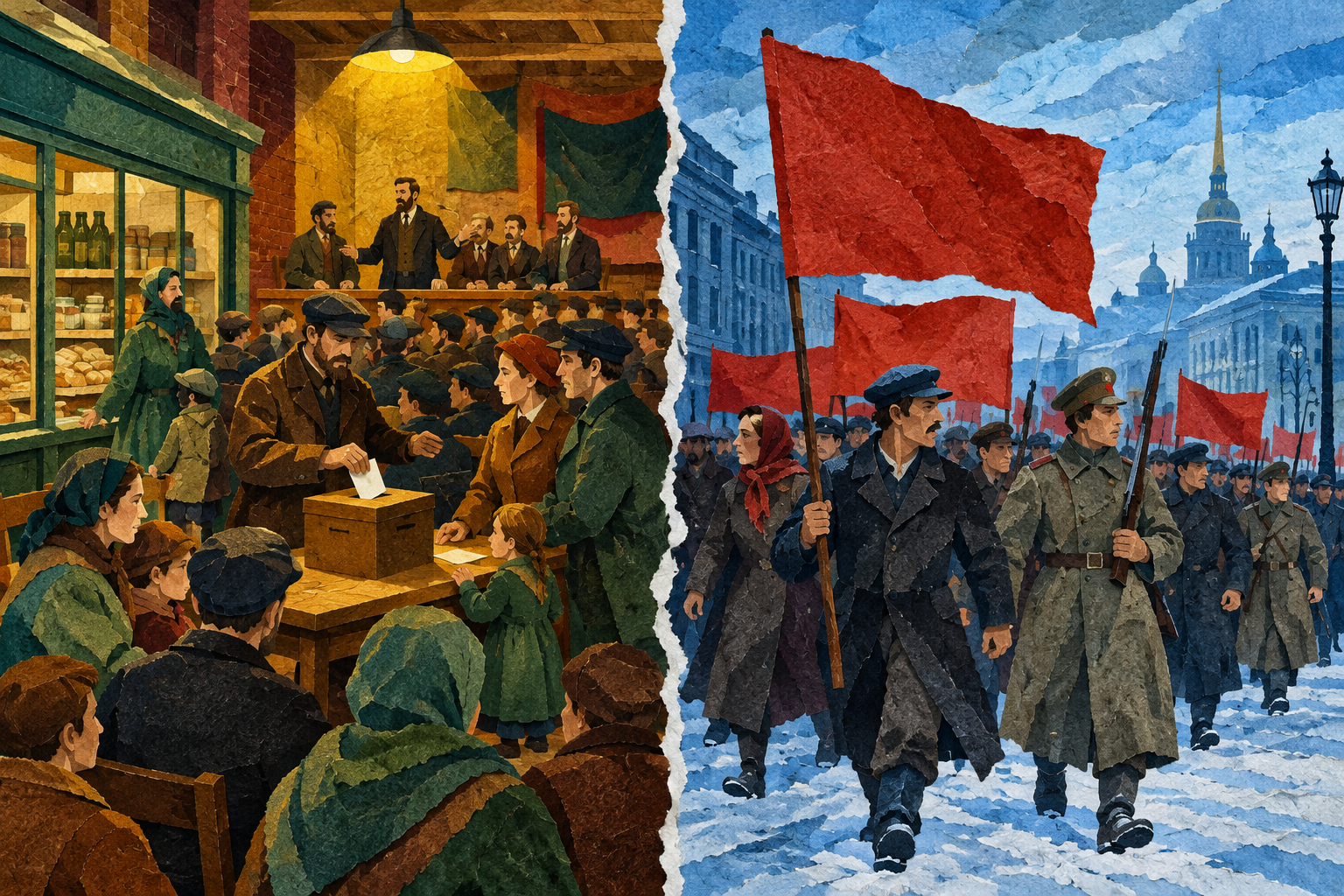
In the twentieth century the Manifesto became a founding text for movements that took power, most notably in Russia in 1917, as explained in Marxism-Leninism: From Marx to 1917. Historians still disagree about how far those later states followed what Marx and Engels wrote. Its economic ideas are developed in Marx's Economics: Surplus Value and Class Struggle. Its line that workers have no country sits uneasily with the rise of nationalism, which is one reason the two ideas clashed so often.
What exams ask
- Who and when: Karl Marx and Friedrich Engels, 1848, for the Communist League.
- Key terms: bourgeoisie (owners of capital), proletariat (wage workers), class struggle, private property, communism.
- Main argument: history moves through conflict between classes, and capitalism will be replaced by a classless society.
- Context: industrialisation, urban poverty and the revolutions of 1848.
- Significance: a founding document of modern socialism and communism, later linked to the First International, the Russian Revolution and many labour movements. A common essay point is the gap between its predictions and what actually happened.
Read next
- Ideas That Shaped the 19th Century: the wider hub that places socialism next to liberalism, nationalism and Darwin.
- Marx's Economics: Surplus Value and Class Struggle: how Marx tried to prove the Manifesto's claims in detail.
- Marxism-Leninism: From Marx to 1917: how the ideas were turned into a ruling doctrine.
- What Is Nationalism?: the rival force that shaped the same century.