In five minutes
Alexander II was the emperor of Russia from 1855 to 1881. He is called the "Tsar Liberator" because in 1861 he ended serfdom, the system that bound roughly 23 million privately owned peasants to the land and to their owners. He went on to reform the courts, local government and the army, so the years of his reign are known as the era of the Great Reforms. He was also a conqueror, who pushed Russia deep into Central Asia and the Far East. Yet reform did not buy him safety. Revolutionaries tried to kill him again and again, and on 13 March 1881 a bomb finally did. This page follows his life from the throne room of the Russian Empire to the canal bank where it ended.
A note on dates: Russia then used the Julian calendar, twelve days behind the Gregorian one in the 1800s. This page gives the Gregorian date first, so the assassination is 13 March 1881 (1 March in Russia at the time).
A tsar's son
Alexander Nikolayevich was born in Moscow on 29 April 1818, the eldest son of the future Nicholas I. He grew up knowing he would be emperor. His tutor was the poet Vasily Zhukovsky, who tried to teach him that a ruler should be humane and well informed, while his father trained him in the army and in the work of government. In 1837 he toured Russia, including Siberian exile towns, which was unusual for an heir. In 1841 he married Marie of Hesse, who took the name Maria Alexandrovna. Nicholas I, however, ruled by order and fear, and the heir spent his youth waiting in the shadow of a stern, conservative father.
Why defeat in Crimea changed everything
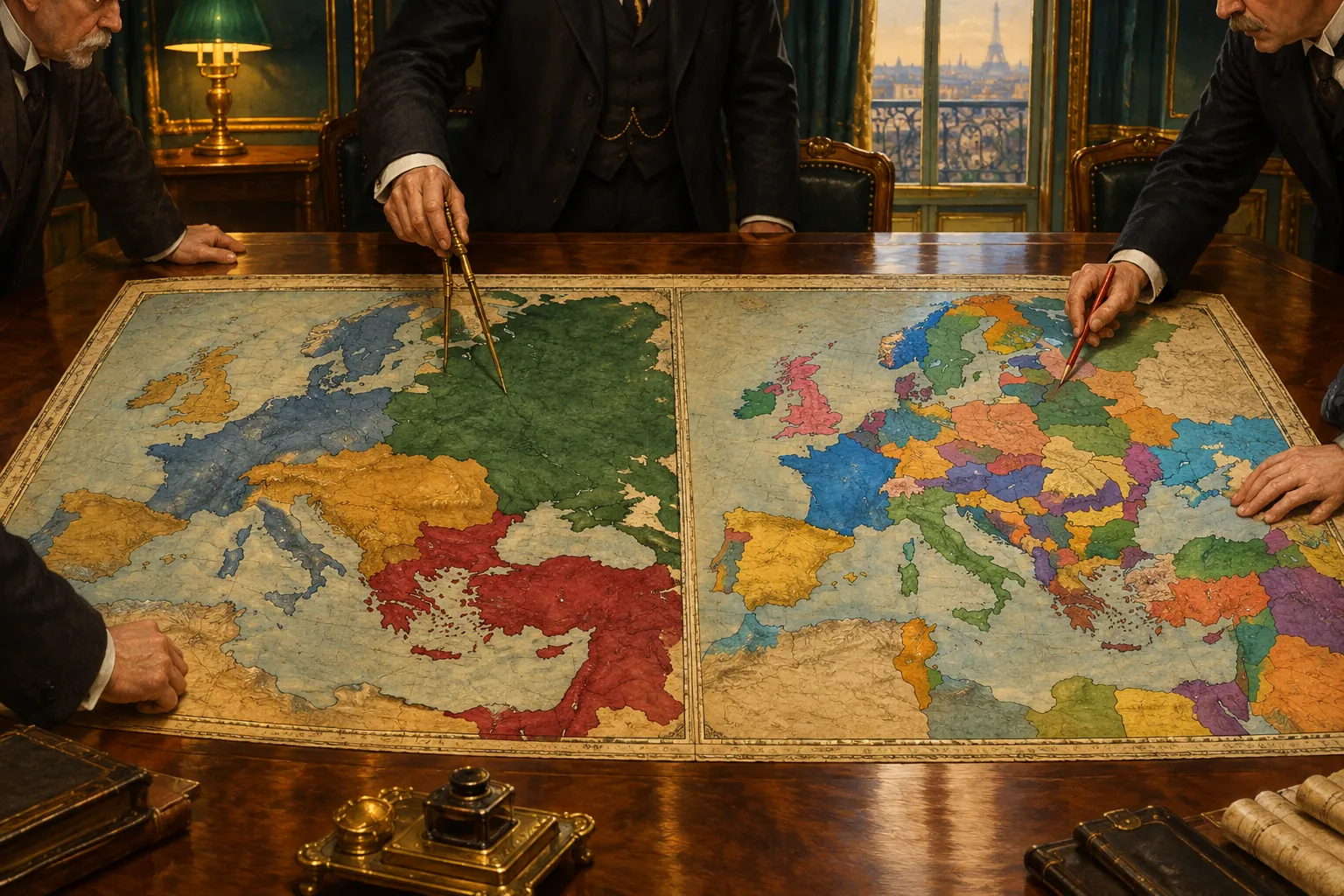
Alexander became tsar on 2 March 1855, in the middle of the Crimean War. Russia was fighting Britain, France and the Ottoman Empire, and the siege of Sevastopol was going badly. The war exposed how far Russia had fallen behind. Soldiers were conscripted for decades, there were few railways to carry supplies, and the army was armed with weaker weapons than its enemies. The peace of 1856, signed in Paris, forced Russia to give up the right to keep warships in the Black Sea.
The lesson Alexander drew was blunt. A country built on serfdom could not raise a modern army or pay for a modern state. In a speech to Moscow nobles in 1856 he is reported to have said that it was better to abolish serfdom from above than to wait until it was abolished from below. Reform, to him, was a way to keep Russia strong and the throne safe.
The Great Reform: freeing the serfs
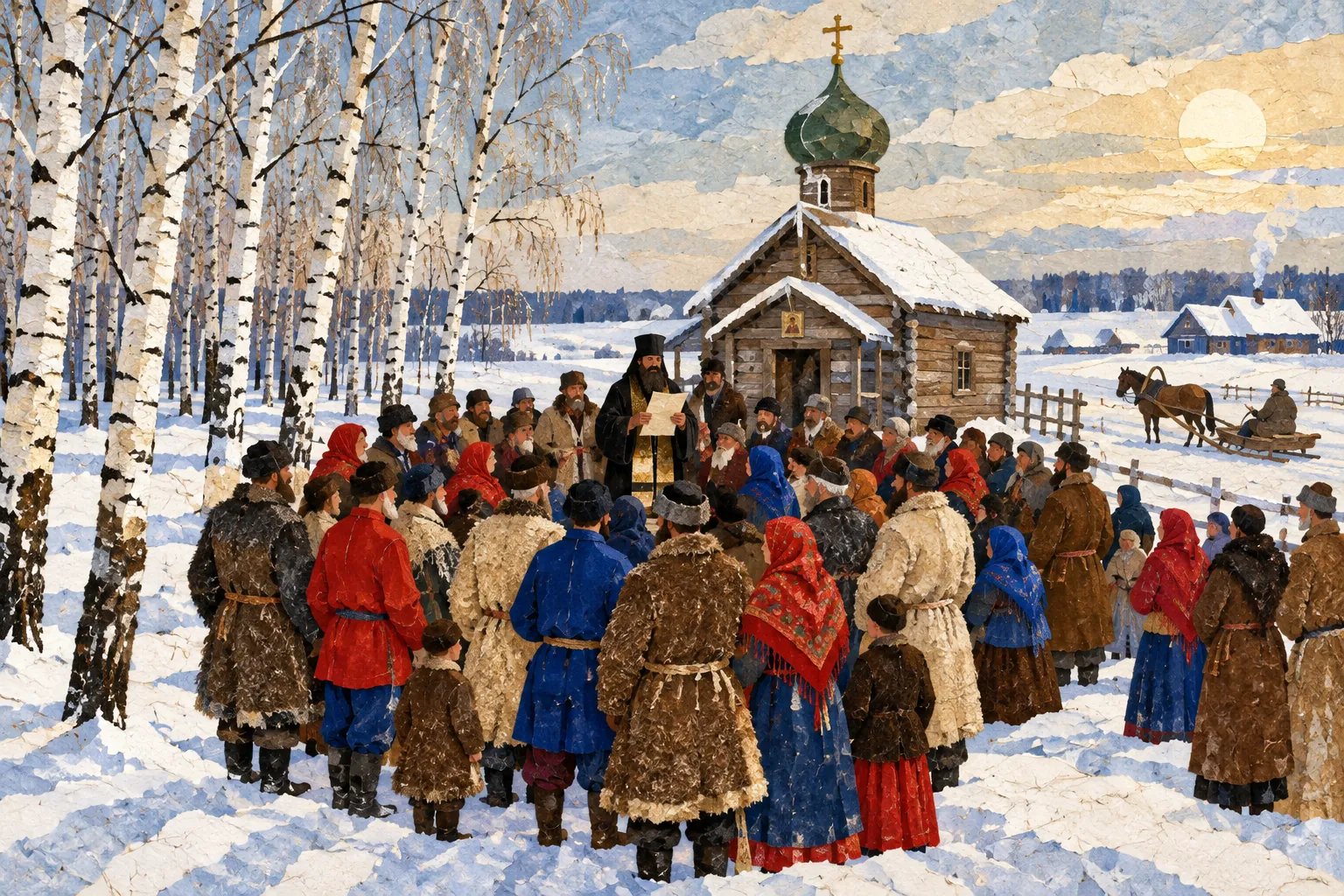
On 3 March 1861 (19 February in Russia) Alexander signed the Emancipation Manifesto. It gave private serfs personal freedom: they could marry, own property and go to court without asking a landlord. Peasants received land, but they had to pay for it. The state paid the landowners at once and the peasants repaid the state through redemption payments spread over 49 years. In most villages the land was held by the commune, called the mir, rather than by single families, which made it hard for a peasant to leave.
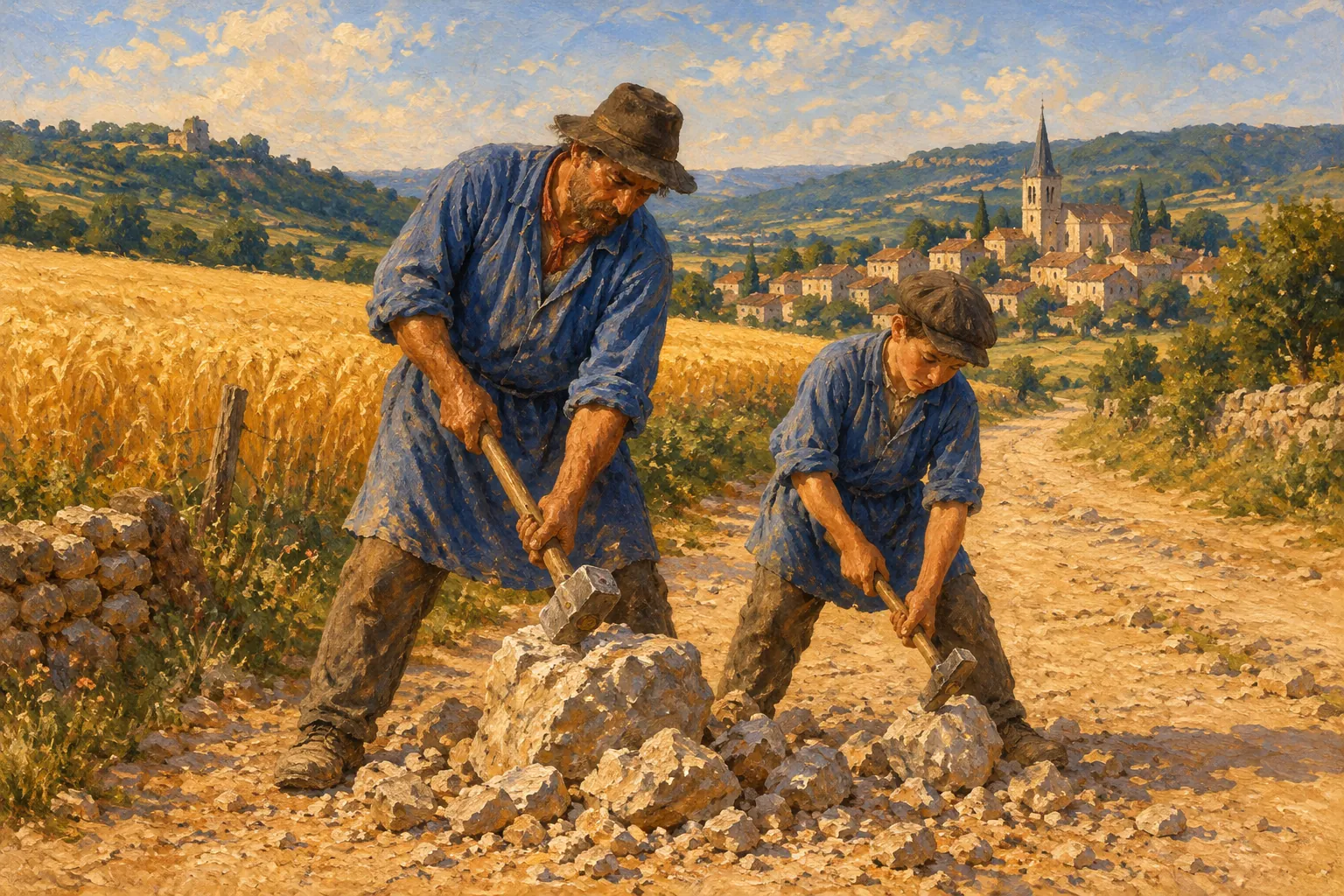
The result pleased almost nobody. Many peasants felt they had been made to buy what was already theirs, and some riots followed in 1861. Landowners lost labour and income. Still, it was the largest single act of liberation in Russian history, and it opened the way to every other reform. State peasants were freed on similar terms in 1866. You can read the full story in The Emancipation of the Serfs (1861).
Courts, councils and conscripts
Once serfs were free, the old ways of ruling the countryside no longer worked. Alexander's government built new institutions in their place.
- Local government (1864): elected councils called zemstvos took charge of roads, schools, medicine and food stores in the provinces. Their votes were weighted towards landowners, but they trained a generation of public servants.
- Law courts (1864): trials became public, judges gained independence, and juries decided criminal cases. This was the most modern part of the reforms.
- Universities and press (1863–1865): universities received more self-government and censorship was eased, although it was tightened again later.
- The army (1874): under the war minister Dmitry Milyutin, Russia replaced the old system of very long service with a general duty of military service for all classes, with a shorter active term.
These changes did not create a parliament. The tsar kept all power, and critics on both sides found fault: conservatives thought he had gone too far, and radicals thought he had not gone far enough.
An empire that kept growing
The same tsar who freed peasants also expanded the empire, sometimes brutally. In 1863 Poles rose against Russian rule in the January Uprising, and it was crushed in 1864 with executions, exile and a harsher policy of Russification. In the same year Russia finished its long war in the Caucasus. In Central Asia, Russian armies took Tashkent in 1865 and Samarkand in 1868, made Khiva a protectorate in 1873 and annexed Kokand in 1876. This push is part of the story told in Russia's Southward Policy.
In the Far East, treaties with China in 1858 and 1860 gave Russia the Amur region and the coast south of it, where Vladivostok was founded in 1860. Far from home, Alaska looked expensive to defend, so in 1867 Russia sold it to the United States for 7.2 million dollars.
The Balkans and the war with the Ottomans
In the 1870s Slavic Christians in the Balkans rebelled against Ottoman rule, and Russian public opinion demanded help. Russia declared war on the Ottoman Empire in April 1877. After hard fighting, including the long siege of Plevna, it won, and the Treaty of San Stefano in March 1878 created a large Bulgaria. Britain and Austria-Hungary objected, so the great powers met at the Congress of Berlin in 1878 and cut Bulgaria down. Many Russians felt that their victory had been taken from them, which made the government look weaker at home.
The reformer under attack
By the 1860s a new generation of young radicals thought the reforms were too small. In the early 1870s many students went out to the villages to teach and to rouse the peasants, a movement called "going to the people", but the peasants mostly did not respond and the police arrested many of them. Some turned to terror. Dmitry Karakozov fired at the tsar in 1866, and a Polish exile shot at him in Paris in 1867. In 1879 a group called Narodnaya Volya ("People's Will") decided to kill him. They mined a railway line in late 1879, and in February 1880 one of their members, Stepan Khalturin, set off a bomb in the Winter Palace dining area, killing soldiers while the tsar was late for dinner.
Alexander's private life was also in turmoil. His wife Maria died in 1880, and he soon married Catherine Dolgorukova, with whom he had long had a relationship. That year he gave wide powers to a general named Mikhail Loris-Melikov, who tried to calm the country by easing censorship and asking elected representatives to advise on new laws. On the day he died, Alexander approved this plan.
On 13 March 1881, as his carriage drove along the Catherine Canal in St Petersburg, a first bomb damaged it. Alexander stepped out to check on the wounded, and a second attacker, Ignacy Hryniewiecki, threw another bomb at his feet. He was carried to the Winter Palace and died within hours, aged 62. A church, the Church of the Saviour on Blood, was built on the spot.
Legacy
His son, Alexander III, took the opposite lesson. He ended the plan for elected advisers, tightened censorship and strengthened the police. The reforms stayed, but the idea of a gradual change toward a constitution faded. Many historians see the years after 1881 as a missed chance. The peasants' resentment over land and debt and the stubborn autocracy fed the crises that ended in The Russian Revolution of 1917. For Alexander himself, the usual verdict is that he was a cautious reformer who changed Russia more than any tsar since Peter the Great, and who never wanted to share power.
What exams ask
Common questions in AP-style courses focus on cause and significance.
- Cause: the loss in the Crimean War (1853–1856) showed that serfdom and an old army held Russia back.
- Emancipation (1861): freedom for serfs, but redemption payments and the village commune limited peasants' independence.
- Great Reforms: zemstvos and courts (1864), and military reform (1874). Know that autocracy remained.
- Reaction to reform: the Polish uprising of 1863, the rise of populists and then of Narodnaya Volya, and Alexander III's reversal after 1881.
- Comparison: Alexander II reformed to preserve autocracy, much as Peter the Great modernised to strengthen the state.
Read next
- The Emancipation of the Serfs (1861): the reform at the centre of his reign, in more detail.
- Russia's Southward Policy: how the Caucasus and Central Asia were taken.
- The Russian Revolution of 1917: where the unresolved tensions of his reign led.
- The Russian Empire (1721–1917): the hub for the whole period.