What was the Underground Railroad?
The Underground Railroad was a secret network of people, hiding places and routes that helped enslaved Americans escape to freedom in the 1800s. It was not a real railroad, and it was rarely underground. The name was a metaphor. Helpers borrowed railway words: "stations" were safe houses, "stationmasters" ran them, "conductors" guided travellers, and the people on the move were "passengers" or "cargo".
There was no head office and no single map. The network was local and improvised. It ran on free Black communities, churches, Quaker families and other abolitionists, and above all on the courage of enslaved people who planned their own escapes. It is one of the best-known chapters in our guide to 19th-Century America.
In five minutes
- By 1860 nearly 4 million people were enslaved in the United States, almost all of them in the South.
- Escape meant a journey of days or weeks, often on foot and at night, toward a free state or Canada.
- Help came in the form of food, a hiding place, forged papers, a guide or a ride in a wagon.
- The Fugitive Slave Act of 1850 turned even the free states into dangerous ground, so many travellers pushed on to Canada.
- The network faded after the Civil War began in 1861 and slavery was ended by the 13th Amendment in 1865.
Why people needed it
Slavery was legal in the Southern states and was protected by federal law. The Constitution already contained a clause on people "held to service" who fled to another state, and the Fugitive Slave Act of 1793 let slaveholders recapture them across state lines. Enslaved people were bought, sold and separated from their families, so many chose to run despite the risk of whipping, branding or being sold farther south.
Escape was never easy. A person who ran had to leave relatives behind, cross unfamiliar land, avoid patrols and slave catchers, and trust strangers. Notices offered rewards for their capture. Free Black people could also be kidnapped and sold into slavery, which is why Black communities in northern cities organised so early to protect each other.
How it worked
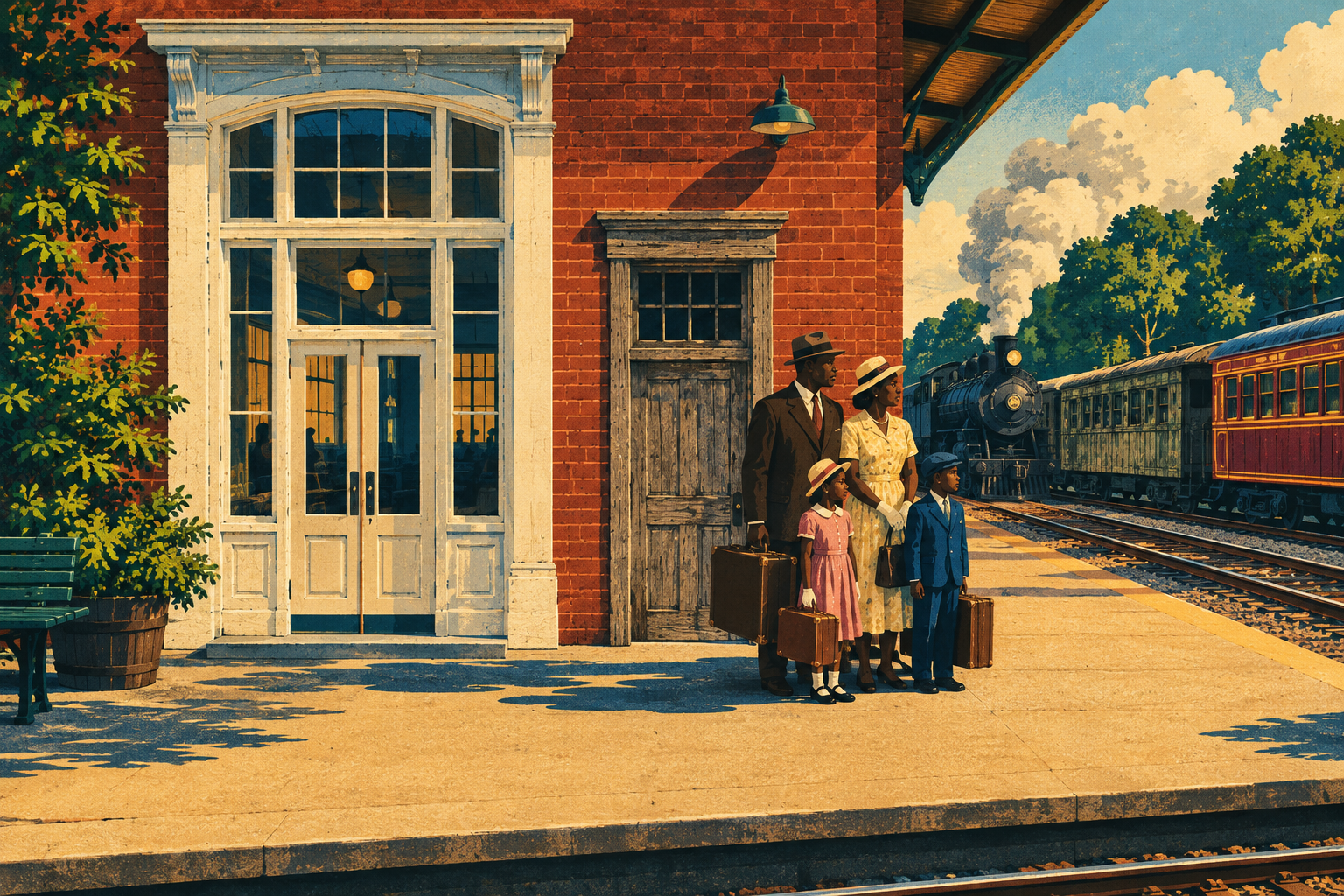
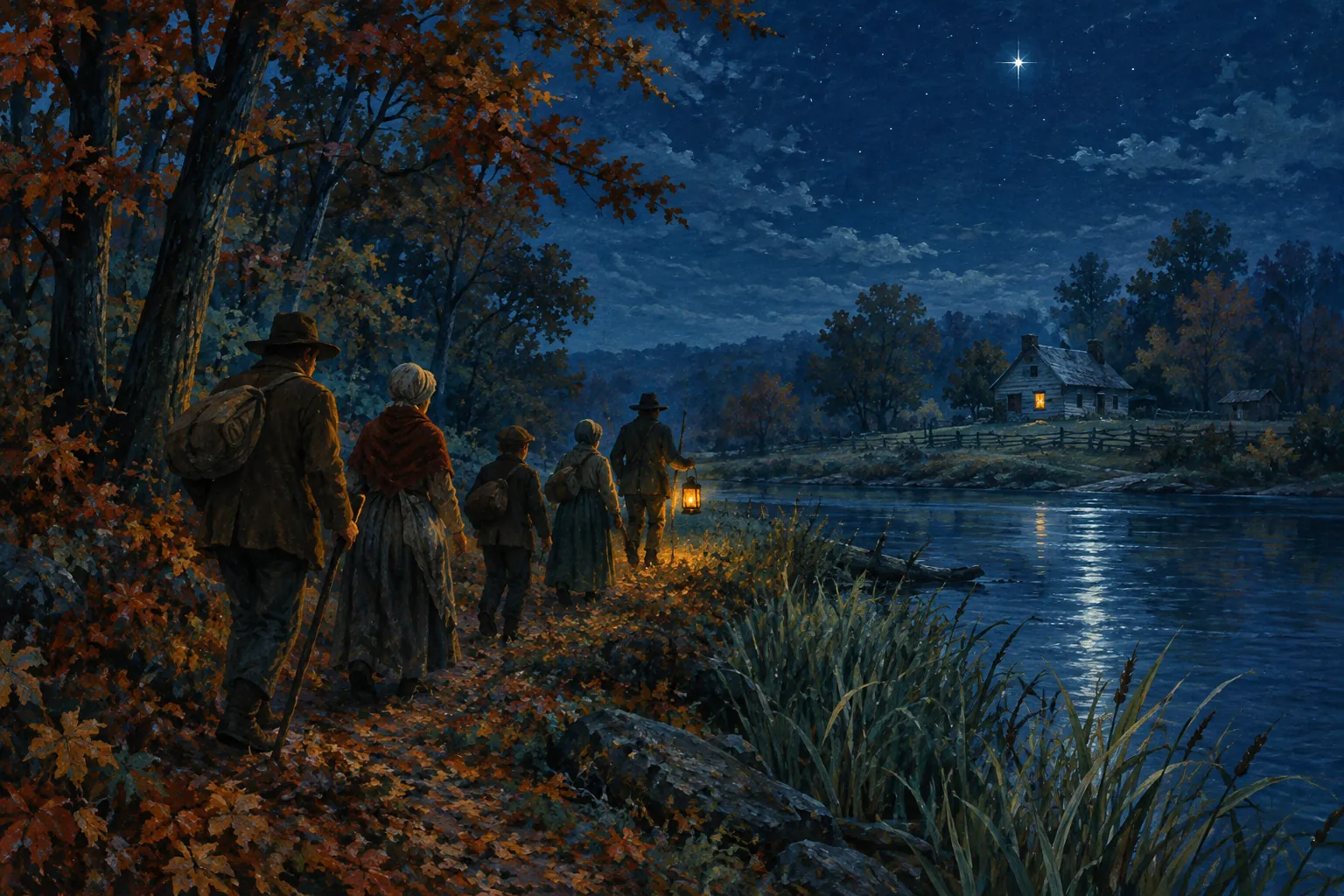
Most journeys started in the border states such as Maryland, Kentucky and Virginia, where a free state lay only a short distance away. Travellers moved mainly at night, followed rivers and the North Star, and rested by day in barns, cellars, churches or the homes of trusted families. A conductor might lead them from one station to the next, often 10 to 20 miles apart. Some people travelled by boat, wagon or train, sometimes in disguise.
Secrecy mattered more than anything. Helpers used code words, changed routes and rarely wrote anything down, because letters and diaries could be used as evidence. This is also why historians cannot count escapes exactly. Estimates run to tens of thousands of people who reached freedom in the North or Canada over several decades, and the figure is only an estimate.
Not every escape fits the picture of a long trek along a chain of safe houses. Many people made short, fast dashes across a river or a state line, and some escaped by sea from Southern ports. In Northern cities such as Philadelphia, New York and Boston, vigilance committees of free Black residents and white allies gave newcomers money, clothing and work.
Key people
Harriet Tubman escaped from Maryland in 1849. She then returned about 13 times and guided roughly 70 people to freedom, including members of her family. During the Civil War she served the Union Army as a scout and nurse, and in 1863 she helped guide the Combahee River raid in South Carolina that freed hundreds of enslaved people. You can read more in our article on Harriet Tubman.
William Still, a free Black abolitionist in Philadelphia, helped hundreds of people and secretly recorded their stories. He published them in 1872 as The Underground Rail Road, and the book remains one of the most important primary sources on the subject.
Frederick Douglass escaped from Baltimore in 1838, wearing sailor's clothes and carrying borrowed papers, and later wrote about the importance of secrecy. As a free man in Rochester, New York, he sheltered fugitives.
Henry "Box" Brown had himself shipped in a wooden crate from Richmond to Philadelphia in 1849. Ellen and William Craft fled Georgia in 1848, with Ellen disguised as a white man travelling with an enslaved servant.
White allies mattered as well. Levi Coffin, an Indiana Quaker, and Thomas Garrett, a Delaware businessman, sheltered and funded many travellers. Still, historians stress that Black Americans, enslaved and free, were the heart of the story.
The Fugitive Slave Act of 1850 and the road to Canada
The Compromise of 1850 admitted California as a free state, a result tied to the boom described in our article on the California Gold Rush. To win Southern votes, Congress paired it with a much harsher Fugitive Slave Act. It required officials and ordinary citizens to help capture people who had fled. Suspected fugitives had no jury trial and could not testify in their own defence. A federal commissioner earned $10 if he ruled that a person was a fugitive and $5 if he ruled they were free, a difference that critics said invited bias.
The law made free Black people in the North feel unsafe, because anyone could be accused. Many moved to Canada, where slavery had been abolished across the British Empire in 1834. Black communities grew in Ontario, then called Canada West, in places such as Chatham, St. Catharines and the Dawn Settlement, which was linked to the minister Josiah Henson. Northern anger at the law also pushed public opinion toward abolition, and Harriet Beecher Stowe's novel Uncle Tom's Cabin (1852) reached millions of readers.
Myths and what the record shows
The Underground Railroad has gathered legends. Few safe houses had secret tunnels, and many houses said to be stations were never documented as such. There is no reliable evidence that quilts carried coded maps. What the record does show is plain enough: fugitives left their own accounts, newspapers printed runaway notices, and court cases, letters and memoirs such as Still's list real names and real places.
Another common idea is that white people organised the system and Black people were simply rescued. In fact, many escapes began with the enslaved person's own decision and planning, and Black churches, mutual-aid groups and vigilance committees did a great deal of the work.
The end and the legacy
After the Dred Scott decision of 1857 said that Black Americans could not be citizens, the North grew more divided. When the Civil War began in 1861, enslaved people increasingly fled toward Union lines, and Lincoln's Emancipation Proclamation took effect on January 1, 1863. You can follow that story in our guide to Abraham Lincoln and in Slavery in the United States. The 13th Amendment ended slavery nationwide in December 1865, and a secret network was no longer needed.
Today the Underground Railroad stands as a symbol of resistance and cooperation across racial lines under a brutal system. Museums such as the National Underground Railroad Freedom Center in Cincinnati preserve its history, and the National Park Service keeps a Network to Freedom programme that lists sites with documented ties to the story.
What exams ask
- Define it: a secret network helping enslaved people escape, active mainly in the 1830s to 1860.
- Link it to law: the Fugitive Slave Acts of 1793 and 1850, and the Compromise of 1850.
- Significance: it shows Black agency and abolitionist activism, and it increased sectional tension that led to the Civil War.
- Name the people: Harriet Tubman, William Still, Frederick Douglass, Levi Coffin.
- Connect the dots: Uncle Tom's Cabin (1852), Dred Scott (1857), the Emancipation Proclamation (1863) and the 13th Amendment (1865).
Read next
- Harriet Tubman: the life of the best-known conductor, in more detail.
- Slavery in the United States: the system people were escaping from.
- Who Was Abraham Lincoln?: how the war and emancipation ended slavery.
- The California Gold Rush (1848–1855): why California's status shaped the Compromise of 1850.
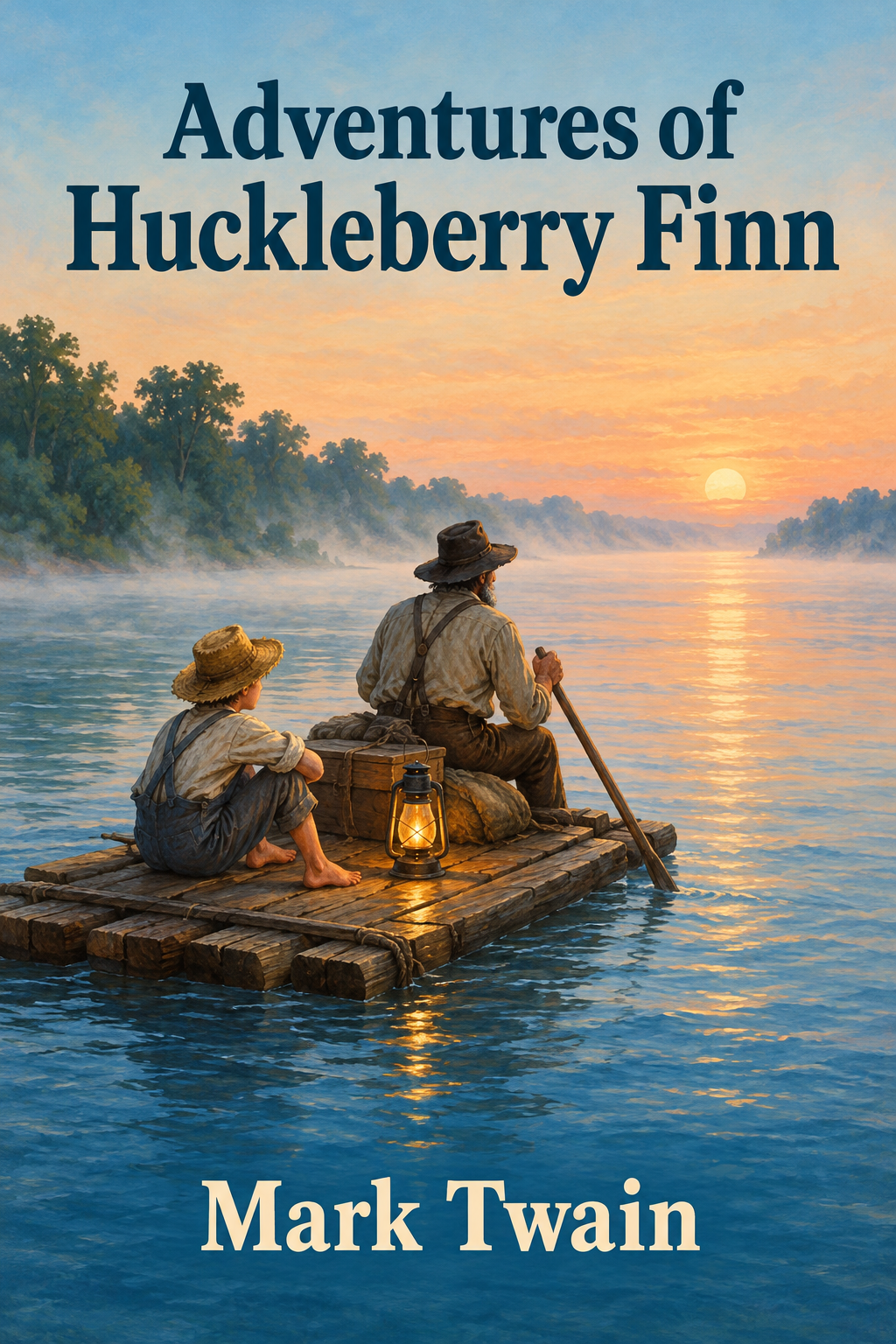
- Adventures of Huckleberry Finn: a novel in which a boy and Jim, a man fleeing slavery, travel down the Mississippi.