The Treaty of Paris 1783 in five minutes
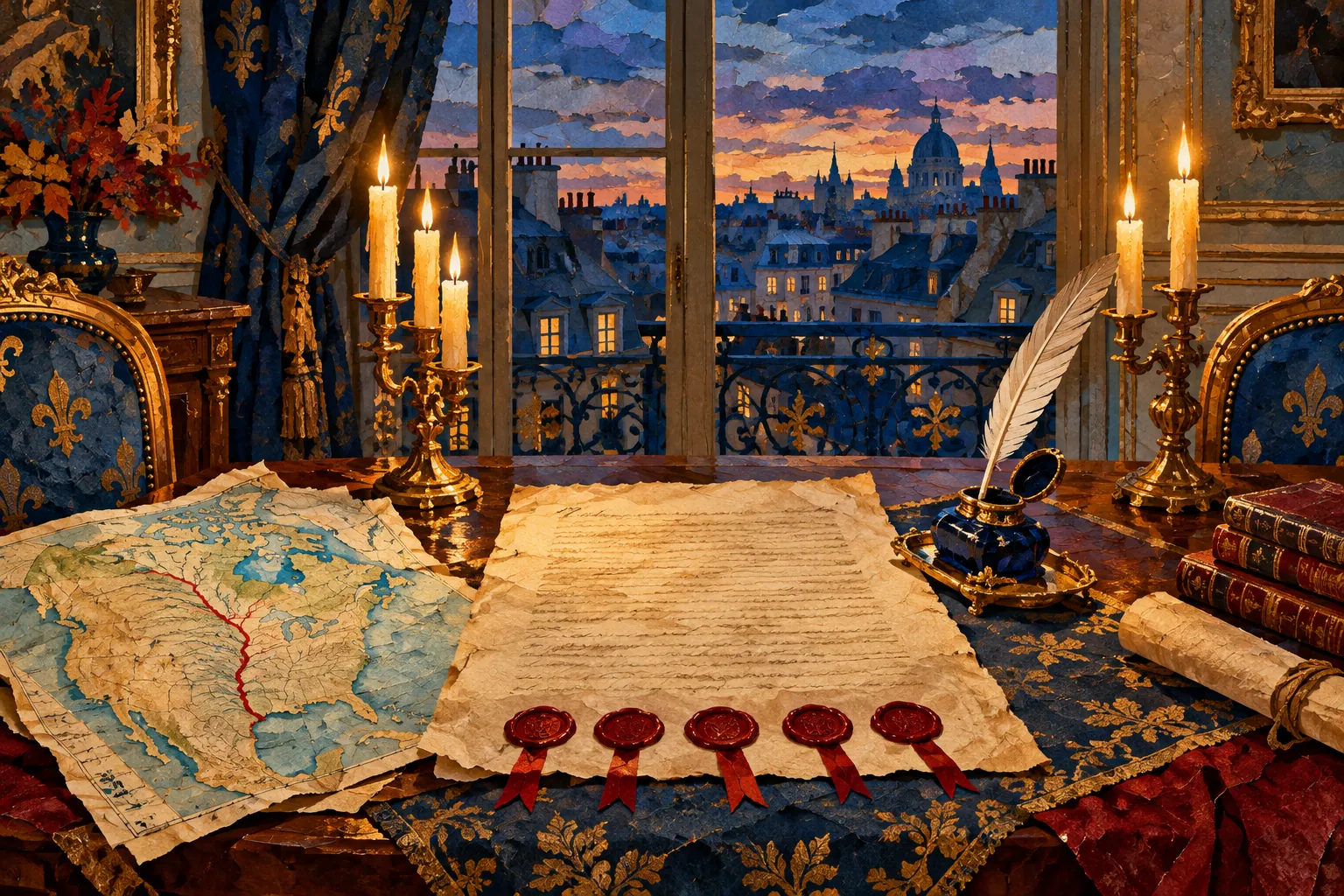
The Treaty of Paris of 1783 is the agreement in which Great Britain accepted the United States as a free, sovereign and independent nation. It ended the American Revolutionary War. It was signed in Paris on 3 September 1783 by David Hartley for Britain and by John Adams, Benjamin Franklin and John Jay for the United States.
It is the legal end of the story told in The American Revolution: Causes, War and Independence. The Declaration of Independence of 1776 announced independence. The victory at Yorktown in 1781 showed that it could be defended. But only this treaty made the former ruler, Britain, put its signature to it.
Why Britain had to make peace
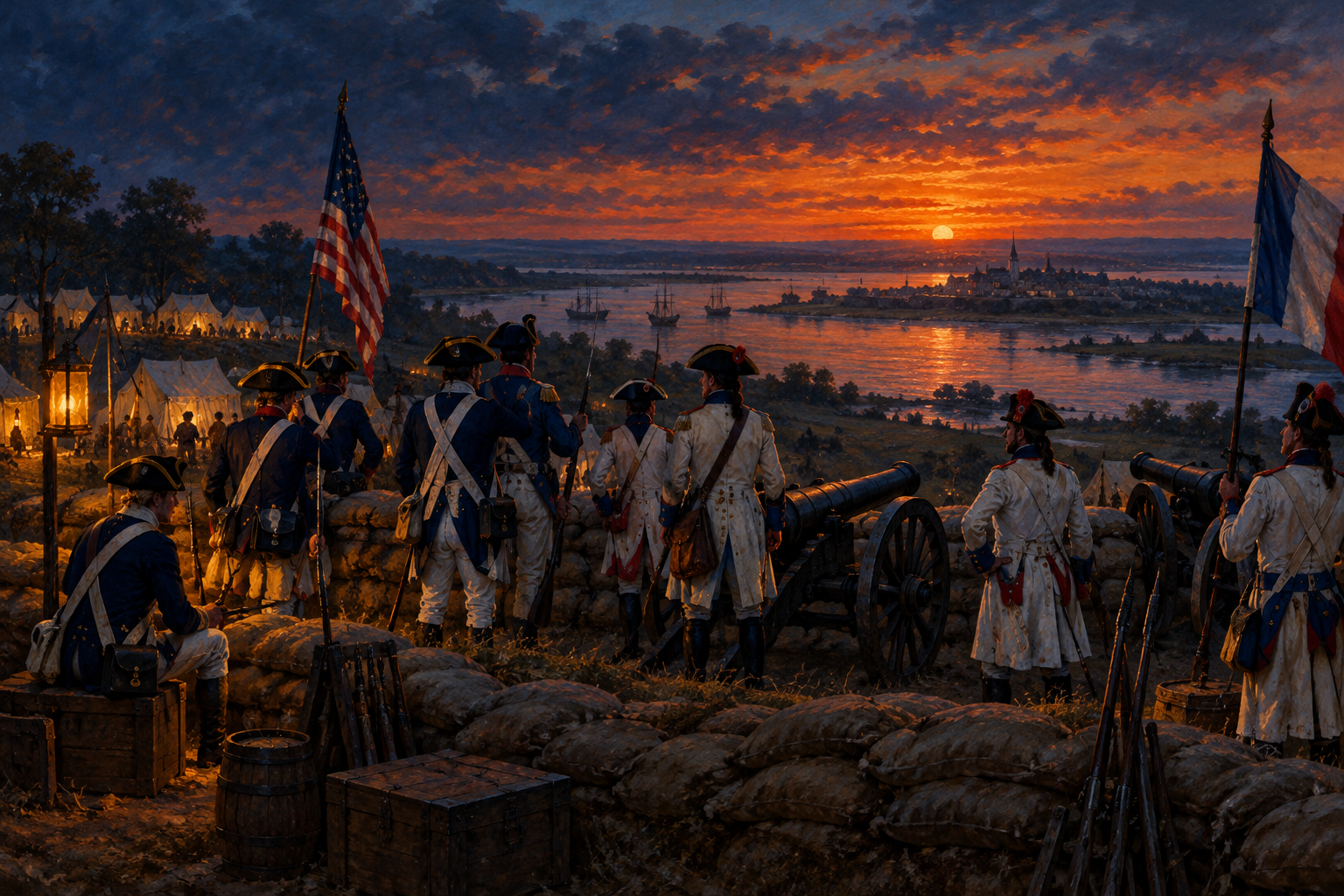
On 19 October 1781, the British general Lord Cornwallis surrendered his army at Yorktown, Virginia, to a joint American and French force under George Washington and the Comte de Rochambeau. A French fleet had cut off his escape by sea. The war did not stop at once, but the will to carry it on in London did. In February 1782 the House of Commons voted against continuing the offensive war in America, and in March Lord North, prime minister for twelve years, resigned.
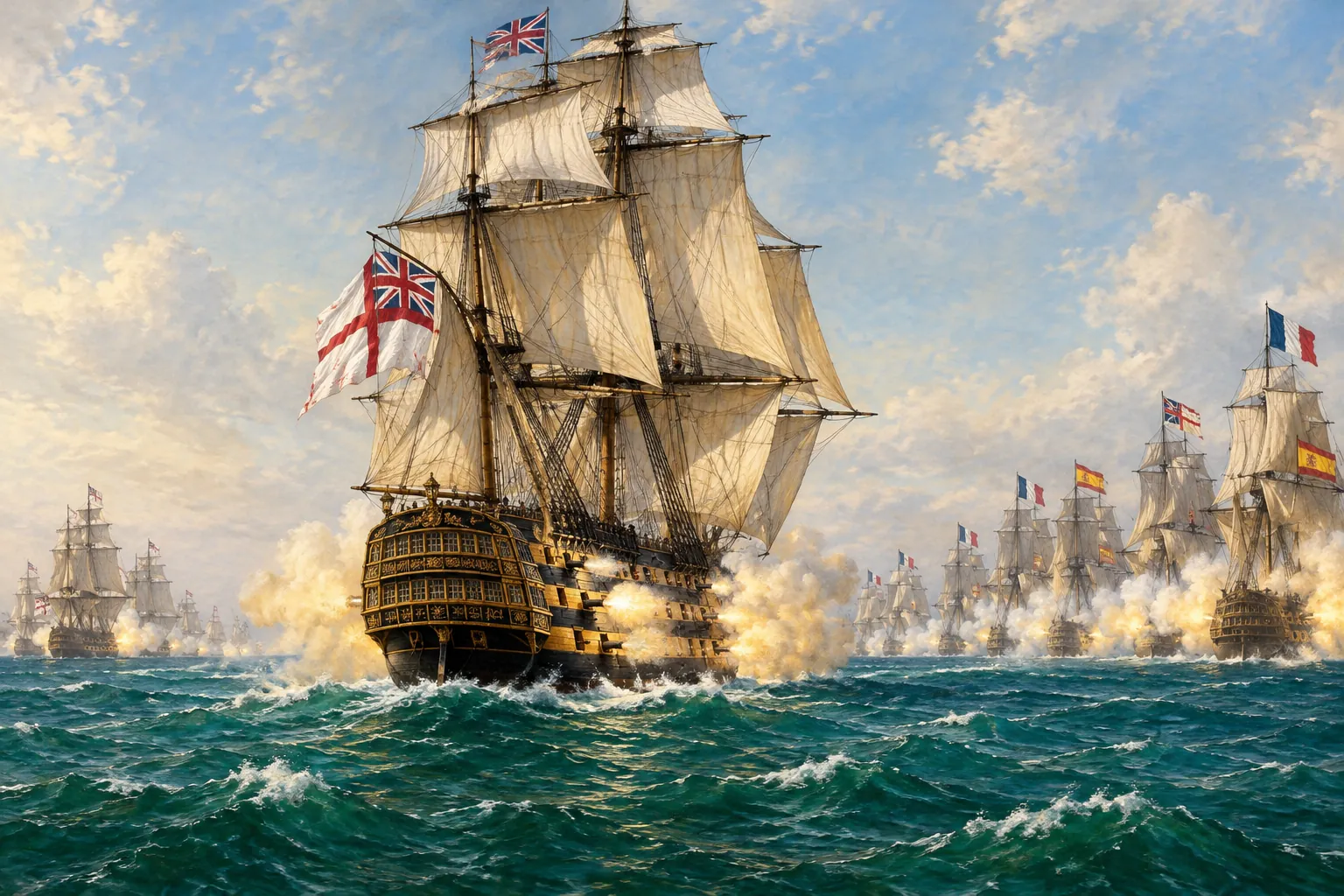
The new ministers, first under the Marquess of Rockingham and then, after his death in July 1782, under the Earl of Shelburne, wanted peace. Britain was also fighting France, Spain and the Dutch Republic, and it needed to protect its empire elsewhere, from the Caribbean to India. Ending the American war freed ships and money for those fights.
Three Americans in Paris
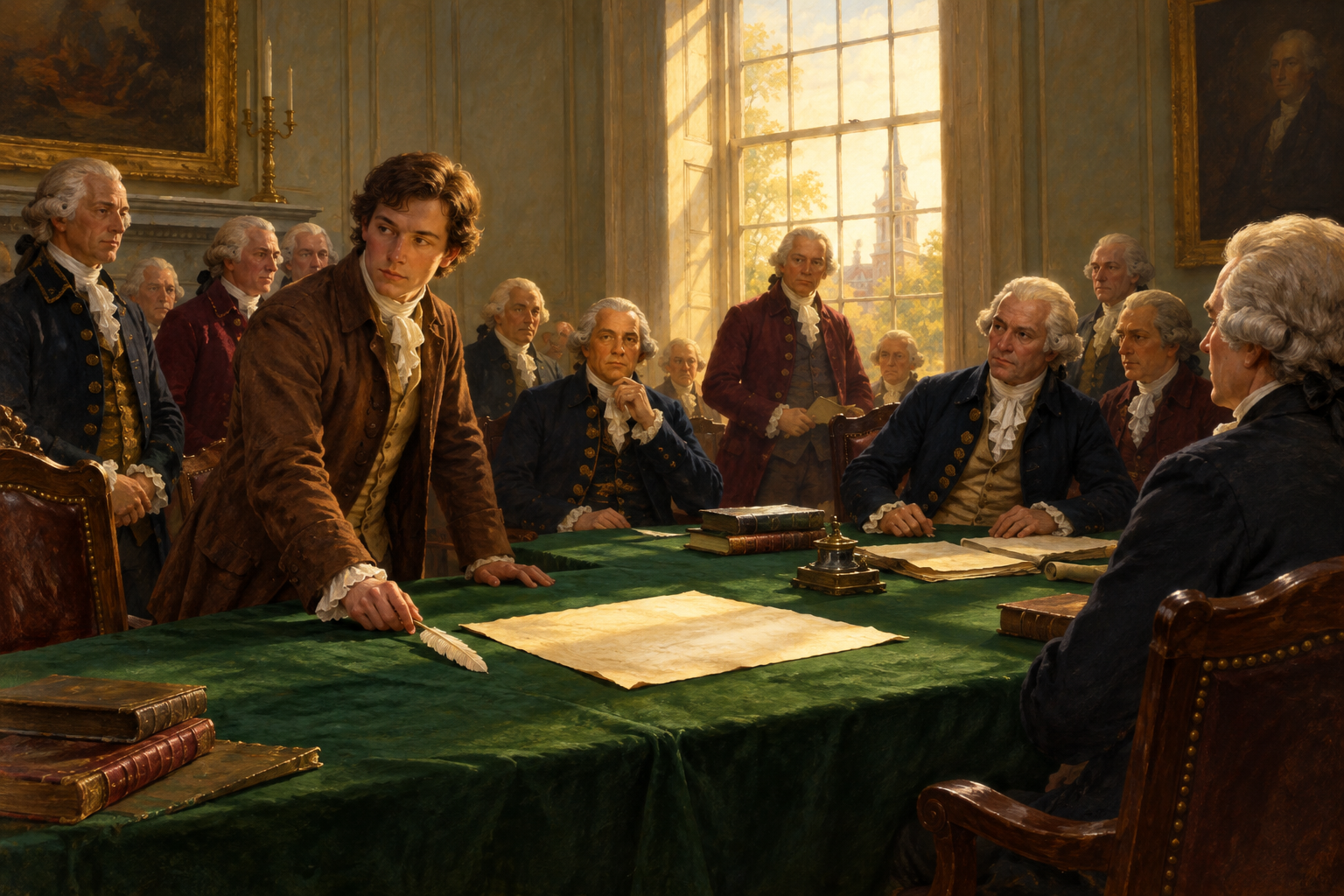
The American side was led by a trio of very different men. Benjamin Franklin, the US minister in Paris, was the most famous and had spent years winning French support. John Jay came from a frustrating mission in Spain and distrusted both French and Spanish motives. John Adams had been in the Dutch Republic, raising loans and winning recognition, and reached Paris in October 1782. Henry Laurens, a South Carolina merchant who had been held in the Tower of London after being captured at sea, also took part and signed the preliminary articles.
Britain's first negotiator was Richard Oswald, a Scottish merchant with business interests in America, sent by Shelburne. The final treaty was signed for Britain by David Hartley, a member of Parliament who had long argued for a settlement with the colonies.
There was a catch. The 1778 alliance with France said that neither partner would make peace without the other, and Congress told its commissioners to be guided by French advice. Jay and Adams suspected that the French foreign minister, the Comte de Vergennes, was ready to limit American claims in the west to please Spain. So they talked to Britain directly. The preliminary articles were signed on 30 November 1782, and Vergennes heard about them afterwards. Franklin smoothed over the quarrel, and France, which also wanted the war over, kept the alliance intact.
A generous peace?
Many people at the time were surprised by how generous the terms were. Shelburne hoped that a friendly peace would pull the United States away from France and keep British trade with America alive. Critics in Parliament called it a surrender. In February 1783 the Commons voted against the terms and Shelburne's government fell. The coalition that followed, led by Charles James Fox and Lord North, kept the deal. The definitive treaty was signed on 3 September 1783, the same day Britain signed separate agreements with France and Spain.
What the treaty said
The treaty has ten articles. These are the ones that matter most:
- Article 1: Britain acknowledges the thirteen states as free, sovereign and independent, and gives up all claims to govern them.
- Article 2: sets the borders. In the north they ran from the St. Croix River on the Maine side along the line through the Great Lakes. In the west they reached the Mississippi River, and in the south the 31st parallel, the northern edge of Spanish Florida.
- Article 3: American fishermen keep the right to fish on the Grand Banks off Newfoundland and in the Gulf of St. Lawrence.
- Article 4: creditors on both sides may recover debts that were honestly owed before the war.
- Articles 5 and 6: Congress will urge the states to return property taken from Loyalists, and no one is to be punished further for having sided with Britain.
- Article 7: prisoners are released and British forces leave American territory quickly, without carrying off American property.
- Article 8: the Mississippi stays open to both British and American traffic.
Note the wording of Article 5. Congress could only recommend. Under the Articles of Confederation it had no power to order the states to do anything, and that weakness shaped what happened next.
The treaties signed alongside it
Britain's agreements with France and Spain, often grouped as the Peace of Paris or the Treaty of Versailles, were signed on the same day. Britain gave East and West Florida and the island of Minorca to Spain, and ceded Tobago and Senegal to France. The American treaty was ratified by Congress, meeting in Annapolis, Maryland, on 14 January 1784. The ratifications were exchanged in Paris on 12 May 1784.
Promises that were hard to keep
Signing a treaty is easier than carrying it out. Several parts caused trouble for years.
Debts. British merchants wanted payment for goods sold before the war. Many American states put obstacles in the way of collecting, and Britain pointed to that as a breach.
Loyalists. Americans who had stayed loyal to the Crown had lost homes and land to confiscation. Most states ignored Congress's request to restore property. Tens of thousands of Loyalists left for Canada, Britain and the Caribbean. British forces left New York City on 25 November 1783.
Forts. Britain kept a string of posts in the Northwest, including Detroit and Niagara, saying it would stay until debts and Loyalist claims were dealt with. The forts were handed over only under Jay's Treaty of 1794, with the last withdrawal in 1796.
Spain. Spain held Florida and the west bank of the Mississippi and did not accept the 31st-parallel border or free use of the river. Pinckney's Treaty of 1795 settled these points in favour of the United States.
Enslaved people. Article 7 told Britain not to carry off enslaved people as property. British commander Sir Guy Carleton refused to return those who had already reached British lines under earlier promises of freedom. Roughly 3,000 Black Loyalists left New York with their names written in a register known as the Book of Negroes.
Native nations. Many Native nations had fought alongside Britain, yet none sat at the table. Britain handed over land they lived on without asking them, and the United States soon treated the lands as won by conquest.
Why the treaty matters
The treaty turned a rebellion into a recognised country. It gave the new United States a huge territory stretching to the Mississippi, which helped to drive the westward settlement that followed. It also showed how weak the central government was. A Congress that could not make states pay debts or return property, and could not force Britain out of its forts, was one of the reasons leaders met in Philadelphia in 1787 to write the Constitution. Abroad, the war and its peace encouraged people who wanted to challenge their own rulers, most directly in France.
What exams ask
In AP US History and similar courses, the treaty usually appears in these ways:
- Significance: Britain recognised independence, and the Mississippi became the western border.
- Contrast: do not mix it up with the Treaty of Paris of 1763, which ended the Seven Years' War and gave Britain Canada and the land east of the Mississippi. The 1783 treaty reversed part of that outcome. A third Treaty of Paris in 1898 ended the Spanish-American War.
- Continuity: link the unfulfilled terms (debts, Loyalists, British forts) to the weakness of the Articles of Confederation and to the Constitution.
- Who was missing: Native nations and enslaved people, whose futures were decided without their voices.
Read next
- How France Helped Win American Independence: the alliance that made Yorktown possible and shaped the peace talks.
- The Articles of Confederation: why Congress could only recommend, and could not enforce, the treaty's terms.
- The Declaration of Independence Explained: the 1776 claim that this treaty finally turned into a recognised fact.