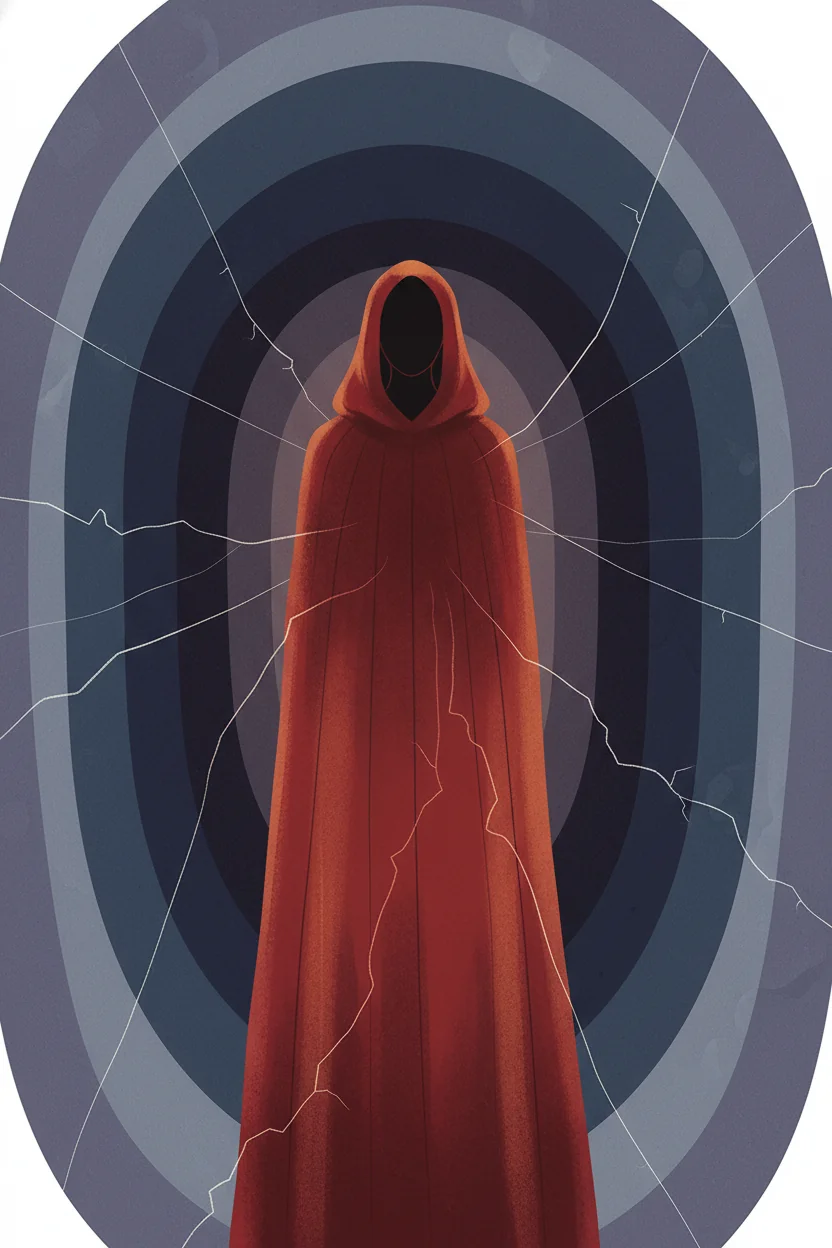
The Handmaid's Tale by Margaret Atwood
by Margaret Atwood
Set in the theocratic Republic of Gilead, the story follows Offred, a woman forced into reproductive servitude. As she navigates a world of strict surveillance and systemic oppression, she attempts to preserve her identity and find a way to escape.
The Big Idea
"The novel warns that the combination of religious extremism and environmental crisis can lead to a totalitarian state where women's bodies are commodified as political tools."
Key Insights
The Weaponization of Religion
Gilead uses distorted scripture to justify the removal of women's rights and the implementation of a rigid hierarchy.
The use of the biblical story of Rachel and Bilhah to justify the Handmaid system.
Identity Erasure
The regime removes personal names to strip individuals of their past and autonomy, making them easier to control.
Offred's name is a patronymic label indicating ownership by the Commander.
The Danger of Apathy
Totalitarianism often succeeds not through a sudden coup, but through a gradual erosion of rights that people ignore until it is too late.
Offred's memories of how women's bank accounts were frozen overnight.
Control of Language
By banning reading and writing and enforcing scripted speech, the state limits the ability of citizens to conceptualize rebellion.
The prohibition of books and the use of biblical slogans for everyday greetings.
Bodily Autonomy
The novel argues that when a woman's value is reduced to her reproductive capacity, she becomes an object of the state.
The 'Ceremony' where procreation is a cold, state-mandated chore rather than an act of love.
Chapter Breakdown
The Dystopian Genesis of Gilead
Margaret Atwood's The Handmaid's Tale is a chilling exploration of a near-future society where the United States has been overthrown by a totalitarian, theocratic regime known as the Republic of Gilead. The context of the novel is rooted in a global crisis of infertility, caused by environmental pollution and radiation. In response to the plummeting birth rates, the regime implements a rigid caste system based on a fundamentalist interpretation of Old Testament scriptures. Women are stripped of all autonomy: they cannot own property, read, write, or hold jobs. Their sole value is determined by their reproductive capability. The society is divided into specific roles: Wives (the high-status partners of Commanders), Marthas (domestic servants), Aunts (the enforcers who train the Handmaids), and the Handmaids themselves—women chosen for their fertility to serve as surrogate mothers for the ruling elite.
A Life of Ritualized Submission
The plot follows Offred, a Handmaid assigned to the household of a high-ranking Commander. Her name, 'Offred,' signifies she is 'Of Fred,' marking her as the property of her assigned husband. Offred's daily existence is a grueling cycle of ritualized submission and extreme surveillance. She lives in a state of constant fear, monitored by 'Eyes' (secret police) and the suspicious gaze of her fellow Handmaids. The central plot revolves around the 'Ceremony,' a monthly ritual where the Commander's Wife forces Offred to undergo a state-sanctioned act of procreation. However, the monotony of her oppression is broken when the Commander begins to invite Offred to his private study, offering her forbidden luxuries like magazines, novels, and conversation. This clandestine relationship develops into a complex psychological game of power and intimacy. Simultaneously, Offred is approached by a secret resistance network known as 'Mayday' and enters into a dangerous, illicit affair with Nick, the Commander's chauffeur, as she desperately clings to her identity and her memories of the 'time before.'
Themes of Power, Gender, and Language
The core of the novel examines the intersection of gender and power. Gilead uses religion as a tool for political control, justifying the systemic oppression of women through distorted biblical mandates. Atwood explores the concept of commodification; the Handmaids are not people, but 'two-legged wombs,' reduced to their biological functions. Another major theme is the erosion of identity. By removing names and banning literacy, the regime attempts to erase the individual's history and capacity for critical thought. Language becomes a weapon; the regime uses scripted greetings (e.g., 'Blessed be the fruit') to enforce conformity and stifle genuine human connection. The novel also highlights the danger of complacency, as Offred recalls how the transition to Gilead happened gradually, with women's rights being stripped away piece by piece while the public remained largely indifferent until it was too late.
Pivotal Moments and Symbolic Imagery
One of the most significant scenes is the 'Salvaging,' a public execution where Handmaids are forced to participate in the killing of 'criminals' to maintain social order through collective guilt. This scene underscores the regime's psychological warfare. The imagery of the color red is pervasive; the Handmaids wear red cloaks and wings, symbolizing both the blood of menstruation/birth and the 'scarlet letter' of shame. A key quote that encapsulates Offred's internal struggle is her reflection on the nature of desire and memory: 'I would like to be thought of, to be remembered.' Her secret room in the house, where she finds a hidden message from a previous Handmaid reading 'Nolite te tangere' (Do not let them touch you), serves as a powerful symbol of quiet rebellion and the enduring human need for connection across time.
Legacy and Contemporary Relevance
The Handmaid's Tale remains a cornerstone of feminist literature because it serves as a cautionary tale about the fragility of democracy and the volatility of human rights. Atwood famously stated that she did not include any event in the book that had not already happened somewhere in history, making the novel a synthesis of historical atrocities rather than pure fantasy. Its legacy is seen in its ability to provoke discussions on bodily autonomy, reproductive rights, and the dangers of religious extremism in governance. By presenting the story as a 'found manuscript' (the Historical Notes at the end), Atwood suggests that while the regime of Gilead eventually fell, the academic detachment of future historians can be just as dehumanizing as the regime itself, reminding us that the struggle for human dignity is an ongoing battle.
Take Action
Practical steps you can implement today:
-
Stay vigilant about the gradual erosion of civil liberties and human rights.
-
Recognize that literacy and access to information are fundamental tools for liberation.
-
Understand that the intersection of political power and religious dogma can lead to systemic abuse.
-
Value and preserve personal history and identity as a form of resistance against conformity.
-
Advocate for the autonomy of individuals over their own bodies and reproductive choices.
Notable Quotes
"Nolite te tangere."
— Margaret Atwood
"Better never means better than it was."
— Margaret Atwood
"I intend to keep on living, to keep on gliding, as if I were a ghost."
— Margaret Atwood
"A rat in a maze is a pretty good metaphor for me."
— Margaret Atwood
Who Should Read This
This book is essential for readers interested in feminist literature, dystopian fiction, and political science. It is particularly relevant for those who wish to explore the themes of gender power dynamics, the dangers of theocracy, and the psychological impact of systemic oppression. Anyone who enjoys '1984' or 'The Brave New World' will find this a compelling and haunting addition to their reading list.
Summary Written By
Software Engineer & Writer
Software engineer with a passion for distilling complex ideas into actionable insights. Writes about finance, investment, entrepreneurship, and technology.
View all summaries →Reviews
No reviews yet. Be the first to share your thoughts!