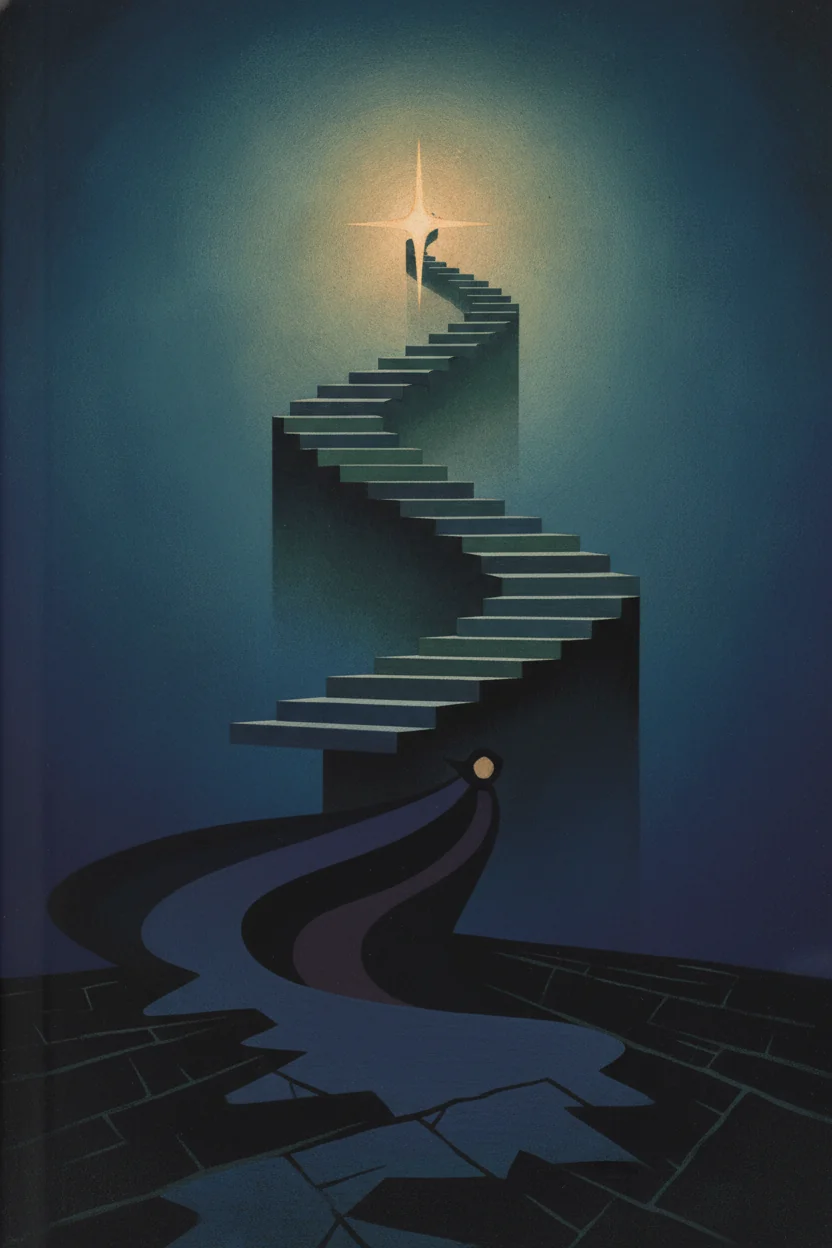
Dracula by Bram Stoker
by Bram Stoker
A young lawyer discovers the sinister nature of Count Dracula in Transylvania, leading to a deadly pursuit as the vampire migrates to London. Together with Professor Van Helsing, a group of allies must use both science and folklore to destroy the undead Count.
The Big Idea
"The battle between modern rationalism and ancient supernatural evil, illustrating that survival requires the integration of scientific knowledge and traditional faith."
Key Insights
The Epistolary Technique
The use of diaries and letters creates a 'found footage' effect that grounds the supernatural in a believable reality.
The story is told through Jonathan Harker's journal and Mina's meticulously organized letters.
Victorian Gender Norms
The contrast between Lucy and Mina reflects Victorian views on female purity and the dangers of unchecked sexuality.
Lucy becomes a predatory 'bloofer lady' after her transformation, while Mina remains the steady, intellectual support.
The Foreign Threat
Dracula represents the fear of an external, 'primitive' force infiltrating and corrupting a modernized society.
The Count moves from the wilds of Transylvania to the heart of London to find new victims.
Faith and Reason
Neither science nor religion alone can defeat the vampire; a synthesis of both is required.
Van Helsing uses blood transfusions (science) and garlic/crucifixes (faith) to fight the Count.
The Power of Blood
Blood serves as a symbol of lineage, life-force, and a medium for spiritual and physical corruption.
Dracula's ability to control Mina is cemented through the forced drinking of his blood.
Chapter Breakdown
The Gothic Atmosphere and Victorian Context
Published in 1897, Bram Stoker's Dracula is more than just a vampire story; it is a profound reflection of late-Victorian anxieties. The novel is structured as an epistolary narrative, composed of diary entries, letters, and newspaper clippings. This format creates a sense of urgent realism, making the supernatural events feel like documented facts. The story is set against the backdrop of a world transitioning from the superstitious folklore of the East to the scientific rationalism of the West. By bringing Count Dracula from the rugged mountains of Transylvania to the bustling streets of London, Stoker explores the fear of the 'foreign other' and the perceived threat of reverse colonization, where an ancient, predatory force invades the heart of the British Empire.
A Plot of Seduction and Survival
The narrative begins with Jonathan Harker, a young solicitor, traveling to Transylvania to finalize a real estate transaction for the mysterious Count Dracula. Harker soon realizes he is a prisoner in a castle where the laws of nature are defied. After escaping the Count's clutches, the focus shifts to England, specifically to Mina Murray (Harker's fiancée) and her friend Lucy Westenra. A series of strange occurrences befalls Lucy, who falls into a death-like trance and is eventually drained of her blood. The arrival of the eccentric Professor Abraham Van Helsing introduces the scientific and occult knowledge necessary to combat the threat. Van Helsing identifies the culprit as a vampire and attempts to save Lucy, though he is too late; he must subsequently destroy her undead form to save her soul. The plot then evolves into a high-stakes hunt as Van Helsing, Harker, and a group of determined men track Dracula back to his homeland to destroy him forever, protecting Mina from the Count's psychic influence and blood-bond.
Major Themes: Science vs. Superstition
At the heart of Dracula is the conflict between modern science and ancient superstition. Van Helsing embodies the bridge between these two worlds; he is a doctor of medicine who also understands the folklore of the undead. The novel suggests that logic and science alone are insufficient to face the true horrors of the world; one must be open to the 'impossible' to survive. Another central theme is the struggle for purity and morality. The vampires represent a perversion of nature and a violation of the blood, which is often linked to familial and racial purity. The female characters, Lucy and Mina, represent two different archetypes of Victorian womanhood: Lucy's burgeoning sexuality after her transformation into a vampire is seen as a threat, while Mina's intelligence and loyalty make her the ideal partner in the fight against evil.
Key Scenes and Pivotal Moments
One of the most haunting sequences is Jonathan Harker's discovery of the Count crawling down the castle walls like a lizard, a scene that strips Dracula of his aristocratic facade and reveals his monstrous nature. The 'baptism' of Lucy—where Van Helsing drives stakes through her heart—is a visceral moment of redemption and violence, symbolizing the purging of sin. The climax of the novel is a frantic race against time through the Carpathian Mountains. The final confrontation is not a grand battle, but a swift execution, where the Count is beheaded and stabbed, returning him to dust. The imagery of the 'bloody' sunset and the oppressive fog throughout these scenes enhances the mood of dread and inevitable doom.
Legacy and Cultural Impact
Dracula fundamentally redefined the vampire in popular culture. Before Stoker, vampires were often depicted as mindless corpses or folklore spirits; Stoker transformed the vampire into a sophisticated, seductive, and calculating predator. The novel's influence extends far beyond literature, spawning countless film adaptations and inspiring the entire modern horror genre. Its enduring relevance lies in its ability to tap into universal fears: the loss of autonomy, the invasion of the home, and the thin line between life and death. By blending Gothic horror with a sense of journalistic urgency, Stoker created a blueprint for the psychological thriller and the supernatural mystery, ensuring that the Count remains the most recognized monster in history.
Take Action
Practical steps you can implement today:
-
Adopt a multidisciplinary approach to problem-solving by combining traditional wisdom with modern technology.
-
Recognize that documented evidence and detailed record-keeping are essential for solving complex mysteries.
-
Understand the importance of community and collective action when facing an overwhelming adversary.
-
Be aware of the 'red flags' of predatory behavior that masquerade as sophistication or charm.
-
Maintain a balance between skepticism and openness to possibilities that lie outside your current understanding.
Notable Quotes
"I welcome you. I bid you welcome."
— Bram Stoker
"There are things that happen which are not to be explained."
— Bram Stoker
"Listen to me, for I am a Doctor of Medicine."
— Bram Stoker
"The blood is the life!"
— Bram Stoker
Who Should Read This
This book is ideal for readers who enjoy Gothic horror, atmospheric storytelling, and psychological tension. It is a must-read for those interested in Victorian literature and the origins of modern vampire mythology. If you appreciate stories where a group of intellectuals must outsmart a supernatural predator, this classic is for you.
Summary Written By
Software Engineer & Writer
Software engineer with a passion for distilling complex ideas into actionable insights. Writes about finance, investment, entrepreneurship, and technology.
View all summaries →Reviews
No reviews yet. Be the first to share your thoughts!