The Picture of Dorian Gray by Oscar Wilde
by Oscar Wilde
A beautiful young man wishes for a portrait of himself to age and bear the scars of his sins while he remains eternally youthful. As he descends into a life of hedonism and cruelty, the painting becomes a grotesque record of his moral decay, eventually leading to his psychological collapse.
The Big Idea
"The pursuit of pleasure and beauty divorced from moral responsibility leads to the inevitable disintegration of the soul."
Key Insights
The Danger of Influence
External philosophies can reshape a person's identity if they lack a strong internal moral compass.
Lord Henry's cynical views on youth and pleasure completely alter Dorian's innocent nature.
Aestheticism vs. Morality
Viewing life purely as a work of art leads to a detachment from human empathy.
Dorian loves Sibyl Vane only as an artistic object, discarding her once she becomes a real person with feelings.
The Paradox of Youth
The obsession with maintaining outward beauty often masks an internal rot.
Dorian remains physically perfect for decades while his soul becomes monstrously deformed.
The Weight of Conscience
Guilt cannot be escaped; it only manifests in different forms if suppressed.
The portrait serves as a physical manifestation of Dorian's guilt that he cannot ignore.
The Duality of Existence
Humans often maintain a public facade that contradicts their private desires and actions.
Dorian's high-society reputation protects him from the suspicion of his secret crimes.
Chapter Breakdown
The Gilded Surface of Victorian Society
Published in 1890, The Picture of Dorian Gray serves as Oscar Wilde's foray into the novel form, blending his signature wit with a haunting exploration of morality and aesthetics. Set in the rigid social climate of Victorian London, the story navigates the tension between public reputation and private vice. The era was defined by a strict moral code, yet beneath the surface of high-society tea parties and polished manners lay a world of decadence and hypocrisy. Wilde uses this backdrop to examine the 'Aesthetic Movement,' which argued that art should exist for its own sake, independent of moral or political purpose. By placing his characters in an environment where appearance is everything, Wilde sets the stage for a psychological descent into madness.
A Pact with Vanity: The Plot Overview
The narrative begins in the studio of Basil Hallward, a talented artist who has painted a full-length portrait of a strikingly beautiful young man named Dorian Gray. Basil is captivated by Dorian, not just for his beauty but for the purity he seems to represent. However, Dorian is introduced to Lord Henry Wotton, a cynical aristocrat and master of paradox. Lord Henry fills Dorian's head with the philosophy of 'New Hedonism,' arguing that the only way to get rid of a temptation is to yield to it and that youth is the only thing worth having.
Terrified by the prospect of aging, Dorian utters a fateful wish: that the portrait would age and bear the scars of his sins while he remained eternally young. This wish, inexplicably, is granted. As Dorian descends into a life of cruelty, debauchery, and moral corruption, his physical appearance remains flawless. The only evidence of his decay is the portrait, which he hides in a locked attic. The painting transforms into a grotesque mirror of his soul, recording every lie, every betrayal, and eventually, a cold-blooded murder. The tension peaks as Dorian's desperation to hide his secret leads him toward an inevitable, violent confrontation with his own conscience.
The Collision of Art and Morality
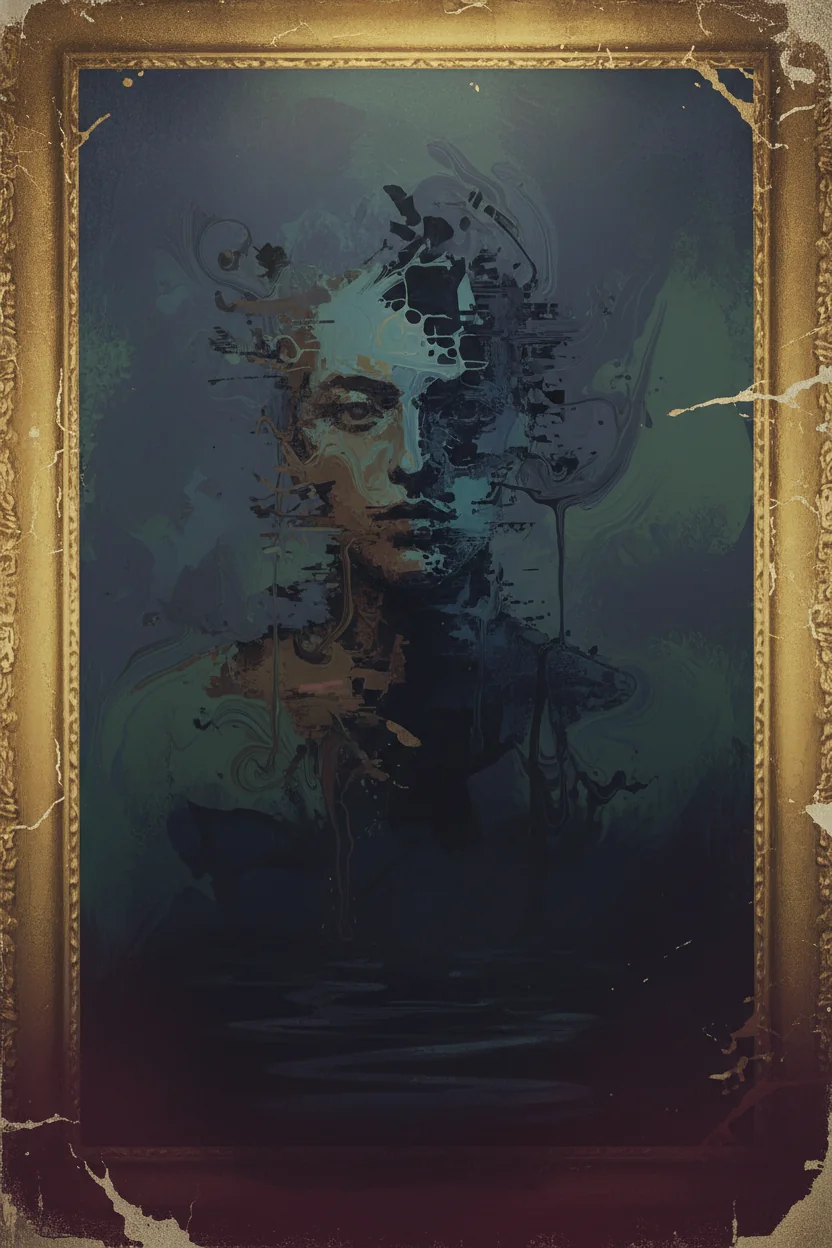
The central theme of the novel is the duality of man. Dorian lives a double life: the public face of a refined gentleman and the private reality of a monster. This reflects the Victorian struggle between the 'ideal' self and the 'shadow' self. Wilde explores the dangers of narcissism, suggesting that when a person becomes obsessed with their own image, they lose their humanity. The portrait acts as a physical manifestation of the conscience; while Dorian can ignore the guilt in his mind, he cannot ignore the visual evidence of his corruption on the canvas.
Another major theme is the influence of others. Lord Henry acts as a catalyst, molding Dorian's worldview through sophisticated rhetoric. This raises questions about free will and responsibility. Is Dorian a victim of Henry's manipulation, or is the darkness already present within him, merely waiting for a spark to ignite it? The novel suggests that the pursuit of pleasure without moral restraint leads not to liberation, but to a spiritual prison.
Pivotal Moments and Haunting Imagery
One of the most critical scenes is Dorian's first encounter with Sibyl Vane, a young actress. Dorian falls in love with her not for who she is, but for the art she creates. When Sibyl's own happiness makes her lose interest in acting, Dorian cruelly rejects her, claiming she is no longer an artist. This moment marks the first time the portrait changes, showing a subtle sneer of cruelty. This shift signifies Dorian's transition from innocence to malice.
The climax occurs when Dorian, driven by a mixture of hatred and fear, attempts to destroy the painting. He believes that by stabbing the canvas, he can erase his sins and start anew. However, the act of destroying the evidence of his soul results in his own death. The servants find him dead on the floor—not as a beautiful youth, but as a withered, repulsive old man—while the portrait has returned to its original state of pristine beauty. This irony underscores the idea that art is eternal, while the human flesh is transient and subject to the laws of morality.
The Eternal Legacy of Dorian Gray
The novel remains a cornerstone of English literature because it challenges the notion that beauty is synonymous with goodness. In a modern world obsessed with social media curation and the 'perfect' digital image, Dorian's struggle with his public persona versus his private reality is more relevant than ever. Wilde's exploration of the psychological toll of secrecy and the corrosive nature of vanity continues to resonate. The book serves as a cautionary tale: the attempt to separate one's actions from their consequences is a futile endeavor. Ultimately, The Picture of Dorian Gray is a masterful study of the human psyche, proving that while we may hide our flaws from the world, we can never truly hide them from ourselves.
Take Action
Practical steps you can implement today:
-
Prioritize character and integrity over the curation of a perfect public image.
-
Be mindful of the voices you allow to influence your core values and beliefs.
-
Recognize that avoiding the consequences of your actions only delays an inevitable reckoning.
-
Understand that true beauty is an internal quality, not a physical attribute.
-
Practice empathy and genuine connection rather than treating people as tools for your own pleasure.
Notable Quotes
"The only way to get rid of a temptation is to yield to it."
— Oscar Wilde
"Experience is simply the name we give our mistakes."
— Oscar Wilde
"Youth is the only thing worth having."
— Oscar Wilde
"Each of us dies or kills; we only differ in the manner of it."
— Oscar Wilde
Who Should Read This
This novel is perfect for readers interested in psychological thrillers, philosophical inquiries into morality, and those who appreciate the witty, stylized prose of the Victorian era. It is an essential read for anyone exploring the intersection of art, ethics, and the human ego.
Summary Written By
Software Engineer & Writer
Software engineer with a passion for distilling complex ideas into actionable insights. Writes about finance, investment, entrepreneurship, and technology.
View all summaries →Reviews
No reviews yet. Be the first to share your thoughts!