In five minutes: the July Revolution of 1830
The July Revolution was the uprising that ended the Bourbon Restoration in France. Between 27 and 29 July 1830, Parisians built barricades, fought the royal army and forced King Charles X from power. The French call those days the "Trois Glorieuses", the Three Glorious Days. Charles fled into exile, the Chamber of Deputies offered the crown to his cousin Louis-Philippe, and France got a more liberal monarchy that lasted until 1848.
The event matters well beyond France. It showed that the order built at the Congress of Vienna in 1814-1815 could be broken from below, and within months Belgium and Poland were in revolt too. For the wider story of this period, see our hub on 19th-Century Europe: Revolutions, Nationalism and Unification.
If you are asking "when was the July Revolution?", the answer is July 1830. Do not mix it up with the French Revolution of 1789 or the February Revolution of 1848. The year is the easiest way to tell them apart.
Causes: a king who distrusted his own constitution
The Restoration and the Charter
After Napoleon fell in 1815, the Bourbon family returned to the throne. Louis XVIII had issued a Charter in 1814 that kept some gains of the 1789 Revolution: equality before the law, a parliament with two chambers and a degree of press freedom. But the Charter was presented as a gift from the king, not as the will of the people. Only rich men could vote. The tax threshold left roughly 100,000 voters in a country of about 30 million.
Charles X and the ultra-royalists
Charles X took the throne in 1824 and made his priorities clear. He was crowned at Reims in 1825 with the old religious ceremony. His government paid compensation to nobles who had lost land in the Revolution and passed a harsh law against sacrilege. Liberals, army veterans and many townspeople saw all this as an attempt to turn the clock back to before 1789.
Hard times and a hated minister
From about 1827, bad harvests pushed up bread prices, and trade slowed, so workers in Paris faced hunger and unemployment. Liberal candidates did well in the 1827 elections, and a moderate ministry tried to ease tensions. In August 1829, however, Charles replaced it with a cabinet led by Prince Jules de Polignac, a committed ultra-royalist who became a symbol of reaction.
The clash with the Chamber
In March 1830, 221 deputies voted an address telling the king that his ministers did not have the confidence of the nation. Charles dissolved the Chamber in May and called new elections. The opposition came back stronger. A military expedition to Algiers, which ended with the city's capture on 5 July, was meant to win popularity at home. It did not.
What happened: the Three Glorious Days
25-26 July: the Four Ordinances
On 25 July, at the palace of Saint-Cloud, Charles signed four ordinances, citing the emergency powers of Article 14 of the Charter. They were published on 26 July. They suspended freedom of the press, dissolved the newly elected Chamber before it had even met, changed the electoral law to shrink the electorate further, and called fresh elections. Opponents saw a royal coup d'état. That same day, journalists around the newspaper Le National, including the young Adolphe Thiers, published a protest declaring the ordinances illegal.
27 July: first clashes
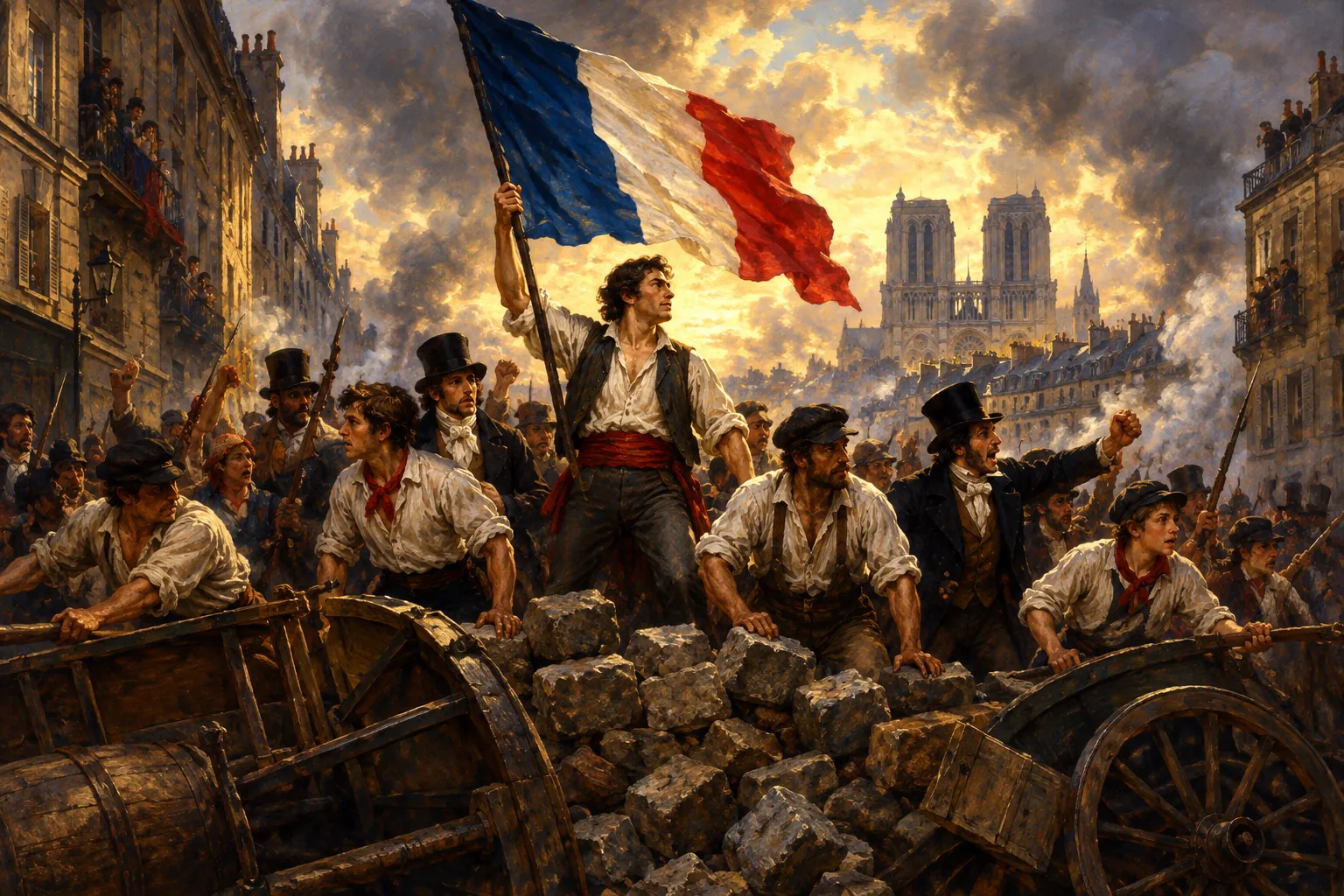
Printers who had lost their work, together with students and craftsmen, poured into the streets. Marshal Marmont was put in charge of the troops in Paris, but the garrison was too small and short of supplies. Barricades of paving stones and overturned carts began to rise in the narrow streets of the eastern and central districts.
28 July: the city rises
The fighting spread. Insurgents took the Hôtel de Ville and raised the tricolour, the flag of the Revolution, on Notre-Dame. Some regular soldiers refused to shoot at the crowd or went over to the people. Marmont had to pull his men back into a smaller area around the Louvre and the Tuileries.
29 July: the king's forces collapse
The insurgents captured the Louvre and the Tuileries Palace. The royal troops left Paris and retreated toward Saint-Cloud. Charles X now withdrew the ordinances and dismissed Polignac, but it was far too late. By common estimates, several hundred people died on the insurgents' side and roughly 150-200 soldiers were killed.
30 July - 9 August: who rules now?
The next question was what to put in the king's place. Republicans wanted a republic, but the liberal politicians, including the banker Jacques Laffitte and Thiers, feared a return to the chaos of the 1790s. They backed Louis-Philippe, Duke of Orléans, a member of the royal family's younger branch with a reputation for liberal sympathies. On 31 July he appeared at the Hôtel de Ville with the aging hero Lafayette, who embraced him wrapped in a tricolour flag. Charles X abdicated on 2 August. On 7 August the Chamber declared the throne vacant and revised the Charter, and on 9 August Louis-Philippe took the oath as "King of the French", not "King of France". The new title said that his power came from the nation. Charles X sailed for Britain in mid-August.
Consequences
The July Monarchy
The revised Charter was no longer a gift from the king. The tricolour became the national flag again. Catholicism was described as the religion of most French people rather than the state religion, press censorship was ended, and the Chamber gained the right to propose laws. The tax threshold for voting was lowered, and the electorate rose to around 170,000, which was still a tiny share of the population. Because wealthy business families and bankers held the real influence, historians often call the regime a "bourgeois monarchy".
Disappointment and later revolts
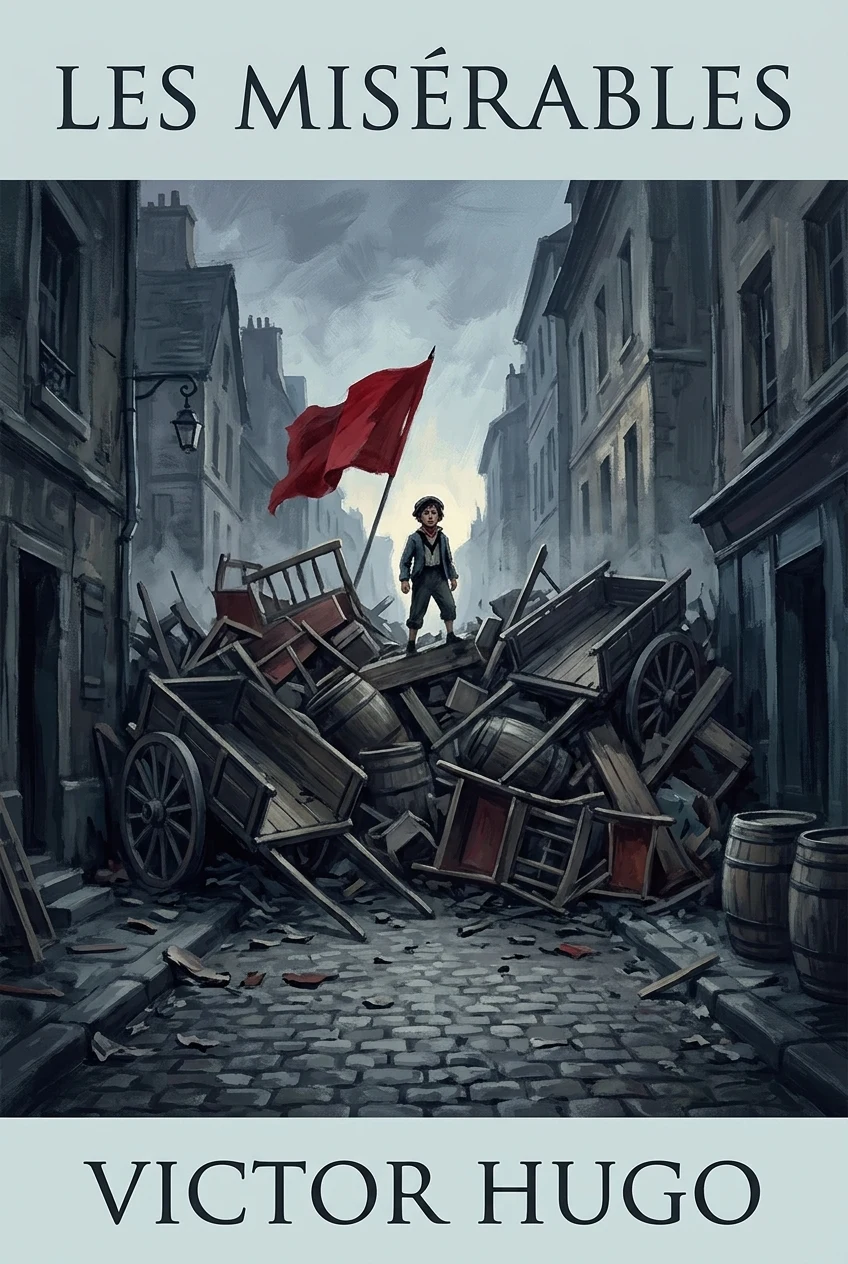
Workers and republicans, who had done much of the fighting, gained little. Silk workers rose in Lyon in 1831, and in June 1832 a republican uprising in Paris was crushed. Victor Hugo set the barricade scenes of Les Misérables in that 1832 revolt, which is why the novel is a good companion to this period. The July Monarchy finally fell in the February Revolution of 1848.
Europe and art
News from Paris inspired others. The Belgians revolted against Dutch rule in August 1830 and won independence, and Poles rose against Russia in November 1830. Italian and German states also saw unrest. Eugène Delacroix painted Liberty Leading the People in 1830 to commemorate the barricade fighting, and it remains the best-known image of the revolution.
What exams ask
- Dates and names: 27-29 July 1830; Charles X; Prime Minister Polignac; Louis-Philippe; Lafayette.
- Trigger: the Four Ordinances of Saint-Cloud, which limited the press and the vote and dissolved the Chamber.
- Long-term causes: ultra-royalist policies, a narrow electorate and economic hardship.
- Result: a constitutional monarchy under Louis-Philippe, still based on wealth. Compare it with 1789 (a far wider social revolution) and 1848 (the end of the monarchy).
- Significance (AP-style): the first major crack in the Vienna settlement, which encouraged liberal and national movements in Belgium, Poland and elsewhere.
Read next
- Belgian Independence (1830): how the news from Paris helped spark the revolt in Brussels.
- The Greek War of Independence (1821-1829): another challenge to the order set up in 1815.
- Otto von Bismarck: The Iron Chancellor: the nationalism that later reshaped central Europe.
- Les Misérables: a novel set in the Paris of the July Monarchy.