In five minutes
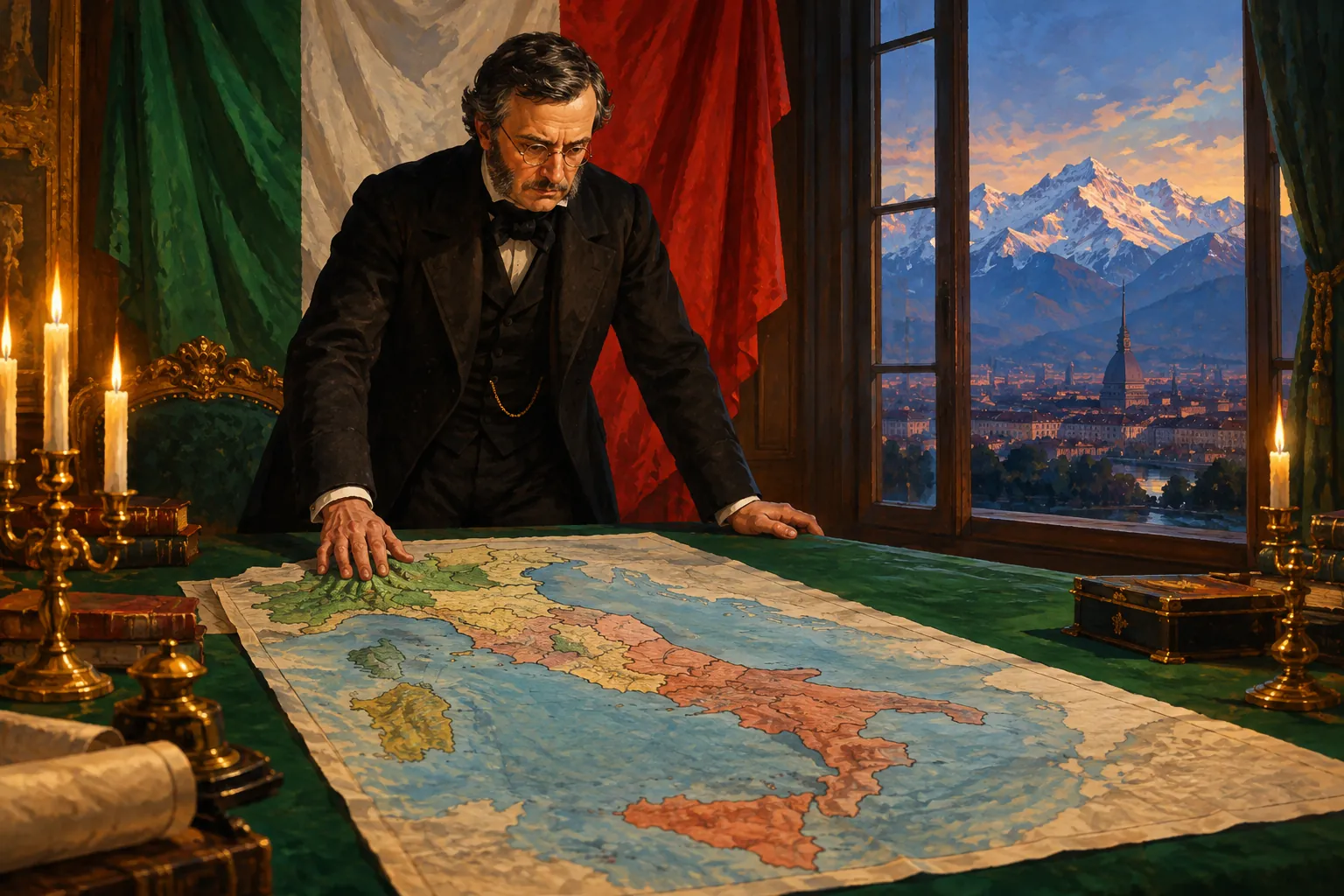
Count Camillo Benso di Cavour (1810–1861) was the prime minister of the Kingdom of Piedmont-Sardinia and the chief political planner of Italian unification. Giuseppe Mazzini offered an ideal and Giuseppe Garibaldi offered an army of volunteers. Cavour offered a state that worked: a growing economy, a constitution, a modern army and a place at the table of the great powers. This article belongs to our topic 19th-Century Europe: Revolutions, Nationalism and Unification.
His method was patient. He built up Piedmont, used the Crimean War to make it noticed, won an alliance with Napoleon III of France, and then used the war with Austria in 1859 to open the road to a united Italy. He did not plan every step, and in 1860 events ran ahead of him, but he was quick to turn them to his advantage.
Who was Cavour? Early life
Cavour was born in Turin on 10 August 1810 into a noble Piedmontese family. At the time Piedmont was part of Napoleon's France, and French was spoken at home. He trained as a military engineer and left the army in 1831. He then travelled in Switzerland, France and Britain, where he studied parliaments, railways and free trade at first hand. He admired British liberalism, with its mix of order and freedom.
Before he was a politician he was a landowner and businessman. On the family estate at Leri he introduced new fertilisers and irrigation, and he invested in banking and industry. The belief that a strong economy underlies a strong state came from this experience.
He was not an early nationalist. In 1847 he and Cesare Balbo founded the newspaper Il Risorgimento, which called for a constitution and reform. In March 1848 King Charles Albert granted a constitution, the Statuto Albertino, and Cavour was elected to parliament that year. The war against Austria that began in 1848 ended in defeat, and in 1849 Charles Albert abdicated in favour of his son Victor Emmanuel II. Piedmont kept its constitution and parliament, which made it unusual among the Italian states.
Strengthening Piedmont
Cavour became minister of agriculture and commerce in 1850, minister of finance in 1851 and prime minister in November 1852. He built a stable majority by joining the centre-right with the centre-left of Urbano Rattazzi, a deal known as the connubio (the “marriage”).
As prime minister he signed trade treaties with Britain, France and Belgium, expanded the railways and strengthened banks and ports. He also backed measures that cut the Church's privileges: the Siccardi laws of 1850 ended special church courts, and in 1855 many monasteries were suppressed. These policies pleased liberals but deepened the quarrel with the papacy.
The Crimean War and Plombières
Piedmont could not beat Austria alone; 1848–49 had proved that. So Cavour looked for allies. In 1855 he sent about 15,000 soldiers to the Crimean War to fight Russia alongside Britain and France. Italy had little interest in the war itself. The point was to earn a seat at the peace conference, the Congress of Paris in 1856, where Cavour raised the “Italian question” and criticised Austrian influence in Italy and the government of the Papal States. Nothing changed at once, but Italy was now a European problem.
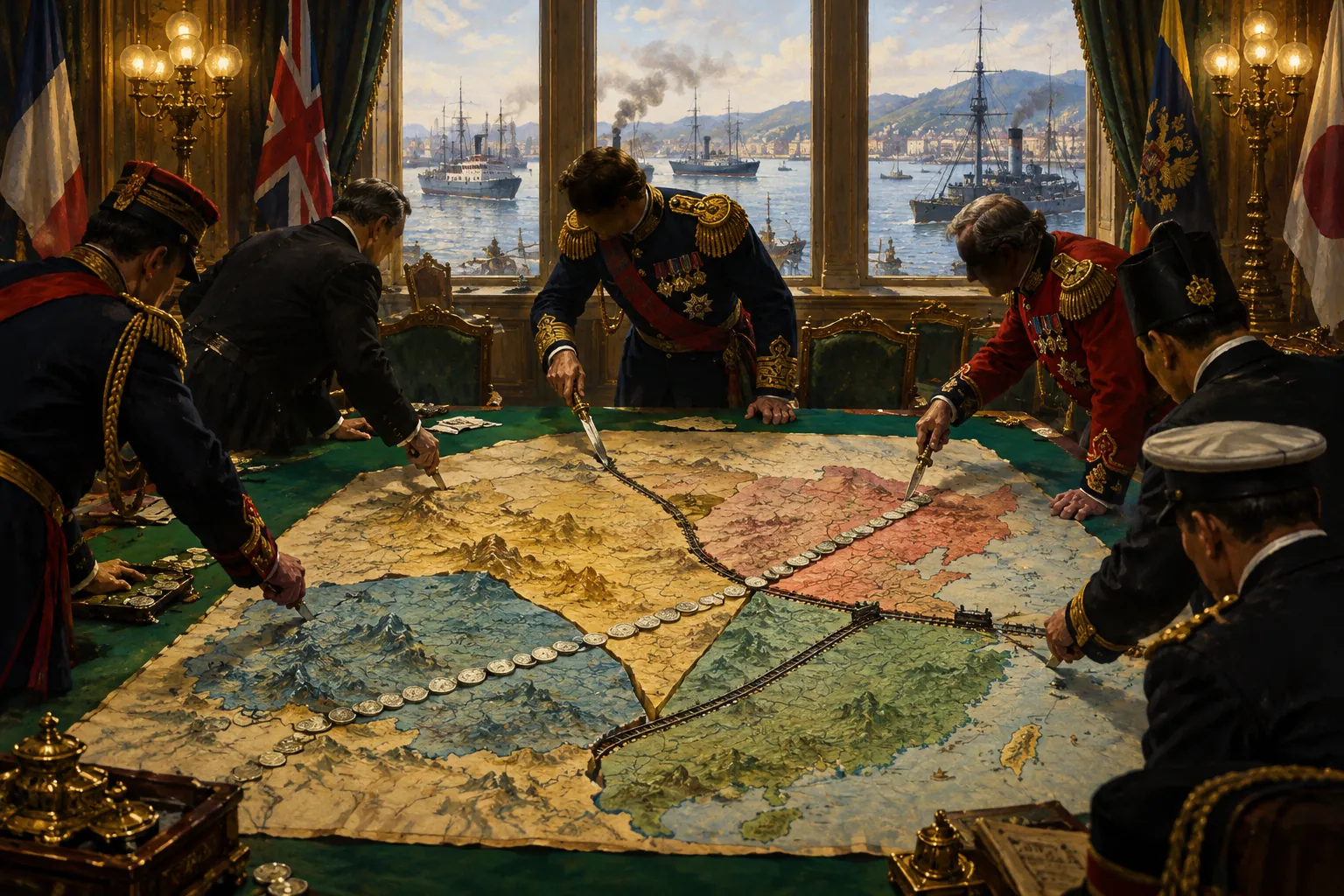
In January 1858 an Italian patriot, Felice Orsini, tried to kill Napoleon III. The attempt is often said to have strengthened the emperor's sense that he must do something about Italy. In July 1858 Cavour met him in secret at the spa town of Plombières. The main terms were:
- France would fight if Austria attacked Piedmont.
- After victory, a strong kingdom in northern Italy would be built around Piedmont.
- Piedmont would hand Savoy and Nice to France.
- Victor Emmanuel II's daughter Clotilde would marry Napoleon III's cousin, Prince Napoleon.
There was a catch: France would help only if Austria were the aggressor. Cavour therefore worked to make Austria look like the one who started the war.
The war of 1859
In April 1859 Austria sent Piedmont an ultimatum to disarm and, when it was refused, went to war. France joined as promised. The allies won at Magenta on 4 June and at Solferino on 24 June. Solferino was extremely bloody, and the carnage helped shape the later Red Cross movement.
Napoleon III then stopped. Heavy losses and worries about wider European trouble made him unwilling to continue, and on 11 July 1859 he agreed an armistice with Emperor Francis Joseph at Villafranca without consulting Piedmont. Lombardy passed to Piedmont through France, but Venetia stayed Austrian. Cavour was furious, quarrelled with the king and resigned.
The war had already changed central Italy, however. Tuscany, Parma, Modena and Romagna had driven out their rulers and refused to take them back. Cavour returned as prime minister in January 1860. Plebiscites in March approved union with Piedmont, and the price was paid in the Treaty of Turin of 24 March 1860, which gave Savoy and Nice to France. Garibaldi, who was born in Nice, never forgave it.
1860: Garibaldi and the south
On the night of 5–6 May 1860 Garibaldi sailed from Quarto near Genoa with about a thousand volunteers, the “Thousand” or Red Shirts, and landed at Marsala in Sicily on 11 May. Officially Cavour had nothing to do with the expedition. In practice he did not stop it. Garibaldi took Sicily, crossed to the mainland and entered Naples on 7 September.
This created a dilemma. If Garibaldi marched on Rome he would meet French troops guarding the pope and might drag Piedmont into a war with Napoleon III. Republican influence could also grow. Cavour acted first: a Piedmontese army entered the Papal States through the Marche and Umbria, avoiding Rome, and defeated the papal army at Castelfidardo on 18 September.
Plebiscites in the south on 21 October approved union. On 26 October at Teano, Garibaldi greeted Victor Emmanuel II as king of Italy and handed over the lands he had won. It is a good example of the difference between a patriot's daring and a statesman's calculation, and of how both were needed.
The Kingdom of Italy and Cavour's death
The first Italian parliament met in Turin, and on 17 March 1861 Victor Emmanuel II was proclaimed king of Italy. Cavour became its first prime minister. He declared that Rome must be the capital, and he proposed to settle the quarrel with the papacy under the principle of a free Church in a free state.
He did not live to see it. After a short illness he died in Turin on 6 June 1861, aged 50. Italy still lacked Venetia, which was added in 1866 after Austria's defeat by Prussia, and Rome, which was taken in 1870 when French troops were withdrawn during the Franco-Prussian War. Cavour's example also shaped the rival model of unification under Otto von Bismarck in Germany: a strong state, alliances and well-timed wars.
Cavour, Mazzini and Garibaldi compared
Historians often split the unification into three roles. Mazzini was the prophet who wanted a republic made by the people; his story is in Giuseppe Mazzini and Young Italy. Garibaldi was the soldier-hero; see Giuseppe Garibaldi and the Red Shirts. Cavour was the diplomat who worked through monarchy, parliament and foreign alliances. Historians also stress that Cavour first aimed at a larger northern kingdom; unity with the south came mostly from Garibaldi's success and Cavour's quick response.
What exams ask
Typical questions ask you to explain how Cavour used diplomacy rather than revolution, why Piedmont-Sardinia led unification, and what each of the three figures contributed. Learn the sequence: Crimean War (1855), Plombières (1858), war with Austria (1859), Garibaldi and the Thousand (1860), kingdom proclaimed (1861), Venetia (1866), Rome (1870). Be ready to give the cost to Piedmont: Savoy and Nice. For significance, say that Cavour showed that nationalism could succeed through state power and great-power politics, which is why unification came from above and left the south and the Church question unresolved.
Read next
- Giuseppe Garibaldi and the Red Shirts: the Sicily expedition that Cavour watched with both hope and alarm.
- Giuseppe Mazzini and Young Italy: the republican ideal that Cavour wanted to contain.
- Otto von Bismarck: The Iron Chancellor: the German statesman who used a similar mix of diplomacy and war.