In five minutes
Robert A. Heinlein (1907–1988) was an American science fiction writer who helped move the genre out of the pulp magazines and in front of mainstream readers. He is usually grouped with Isaac Asimov and Arthur C. Clarke as one of the "Big Three" of twentieth-century science fiction.
His books are known for plain, confident prose, capable heroes and big arguments about freedom, duty and how a society should be run. Three of them, The Moon Is a Harsh Mistress, Stranger in a Strange Land and Starship Troopers, are still debated in classrooms and online.
He won the Hugo Award for best novel four times.
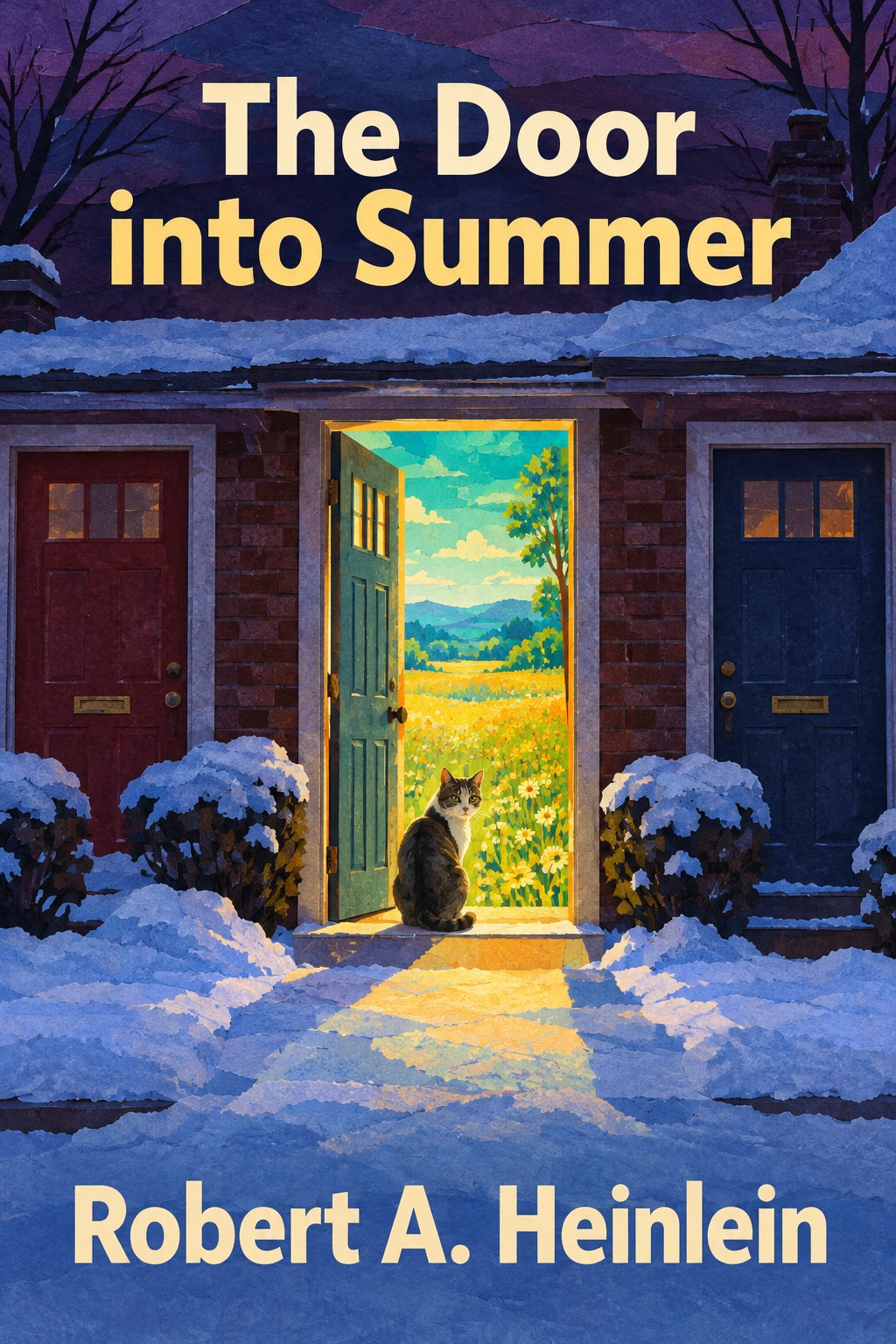
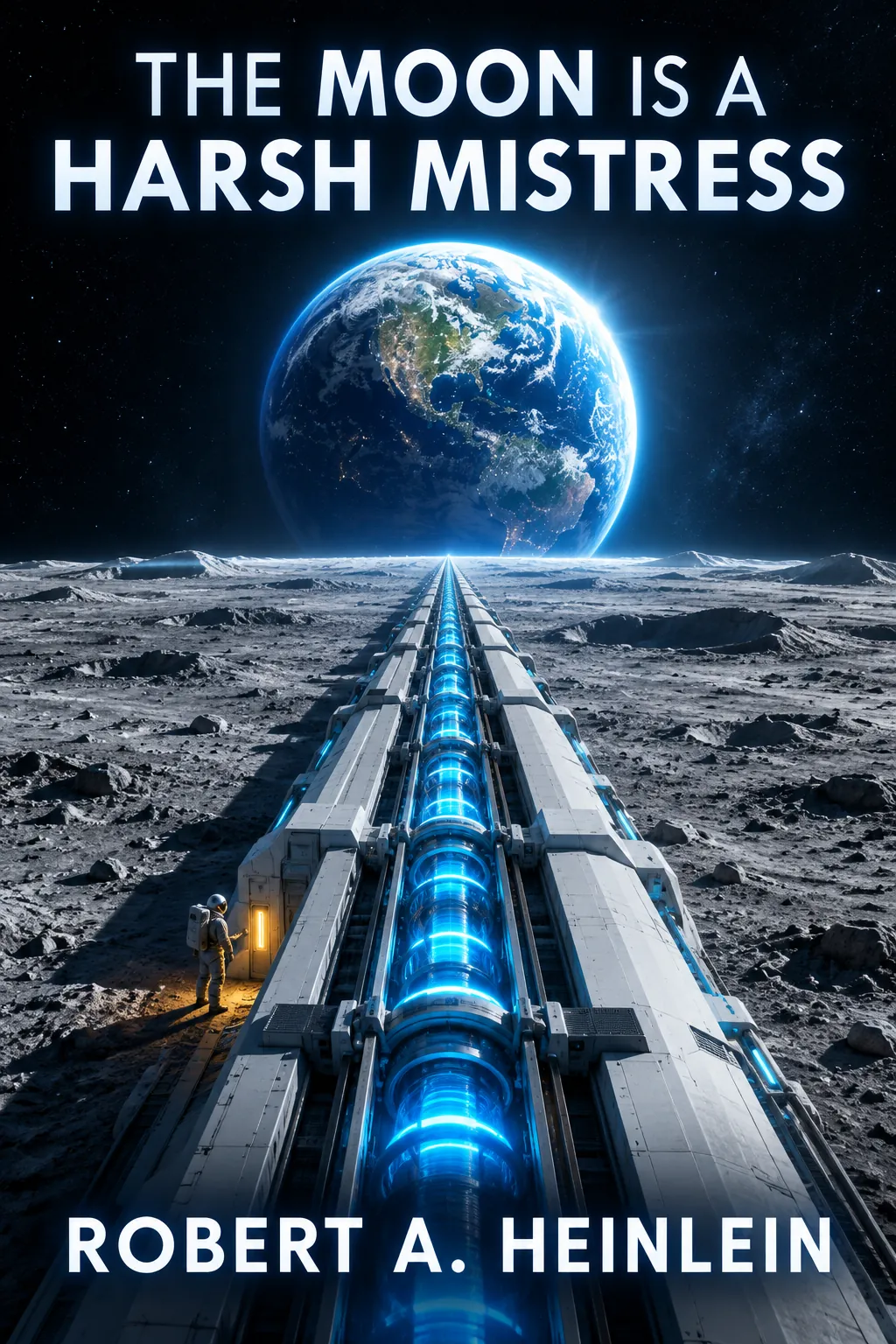
If you want one place to start, try The Door into Summer for a warm time-travel story, or The Moon Is a Harsh Mistress for his best-loved political novel.
Heinlein belongs to the longer story told in our History of Science Fiction guide.
From naval officer to full-time writer
Robert Anson Heinlein was born on 7 July 1907 in Butler, Missouri, and grew up in Kansas City. He graduated from the United States Naval Academy in 1929 and served on warships, including the aircraft carrier USS Lexington.
Tuberculosis ended his naval career, and he was retired on medical grounds in 1934. A few years of odd jobs and an unsuccessful run for public office followed, and he needed money to pay off his house.
In 1939 he wrote the short story "Life-Line" and sold it to Astounding Science Fiction, where it ran in August of that year. Its editor, John W. Campbell, became an important early supporter.
Heinlein wrote fast in those years, sometimes under pen names such as Anson MacDonald and Lyle Monroe. During the Second World War he worked as a civilian engineer at the Naval Aircraft Factory in Philadelphia, alongside fellow writers Isaac Asimov and L. Sprague de Camp.
After the war he moved up from the pulps to bigger markets. In 1947 his story "The Green Hills of Earth" appeared in the Saturday Evening Post, a sign that science fiction could reach a general audience.
In 1948 he married Virginia Gerstenfeld, who worked closely with him for the rest of his life. He also worked on the 1950 film Destination Moon, which won an Academy Award for its special effects.
The Future History
From 1939 Heinlein linked many of his stories into one imagined timeline of humanity's future, which he called the Future History. A chart of that timeline was printed in Astounding in 1941.
The stories run from early rocket flights through settlements on the Moon and beyond, and on into far-future societies. Well-known entries include "The Roads Must Roll" and "The Green Hills of Earth".
He gathered the main stories in The Past Through Tomorrow in 1967. Later science fiction series built on the same idea of a shared, slowly unfolding future.
Books for young readers
Between 1947 and 1958 Heinlein wrote twelve novels for teenagers for the publisher Charles Scribner's Sons. They include Rocket Ship Galileo, Starman Jones, Citizen of the Galaxy and Have Space Suit—Will Travel.
These "juveniles" mix adventure with real problem-solving, such as how to cross a hostile planet or get out of a bad situation with limited gear. Generations of young readers first met science fiction through them.
The big novels
In the late 1950s and 1960s Heinlein wrote the books that made his name beyond science fiction fans. Each one asks a hard question about how people should live together.
Starship Troopers (1959)
Johnny Rico joins the Mobile Infantry, a force fighting an alien species the humans call the Bugs. The book argues that full citizenship should be earned through public service.
Some readers see a serious look at duty and responsibility. Others see an admiring picture of militarism, and both views are part of its long reputation.
It won the Hugo Award in 1960.
Stranger in a Strange Land (1961)
Valentine Michael Smith is a human raised by Martians who comes to Earth and sees its customs with fresh eyes. The book questions religion, money and sexual morality, and it became a favourite of the 1960s counterculture.
It won the Hugo Award in 1962 and gave English the word "grok". A longer, uncut version was published in 1991, after Heinlein's death.
The Moon Is a Harsh Mistress (1966)
The Moon's penal colony rebels against rule from Earth, helped by a self-aware computer called Mike. It is a story about revolution, careful planning and the cost of freedom.
The saying "There ain't no such thing as a free lunch", shortened to TANSTAAFL, is closely linked with the book. It won the Hugo Award in 1967, and you can read our The Moon Is a Harsh Mistress summary first.
The Door into Summer (1957)
Inventor Dan Davis is cheated out of his own company, and his hunt for a way back involves a cat, long sleep and time travel. It is one of Heinlein's warmest and most readable books, and our The Door into Summer summary covers it.
His fourth best-novel Hugo went to Double Star, awarded in 1956.
Later work
Time Enough for Love (1973) follows the very long-lived Lazarus Long. Friday (1982) is an action story about an engineered secret courier.
Critics often feel the late books are looser and more talkative than the earlier ones. Fans still find ideas in them worth arguing about.
How he wrote
Heinlein liked to build a world through small details rather than long explanations. A famous example is the phrase "the door dilated" in Beyond This Horizon, which tells you in three words that doors work differently in that future.
His narrators are usually practical and a little wry. They explain how things work, and they trust the reader to keep up.
In 1947 he set out five rules for working writers: write, finish what you start, do not rewrite except to an editor's order, put it on the market, and keep it on the market until it sells. They are still passed around in writing circles.
Ideas and influence
Heinlein's heroes are competent people who solve problems, argue with authority and take responsibility for their choices. The books often say that freedom matters, that duty matters and that clear thinking beats panic.
His politics shifted over his life, and critics and fans disagree about them. Readers find both libertarian and authoritarian themes, sometimes in the same book, so it helps to read each novel as its own argument.
He also cared about real spaceflight. In 1969 he took part in the television coverage of the Apollo 11 Moon landing alongside Walter Cronkite and Arthur C. Clarke.
In 1975 he received the first Grand Master Award from the Science Fiction Writers of America, the group's lifetime honour. He died on 8 May 1988 at his home in California.
Where to start reading
- Short and warm: The Door into Summer, a time-travel story with a cat.
- Political and tightly plotted: The Moon Is a Harsh Mistress, a revolution on the Moon.
- For teen readers: Have Space Suit—Will Travel, a young adventure from 1958.
- For debate: Starship Troopers and Stranger in a Strange Land.
Common misconceptions
"The Starship Troopers film is the book"
The 1997 film by Paul Verhoeven borrows the names and the war but changes the tone and leaves out the powered armour. Read the novel to judge the novel.
"Grok is a real Martian word"
Heinlein invented it for Stranger in a Strange Land. In the book it means to understand something so deeply that you become part of it.
"He only wrote for adults"
A large share of his early book career was aimed at teenagers. The twelve Scribner's novels are still a good way into his work.
"All his books share one political message"
They do not. Each novel makes its own case, and the arguments differ from book to book.
Read next
The Moon Is a Harsh Mistress is the best place to see his ideas about freedom put to work in a gripping plot.
The Door into Summer shows his lighter, friendlier side in a short time-travel story.
History of Science Fiction places him next to Asimov, Clarke and the writers who came before and after.