In five minutes
Octavia E. Butler (1947–2006) was an American science fiction writer who used time travel, aliens and disaster to ask who holds power and what people will pay to survive.
She was the first science fiction writer to receive a MacArthur Fellowship, and she is still the author many readers name first when they talk about Black women in the genre.
Her best-known books are Kindred (1979), where a modern woman is pulled back to a slave plantation, and Parable of the Sower (1993), where a teenager builds a new belief system as California falls apart.
Both stand alone, so you can start with either one.
She belongs to a long line of writers traced in our History of Science Fiction.
Who was Octavia Butler?
Octavia Estelle Butler was born on 22 June 1947 in Pasadena, California. Her father died when she was very young, and her mother and grandmother raised her.
She was shy and dyslexic, and the library became her refuge. She began writing stories as a child, and she later said that a poor science fiction film convinced her she could do better.
She studied at Pasadena City College and took writing classes at Cal State Los Angeles and UCLA.
In 1970 a screenwriters' guild workshop put her in front of the writer Harlan Ellison, who encouraged her to attend the Clarion science fiction workshop in Pennsylvania. There she sold her first stories, and her story "Crossover" appeared in print in 1971.
Success came slowly. For years she worked low-paid jobs and wrote in the early morning before her shifts.
In 1999 she moved to the Seattle area. She died suddenly on 24 February 2006, aged 58, and her papers are held at the Huntington Library in San Marino, California.
Her main books
The Patternist series
Her first novel, Patternmaster (1976), began a series about a hidden line of telepaths. The books are not in reading order: Wild Seed (1980) is the earliest in time and the best place to start.
Wild Seed follows Anyanwu, a healer who can change her body, and Doro, a man who moves from body to body and breeds people for power. Their fight over freedom and control runs from late seventeenth-century Africa to colonial America.
Kindred (1979)
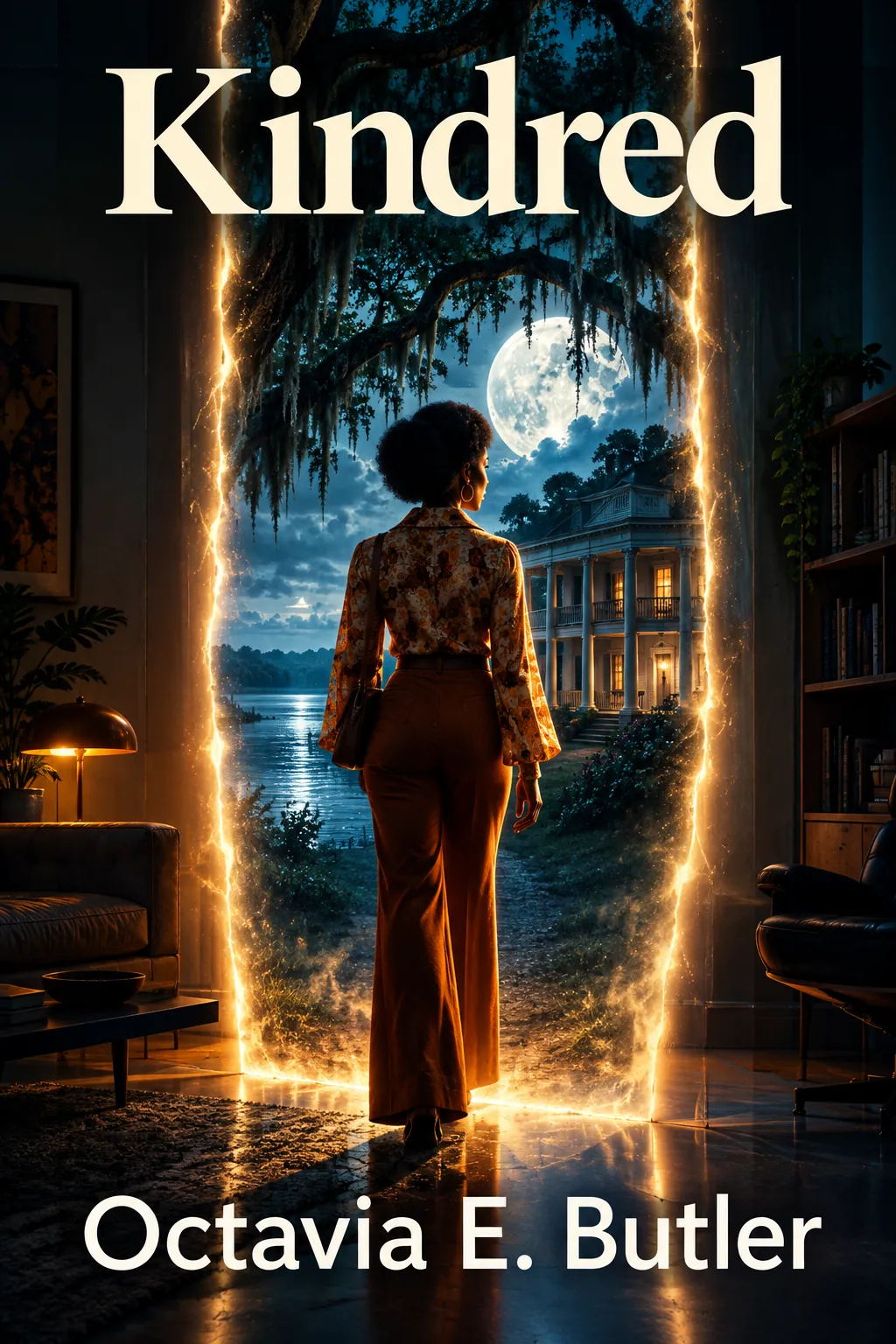
Dana, a Black writer in 1976 Los Angeles, is pulled again and again to a Maryland plantation in the early 1800s. Each time she must keep alive Rufus, a white boy who will become the master of the plantation and who is her ancestor.
The book gives no scientific explanation for the time travel. Butler herself called it a grim fantasy, though shelves usually file it under science fiction.
Its power comes from the close, physical detail of what Dana must do to survive. See our Kindred study guide for a chapter-by-chapter reading.
Xenogenesis, also called Lilith's Brood (1987–1989)
The trilogy Dawn, Adulthood Rites and Imago begins after a nuclear war has nearly ended humanity. Alien beings called the Oankali rescue the survivors, but they demand a price: the two species must merge their genes.
Lilith Iyapo, the woman chosen to guide the first humans back to Earth, has to decide whether that deal is rescue or captivity. The story treats the question seriously and gives no easy answer.
Parable of the Sower (1993) and Parable of the Talents (1998)
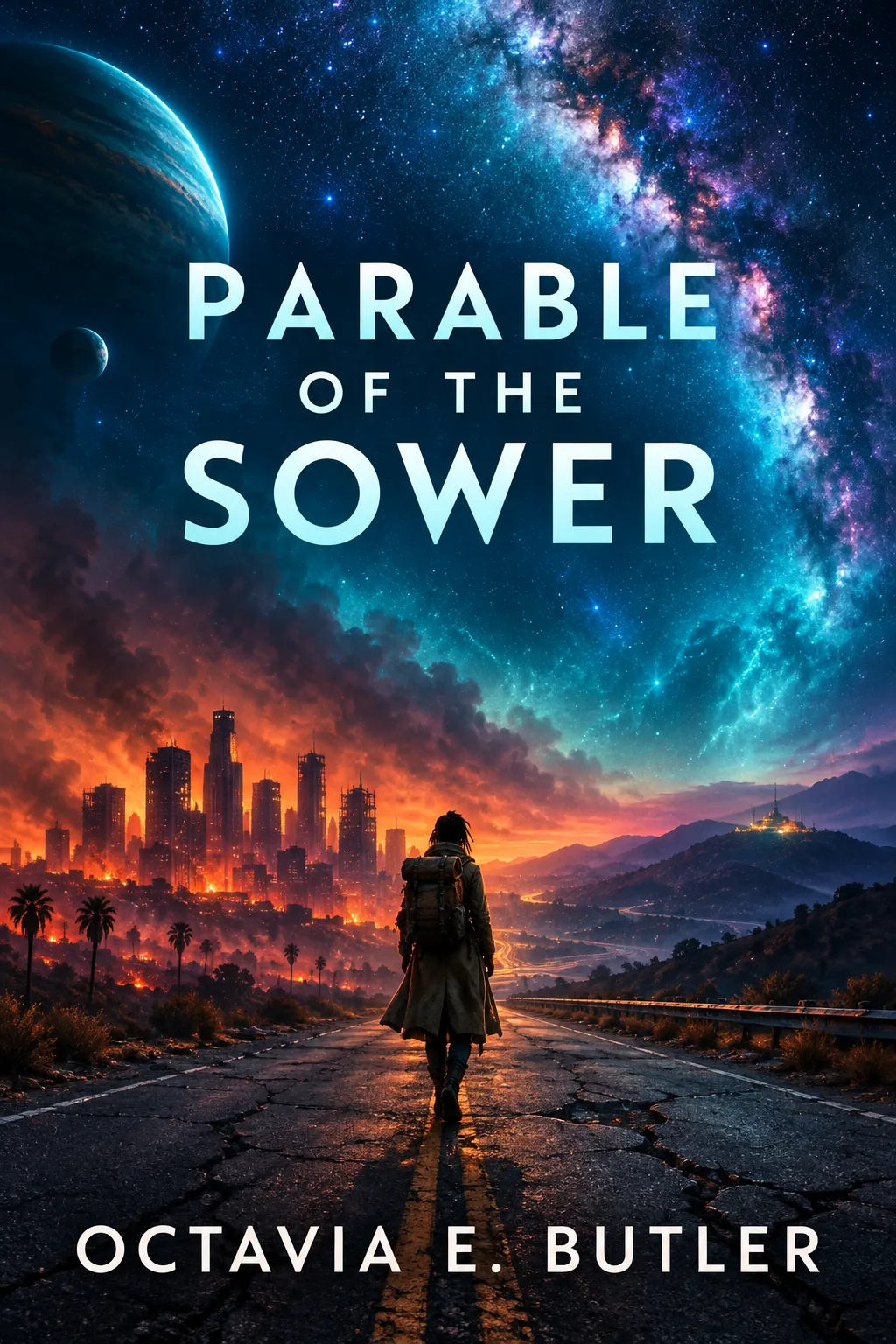
The first novel opens in 2024, in a walled neighbourhood near Los Angeles. Lauren Olamina has "hyperempathy", which makes her feel other people's pain, and she works out a belief system called Earthseed as her community collapses.
Its sequel, Parable of the Talents, won the Nebula Award for best novel in 1999. A third book, Parable of the Trickster, was planned but never finished.
Our Parable of the Sower study guide covers the plot and the Earthseed verses.
Fledgling (2005)
Her last novel is a vampire story with a difference. Shori, who looks like a child, belongs to a species called the Ina and has lost her memory, so she must work out who attacked her family and what she owes the humans who feed her.
The short stories
"Speech Sounds" (1983) imagines a sudden illness that takes away people's ability to speak or read. It won the Hugo Award for best short story in 1984.
"Bloodchild" (1984) is set on a world where humans live under the protection of an insect-like species, the Tlic, who need human hosts for their young. It won the Hugo and the Nebula.
Butler said it was not a story about slavery. She saw it as a story about love, obligation and male pregnancy.
Both stories are collected in Bloodchild and Other Stories (1995), a good short entry point to her work.
Ideas that keep coming back
Power and hierarchy are her central subject. Her characters live in systems where someone always has more control, and she asks how people behave when they are at the top, at the bottom or caught between.
Change is the second. Earthseed puts the idea in short verses, and two lines are easy to remember: "All that you touch you Change. All that you Change changes you."
(Parable of the Sower)
Bodies, biology and consent form a third thread. Characters are infected, merged, bred or bonded, and the stories ask what real choice means when survival is at stake.
The fourth is community. Her heroes survive by building chosen families, not by fighting alone.
The real science
Hyperempathy, the Oankali, the Patternist telepaths and the Tlic are all invented. None of them is a real condition or species.
The world of Parable of the Sower is different in kind. Butler built it by extending trends she saw in the early 1990s, such as inequality, climate stress, cuts to public services and private security, and she described the book as a warning about those trends.
It is better read as extrapolation than as a prediction of specific events.
Where to start
If you want a gripping, self-contained story rooted in history, start with Kindred.
If you want near-future fiction about collapse and community, start with Parable of the Sower.
If you want a first taste in an evening, read "Bloodchild" or "Speech Sounds".
If you want large-scale ideas about genes and alien contact, try Dawn or Wild Seed.
Awards and legacy
Butler won two Hugo Awards and two Nebula Awards for her fiction, for the stories above and for Parable of the Talents. In 1995 she became the first science fiction writer to receive a MacArthur Fellowship, and in 2000 she received the PEN West Lifetime Achievement Award.
She was inducted into the Science Fiction Hall of Fame in 2010, after her death.
Kindred has since been adapted as a graphic novel (2017) and as a television series (2022). The 2015 anthology Octavia's Brood collects stories by activists and organisers who say her work shaped how they imagine social change.
Common misconceptions
"She wrote only about race." Race and gender shaped her work, but her subjects are hierarchy, biology and survival, and they reach every reader.
"Kindred is a time-machine adventure." There is no machine and no explanation; the book is about what the past does to a person who has to live in it.
"Parable of the Sower predicted the future." Butler extended present trends to show where they might lead, and the book sits in a long tradition of cautionary fiction.
"Her books are hopeless." They are hard, but they end with people building something new together.
Read next
History of Science Fiction: see where Butler fits among the writers who shaped the genre.
Kindred: the best-known place to begin, with a chapter-by-chapter guide.
Parable of the Sower: Lauren Olamina and the ideas of Earthseed.