In five minutes
The metaverse is the idea of a shared, lasting virtual world that people enter as avatars to meet, work, play and trade. The word was coined by Neal Stephenson in his 1992 novel Snow Crash.
Today it means two different things: a setting in science fiction and a business plan in the technology industry.
In the novel, the Metaverse is a place with its own streets, clubs, rules and class divisions. In industry, it is a loose label for 3D online spaces, VR headsets and digital goods.
The short version is that the word is more than thirty years old, the technology is still unfinished, and no single company owns the idea.
This page belongs to our History of Science Fiction hub. We start with the word's origin, then look at the real technology and the common mistakes.
Where the word comes from
The hero of Snow Crash is Hiro Protagonist, a pizza deliveryman in Los Angeles who is also a skilled hacker. Much of the story moves between the real city and the Metaverse.
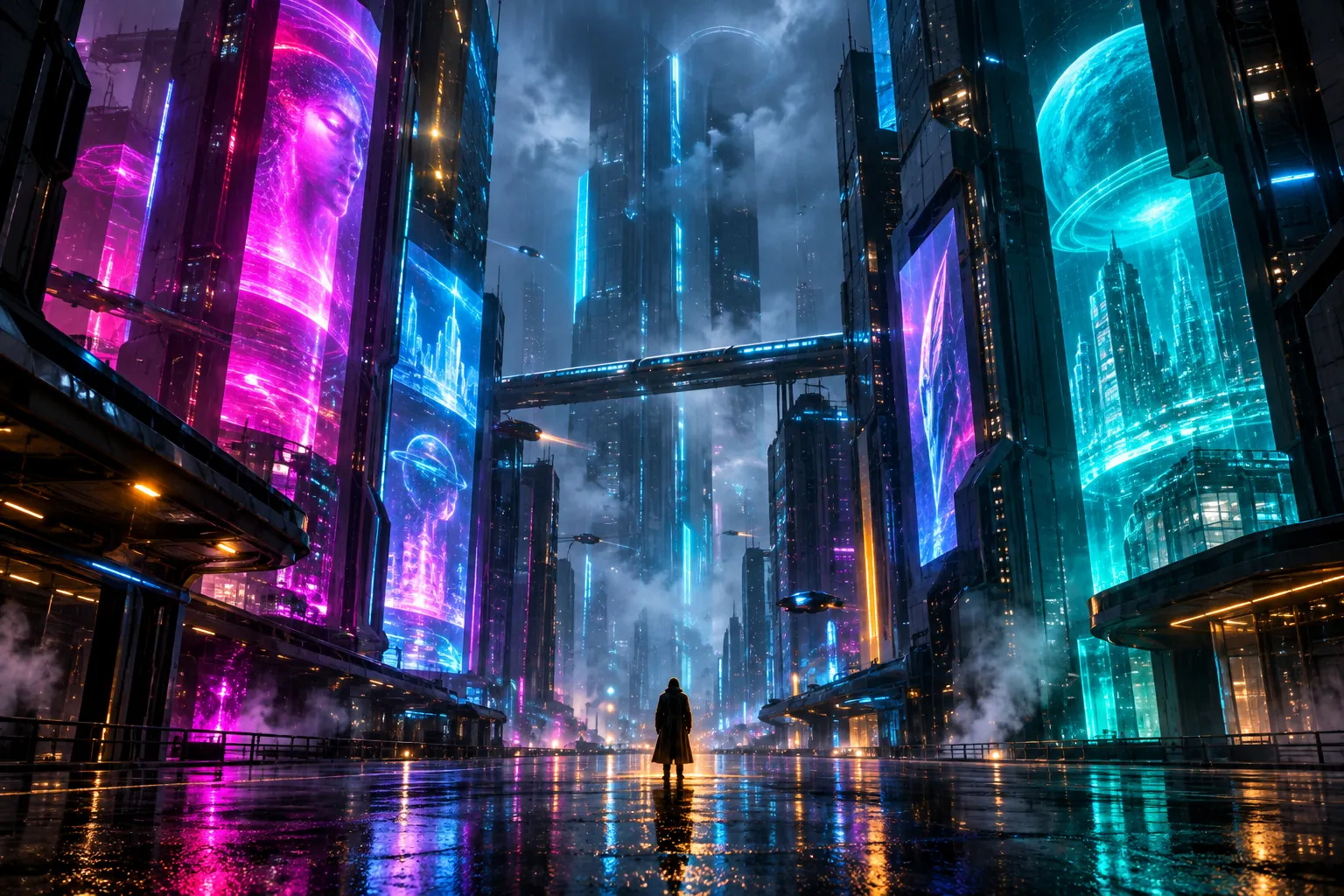
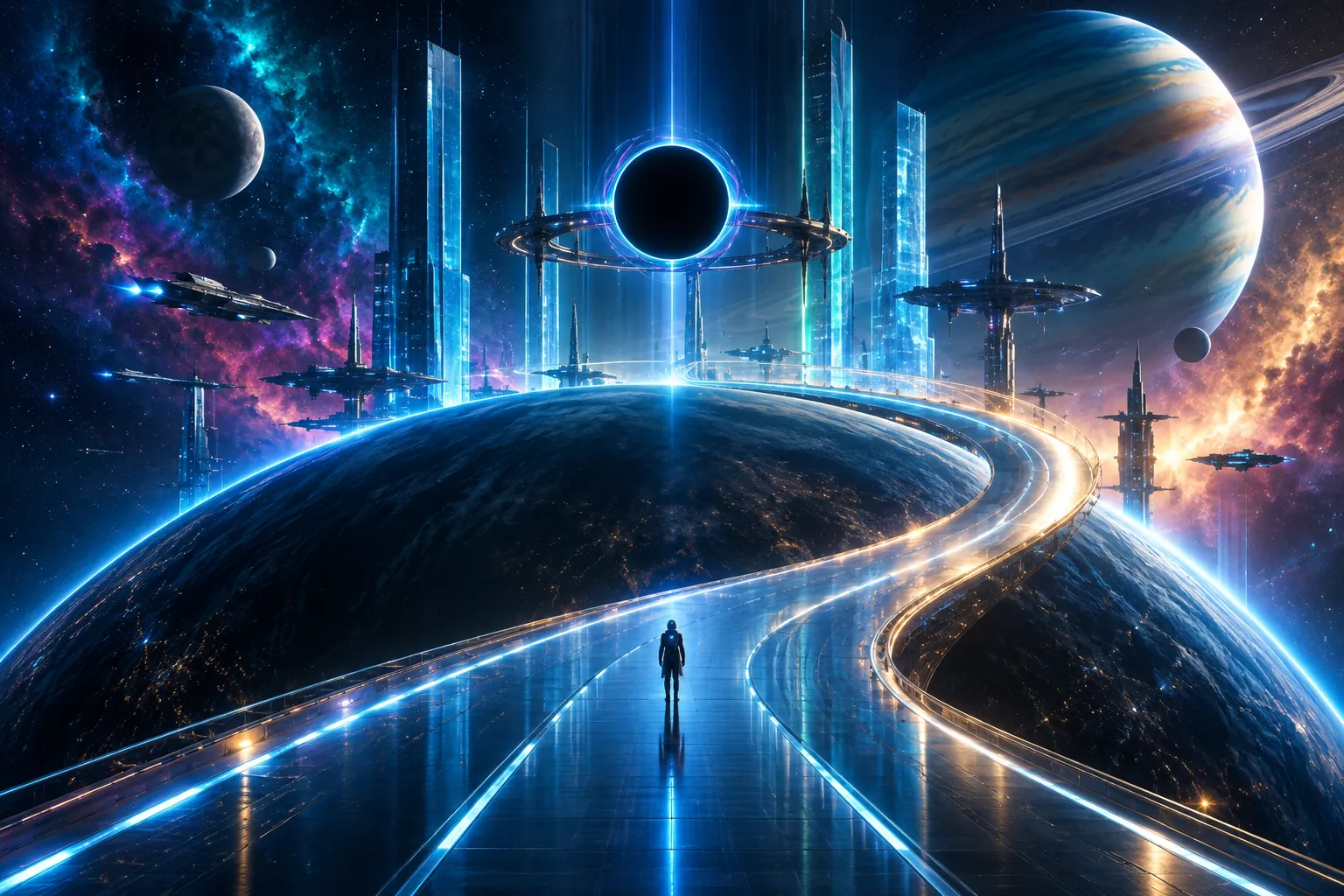
People reach it through goggles and a computer. Inside, a glowing boulevard called the Street circles a planet, and developers can build whatever they like along it.
Hiro spends time in the Black Sun, a club where hackers meet. There, people who could never share a room can talk as if they could.
The plot starts when someone in the Black Sun offers Hiro a mysterious file called Snow Crash. Seeing it on screen can harm a hacker's mind, and tracing where it came from drives the rest of the book.
Everyone appears as an avatar, and the quality of the avatar depends on the equipment. A rich user arrives with a detailed, lifelike body, while someone on a cheap public terminal shows up as a rough black-and-white figure.
That detail shows Stephenson's attitude. His Metaverse is not an escape from inequality; it carries inequality into the virtual world.
The novel's America is a place where private organisations have taken over much of what governments used to do. That is part of why the characters want somewhere else to be.
The word itself is a blend of "meta", meaning beyond, and "universe". "Avatar" comes from Sanskrit, where it refers to the earthly form of a god.
Spoiler note: this page describes the setting of the novel but not how the plot ends.
The ideas before the word
Stephenson did not invent the idea from nothing. Writers and programmers had been circling it for years.
In 1981, Vernor Vinge published the novella True Names, in which hackers enter a shared virtual realm under assumed identities.
In 1984, William Gibson's Neuromancer spread the word "cyberspace". It became the best-known novel of cyberpunk, the genre that Snow Crash is usually grouped with.
Real software was moving in the same direction. In 1986, Lucasfilm Games began running Habitat, an online world where users appeared as avatars on their home computers.
Fiction and experiments were developing side by side. Stephenson gave the shared idea one memorable name.
The real science: what exists and what does not
It helps to separate what is established from what is a forecast.
What is established is that shared 3D worlds exist and have millions of users. Second Life opened in 2003 and let residents build and sell their own creations.
Roblox launched in 2006 and grew into a platform of games made by its users. It now reports tens of millions of daily players, many of them on phones.
On 28 October 2021, Facebook's parent company renamed itself Meta and said it was betting on the metaverse. Its Reality Labs division has since reported operating losses of billions of dollars a year.
In 2022, companies and standards bodies founded the Metaverse Standards Forum to discuss shared technical standards.
What is not established is the central promise: a single connected world that everyone uses every day. Several problems are still open:
- Headsets can be heavy, and some users feel motion sickness.
- Avatars and purchases usually cannot move between services.
- Moderation and harassment are hard to manage in live 3D spaces.
- Personal data from motion tracking raises privacy questions.
So the fair summary is this: many separate virtual spaces exist today. The single, shared metaverse of the novel is still fiction.
Why the idea keeps coming back
People have long wanted places that are not limited by distance. A virtual space lets friends who live in different countries stand in the same room.
Businesses like it for a second reason. A new kind of place means new things to build, sell and advertise.
Fiction keeps testing the idea against human nature. If a world can be designed, someone designs it, and that someone has power over everyone inside.
This is why the topic divides people. Supporters see a new way to meet, learn and create, while critics see another platform where a few companies set the rules.
A useful question is not whether the metaverse will "win". It is who controls the spaces we spend time in, and on what terms.
Where it shows up in fiction
Books come first, because they gave us the idea.
- Snow Crash by Neal Stephenson (1992): the origin of the word and the model for later versions.
- Neuromancer by William Gibson (1984): cyberspace as a place people enter, before the word metaverse existed.
- Ready Player One by Ernest Cline (2011): a global VR world called the OASIS, where a treasure hunt decides who inherits a fortune.
Japanese light novels have used the same setting for years. Sword Art Online, by Reki Kawahara, is one well-known example.
These stories enjoy the freedom of virtual worlds. They also keep asking who owns them, who is left out and what happens when people prefer them to real life.
Common misconceptions
"Meta invented the metaverse"
No. The word dates to 1992, and similar worlds existed decades before Meta changed its name.
"The metaverse means VR headsets"
Not necessarily. Many of the most-used virtual worlds run on phones and ordinary computers.
"The metaverse in Snow Crash is a utopia"
It is not. The book shows inequality, crime and commercial power inside it.
"It is the same as the simulation hypothesis"
The two ideas are different. The simulation hypothesis asks whether our own reality might be a simulation, while the metaverse is a place people choose to enter.
"It requires crypto and NFTs"
It does not. Some companies have linked the two in their pitches, but virtual worlds worked without them.
Read next
- Cyberpunk: the genre behind Neuromancer and Snow Crash, and the best place to see where virtual worlds and corporate power first met.
- Simulation hypothesis: the related question of whether our own world could be a simulation.
- History of Science Fiction: the full timeline of the genre that produced the word.