In five minutes
Cloning means making a genetic copy of a living thing. In science fiction it usually means a person copied from another person, and the stories ask what a copy owes the world and what the world owes the copy.
The idea has a real side and a fictional side. Plants and many animals have been cloned for decades, but nobody has shown a cloned human baby.
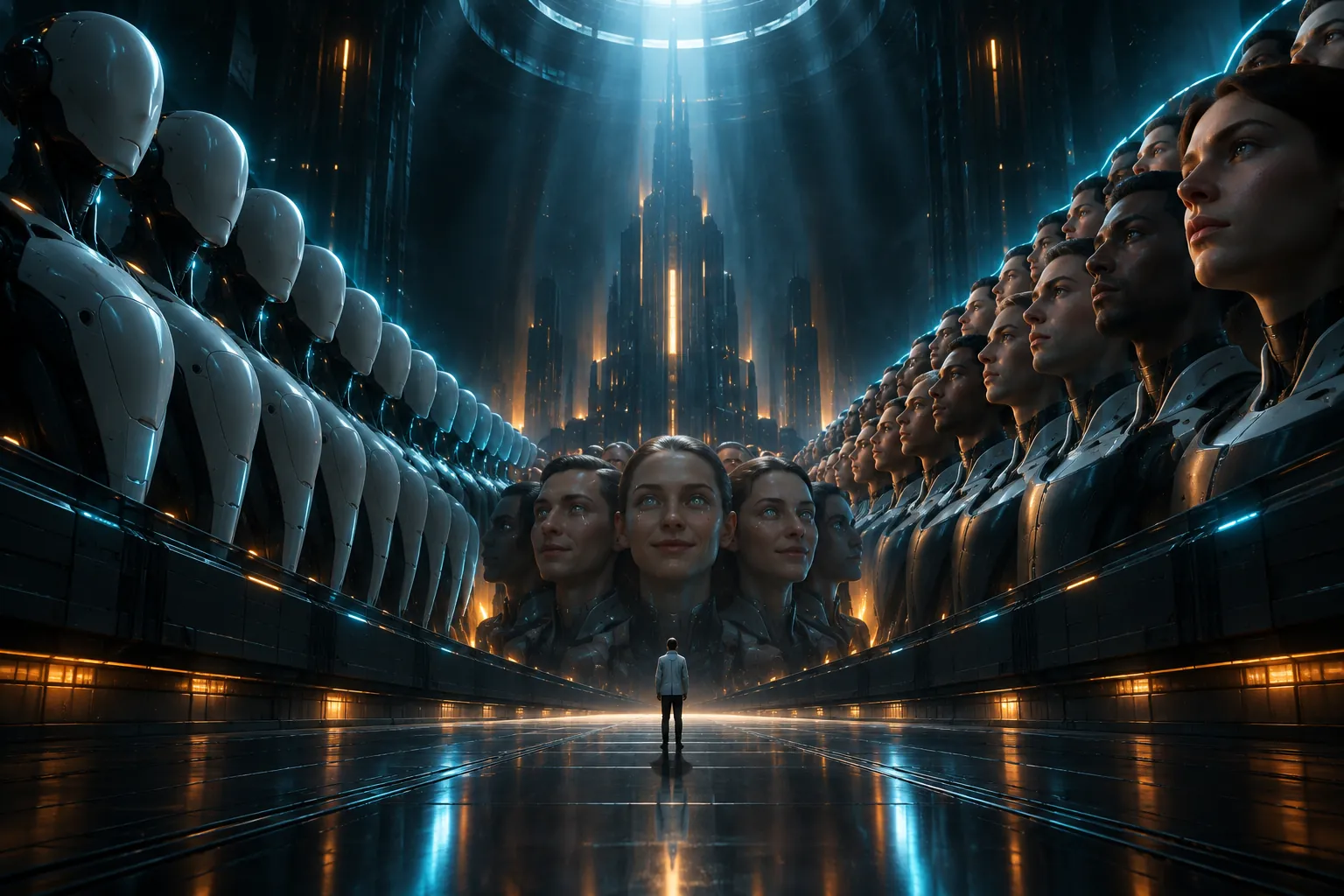
Fiction runs ahead of that gap. Writers have used clones as factory workers, spare parts, resurrected tyrants, replacements for lost children and lonely second selves.
Most of these stories share one question: if two people share the same genes, do they share the same self?
The science keeps answering no. The best stories then ask what a society does with that answer.
This page is part of our History of Science Fiction hub. It covers the real science first, then the books that made cloning a standard idea of the genre.
The real science
A clone is an organism that is genetically identical to another. Nature makes them all the time: identical twins are clones of each other, and many plants copy themselves from cuttings or runners.
The word comes from the Greek for "twig". The botanist Herbert J. Webber introduced it in 1903 for plants grown from cuttings.
Cloning animals by nuclear transfer began with frogs. Robert Briggs and Thomas King moved nuclei between frog eggs in 1952, and in 1958 John Gurdon showed that the nucleus of a specialised frog cell could still direct the growth of a whole new animal.
Gurdon shared the 2012 Nobel Prize in Physiology or Medicine with Shinya Yamanaka. Yamanaka's work on reprogramming cells (iPS cells) is a different route from cloning, but it grew from the same question about what a grown-up cell remembers.
The most famous mammal clone is Dolly the sheep, born on 5 July 1996 at the Roslin Institute near Edinburgh. Her creators announced her in February 1997.
The method is called somatic cell nuclear transfer. Scientists take the nucleus from an adult body cell, place it in an egg whose own nucleus has been removed, and trigger the egg to start developing.
Dolly's nucleus came from a mammary gland cell of an adult ewe. The egg grew into an embryo, which was carried by a surrogate mother and born as an ordinary lamb.
The process is inefficient. It took hundreds of attempts to produce Dolly, and cloned animals still fail far more often than naturally conceived ones.
Dolly lived to the age of six and was put down in February 2003 because of a lung disease. Since then, researchers have cloned cattle, pigs, dogs, cats and, in 2018, the first monkeys by this method, in a laboratory in Shanghai.
Human reproductive cloning has never been shown to work. Many countries ban it, and a 2005 United Nations declaration on human cloning urged states to prohibit it, although the declaration is not legally binding.
Scientists also separate reproductive cloning, which aims at a new individual, from research that makes cells or tissue for study. Fiction almost always means the first kind.
Where it shows up in fiction
Cloning became a standard science fiction idea in the second half of the twentieth century, but its roots go back further. The story that still shapes the genre most is a novel from 1932.
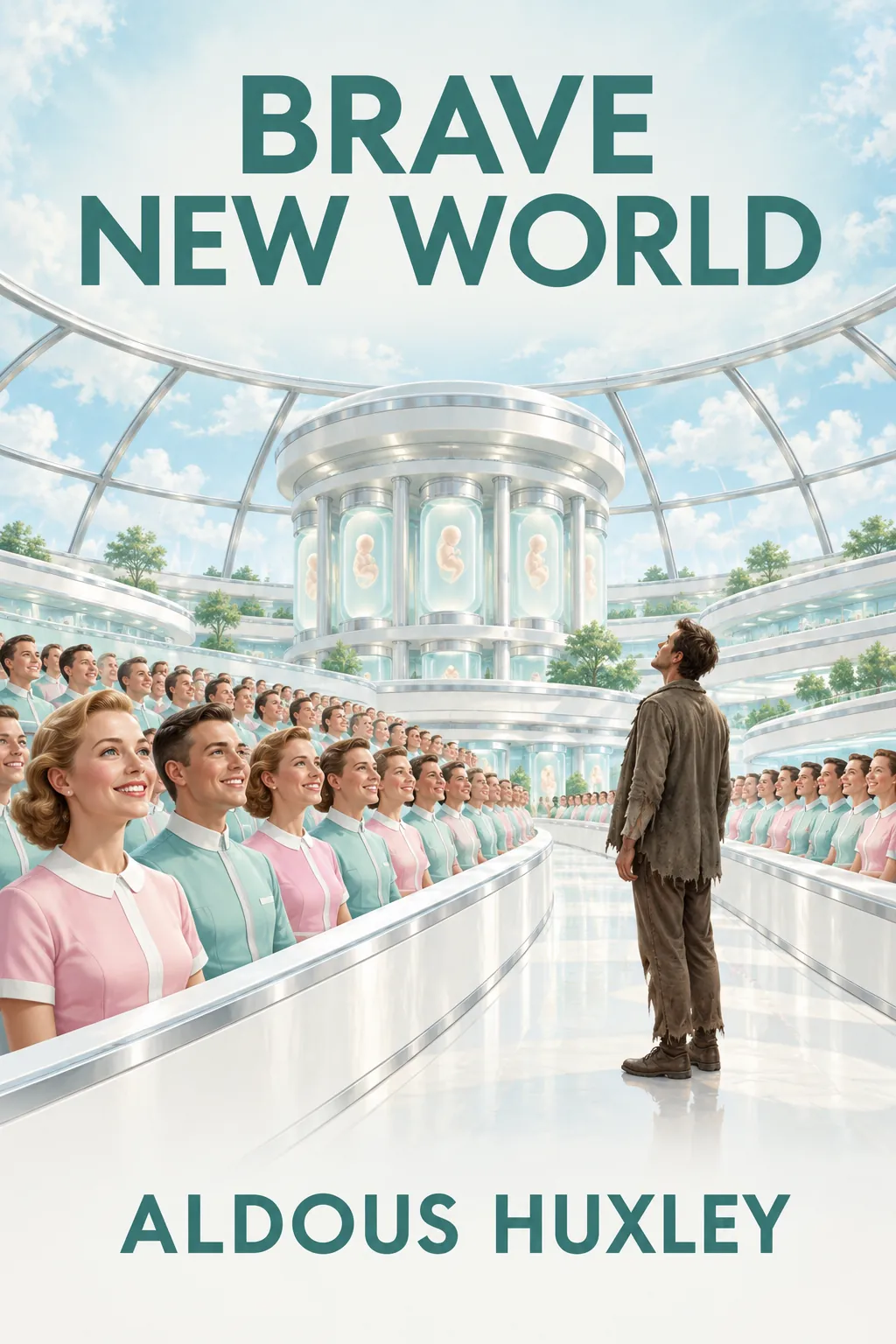
Brave New World (Aldous Huxley, 1932)
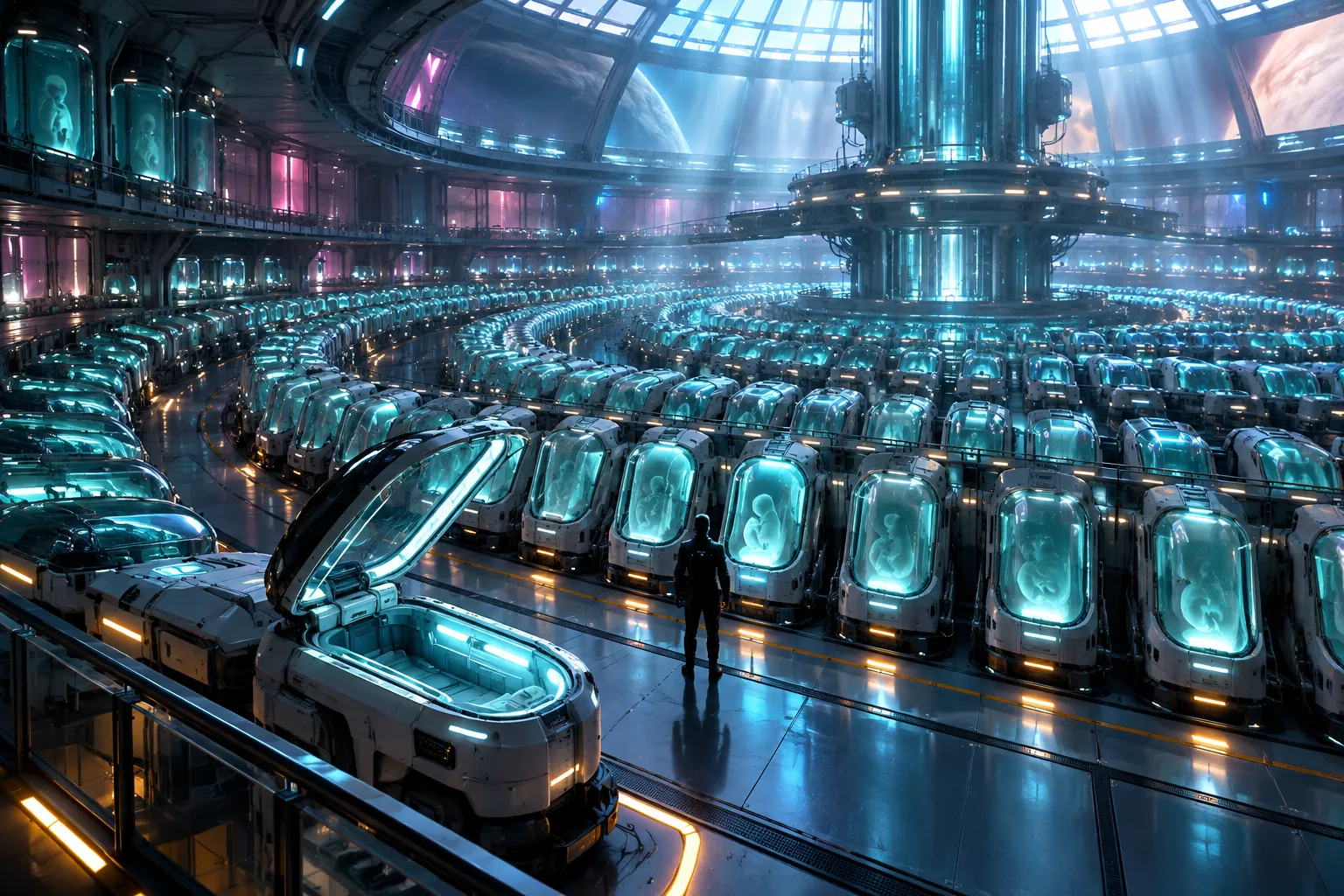
In the Hatchery and Conditioning Centre, a method called Bokanovsky's Process splits one fertilised egg into as many as 96 embryos. The state uses it to produce batches of identical workers for the lower castes.
Strictly speaking, this is closer to artificial twinning than to Dolly-style cloning, because no adult cell is copied. What matters is the idea: people made in batches, each one trained to want the job it was built for.
Our study guide to Brave New World covers the whole novel.
The Boys from Brazil (Ira Levin, 1976)
A thriller in which a Nazi doctor arranges for dozens of boys to be raised from the cells of Adolf Hitler. The plot works because the villains know that identical genes are not enough, so they try to repeat the childhood as well.
It is one of the earliest popular novels to treat cloning as a real technical project, and it puts the nature-versus-nurture argument at the centre of the plot.
Where Late the Sweet Birds Sang (Kate Wilhelm, 1976)
After an environmental collapse leaves humans unable to reproduce reliably, a community turns to cloning to survive. It won the Hugo Award for Best Novel in 1977.
Over generations the clones grow into a society that works well as a group but struggles with individual choice. Wilhelm asks what is lost when a population is made of near copies.
Cyteen (C. J. Cherryh, 1988)
After the murder of a powerful scientist, Ariane Emory, her clone is raised in a deliberate attempt to repeat her upbringing and, with it, her mind. The novel won the Hugo Award in 1989.
It treats the clone as a person with her own will rather than a replacement, and the conflict comes from the people who want her to be someone else.
Never Let Me Go (Kazuo Ishiguro, 2005)
The narrator, Kathy H., looks back on her years at Hailsham, a boarding school in the English countryside. The book reveals its premise gradually, so skip the next paragraph if you want to read it cold.
The students are clones, raised so that their organs can be donated to other people. There is no escape plot and no villain with a speech, only quiet young people who accept their fate.
That calm is what makes the book hard to forget. See our guide to Never Let Me Go for characters and themes.
What cloning stories are really about
Identity comes first. A clone shares nuclear DNA with its source but lives a different life, so the stories test how much of a person is inherited and how much is lived.
Personhood is the second theme. Many stories treat clones as property or as parts, and then show the characters behaving exactly like the people who made them.
Mortality is the third. Clones can stand for the wish to live on, to replace someone lost, or to keep a supply of spare bodies, and the stories usually find that wish costs somebody else.
Cloning also overlaps with other ideas about changing the human body. See Cyborg for machine enhancement and Transhumanism for the wider movement.
Common misconceptions
A clone has the same memories. It does not.
Memories and personality come from experience, so a clone is better described as a delayed twin than as a copy of a mind.
A clone appears fully grown. In reality, a cloned animal begins as an embryo and is born as a baby, then grows at the normal pace.
Fiction that skips this usually mixes cloning up with a different idea, such as copying or growing bodies at speed.
A clone is identical in every way. Not even in the genes.
The egg keeps its own mitochondrial DNA, and differences in the womb and in life leave their mark on appearance and health.
Cloning could bring back dinosaurs. Jurassic Park made this famous, but DNA breaks down over time.
The oldest DNA sequenced so far is about two million years old, far short of the roughly 66 million years since the dinosaurs.
Cloning is the same as genetic engineering. It is not.
Cloning copies a genome, while genetic engineering changes one, and fiction often blends the two.
Read next
History of Science Fiction places cloning among the other big ideas of the genre.
Cyborg looks at the other great body-changing idea, the merging of human and machine.
Transhumanism explains the real movement that wants to use technology to change what humans can be.
Never Let Me Go and Brave New World are the two best starting points among the novels above.