In five minutes: what is a utopia?
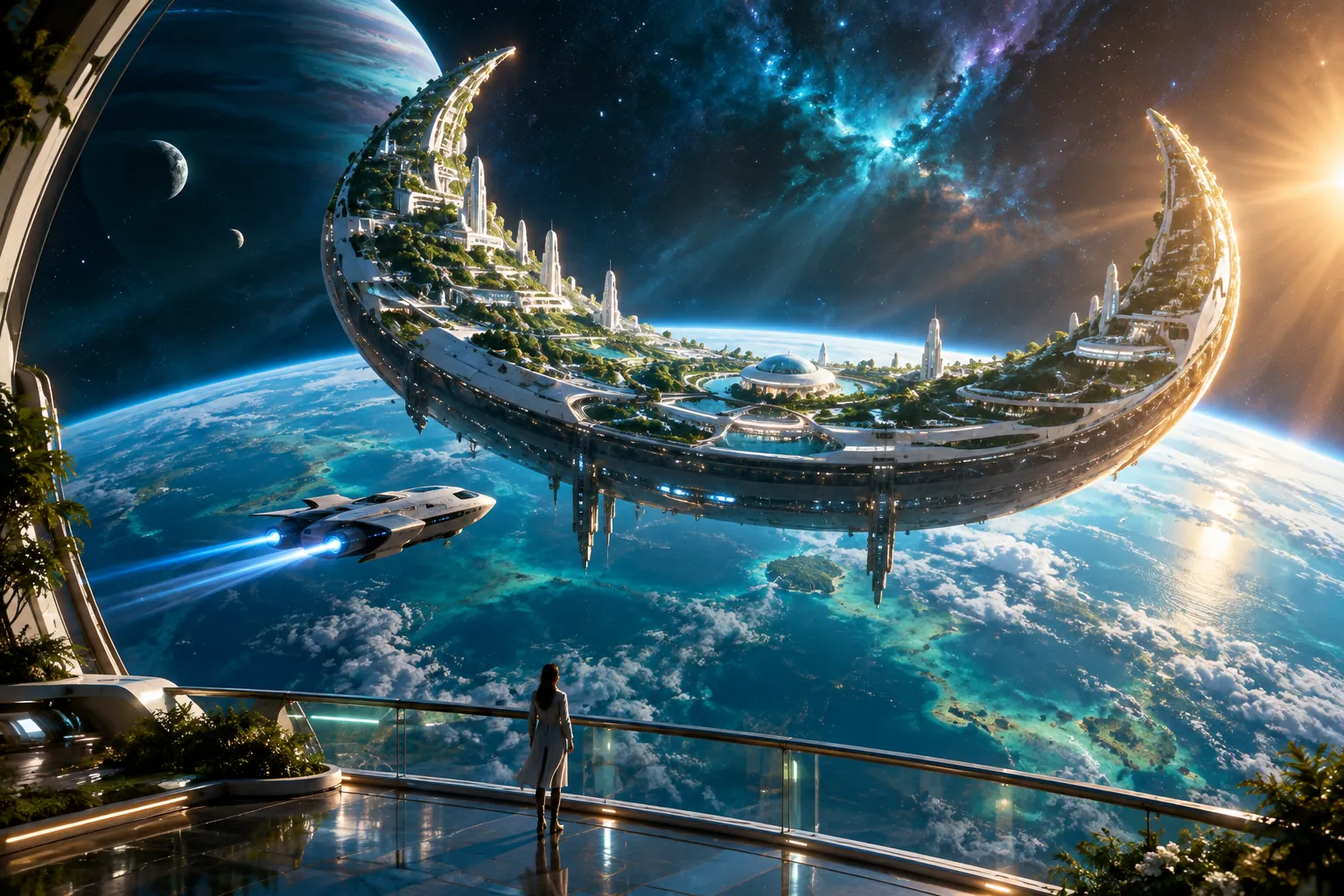
A utopia is an imagined society where life works far better than it does in the real world. People use the word for any ideal community, and for the long tradition of stories that describe one.
The word was invented by Thomas More, an English lawyer and writer, in his 1516 book Utopia.
More built it from Greek. It sounds like both “no place” and “good place”, so the name quietly admits that a perfect society may not exist anywhere.
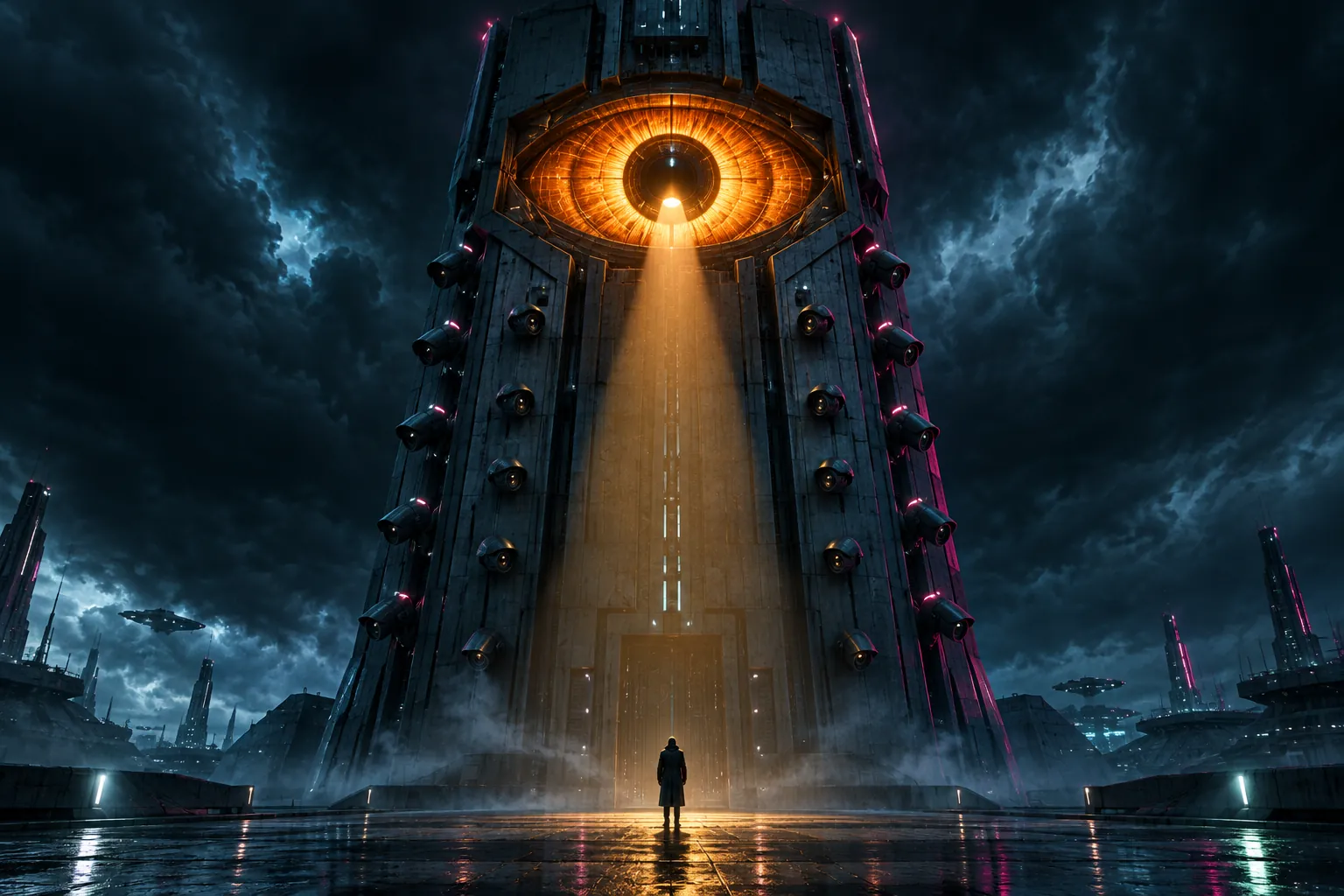
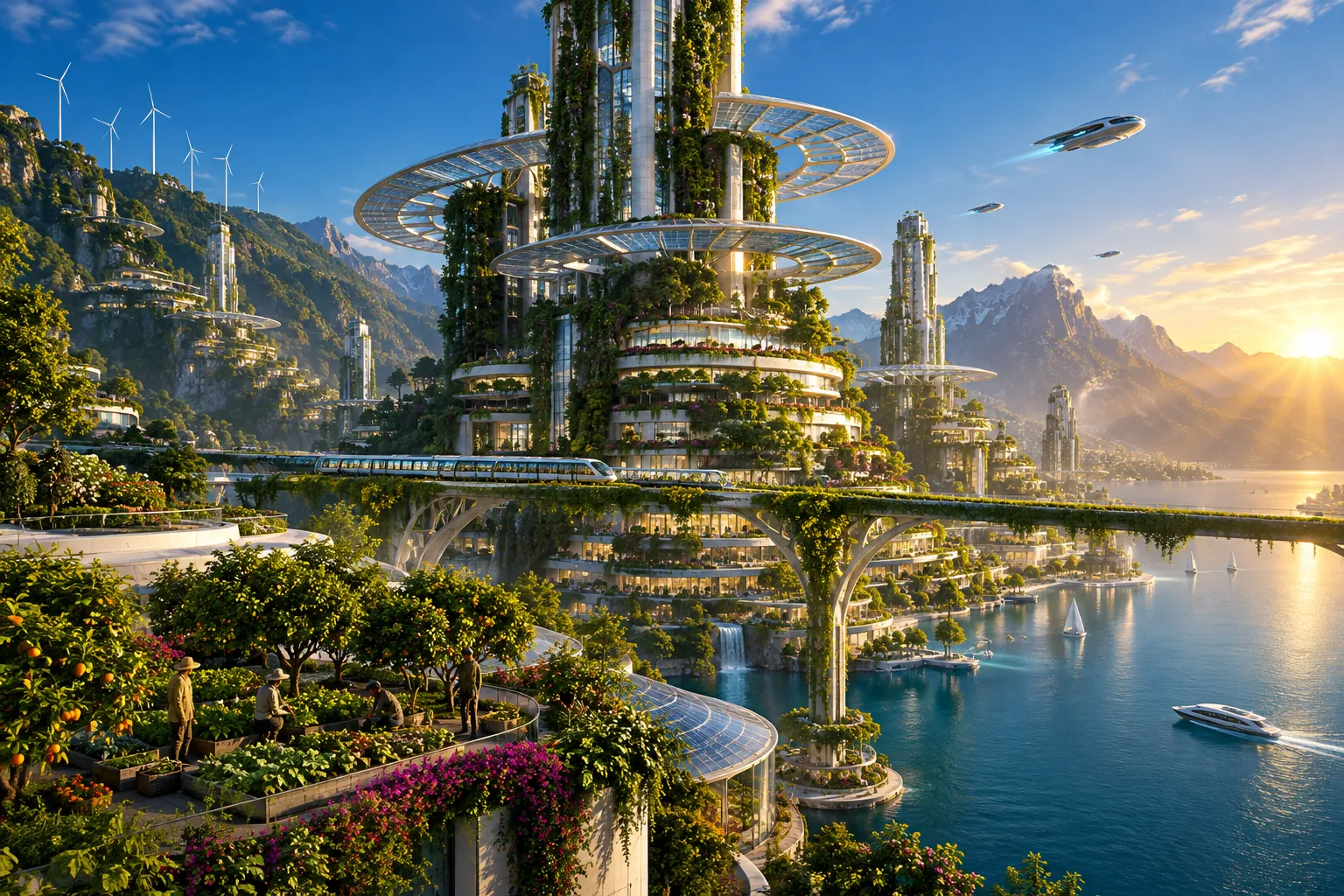
Science fiction took over the idea early. Its darker twin, dystopia, asks what happens when the dream goes wrong, and solarpunk asks whether a hopeful future can be believable again.
This page is part of History of Science Fiction, where utopia is one of the oldest threads.
Where the word utopia comes from
More wrote Utopia in Latin, the language of European scholars. He drafted the second half in 1515 during a diplomatic mission to Flanders, then added the first half after returning to England.
The book was printed in Leuven in 1516, with friends such as Erasmus and Peter Giles helping to see it into print. The first English translation, by Ralph Robinson, appeared in 1551.
The name is a pun. The Greek ou-topos means “no place”, and eu-topos means “good place”, and in English the two sound almost the same.
The narrator is a traveller named Raphael Hythloday, whose surname can be read as “a speaker of nonsense”. More signals from the first page that this is a game as well as an argument.
What More's island is like
The book has two parts. In the first, More meets Hythloday in Antwerp, and Hythloday attacks the England of the day, where landlords fenced in farmland for sheep and thieves were hanged.
In the second, Hythloday describes the island of Utopia, which he says he visited after sailing with Amerigo Vespucci. According to the story, a conqueror named Utopus had a channel dug to cut the land off from the mainland.
The island is crescent-shaped and holds 54 cities, all built to the same plan. Nobody owns private property, and families swap houses by lot every ten years.
Officials are chosen by election, starting with a representative for every group of thirty households. Everyone learns farming and a trade, and the working day is six hours.
Meals are eaten together in public halls, and free time is meant for learning. Gold is treated as worthless: Utopians use it for chamber pots and for the chains of slaves, so that nobody learns to prize it.
Religious belief is tolerated, though people who deny God and the soul are barred from public office.
It is not a gentle paradise by modern standards. Slavery is a punishment, travel needs permission, and the island hires foreign soldiers to fight its wars.
At the end, the narrator called More says that many Utopian customs seem absurd to him. He adds that he wishes for much of it in his own country but does not expect to see it.
Is it a serious plan or a joke?
Readers have argued about this for five centuries. The book is funny, full of puns and invented names, yet it makes real arguments about property, punishment and war.
Many scholars read it as both at once: a satire of European society and a thought experiment about how it might be arranged differently.
The facts of More's life add to the irony. He served Henry VIII as Lord Chancellor, then was executed in 1535 for refusing to accept the king as head of the Church of England.
The real science: thought experiments and real communities
Utopia is not a scientific concept. It is a thought experiment, a way of changing one feature of society, such as money or work, to see what follows.
People have tried to build real ones. Robert Owen's New Harmony in Indiana began in 1825, and its communal scheme broke down within about two years.
Brook Farm in Massachusetts ran from 1841 to 1847, and the Oneida Community in New York lasted from 1848 to 1881. The kibbutz movement in Israel, which began around 1910, is another well-known experiment in shared living.
In the Communist Manifesto (1848), Marx and Engels called early socialist schemes such as Owen's “utopian”. Since then the word has also carried a hint of criticism, meaning a plan that ignores how people really behave.
The philosopher Karl Popper made a different objection in The Open Society and Its Enemies (1945). He argued that a fixed blueprint for a perfect society tends to justify force against anyone who disagrees.
Defenders answer that imagining a better society is how many reforms begin. Both sides agree that the picture needs honest costs to be believable.
Where utopia shows up in fiction
Early followers copied More's frame of a traveller discovering a perfect land. Francis Bacon's New Atlantis (published 1627) imagines an island guided by a research institution called Salomon's House.
In the 19th century, utopias moved into the future. Edward Bellamy's Looking Backward (1888) has a man wake in the year 2000 to a planned, peaceful America.
William Morris wrote News from Nowhere (1890) as a reply, picturing a rural England that values craft over factories.
Charlotte Perkins Gilman's Herland (1915) describes a hidden country of women. B. F. Skinner's Walden Two (1948) imagines a small community run on behavioural science.
Ursula K. Le Guin's The Dispossessed (1974) carries the subtitle “An Ambiguous Utopia”. It shows an anarchist world with real flaws, which fits the modern view that a utopia must admit its costs.
Dystopias attack the dream head-on. Aldous Huxley's Brave New World (1932) and George Orwell's Nineteen Eighty-Four (1949) show societies that promise happiness or order while taking away freedom.
The watching leader of Orwell's book has its own page, Big Brother (Orwellian).
Common misconceptions
“Utopia means a perfect place.” More's island has slavery and strict rules, and the name itself says “no place”.
“Utopia and dystopia are completely separate.” Often they are the same society seen from different positions, where one person's order is another person's cage.
“More wanted to build this island.” The island is described by the character Hythloday, and More ends by saying he cannot agree with everything about it.
“Utopia means heaven.” It does not.
It is an earthly society made by people, not an afterlife.
Read next
Dystopia: the dark mirror of the utopian dream and how the word entered English.
Solarpunk: a modern attempt to write hopeful futures with practical detail.
Big Brother (Orwellian): the most famous picture of order turned into control.
History of Science Fiction: where utopia sits among the genre's oldest ideas.