In five minutes
Marxism-Leninism is a political doctrine built from two parts. The first is the theory of Karl Marx and Friedrich Engels: history moves through conflict between social classes, and capitalism will eventually give way to a society without classes. The second is the work of Vladimir Lenin, who asked a practical question: how does a small group of revolutionaries actually bring that change about, and why might it start in a poor, mostly peasant country like Russia?
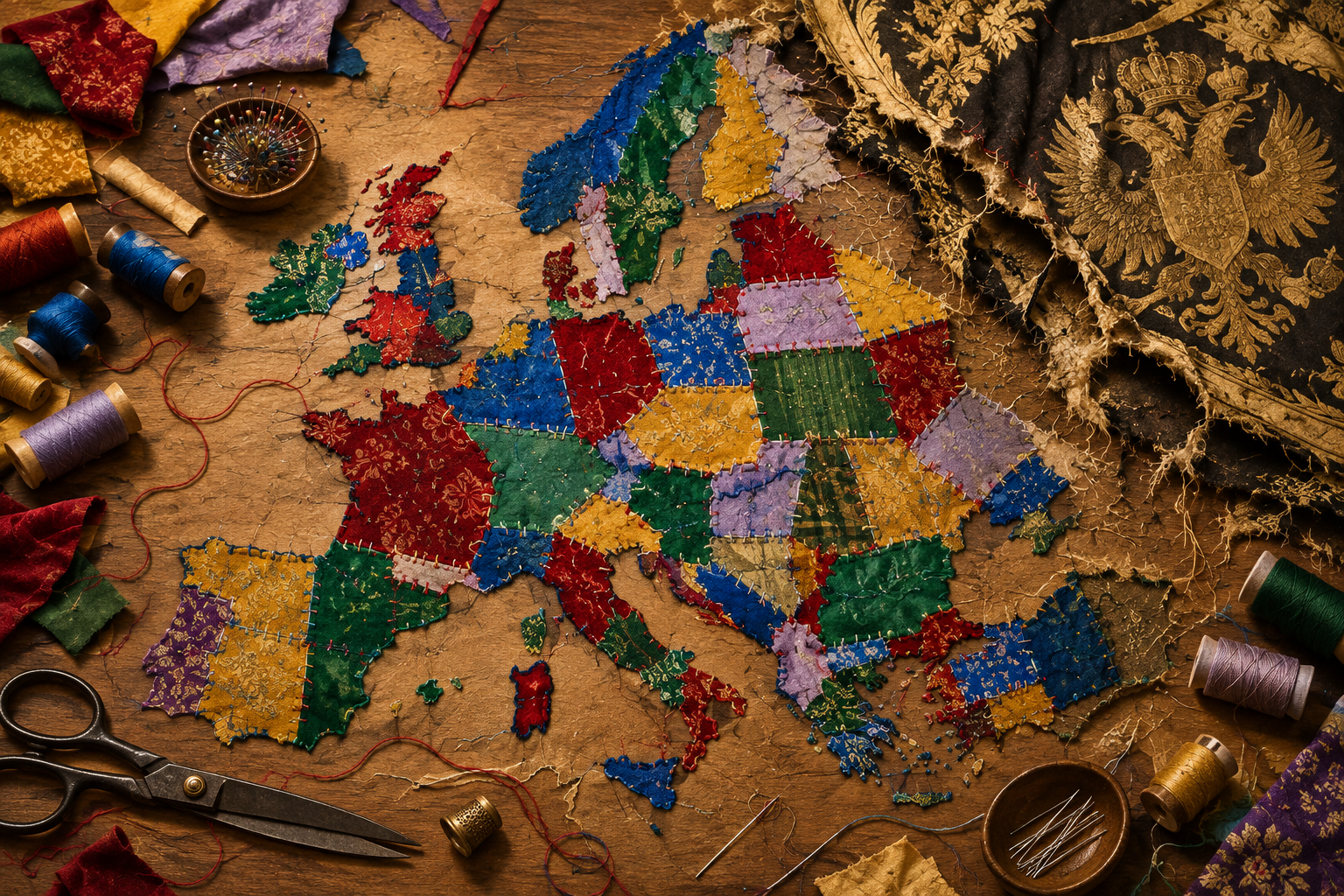
The name came later. Lenin died in 1924, and it was in the years after his death that his followers, above all Joseph Stalin, began to call the whole system Marxism-Leninism. This page follows the story up to 1917, the year Lenin's party took power. The doctrine is one of the major currents described in Ideas That Shaped the 19th Century, alongside liberalism, nationalism and Darwin's theory of evolution.
- Marx's core claim: history is a story of class struggle, and the workers (the proletariat) will overthrow the owners of capital (the bourgeoisie).
- Lenin's core claim: workers need a disciplined party of professional revolutionaries to lead them, and imperialism has made the whole world ripe for upheaval.
- The test: the Bolshevik seizure of power in Petrograd in October 1917 (7 November in the modern calendar).
Where it began: Marx and Engels
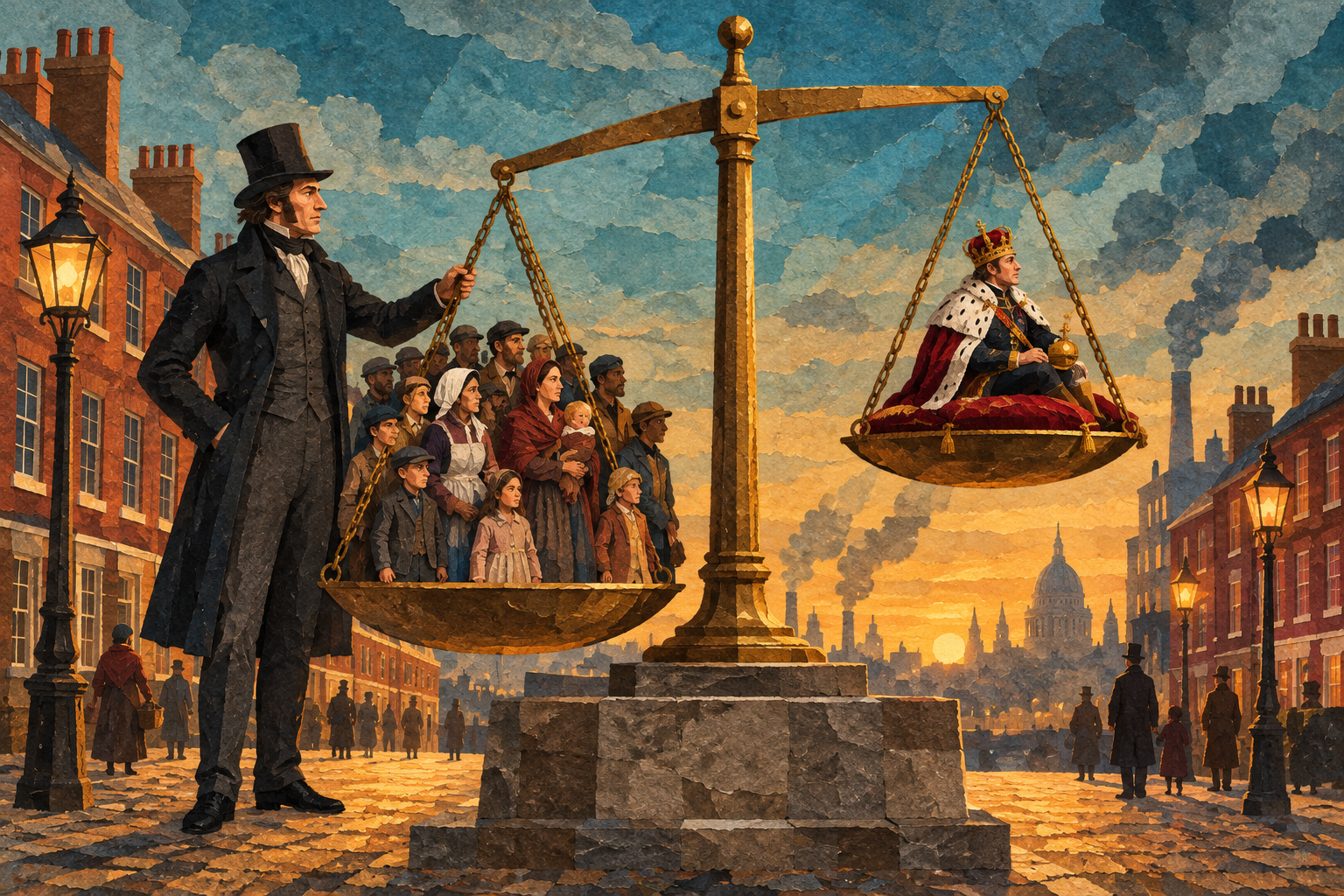
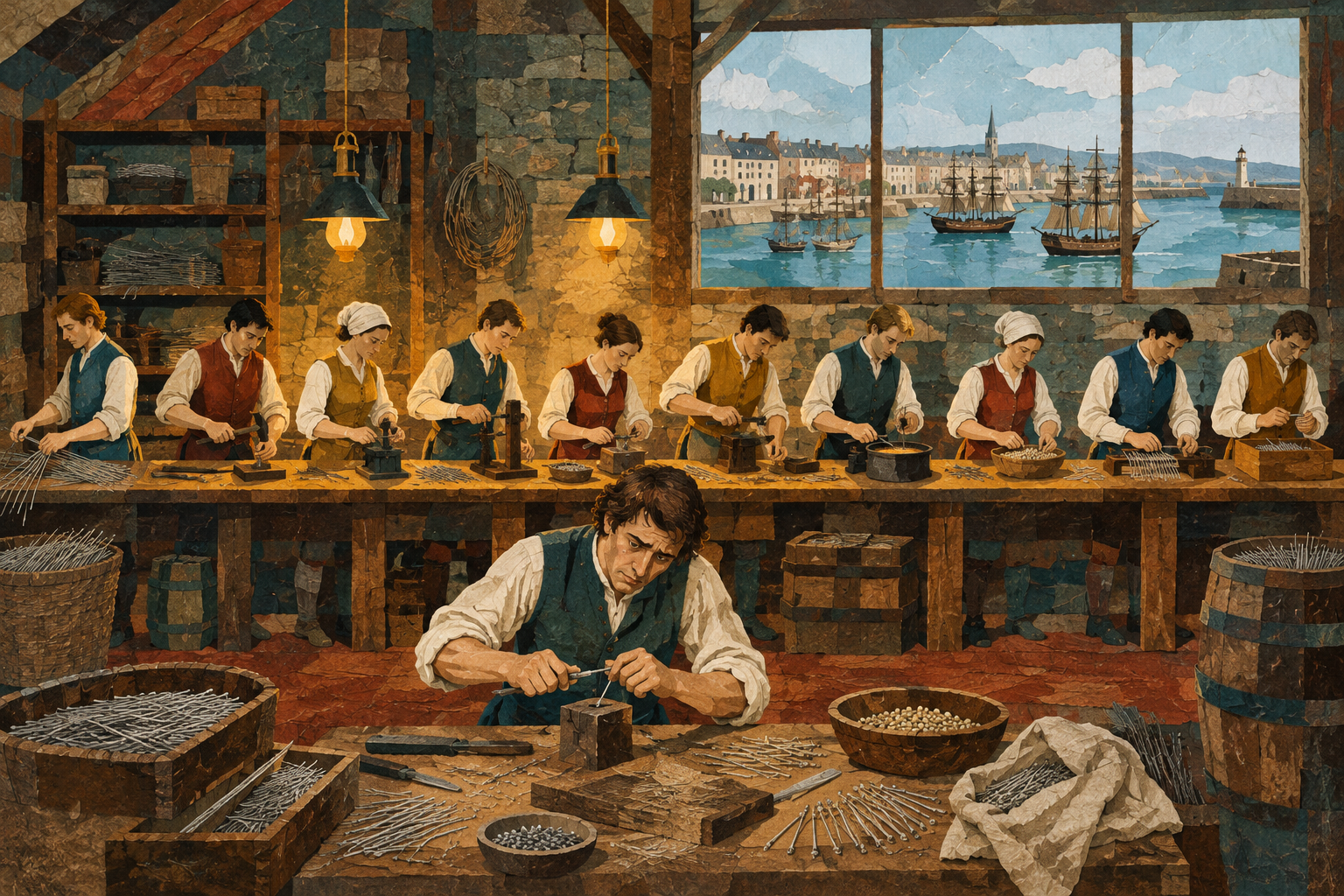
Karl Marx (1818–1883) and Friedrich Engels (1820–1895) lived in a Europe being remade by factories, railways and growing cities. Workers in these places were often poor, and many owned nothing but their ability to work. Marx argued that this was not an accident. In his view, the owners of factories and land lived off the labour of those who worked for wages, and the two groups were bound to clash.
Their short pamphlet The Communist Manifesto, published in London in 1848, put the idea in a sentence that became famous: the history of all society so far is the history of class struggles. Marx later spent years on a detailed study of the economy, and the first volume of Capital appeared in 1867. There he argued that employers gain profit from surplus value, the part of a worker's labour that is not paid for. After Marx's death, Friedrich Engels edited and published the later volumes and spread the ideas across Europe.
Marx expected the revolution to come first in the most industrial countries, such as Britain or Germany. He also wrote that after the old order fell there would be a transitional stage, which he called the dictatorship of the proletariat, before a classless society appeared. He left few details about how this would work, and that gap mattered later.
Why Russia? A Marxist movement in a peasant country
Russia in the late nineteenth century was ruled by a tsar with almost unlimited power. Serfdom had ended only in 1861, and the great majority of people were still peasants. Yet from the 1890s the state pushed factories, railways and mining, and city workers grew in number. Marxist ideas came with them. Georgi Plekhanov founded the first Russian Marxist group, Emancipation of Labour, in exile in 1883, and in 1898 a small congress in Minsk created the Russian Social Democratic Labour Party.
This created a puzzle. If Marx said revolution needs a large industrial working class, how could a Marxist party in Russia hope to succeed? Russian Marxists spent the next two decades arguing about the answer, and Lenin's answer is what separates his version from Marx's.
Lenin's additions to Marx
A party of professional revolutionaries
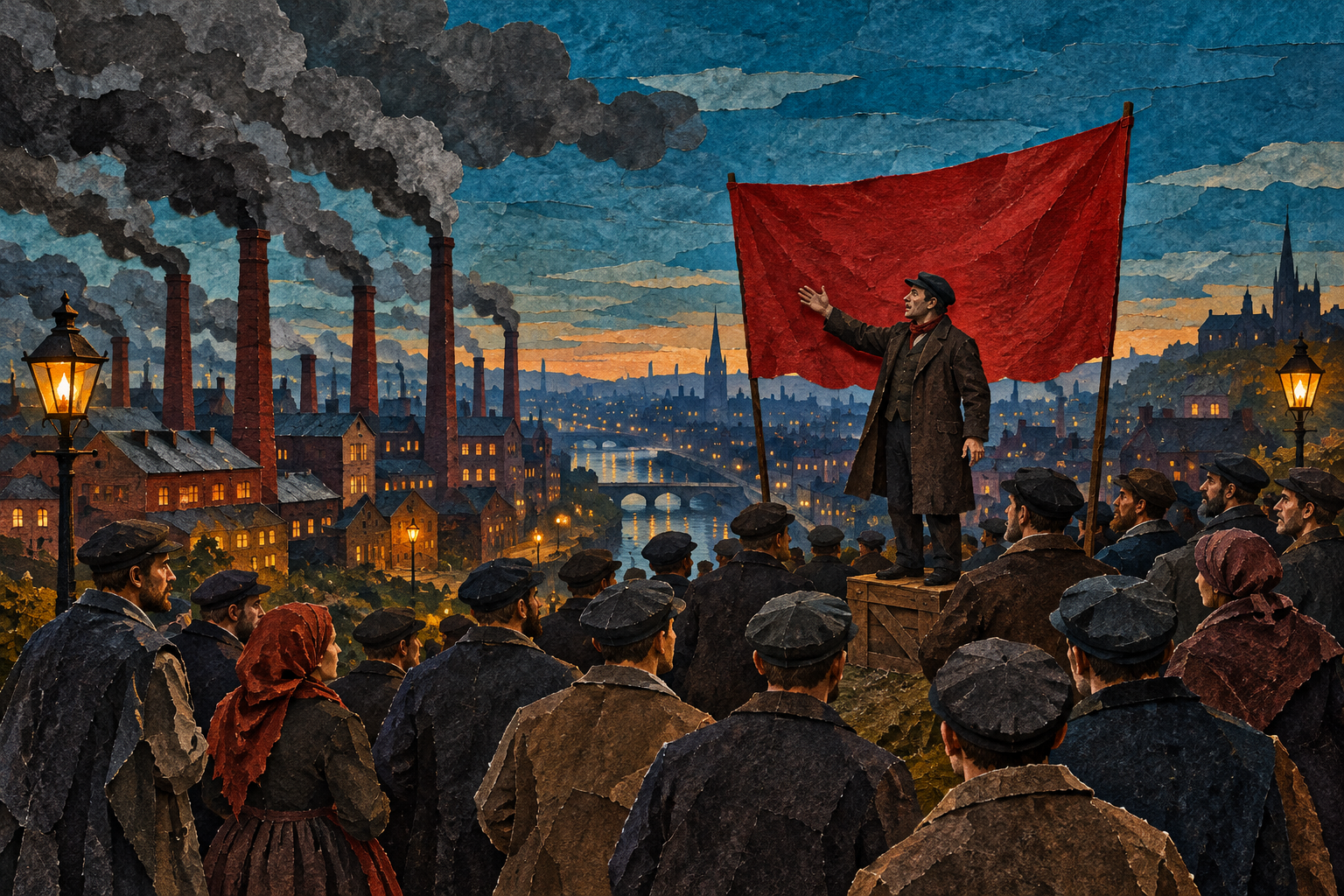
Vladimir Ulyanov, known as Lenin (1870–1924), became a revolutionary after his older brother Alexander was hanged in 1887 for a plot against the tsar. In What Is to Be Done? (1902) he argued that workers left to themselves tend to fight only for better wages and conditions. To aim at a political revolution, they need a tightly organised party of full-time revolutionaries, a vanguard that supplies the vision. Secret police and censorship in Russia, he said, made such a hidden, disciplined party a necessity.
At the party's second congress in 1903, a quarrel over who counts as a member split the movement. Lenin's supporters won a vote on other questions and took the name Bolsheviks, meaning the majority. Their opponents, led by Julius Martov, became the Mensheviks, the minority. The labels stuck even though the numbers later shifted.
1905 and the soviets
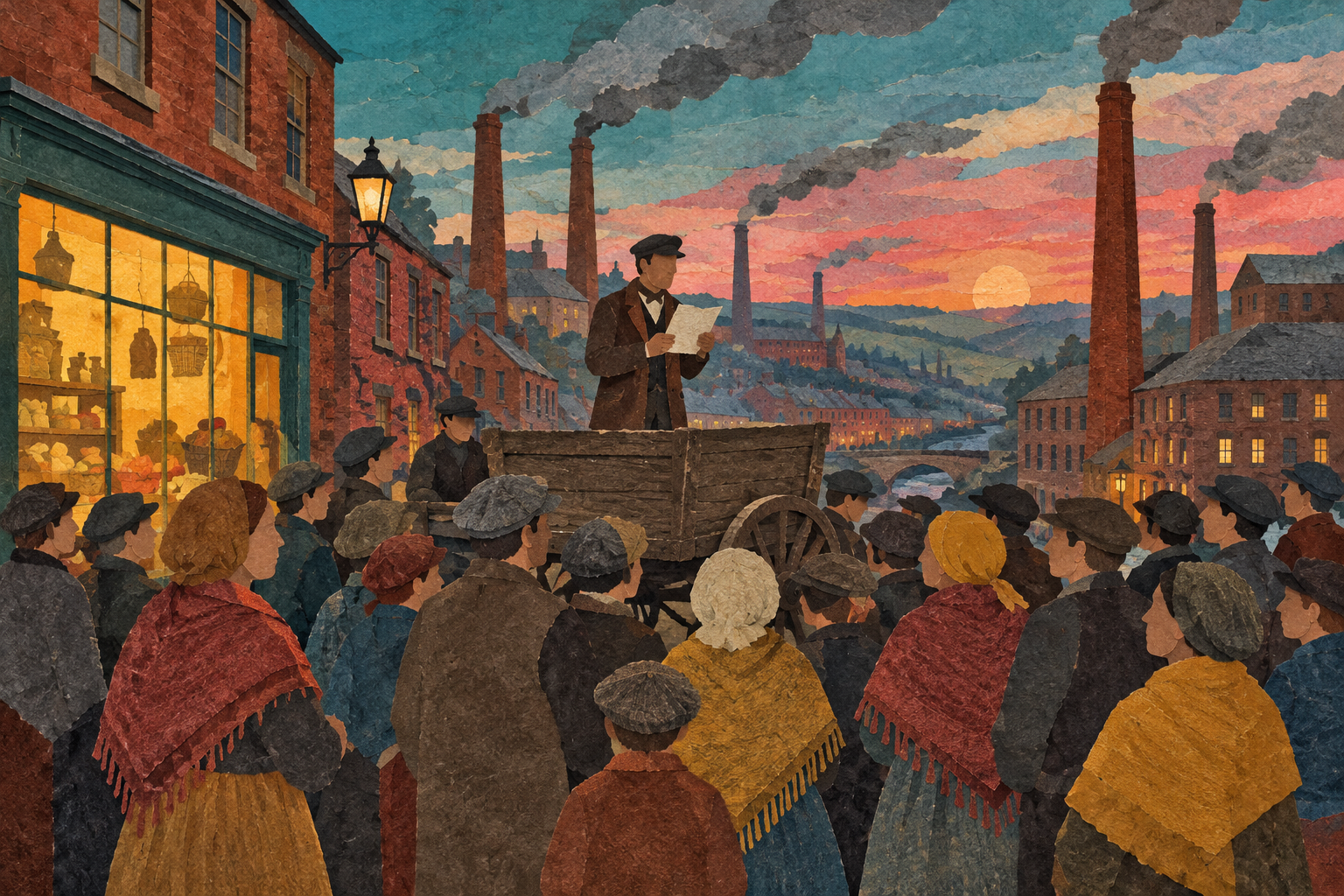
In January 1905 troops fired on a peaceful workers' march in St Petersburg, an event called Bloody Sunday, and a wave of strikes and unrest followed. Workers elected councils called soviets to run strikes. The tsar promised an elected parliament, the Duma, and the revolution faded, but Lenin took away a lesson: ordinary people could build their own organs of power, and a party could try to lead them.
Imperialism and war
When the First World War began in 1914, most socialist parties in the Second International backed their own governments, despite earlier promises to oppose war. Lenin called this a betrayal. During the war, in 1916, he wrote Imperialism, the Highest Stage of Capitalism (published in 1917). It argued that big banks and monopolies had pushed the great powers to divide the world among themselves, and that the war was the result. In his view, capitalism had become a single world system, and it could break at its weakest link. That link, he suggested, might be Russia rather than Germany.
1917: theory meets events
In February 1917 (March in the modern calendar), strikes and mutinies in Petrograd forced Tsar Nicholas II to abdicate. A Provisional Government took charge, but the soviets held real power in the streets and barracks, a situation called dual power. Lenin, in exile in Switzerland, returned in April, travelling by sealed train through Germany. His April Theses rejected support for the Provisional Government and called for all power to the soviets, together with peace, land for peasants and bread.
In the summer, in hiding, Lenin wrote The State and Revolution. It argued that the state is a tool by which one class rules another, so workers could not just take over the old machinery. They had to break it and build a new kind of state, which would eventually wither away. The book was published in 1918, after the revolution, and it shaped how Bolsheviks described their own system.
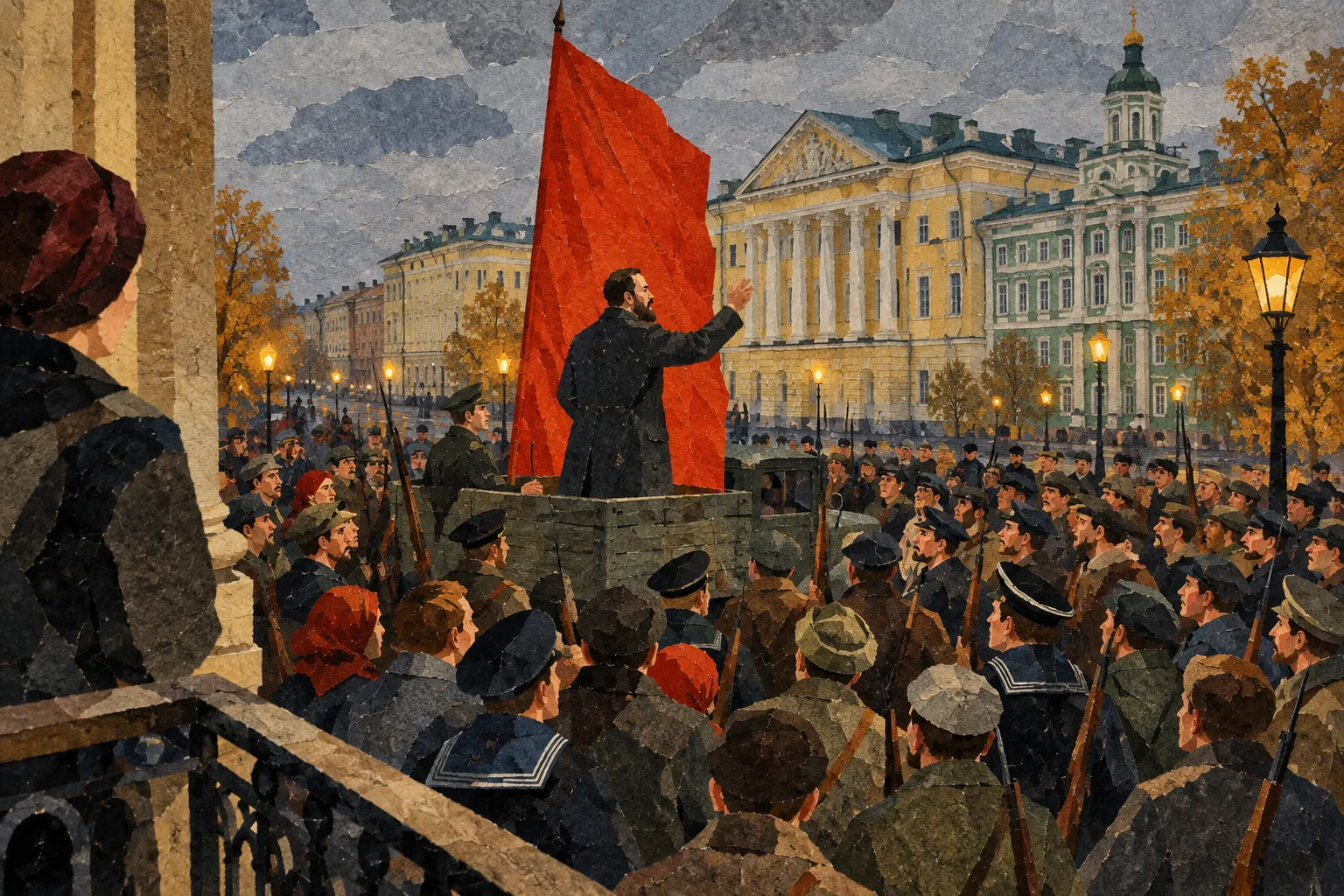
On 25 October by the Russian calendar of the time (7 November in the modern calendar), Bolshevik-led forces seized key points in Petrograd and the Provisional Government fell. The second All-Russian Congress of Soviets met and approved a new government led by Lenin. For Lenin's followers it showed that a revolution could succeed outside the most developed countries.
After 1917: how the name came about
The years that followed brought civil war (1918–1922), the founding of the Communist International in 1919 to spread the model abroad, and the creation of the Soviet Union in December 1922. After Lenin's death on 21 January 1924, Stalin published lectures called Foundations of Leninism and presented Leninism as the continuation of Marx for the age of imperialism. The joined name Marxism-Leninism came to describe the official teaching of the Soviet party. In 1938 a party textbook, the Short Course, fixed a standard version for schools and party members. Later communist governments, including China, Vietnam and Cuba, adopted the label in their own ways.
Common misunderstandings
- Marx did not invent Marxism-Leninism. Marx died decades before the term existed, and the standard version was shaped by Stalin's era.
- Marxism-Leninism is not simply Marxism. Other Marxists, including social democrats such as Karl Kautsky and revolutionaries such as Rosa Luxemburg, criticised Lenin's emphasis on a disciplined party and his limits on political freedom.
- The October Revolution was not one event of one day. It followed months of strikes, military collapse and political conflict.
What exams ask
Typical questions ask you to explain the difference between Marx and Lenin. A short answer: Marx described class struggle and predicted a workers' revolution in industrial countries; Lenin added the vanguard party, a theory of imperialism, and the idea that revolution could begin in Russia. Know the dates 1848 (Manifesto), 1903 (Bolshevik–Menshevik split), 1905 (first revolution), 1917 (February and October revolutions) and 1924 (Lenin's death). Be ready to link the First World War to the revolution and to explain the calendar difference between 25 October and 7 November.
Read next
- The Communist Manifesto (1848): the short text where Marx and Engels first set out the idea of class struggle.
- Friedrich Engels: the partner who funded, edited and spread Marx's work.
- What Is Nationalism?: the rival force that pulled workers toward their nations in 1914.