In five minutes
Friedrich Engels (1820–1895) was a German businessman and writer who spent most of his adult life beside Karl Marx. Together they produced The Communist Manifesto in 1848. Engels also paid for much of Marx's living costs, and after Marx died in 1883 he edited the second and third volumes of Capital. He is a central figure in the ideas that shaped the 19th century, and anyone who searches for "Marx and Engels" is really asking about a partnership of two very different men.
Two facts make Engels unusual. He was the son of a textile manufacturer, so he knew capitalism from the inside, and he worked in a family cotton firm for about twenty years. And he was content to be the partner in the background: he later said he had played second fiddle to Marx. That modesty hides how much he did. He wrote an early study of working-class life, helped shape the ideas of the Manifesto, and became the main explainer of Marxism after 1883.
A pious home in the Rhineland
Engels was born on 28 November 1820 in Barmen, a manufacturing town in the Prussian Rhineland (today part of Wuppertal). His father owned cotton mills and belonged to a strict Protestant family. Friedrich was the eldest son and was expected to join the business. He left school at 17 and went to Bremen as a clerk in a trading house.
Away from home he began to read widely, wrote articles under a pen name and drifted towards the Young Hegelians, a group of radical German philosophers who questioned religion and the Prussian state. In 1841 he did a year of military service in Berlin, where he attended university lectures and met people from this circle.
Manchester: seeing the factory system up close
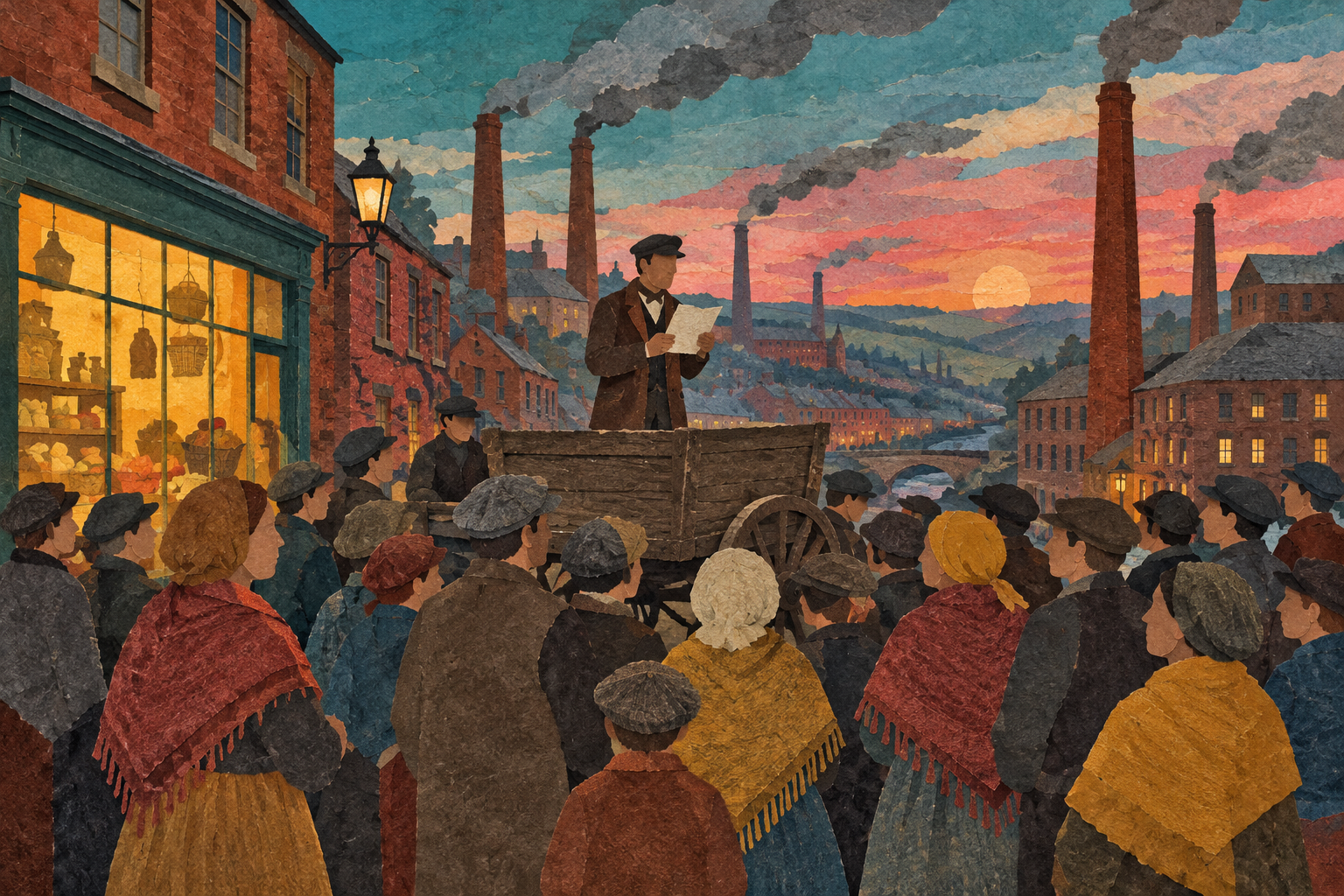
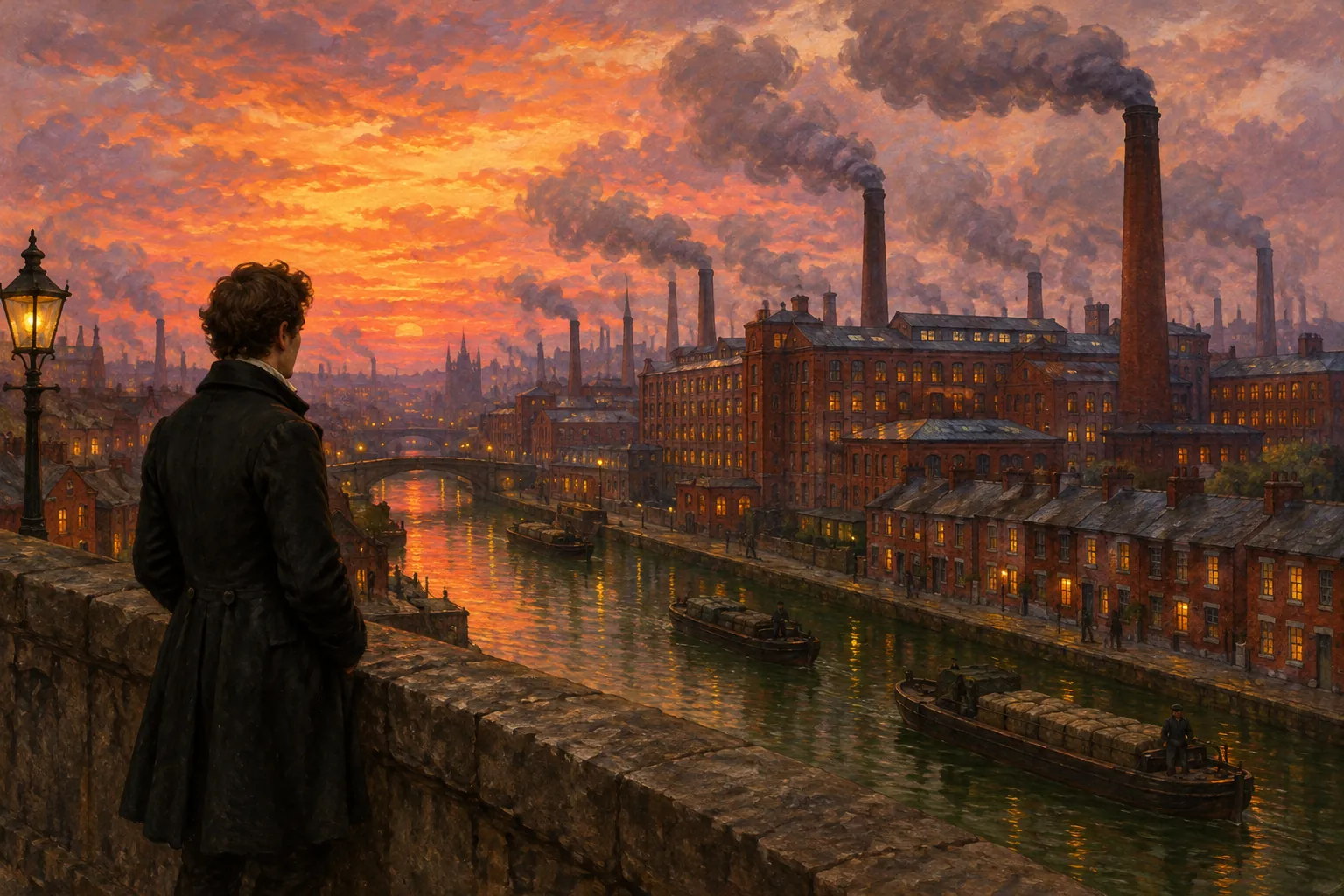
In late 1842 his father sent him to Manchester to work at Ermen & Engels, a cotton-thread firm in which the family held a share. Manchester was then the centre of the British cotton industry and one of the first great industrial cities. Engels spent about twenty-one months there on this first stay. He walked through the poor districts of Manchester and Salford, and an Irish working woman named Mary Burns guided him through them. She became his partner, and they lived together until she died in 1863.
What he saw became The Condition of the Working Class in England, published in German in 1845. The book describes overcrowded housing, polluted water, child labour and low wages, and argues that the new factory system produced these conditions by design, not by accident. It was one of the first detailed studies of industrial poverty, and it pushed Engels towards socialism. He also wrote an essay criticising political economy, which Marx read with great interest.
Paris, 1844: the friendship begins
The two men had met briefly in Cologne in 1842, without much warmth. The real start came in late August 1844, when Engels, on his way home from England, stopped in Paris and spent about ten days with Marx. They found that they had reached similar conclusions by different roads: Marx through philosophy and German politics, Engels through economics and industrial England. They agreed to work together.
Their first joint book, The Holy Family (1845), attacked other Young Hegelians. In Brussels they then wrote The German Ideology (1845–46), which set out a view of history in which the way people produce goods shapes society, law and ideas. It was not published in their lifetime.
The Communist Manifesto and 1848
In 1847 both men joined the Communist League, a small secret group of workers and exiles. Engels wrote a draft in question-and-answer form, called Principles of Communism, and the League asked for a public statement of its aims. Marx wrote most of the final text, and it appeared in London in February 1848 as The Communist Manifesto. Its opening line says that the history of all society so far is the history of class struggle. Engels's draft is a clear forerunner, and he helped shape the ideas.
Revolutions broke out across Europe within weeks. Engels worked on the radical newspaper in Cologne with Marx, and in 1849 he fought in the armed uprisings in Elberfeld and in Baden and the Palatinate. The Prussian army crushed them. Engels escaped through Switzerland and reached London, and the two men became exiles.
Back to the cotton business to support Marx
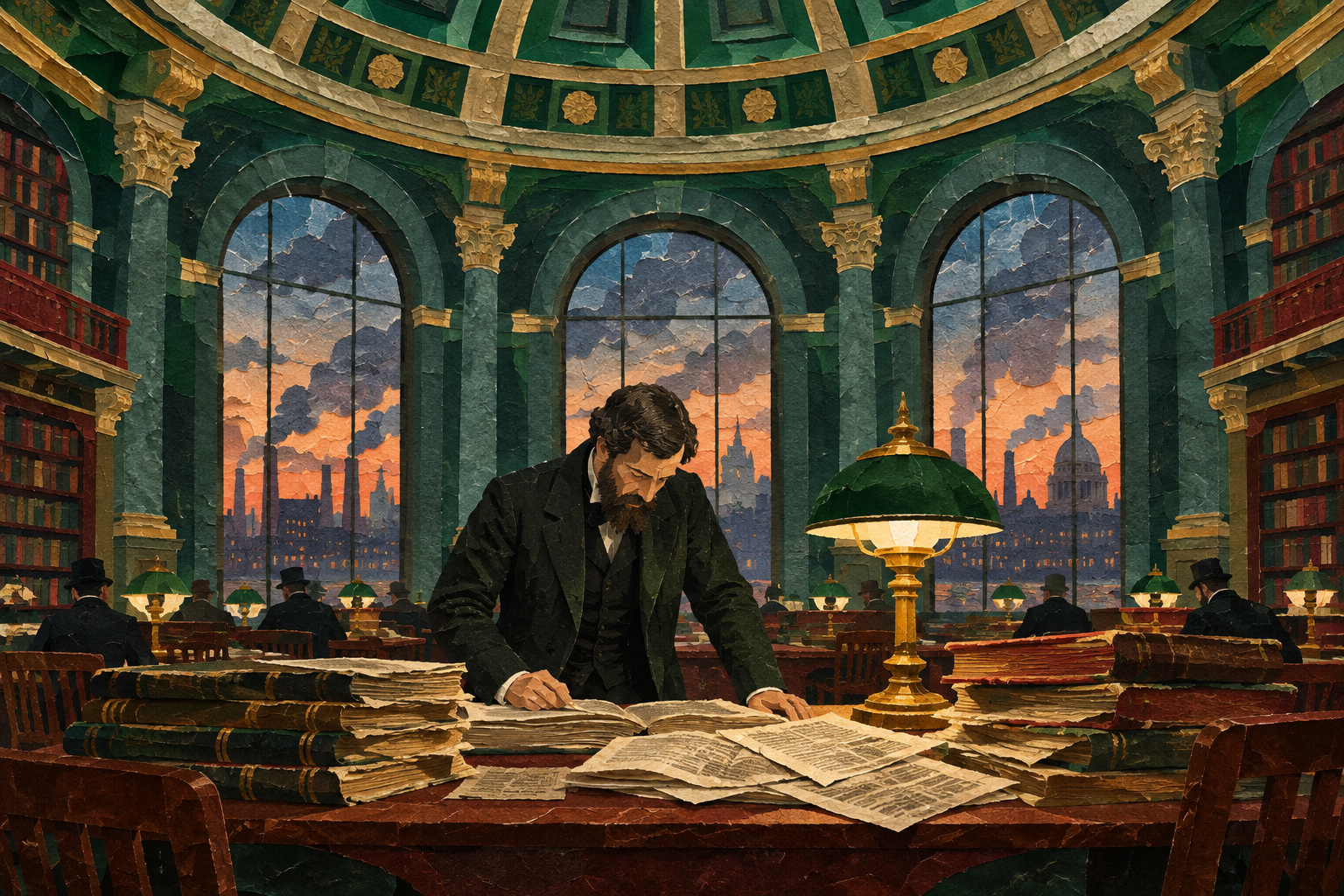
Marx settled in London with his family and very little money. In 1850 Engels made a hard choice. He returned to Manchester and rejoined the firm he disliked, so that he would have an income. For almost twenty years he worked as a clerk and then a partner at Ermen & Engels, and he sent Marx regular sums of money. Without this help Marx would likely not have been able to spend years in the British Museum reading room on Capital.
Engels led a double life. He was a respectable businessman who joined Manchester clubs and hunted with the local gentry, and he was a revolutionary writing letters and articles in the evenings. After Mary Burns died, he lived with her sister Lizzie Burns, and he married her on the day before she died in 1878. In 1869 he sold his share of the firm, and in 1870 he moved to London to be near Marx.
After Marx: finishing Capital and explaining Marxism
Marx died on 14 March 1883, and Engels spoke at his funeral in Highgate Cemetery. He compared Marx to Darwin, saying that Marx had found the law of development of human history, just as Darwin had found the law of development of living things. Engels then took on a huge task: Marx left piles of notes in a very hard hand. Engels deciphered them and edited Capital volume 2, published in 1885, and volume 3, published in 1894.
He also wrote his own books. Anti-Dühring (1878) argued with a German professor and became a standard guide to Marxist thought. Part of it was reworked into the short Socialism: Utopian and Scientific (1880 in French), which became the most widely read introduction to the subject. The Origin of the Family, Private Property and the State (1884) traced how family forms and property changed over time. Ludwig Feuerbach and the End of Classical German Philosophy (1886) explained how Marx and he had moved on from Hegel.
In his last years Engels advised the growing socialist parties of Europe, especially the German Social Democrats, and he supported the Second International, founded in Paris in 1889. He died of throat cancer in London on 5 August 1895. At his request his ashes were scattered in the sea off Eastbourne.
Key ideas
- Materialist view of history: how a society produces its goods shapes its classes, laws and beliefs.
- Class struggle: history moves forward through conflict between groups such as nobles and peasants, or owners and workers.
- Utopian and scientific socialism: Engels called earlier thinkers like Saint-Simon, Fourier and Owen utopian because they offered ideal plans; he called Marx's analysis of capitalism scientific.
- Dialectics: change comes through contradiction and conflict. He applied this to nature in the unfinished Dialectics of Nature, published only in 1925.
How to read the partnership
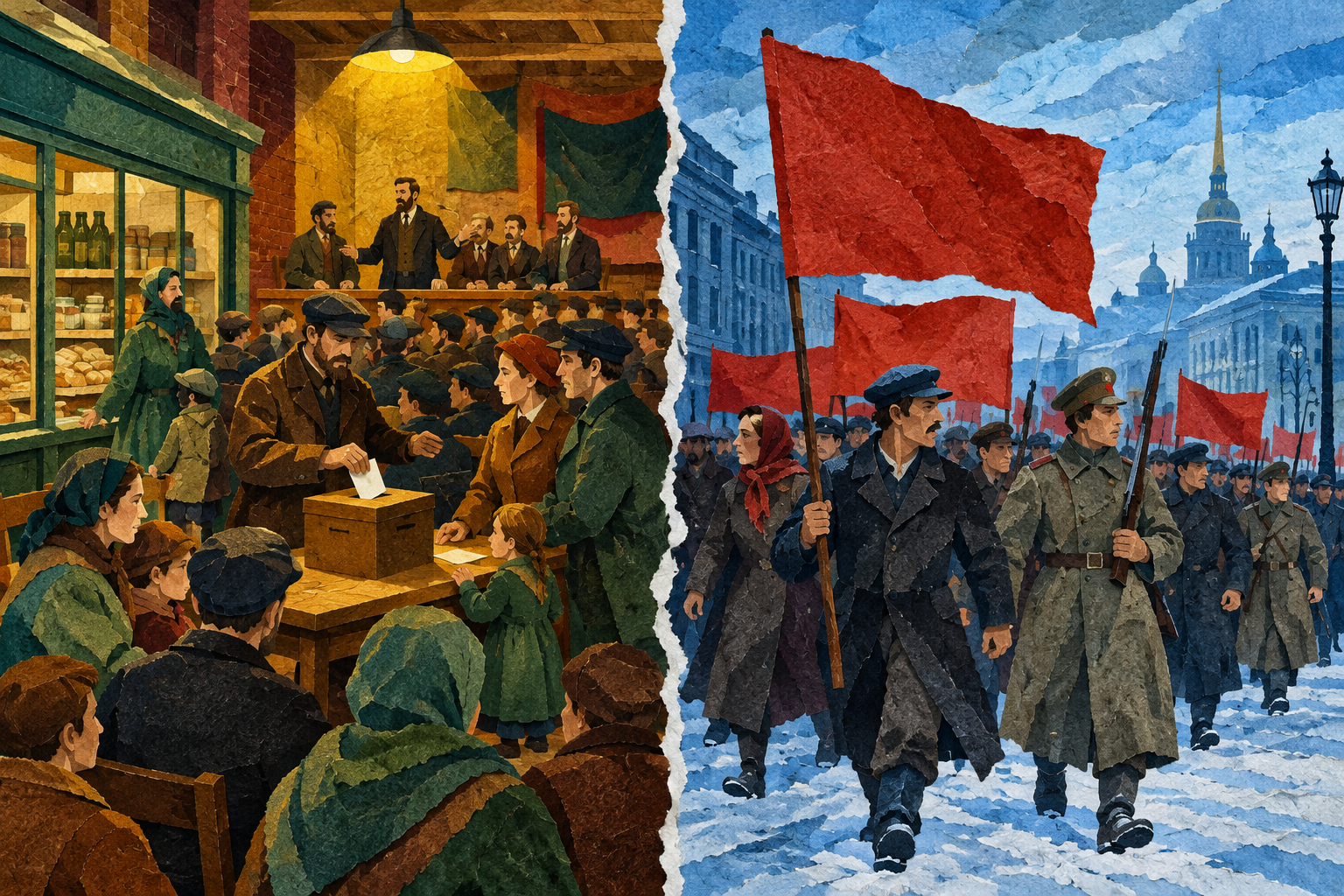
Historians still debate how far Engels shaped Marxism and how far he simplified it. Some argue that his clear, systematic books turned Marx's open-ended thinking into a rigid doctrine, which later movements then used. Others reply that Marx read and approved much of what Engels wrote, and that Engels's work made the ideas available to ordinary readers. Both points are discussed, and you can follow the later story in Marxism-Leninism: From Marx to 1917. It is fair to say that most people met Marxism through Engels first.
What exams ask
- Name the two authors of The Communist Manifesto (1848) and the group that asked for it, the Communist League.
- Explain why Engels's Manchester experience mattered: it gave him first-hand evidence for The Condition of the Working Class in England (1845).
- Describe how Engels supported Marx's work financially and then edited Capital volumes 2 and 3.
- Contrast "utopian" and "scientific" socialism.
- AP-style significance: the Industrial Revolution produced a new working class, and Marx and Engels turned the complaints of that class into a political theory that shaped 20th-century politics.
Read next
- Ideas That Shaped the 19th Century: the hub for liberalism, socialism, nationalism and Darwin, in one place.
- Marxism-Leninism: From Marx to 1917: how the ideas of Marx and Engels were taken up and changed in Russia.
- Who Was Charles Darwin?: the scientist Engels compared Marx to at the graveside.
- What Is Nationalism?: the rival force that, in 1914, proved stronger than workers' solidarity across borders.