In five minutes: what total war means
Total war means a war in which a state puts nearly all of its people, industry, money and information to work for victory, and in which the enemy's economy and civilians become targets as well as its soldiers. World War I was the first major war fought this way. By 1916 it was clear that victory depended less on one decisive battle than on which side could keep producing shells, food and soldiers the longest.
This page is part of our guide to World War I (1914–1918): Causes, Course and Consequences. Here we focus on one idea: how the war pulled whole societies into the fighting, and what that left behind.
What makes a war “total”?
Historians use the term for a war with four features. First, the state mobilises almost everyone: men go to the front, women, children and older workers fill the jobs they leave. Second, the economy is redirected to the war, so factories, railways, farms and banks answer to war needs. Third, the government controls daily life through rationing, censorship, propaganda and emergency laws. Fourth, the line between soldier and civilian blurs, because a factory worker or a farmer helps the enemy's defeat just as a gunner does.
The phrase itself became famous later. The German general Erich Ludendorff, who ran Germany's war effort in 1916–1918, published a book called Der totale Krieg (“Total War”) in 1935, arguing that a future war would have to involve the entire nation. Historians now use the word for the style of fighting that emerged in 1914–1918.
Why the war became total
A stalemate that devoured material
In August 1914 many leaders expected a short war. Instead, on the Western Front the armies dug in, and trench warfare made quick breakthroughs almost impossible. Defenders had machine guns and barbed wire; attackers needed enormous artillery barrages to break the line. Battles such as Verdun and the Somme in 1916 consumed shells, guns and men at a rate nobody had planned for.
Industrial economies and mass armies
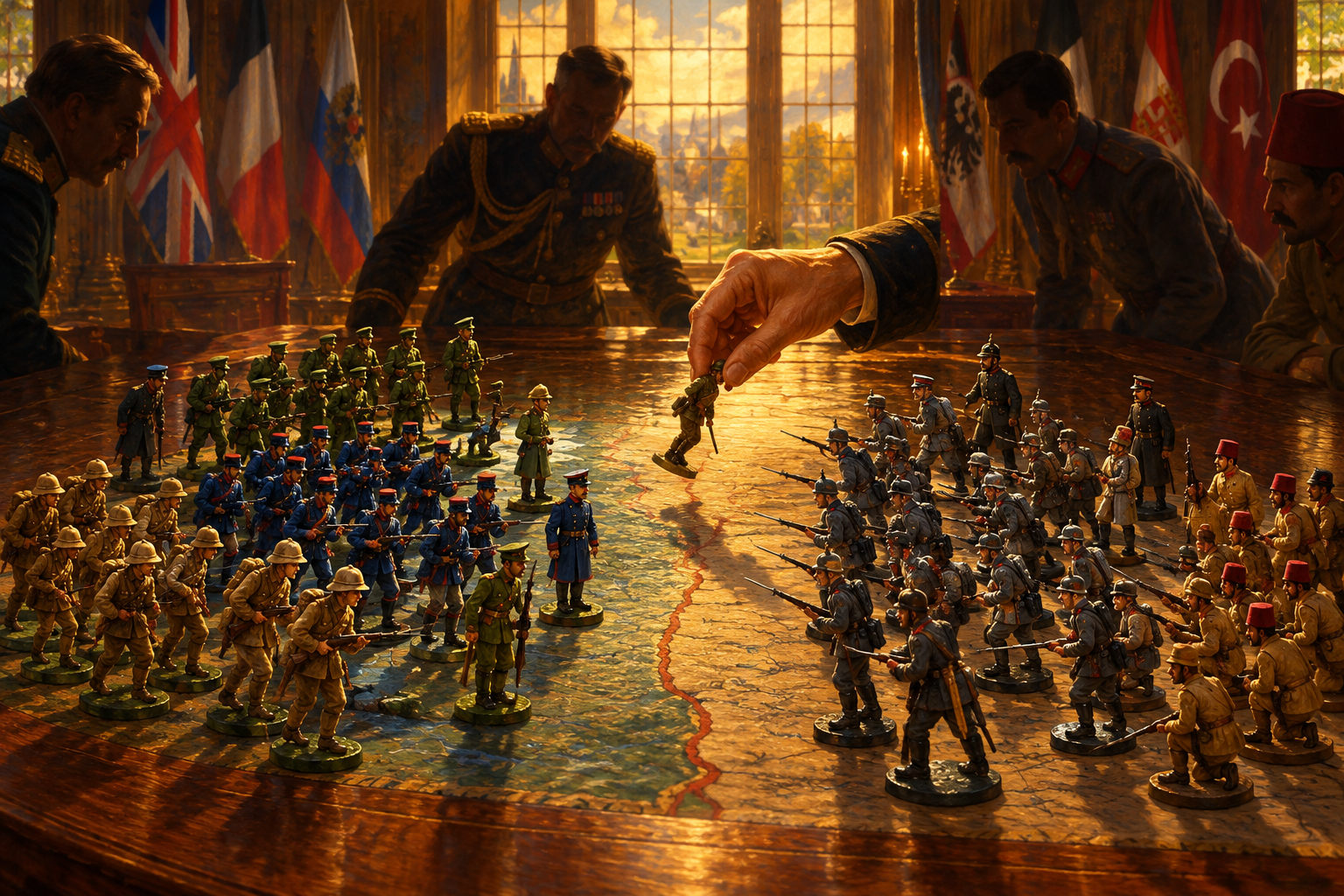
The great powers had large populations, railways and heavy industry. That meant they could keep raising and supplying armies of millions, so the war did not end when the first army was beaten. Each side could replace losses, which pushed the contest from the battlefield into the factory and the farm.
Nationalism and the fear of defeat
Governments told their people the war was about survival and national honour. The same militarism that had built up armies before 1914 made it easier to ask civilians for sacrifice, and harder to accept a compromise peace after so many deaths.
How states mobilised their societies
Men: from volunteers to conscription
Britain began the war with a small professional army and relied on volunteers, helped by recruiting posters. As losses rose it introduced conscription with the Military Service Act of January 1916. France and Germany already had conscription. The United States passed its Selective Service Act in May 1917, soon after entering the war.
Factories: the shell crisis and war ministries
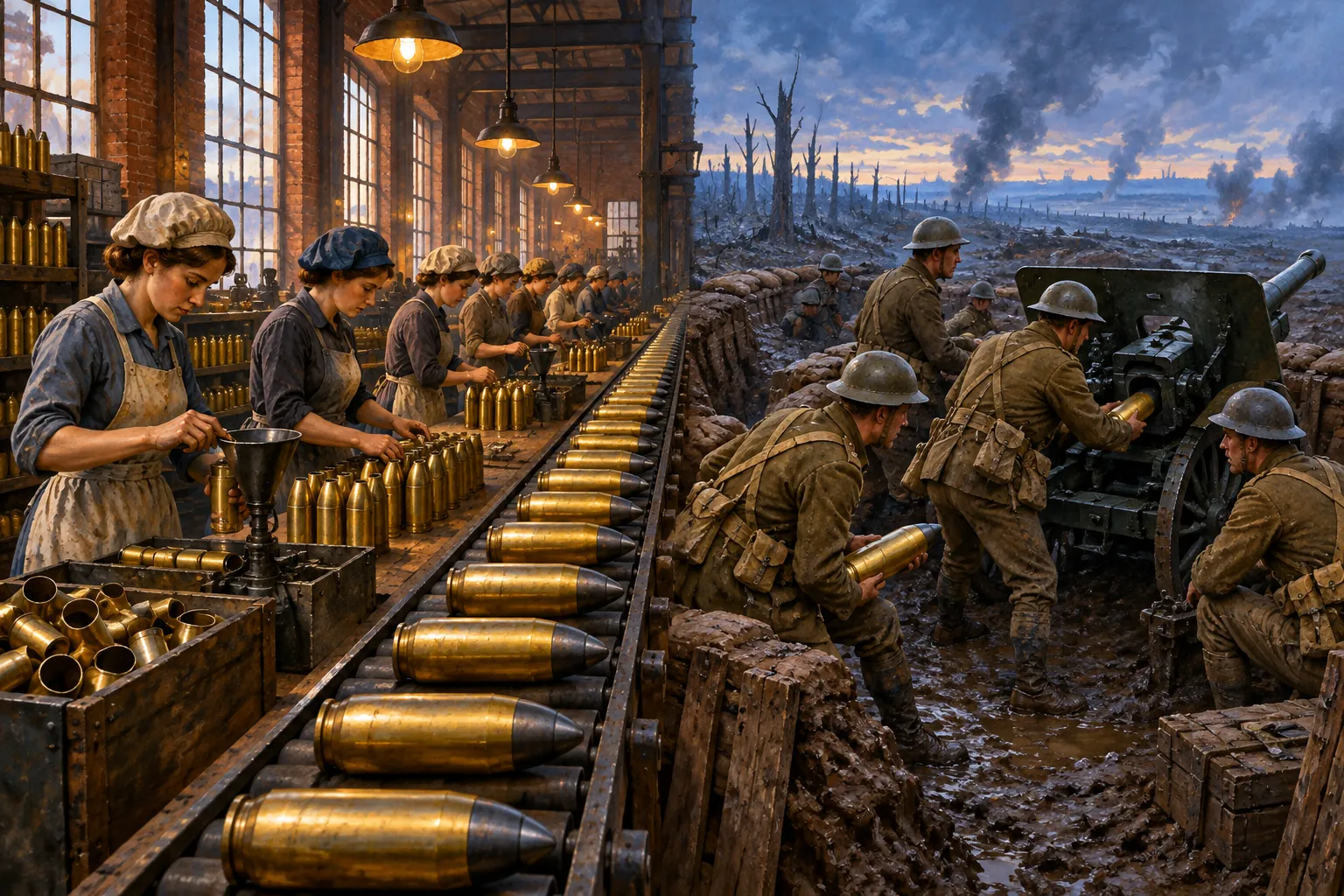
In May 1915 British newspapers reported a shortage of high-explosive shells, a scandal known as the Shell Crisis. The government answered by creating a Ministry of Munitions under David Lloyd George, which ordered civilian factories to switch to war work, and by passing the Munitions of War Act in July 1915. France gave similar powers to Albert Thomas, who organised artillery and munitions production. In Germany, Walther Rathenau helped set up a War Raw Materials Department in August 1914 to control scarce materials, and in 1916 Hindenburg and Ludendorff launched the Hindenburg Programme to raise arms output sharply.
Labour: women and the home front
With millions of men at the front, women took jobs in munitions plants, offices, transport and farming. In December 1916 Germany passed the Auxiliary Service Law, which required men aged 17 to 60 to work in jobs useful to the war. The work was often hard and dangerous, and many women left or lost these jobs when the war ended. Even so, the experience changed how many societies saw women's role in public life.
Food, money and ideas
Governments also managed what people ate and believed. Britain set up a Ministry of Food in 1916 and introduced rationing in 1918. The United States created a Food Administration under Herbert Hoover in 1917. Governments sold war bonds, raised taxes, printed posters and censored newspapers. The U.S. Committee on Public Information, created in April 1917, ran a national propaganda campaign. Supporting the war became a civic duty, and open opposition was often punished.
Civilians as targets
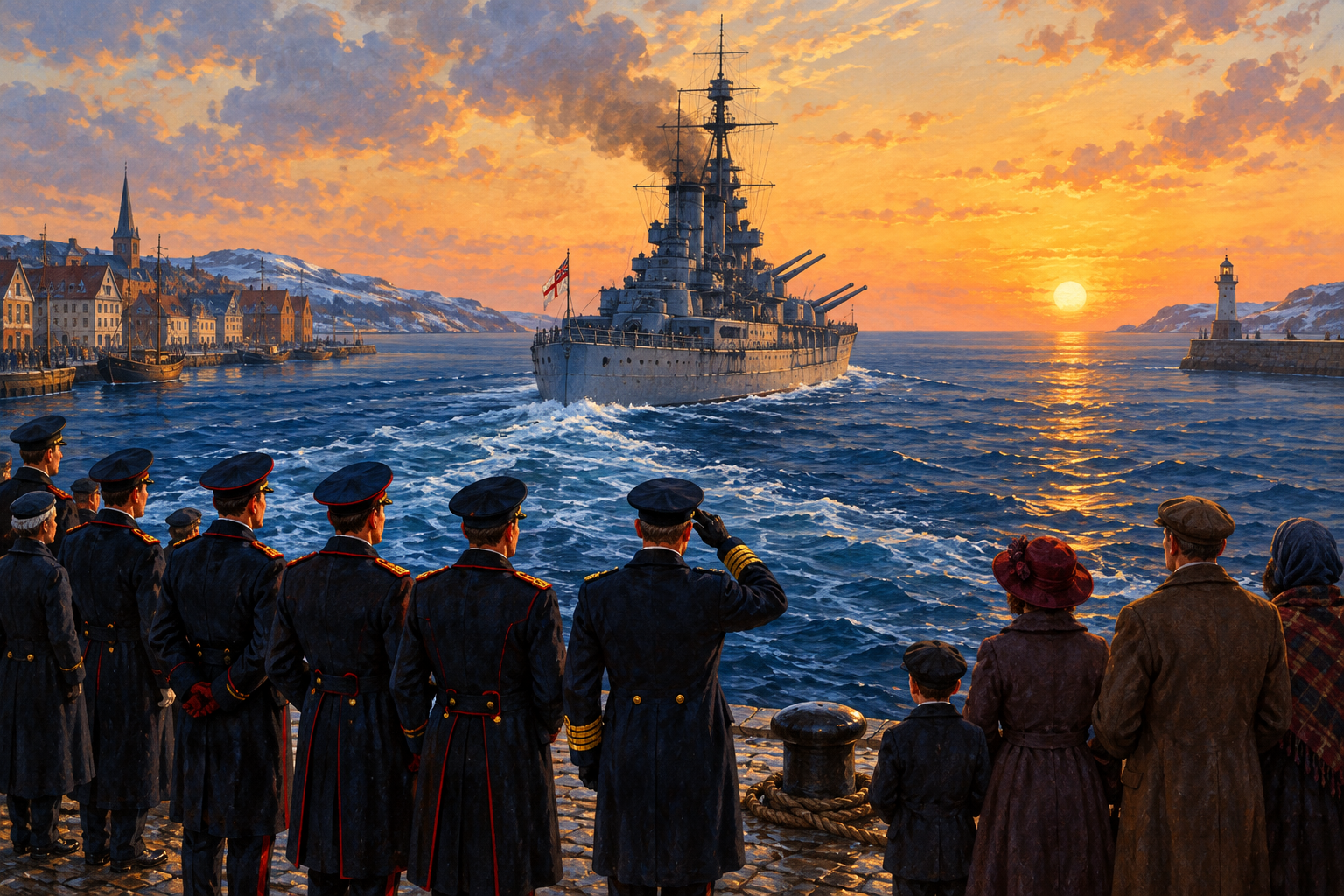
Total war also meant attacking the enemy's economy. From 1914 Britain used its navy to blockade Germany and cut its imports of food and raw materials. Germany answered with submarines and, from February 1917, unrestricted submarine warfare against merchant ships. Zeppelin airships began bombing Britain in January 1915, and heavier bombers followed in 1917.
The effects were severe. Food shortages in Germany grew serious over the winter of 1916–1917, remembered as the “Turnip Winter”, when turnips replaced potatoes on many tables. Hunger, cold and exhaustion at home fed political anger that helped bring on the revolutions and mutinies of 1917–1918. The numbers of civilian deaths from hunger and disease are debated, but they were large.
What total war left behind
- A bigger state. Governments learned to plan production, set prices, control labour and direct trade. Many of these tools were reused in the 1930s and 1940s.
- New political rights. Women over 30 who met certain conditions gained the vote in Britain in 1918, and women voted in Germany from 1919 and in the United States from 1920. War service was one of the arguments reformers used.
- Higher expectations. People who had given so much expected help in return, which fed later welfare systems and also bitter disappointment with the peace settlements.
- Harder wars to end. When a whole society has been mobilised, leaders find it difficult to accept a limited peace. This is one reason the fighting dragged on to 1918.
- A model for World War II. In 1939–1945 states mobilised even more completely, and civilians suffered even more directly.
Total war and Japan
Japan joined the Allies in August 1914 but fought far from the main front, so its home front was not strained as in Europe. Japanese officers, however, studied the European experience closely. They concluded that a future war would be decided by a country's whole industrial strength. Japan passed a Munitions Industry Mobilization Law in 1918, and in 1938 the National General Mobilization Law gave the government broad powers over labour, goods and money.
What exams ask
AP-style questions usually ask you to explain how WWI changed the relationship between governments and their citizens. A strong answer names specific tools (conscription, munitions ministries, rationing, propaganda, the blockade), gives one or two country examples, and links them to a long-term result such as women's suffrage or an expanded state role. Be ready to compare Britain, Germany and the United States, and to explain why the stalemate on the Western Front pushed governments toward total mobilisation.
Read next
- World War I (1914–1918): Causes, Course and Consequences: the full overview that this page belongs to.
- Trench Warfare in WWI: why the stalemate made industrial supply so important.
- The Western Front: the battles that consumed so many shells.
- What Is Militarism? How It Led to WWI: how pre-war armies and attitudes prepared the way.