The Boxers in five minutes
The Boxers were members of a popular movement in northern China that rose up against foreign missionaries, Chinese Christians and foreign influence in 1899–1901. Their Chinese name was Yihetuan, “Righteous and Harmonious Militia.” Westerners called them “Boxers” because many members trained in martial arts and ritual boxing. This page belongs to our guide to Qing China, Japan and the West (1793–1912).
- Who: mostly young peasants, village martial-arts groups and workers who had lost their livelihoods, in Shandong and Zhili (today Hebei).
- Slogan: 扶清滅洋, “Support the Qing, destroy the foreigners.”
- Targets: missionaries, Chinese converts, churches, railways and telegraph lines.
- Peak: the summer of 1900, when they entered Beijing and the Qing court declared war on the foreign powers.
- End: an eight-nation army took Beijing on 14 August 1900, and the Boxer Protocol was signed in September 1901.
Where did the Boxers come from?
The movement grew in the poor, crowded farmland of western Shandong province. Villages there had a long tradition of local martial-arts societies and folk religion, and groups such as the Plum Flower Fist and the Big Sword Society are usually counted among the Boxers’ roots. In the 1890s several pressures hit the region at once.
- Foreign pressure. After China’s defeat by Japan in 1894–95, the powers pushed for ports, railways and leased territory. In November 1897 Germany occupied Jiaozhou Bay in Shandong, using the killing of two German missionaries as its excuse.
- Missionaries and converts. Under the treaties, missionaries could live and own property inland, and their governments protected them. Quarrels over land, village festivals and lawsuits often set Christian converts against their neighbors, and many villagers felt the churches were shielded by foreign power.
- Disaster. The Yellow River flooded in 1898 and drought followed. Hungry villagers looked for someone to blame.
- Lost livelihoods. Railways, steamships and imported goods hurt carters, boatmen and handicraft workers.
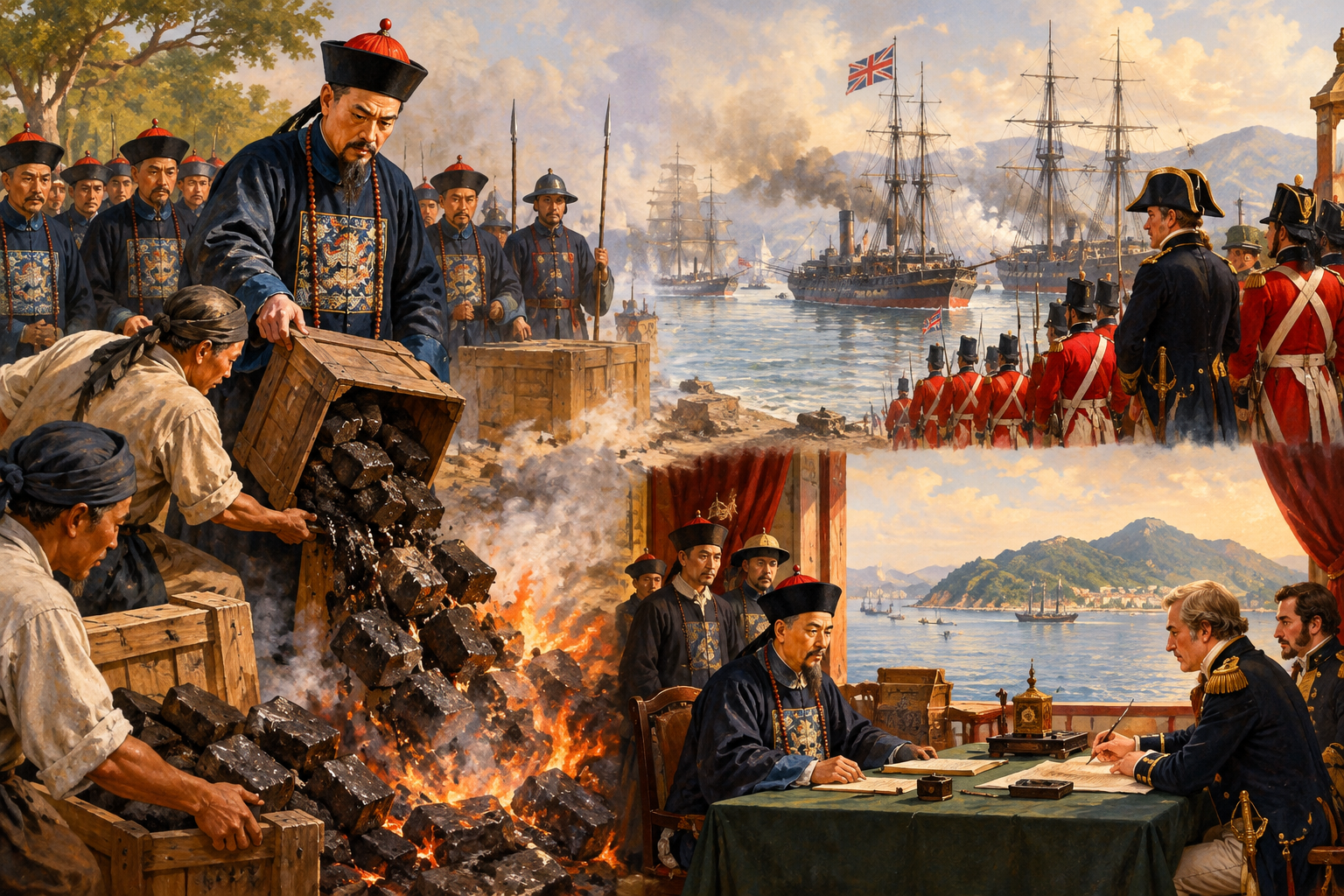
For the longer buildup, read Why Did the Boxer Rebellion Happen? Behind all of it were decades of unequal treaties that began with The First Opium War (1839–1842).
What did “Support the Qing, destroy the foreigners” mean?
The slogan 扶清滅洋 (fú Qīng miè yáng) is the best-known line of the movement. “Support the Qing” meant that the Boxers presented themselves as loyal to the dynasty, not as rebels against it. “Destroy the foreigners” named the enemy: foreigners, their religion and the Chinese who followed it. Earlier secret societies in the region had often used slogans against the Qing, so the change mattered. By late 1898, bands in Shandong were using the new slogan.
The slogan was also practical. By stressing loyalty, the Boxers made it easier for local officials, and in the end the court itself, to see them as a useful force rather than a threat. Different bands used different wording, and many Boxers cared more about local quarrels than about the dynasty. The slogan was a banner that many kinds of anger could gather under.
What did the Boxers believe?
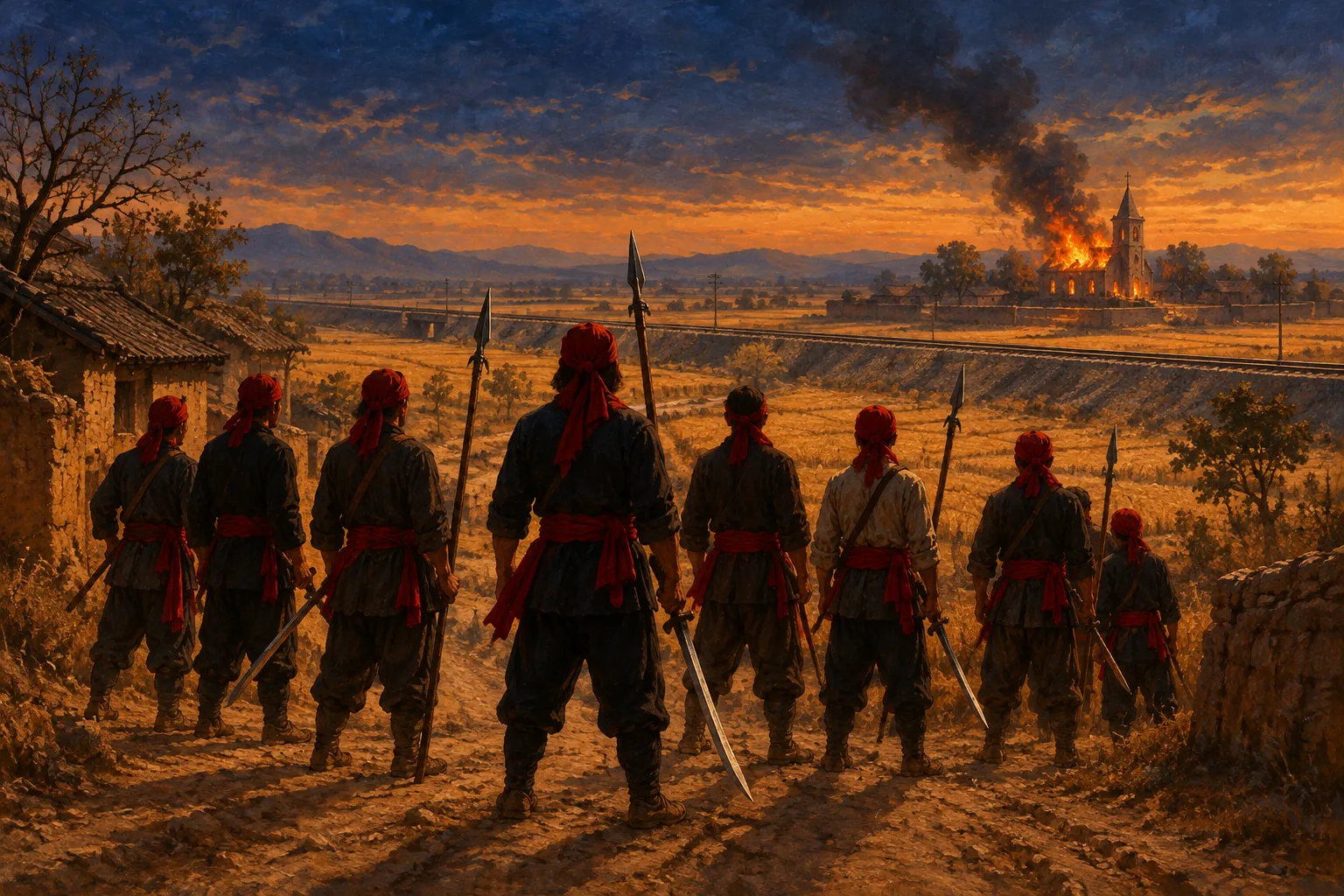
Boxer belief mixed martial arts with popular religion. In rituals, members were said to be possessed by gods and heroes known from opera, storytelling and novels such as Journey to the West. They believed that this possession, together with charms and chants, made their bodies safe from swords and even bullets. Many wore red sashes and head cloths. Young unmarried women formed a related group called the Red Lanterns.
These beliefs gave the movement energy and helped it spread fast, because a young man could join after a few days of drills and ritual. They also explain why Boxers kept charging at modern rifles and artillery and suffered heavy losses.
From Shandong to Beijing
In 1899 the Boxers grew in number and attacked more Christian villages. The Shandong governor Yuxian was seen as sympathetic to them. In December 1899 he was replaced by Yuan Shikai, who suppressed the movement in the province, and many Boxers moved north into Zhili, near Beijing and Tianjin. In the spring of 1900 they spread across the plain, burning churches, tearing up railway track and cutting telegraph wires. Chinese Christians were the most numerous victims.
The crisis then moved quickly in June 1900.
- On 11 June the Japanese diplomat Sugiyama Akira was killed outside Beijing.
- On 17 June foreign naval forces seized the Dagu forts near Tianjin.
- On 20 June the German minister Clemens von Ketteler was shot in Beijing. Foreign diplomats, soldiers and thousands of Chinese Christians were now shut inside the Legation Quarter, and the siege began.
- On 21 June the Qing court under Empress Dowager Cixi issued a declaration of war on the foreign powers.
The court was split. Prince Duan and others backed the Boxers, while officials such as Ronglu urged caution. Several powerful governors in the south and center of China, including Liu Kunyi and Zhang Zhidong, ignored the declaration and agreed with foreign consuls to keep their regions out of the war. This arrangement is called the “Mutual Protection of the Southeast.”
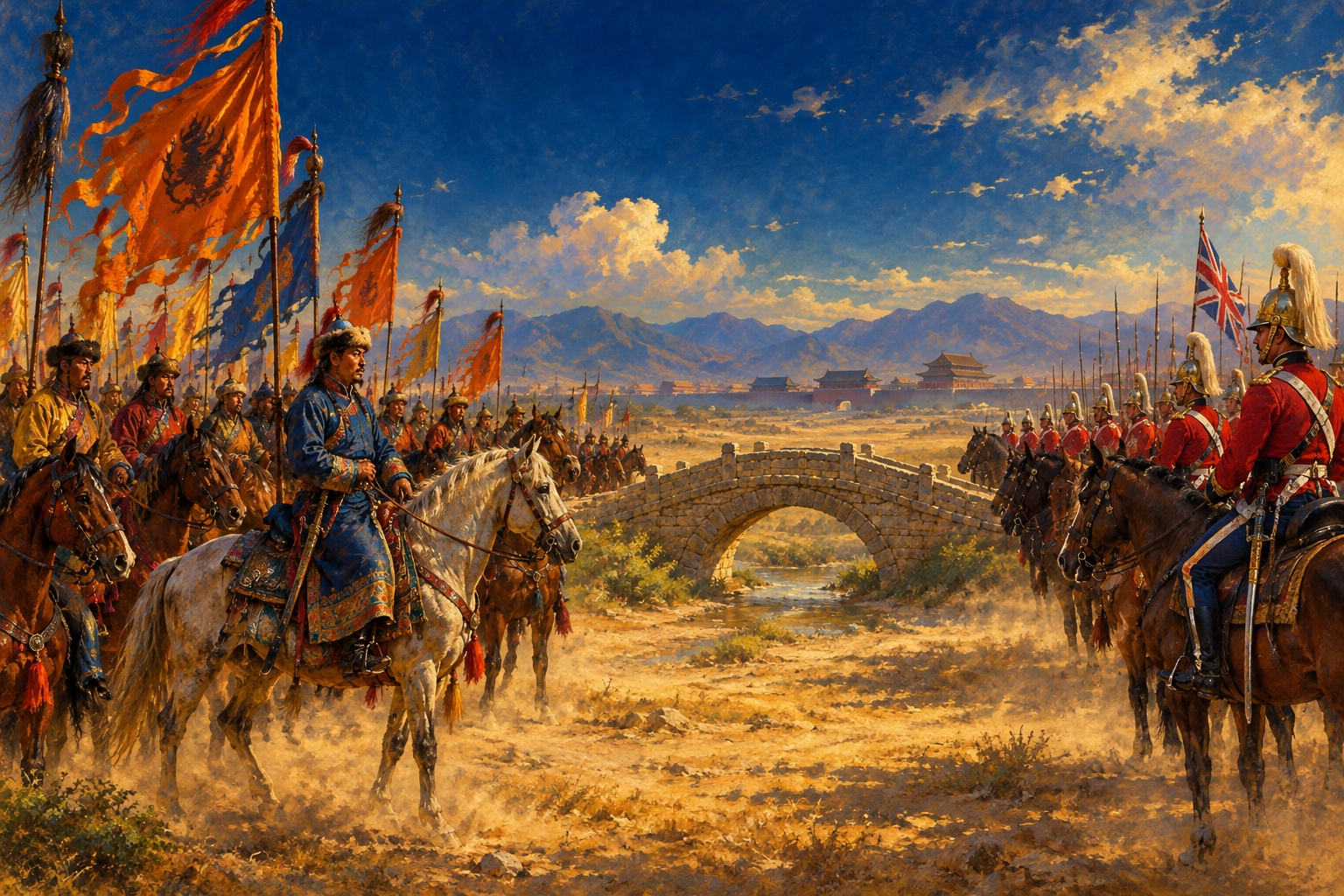
The siege lasted 55 days. On 14 August 1900 the relief force of the Eight-Nation Alliance entered Beijing. Cixi and the emperor fled toward Xi’an the next day.
How did the Boxer movement end?
The Boxer Protocol, signed on 7 September 1901, set the terms. China had to pay an indemnity of 450 million taels of silver over 39 years, which came to roughly double that with interest. Foreign troops gained the right to be stationed in Beijing and along the route to the sea, the Dagu forts were torn down, imports of weapons were banned, and officials who had backed the Boxers were punished. The court returned to Beijing in January 1902.
The effects went well beyond China. The Qing government was weakened and soon began a program of reforms. Russia kept troops in Manchuria after the war, which alarmed Japan and Britain, and that helped lead to the Anglo-Japanese Alliance of 1902 and then to the Russo-Japanese War of 1904–05.
Historians avoid a single label for the Boxers. In China they have sometimes been remembered as patriotic resisters of imperialism; others stress the violence against Chinese Christians and the movement’s belief in magic. Both the anger at foreign pressure and the killing of civilians belong to the story.
What exams ask
Typical AP-style questions focus on the following points.
- Causes: foreign spheres of influence after 1895, missionary activity, flood and drought in Shandong, and economic disruption.
- Slogan and aims: why the move from anti-Qing to pro-Qing wording mattered.
- The court’s role: Cixi’s declaration of war and the Southeast regional governors who refused to follow it.
- Foreign response: the Eight-Nation Alliance (Japan, Russia, Britain, France, the United States, Germany, Italy and Austria-Hungary).
- Significance: the Boxer Protocol, a heavier burden on the Qing, and pressure toward reform and, in the end, revolution. The United States’ Open Door notes of 1899–1900 also belong to this period.
Read next
- Why Did the Boxer Rebellion Happen? Read this for the full chain of causes behind the uprising.
- The Eight-Nation Alliance shows who sent troops to Beijing and how they cooperated.
- The First Opium War (1839–1842) explains where the system of unequal treaties began.
- Qing China, Japan and the West (1793–1912) is the hub that places all of these events on one timeline.