In five minutes
Hard science fiction is science fiction that treats known science as a rule of the game. The author may invent a ship, a planet or an alien, but the invention has to fit what physics, chemistry and biology tell us. Very often the pleasure of the story is working out what follows from those limits.
Take a stranded astronaut. In a hard SF story he does not wave a gadget and fix everything. He counts his oxygen, his food and the days until rescue, and he solves each problem with arithmetic, chemistry or a clever use of what is in the cabin. The reader gets to think along with him.
The word "hard" does not mean "difficult". It echoes the old habit of calling the natural sciences the "hard sciences", and many hard SF novels have no equations in them at all. The genre is one branch of the wider history of science fiction, and it is best seen as a scale rather than a box: some books follow the science closely, others bend it once for the sake of the plot.
Three points to keep in mind: the label dates from 1957, the idea is much older, and today the genre is popular again thanks to novels such as The Martian and Project Hail Mary.
Where the term came from
The phrase "hard science fiction" is usually credited to the critic P. Schuyler Miller, who used it in a 1957 book review in the magazine Astounding Science Fiction. By then readers already talked about "hard" and "soft" sciences, and the label simply carried that contrast over to stories.
The habit of writing carefully about science is older than the word. Jules Verne's From the Earth to the Moon (1865) worked through the size of a giant cannon and the speed needed to leave the Earth, even though the cannon idea would not survive real physics. In 1926 Hugo Gernsback launched Amazing Stories, hoping to teach science through fiction. From 1937 the editor John W. Campbell pushed the writers of Astounding to get the science right, and that period is often called the Golden Age.
Arthur C. Clarke belongs at the centre of this story. In 1945 he published a technical article suggesting that a satellite in a 24-hour orbit above the equator would stay over one spot on the ground and could relay radio signals. That orbit is now called geostationary. You can read more about him on the page for Arthur C. Clarke.
The real science
What makes a book "hard" is a promise to the reader: the story will respect the best current knowledge, or at least will not break it casually. In practice authors work in a few ways.
- Start from a real law. Hal Clement's Mission of Gravity (1953) takes a planet that spins very fast and is flattened as a result. Gravity there is only a few times Earth's at the equator but hundreds of times Earth's at the poles, and the plot is a journey through those zones.
- Do the sums. Orbits, travel times, food supplies and radiation doses are worked out, often by the author with a calculator or a script. Andy Weir has described doing exactly this while writing The Martian.
- Change one thing only. Many hard SF books allow a single big assumption, such as a new kind of engine or a lifeform that works differently from ours, and then follow its consequences honestly.
- Mark the speculation. Good hard SF tells you, through its characters, what is measured and what is a guess.
It is also fair to say that no story is perfectly accurate. Science moves on, and plots need drama. Larry Niven's Ringworld (1970) was a famous case: readers soon pointed out that a ring-shaped world like his would drift out of position, and Niven answered that in the sequel. Weir has said that he knowingly made Martian wind stronger than the thin atmosphere would allow, so that the opening storm could happen. Honest bending, admitted as such, is part of the tradition.
Where it shows up in fiction
Books come first. Here are examples that readers and critics often name, in rough order of date.
- Mission of Gravity by Hal Clement (1953): a model of building an alien world from physics.
- 2001: A Space Odyssey by Arthur C. Clarke (1968): spaceflight shown calmly and in detail, written alongside Stanley Kubrick's film. Clarke also wrote about a space elevator in The Fountains of Paradise (1979).
- Ringworld by Larry Niven (1970): an engineering marvel on a giant scale.
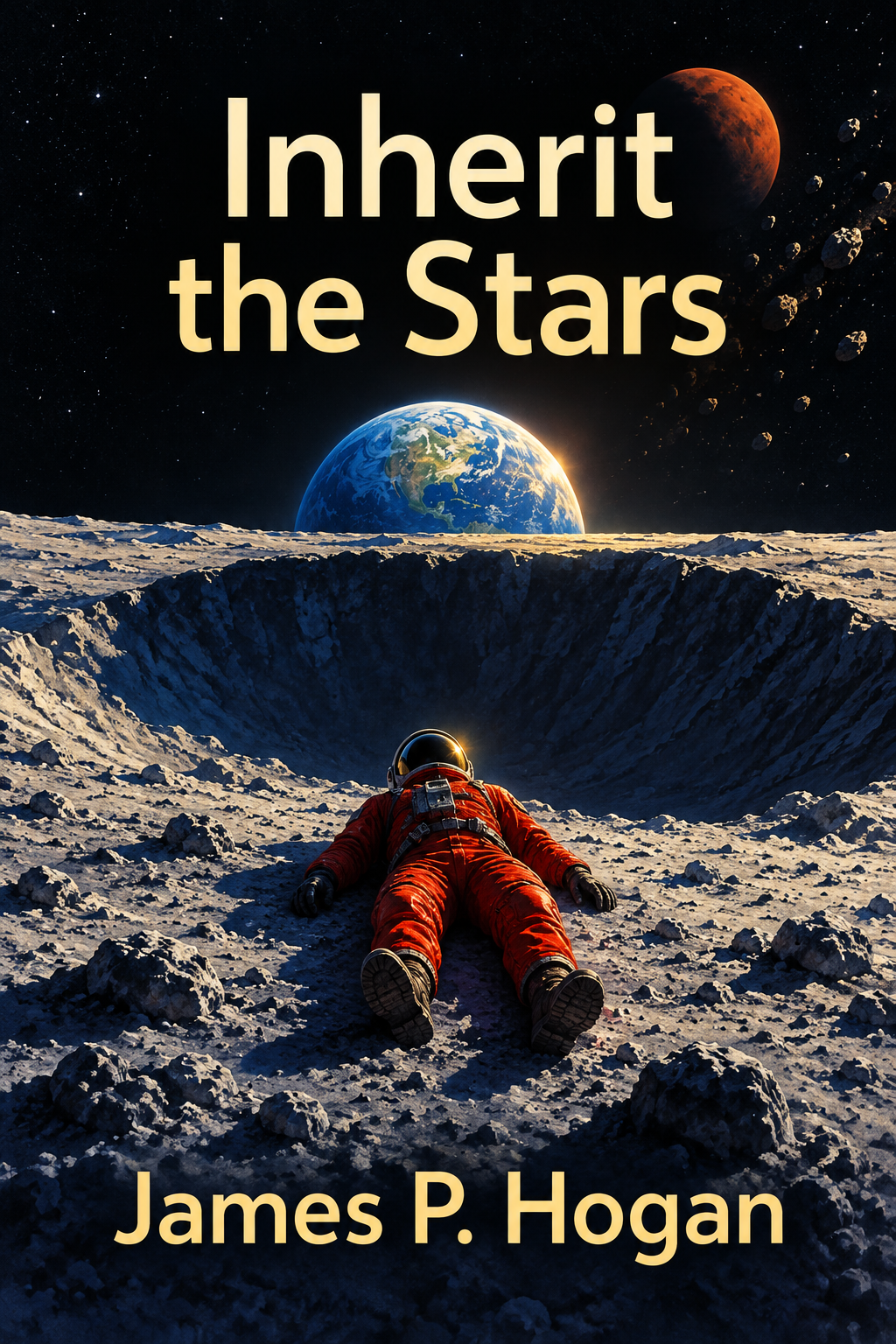
- Inherit the Stars by James P. Hogan (1977): a detective story in which scientists study a spacesuited body, dead about 50,000 years, found on the Moon. Almost every chapter is a lab discussion, and it is gripping. See our study guide.
- Dragon's Egg by Robert L. Forward (1980): written by a physicist, about life on a neutron star.
- Red Mars by Kim Stanley Robinson (1992): geology, politics and the slow work of settling another planet.
- The Three-Body Problem by Liu Cixin: the first part of the trilogy appeared in Chinese in 2008, and its English translation won the 2015 Hugo Award for Best Novel. It mixes real physics with big speculation.
- The Martian by Andy Weir (2011): a botanist stranded on Mars, solving one problem after another.
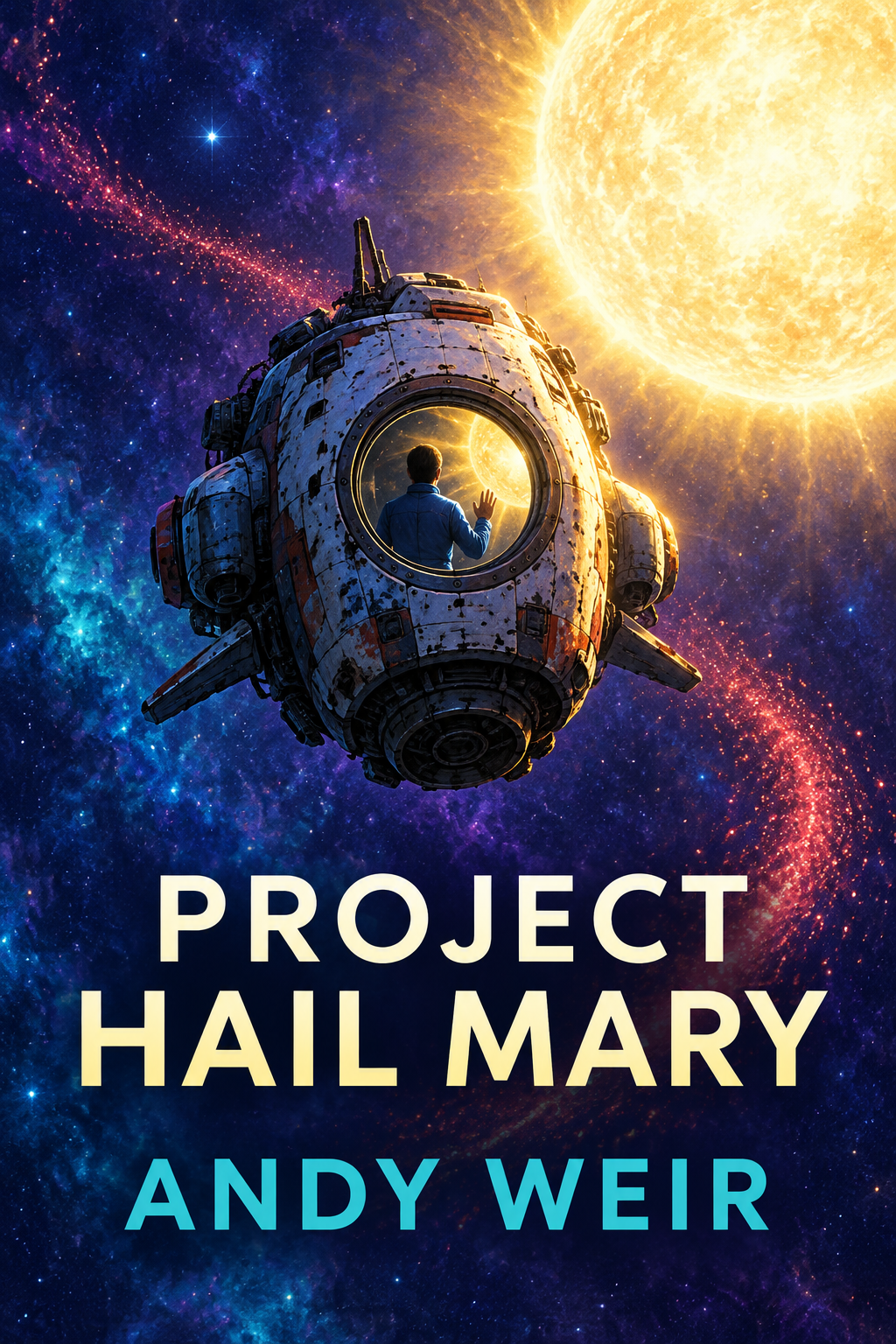
- Project Hail Mary by Andy Weir (2021): a teacher wakes on a spaceship with no memory and must work out why he is there. It is the easiest modern way in, and we have a study guide for it.
Films such as Interstellar and Gravity are often discussed in the same breath, though readers argue about how closely each follows the science.
Hard SF and soft SF
"Soft" science fiction is the other end of the scale. It is not a lesser kind of writing. It simply puts more weight on people, society, politics or psychology than on technical accuracy. Ursula K. Le Guin and Ray Bradbury are often named as authors who did this very well.
A rough comparison helps:
- Hard SF asks: "Could this work, and what follows if it does?"
- Soft SF asks: "What would this do to us, and what does it say about us?"
Most books sit in between, and many great ones do both. Critics sometimes say a book is "harder" or "softer" than another rather than putting it in one group. Where a favourite novel sits on that scale is a matter of opinion, which is part of the fun.
Common misconceptions
- "Hard SF is full of maths." Some of it is, but most is written for general readers. The science comes through in how characters think, not in formulas on the page.
- "It has to be about the near future." No. Hard SF can be set millions of years ahead, as long as the story is honest about what it invents.
- "Faster-than-light travel rules a book out." Not always. Some authors allow one such device and keep everything else strict. Others refuse it completely, and that choice shapes their plots.
- "Hard SF is cold and has no feelings." The best examples, such as Project Hail Mary, are about friendship and courage as much as about physics.
- "It is the best kind of SF." It is one tradition among many. Readers and critics disagree about definitions, and there is no official test.
How to start reading
If you want a gentle start, begin with Project Hail Mary or The Martian: fast, clear and friendly. If you like a puzzle, try Inherit the Stars. If you want to see where the tradition grew from, read Clarke's short stories and then 2001. For big ideas on a cosmic scale, try The Three-Body Problem.
A useful habit: whenever a story does something surprising, pause and ask, "Which rule of science is this using?" You will often find the answer in the next few pages, and that is the quiet reward of the genre.
Read next
- History of science fiction: the wider story, from early voyages to the present, with hard SF in its place.
- Arthur C. Clarke: the writer who predicted communication satellites and shaped the genre's calm, curious voice.
- Project Hail Mary: the most popular recent hard SF novel, explained chapter by chapter.
- Inherit the Stars: a classic scientific mystery that starts with a body on the Moon.