In five minutes
First contact is the moment humans and another intelligent species first learn the other exists. It has never happened. No signal, object or message from an alien civilisation has ever been confirmed. What exists instead is more than a century of fiction imagining the moment, and a small, patient science of listening and sending messages in case it comes.
The phrase is usually traced to “First Contact”, a 1945 story by Murray Leinster. In it, the crews of a human ship and an alien ship meet inside the Crab Nebula. Each side fears the other will follow it home, so neither can simply fly away. The story is less about monsters than about trust, and that is still the core of the idea. Two groups with no shared language, no shared history and no proof of good intentions have to decide what to do next.
This page covers the real science first, then how fiction has used the idea, then the common mistakes people make about it. If you want to know why nobody has turned up yet, our Fermi paradox article takes that question on directly.
Why the problem is so hard
Three obstacles stand in the way, and fiction usually plays down all of them.
- Distance. The nearest star beyond the Sun, Proxima Centauri, is about 4.2 light-years away. A radio message there and back takes more than eight years, and that is the closest case. A conversation across the galaxy would run over thousands of years.
- Language. Humans never agreed on a single language among themselves. A species with a different body, different senses and a different history may not share our idea of a “word” at all. Mathematics and physics are the usual hopes for common ground: prime numbers and the laws of nature should look the same everywhere.
- Trust. With no shared history, nobody can tell whether a signal is a greeting, a broadcast never meant for us, or a trap. The dark forest theory is an extreme version of this worry.
The real science
Listening
The modern search began in 1960, when astronomer Frank Drake pointed a radio telescope in West Virginia at two nearby sun-like stars in an effort called Project Ozma. It found nothing, but it started a field. In 1961 Drake wrote down an equation that breaks the question “how many civilisations might we hear?” into smaller pieces that can be estimated. Most of its inputs are still guesses, which is why scientists reach very different answers.
The best-known result of this kind of search is the Wow! signal. On 15 August 1977 the Big Ear radio telescope at Ohio State University recorded a strong, narrow-band burst lasting about 72 seconds. Astronomer Jerry Ehman circled it on the printout and wrote “Wow!” beside it. It has never been heard again, so nobody can say what caused it. The largest effort today is Breakthrough Listen, launched in 2015 with 100 million dollars over ten years, which scans nearby stars and the galactic plane. No confirmed technological signal has been reported.
Sending
Humans have also sent a few deliberate messages. Pioneer 10 and 11, launched in 1972 and 1973, each carry a metal plaque showing a man and a woman, the Solar System and the Sun’s position among nearby pulsars. Voyager 1 and 2, launched in 1977, carry golden records with greetings, music and images. Neither probe is heading for a chosen target, and both will need tens of thousands of years to pass near another star.
The Arecibo message was a different kind of message. Broadcast by radio on 16 November 1974 toward the star cluster M13, it was a string of 1,679 bits that forms a small picture when arranged in a grid of 23 by 73. M13 is about 25,000 light-years away, so any reply would take around 50,000 years, and the cluster will have moved by the time the signal arrives. It was a demonstration of what could be done, not a serious attempt to start a conversation.
Life closer to home
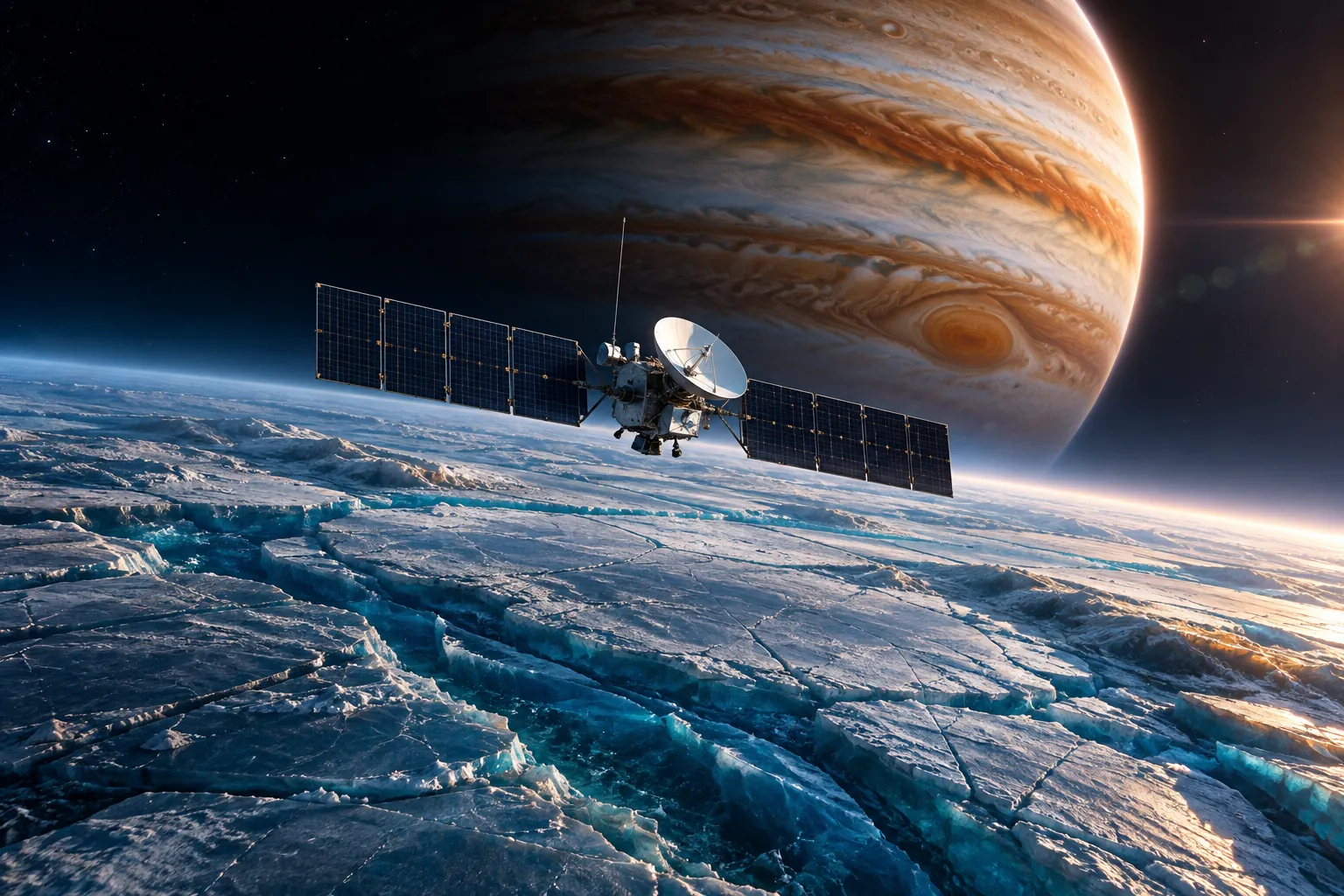
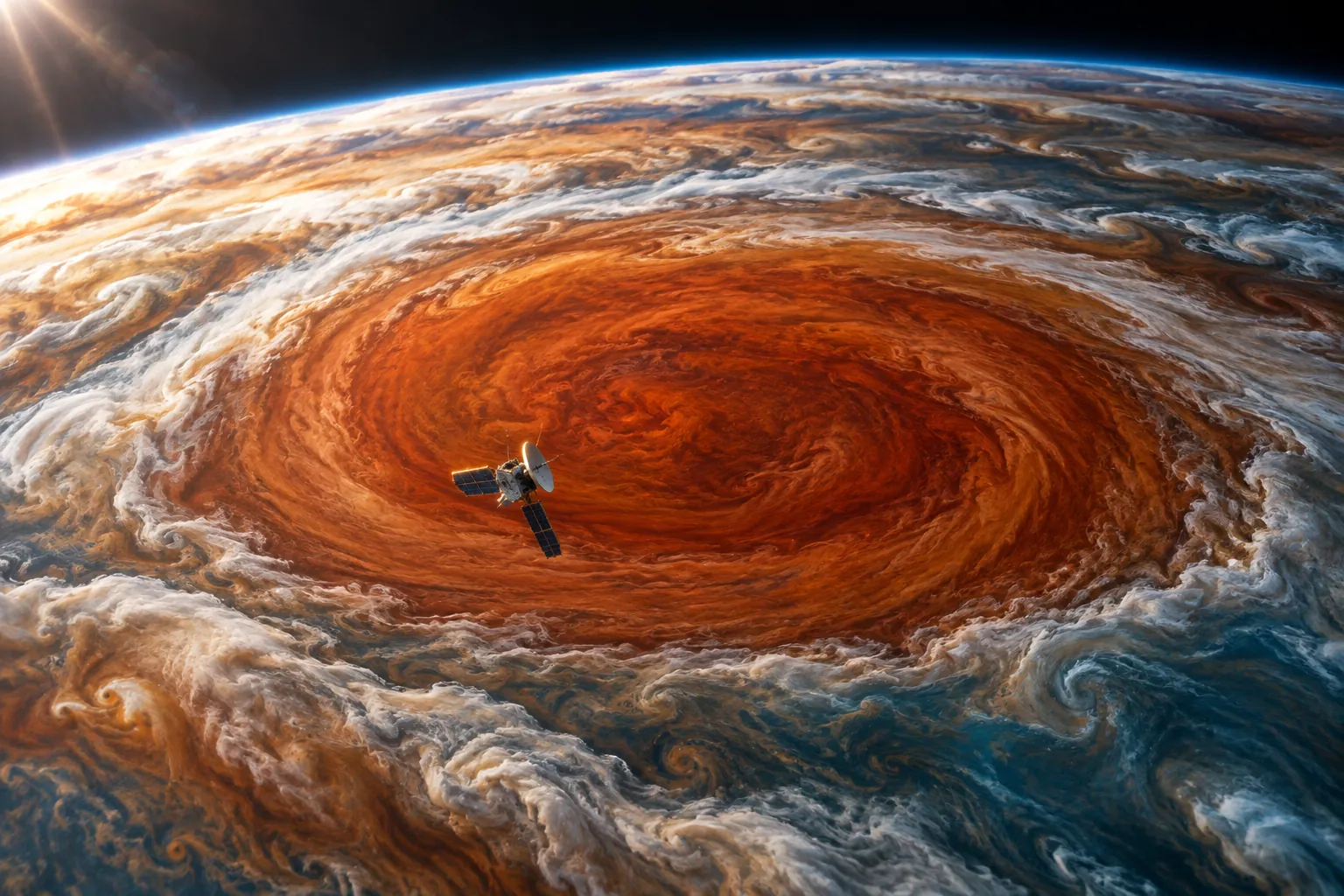
The first discovery may be much smaller than a civilisation. Microbes in the ocean under Europa’s ice, or in the plumes of Saturn’s moon Enceladus, would be a huge scientific find. They would not count as contact, though, because nobody would answer. NASA’s Europa Clipper launched in October 2024 and is due to reach the Jupiter system in 2030 to study Europa’s ice and ocean. Our guide to Jupiter’s moons explains why that moon matters.
The agreed rules
No law covers first contact, but there is a guideline. In 1989 the International Academy of Astronautics adopted a declaration of principles for SETI, the search for extraterrestrial intelligence, and updated it in 2010. In short, anyone who finds a possible signal should check the evidence carefully, tell the scientific community and the public, share the data openly, and not reply on behalf of Earth without wide international consultation. Who speaks for humanity is still unresolved. Stephen Hawking said in 2010 that contact might go badly for us, and some researchers argue that sending messages at all calls for more caution.
Where it shows up in fiction
Writers have used first contact to ask what we fear, what we hope for and whether understanding is even possible. Here are the key examples, books first.
- The War of the Worlds (1898), H. G. Wells. Martians invade England. It set the invasion template that many later stories either follow or push against.
- “First Contact” (1945), Murray Leinster. The story that named the idea, built around mutual suspicion.
- Childhood’s End (1953), Arthur C. Clarke. Calm, far more advanced visitors arrive and change humanity whether it asked for it or not.
- Solaris (1961), Stanisław Lem. Humans study a living ocean on a distant planet and fail to understand it. Lem’s point is that a mind truly unlike ours may stay out of reach.
- Contact (1985), Carl Sagan. A radio signal arrives with building instructions. The novel spends as much time on science, politics and belief as on the aliens.
- “Story of Your Life” (1998), Ted Chiang. A linguist works to learn an alien language. It is the basis of the film Arrival (2016).
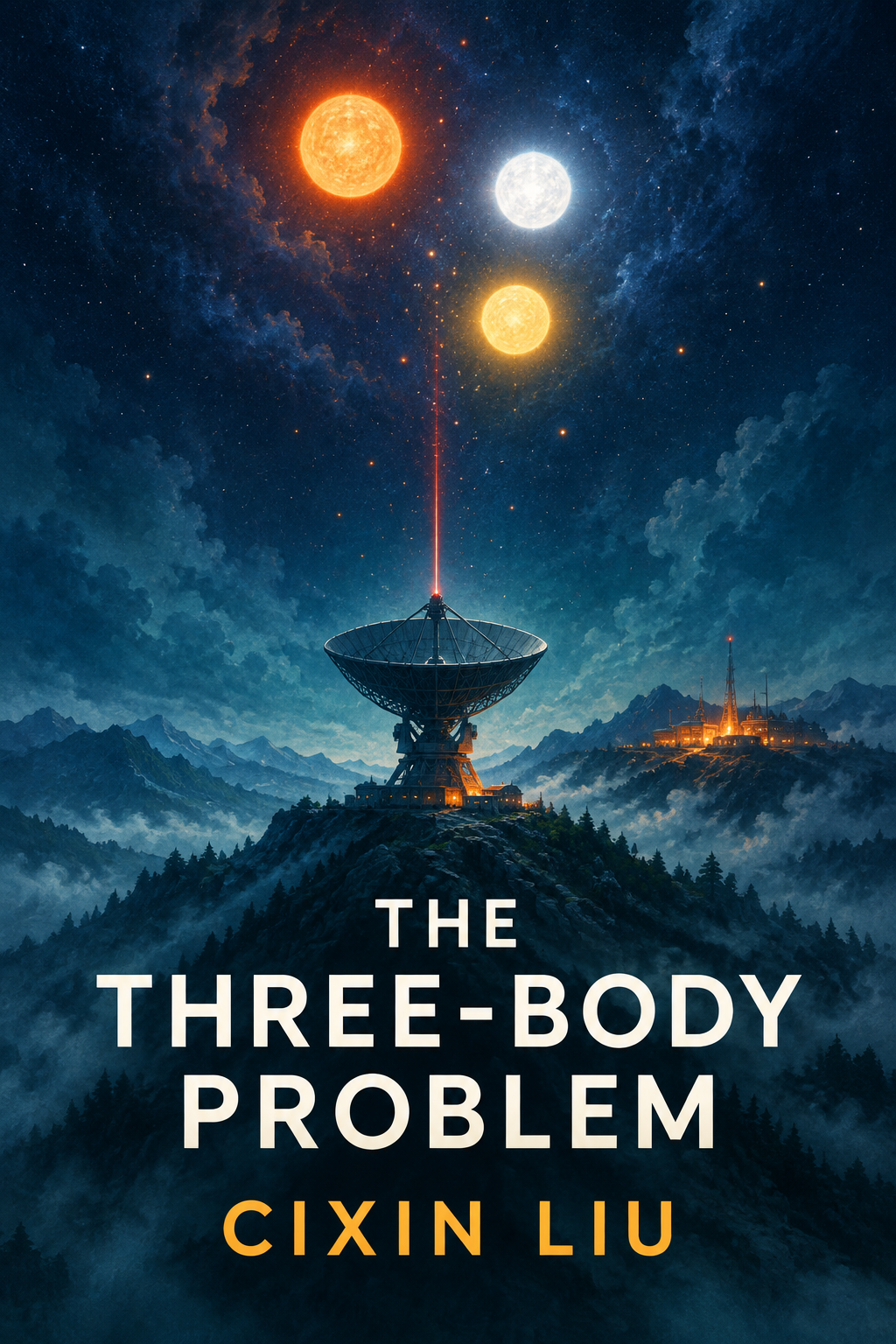
- The Three-Body Problem by Liu Cixin. Contact is a danger, not a gift, and the sequel gives us the dark forest idea. See our Three-Body Problem study guide.
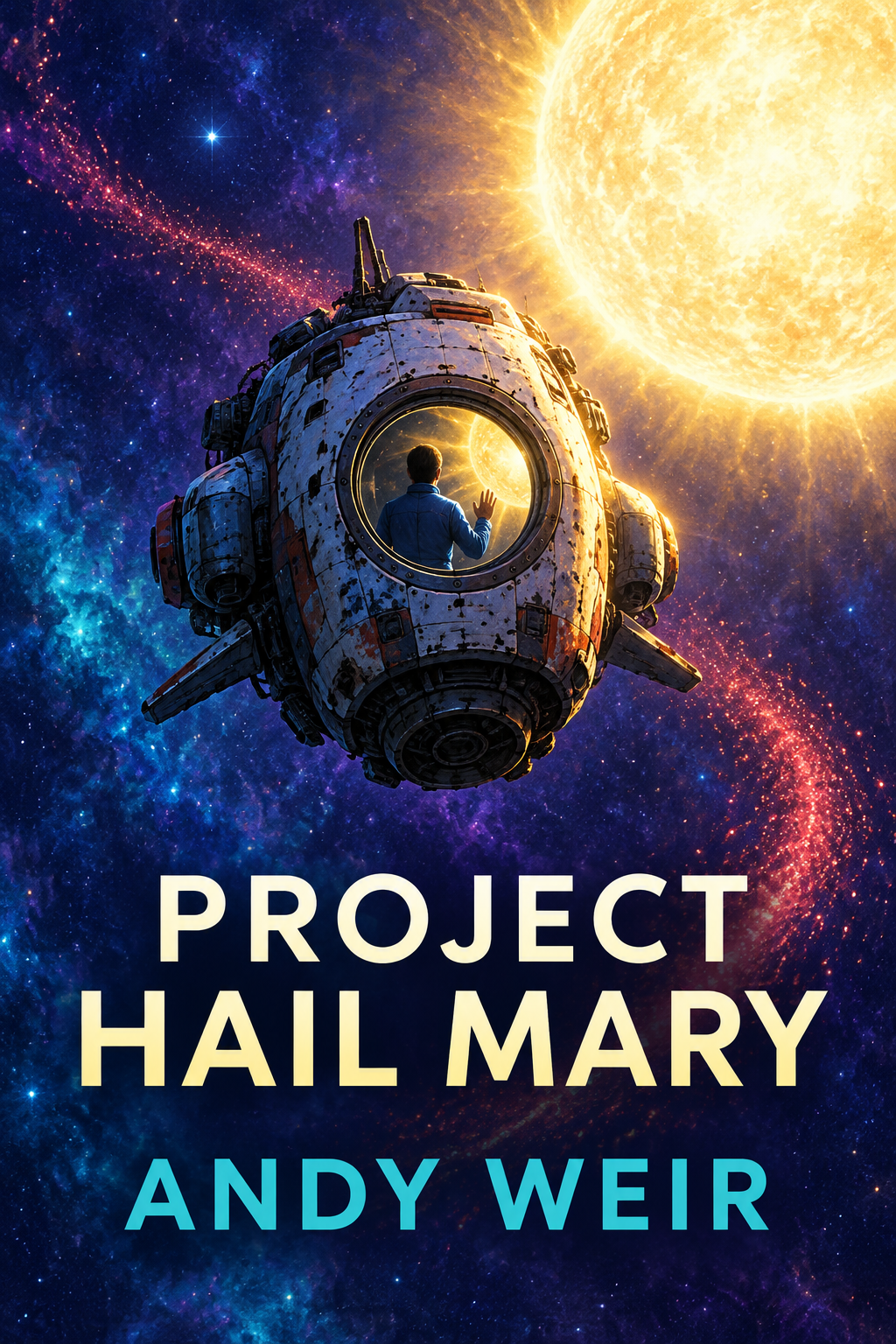
- Project Hail Mary (2021), Andy Weir. Two very different beings find a way to work together on a shared problem. See our Project Hail Mary study guide. Spoiler note: the meeting happens partway through the book, so we describe it only in general terms.
Common misconceptions
- “UFO sightings are first contact.” They are not. An unexplained sighting is just unexplained, and none has produced evidence of an alien civilisation.
- “The Wow! signal proved aliens exist.” It did not. It was a single strong signal that was never repeated, so its cause is unknown.
- “Aliens would look like us and speak a language we could learn.” Fiction often assumes this because it makes for a good story. Real biology and communication could be very different.
- “The Arecibo message will bring a reply soon.” It was aimed at a cluster about 25,000 light-years away, so a reply, if any, would take roughly 50,000 years.
- “Contact means invasion.” That is one fictional pattern, made famous by Wells. There is no evidence for it either way, and other stories imagine cooperation, indifference or confusion.
Read next
The Fermi paradox asks why, in a galaxy this old, we have heard nothing. Start there if you want the puzzle behind the search.
The dark forest theory gives the bleakest answer: staying silent may be how civilisations survive.
The Project Hail Mary study guide shows the hopeful side, with contact as teamwork.
The Three-Body Problem study guide shows the opposite, with contact as a threat. Reading both back to back is a good way to see how far fiction’s answers can differ.