0% • 11 min left

The Battle of Điện Biên Phủ (1954)

October 31, 2026
The Battle of Dien Bien Phu ran from 13 March to 7 May 1954. A Viet Minh army besieged a French Union garrison in a valley in north-west Vietnam and overran it. The defeat helped force the Geneva settlement of 1954, which split Vietnam at the 17th parallel, and hastened the end of French rule in Indochina.

Part of: The Vietnam War Explained (1955–1975): When, Why and Who Won

The Battle of Điện Biên Phủ (1954)

Key facts

When
13 March to 7 May 1954 (56 days)
Where
Điện Biên Phủ valley, north-west Vietnam
Sides
French Union garrison against the Viet Minh
Commanders
Colonel Christian de Castries (garrison); Võ Nguyên Giáp (Viet Minh)
Strength
Garrison: about 11,000 to 15,000 men (French Ministry of the Armed Forces). Viet Minh: tens of thousands of regular troops, supported by thousands of porters
Result
French surrender on 7 May 1954; the Geneva agreements of 20 to 21 July 1954 set a temporary dividing line at the 17th parallel

Timeline

Tap a step for details. Arrow keys move between steps.

  1. 1953, 20 November

    French paratroopers land in the valley (Operation Castor)

    On 20 November 1953 the French command decided to occupy the valley, and paratroopers landed there. Navarre expected a strong camp to draw the Viet Minh into a battle that French artillery and aircraft could decide. The base depended on air transport and a single overland road.

    Also in 1953:More from 1953

  2. 1954, 13 March

    The Viet Minh attack Béatrice (Him Lam)

    The first major attack targeted Béatrice, a post on high ground above the road from Tuần Giáo. The bombardment began in the late afternoon, and the post fell within hours of the assault.

  3. 1954, 14 to 17 March

    Gabrielle and Anne-Marie are lost

    Both northern posts were lost within days of the first attack. By 17 March the northern cluster had been largely overrun, and the Viet Minh could look down onto the valley floor from the north.

  4. 1954, late March

    Dominique and Éliane 1 change hands

    In late March the Viet Minh took Dominique and Éliane 1. French counterattacks followed over the next weeks, and each side lost and regained ground on the same ridges, wearing down the garrison.

  5. 1954, April

    Giáp moves the attack into trenches and sapping

    In April the Viet Minh shifted to trench warfare and sapping, digging forward under cover toward the French lines. This kept pressure on the garrison without a costly assault in the open.

  6. 1954, April

    More outer posts fall

    Further posts fell during April. Each lost post shortened the French line, brought the attackers closer to the airstrip, and made the air drops more dangerous.

  7. 1954, 26 April

    The Geneva Conference opens

    Diplomats from several countries met in Geneva to discuss Korea, and the Indochina phase began on 8 May. The fighting in the valley went on while the delegates talked.

  8. 1954, 1 to 2 May

    A night attack takes three more posts

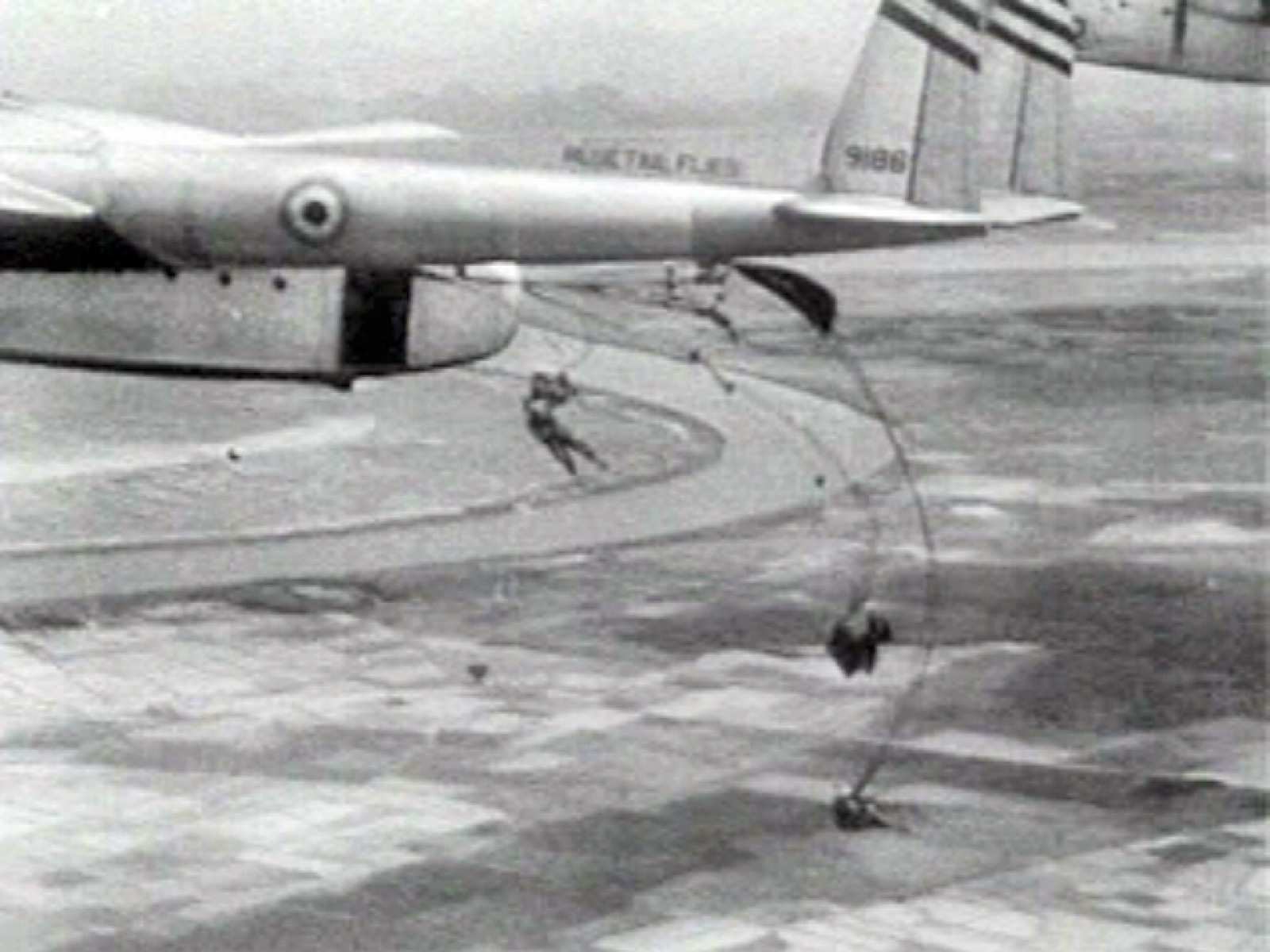
    Frame from a 1954 Pathé newsreel about the French fighting at Dien Bien Phu.
    Warner Pathé News, public domain, via Wikimedia Commons

    In the night of 1 to 2 May, the Viet Minh took Éliane 1, Dominique 3 and Huguette 5. A French army log for that night and a United States telegram sent from Saigon on 2 May both record the losses. The inner ring was now smaller, and the garrison had less room to manoeuvre.

  9. 1954, 7 May

    The final assault and the surrender

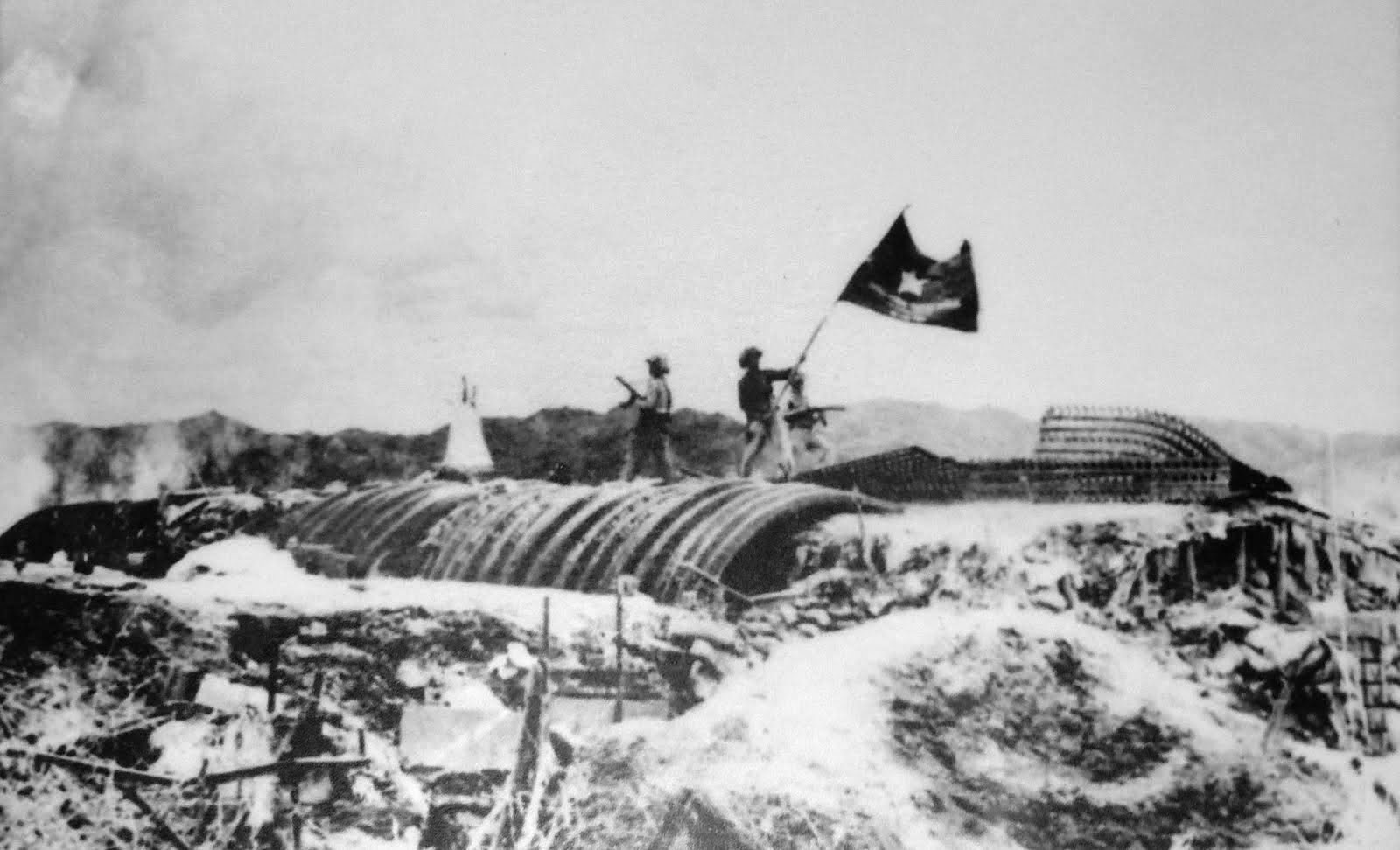
    Viet Minh soldiers planting their flag over the captured French headquarters at Dien Bien Phu.
    Vietnam People's Army, public domain, via Wikimedia Commons

    The last French defences were overrun on 7 May, and the French command surrendered. Colonel de Castries was taken prisoner. The surrender ended a siege of 56 days.

  10. 1954, after 7 May

    The prisoners are marched away

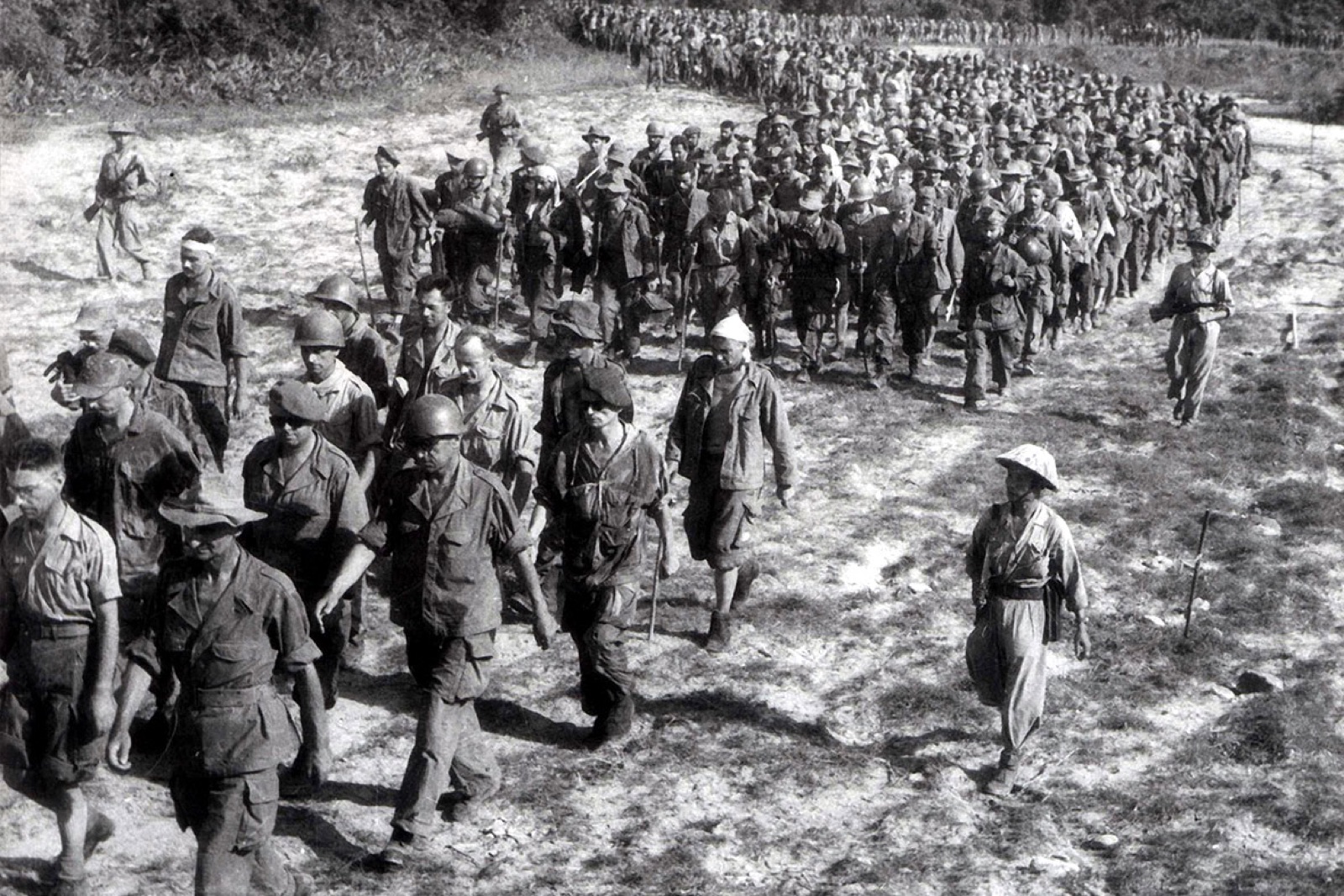
    Captured French soldiers walk under escort to a prisoner-of-war camp after the fall of Dien Bien Phu.
    Stringer, AFP, public domain, via Wikimedia Commons

    The garrison's men were taken prisoner and marched under escort toward the camps. Many prisoners died in captivity.

  11. 1954, 20–21 July

    The Geneva agreements are signed

    The ceasefire agreements are dated 20 July 1954, and the Final Declaration is dated 21 July. The agreements set a temporary dividing line at the 17th parallel, with French forces to withdraw to the south and Viet Minh forces to the north, pending general elections planned for 1956. The United States did not endorse the Final Declaration and only took note of the agreements.

  12. 1954, 27 July to 11 August

    Ceasefires take effect region by region

    Each region had its own start date. Northern Vietnam's ceasefire took effect on 27 July, central Vietnam's on 1 August and southern Vietnam's on 11 August. Laos followed on 6 August and Cambodia's complete ceasefire on 7 August, and the 1 August date marks central Vietnam only, not the end of fighting across Indochina.

  13. 1954, summer

    Surviving prisoners are freed

    The French Ministry of the Armed Forces records that the survivors were mostly freed in the summer of 1954, many of them sick and emaciated.

Maps

Tap a map to zoom

  • French-language battle map of the opening of Dien Bien Phu, 13–15 March 1954, showing the French strongpoints and the first Viet Minh attacks.

    The valley at the start of the battle, 13–15 March 1954: French strongpoints and the first assaults. This is a modern map.

    BrunoLC, CC0, via Wikimedia Commons

  • Close-up plan of the Dien Bien Phu entrenched camp and the surrounding hills (modern map).

    Plan of the Dien Bien Phu entrenched camp in the valley, shown on a modern map.

    Unknown author, CC BY-SA 3.0, via Wikimedia Commons

  • Map of the Dien Bien Phu valley with the French strongpoints marked (modern map).

    The Dien Bien Phu valley and its French strongpoints, shown on a modern map.

    Unknown author, CC BY-SA 3.0, via Wikimedia Commons

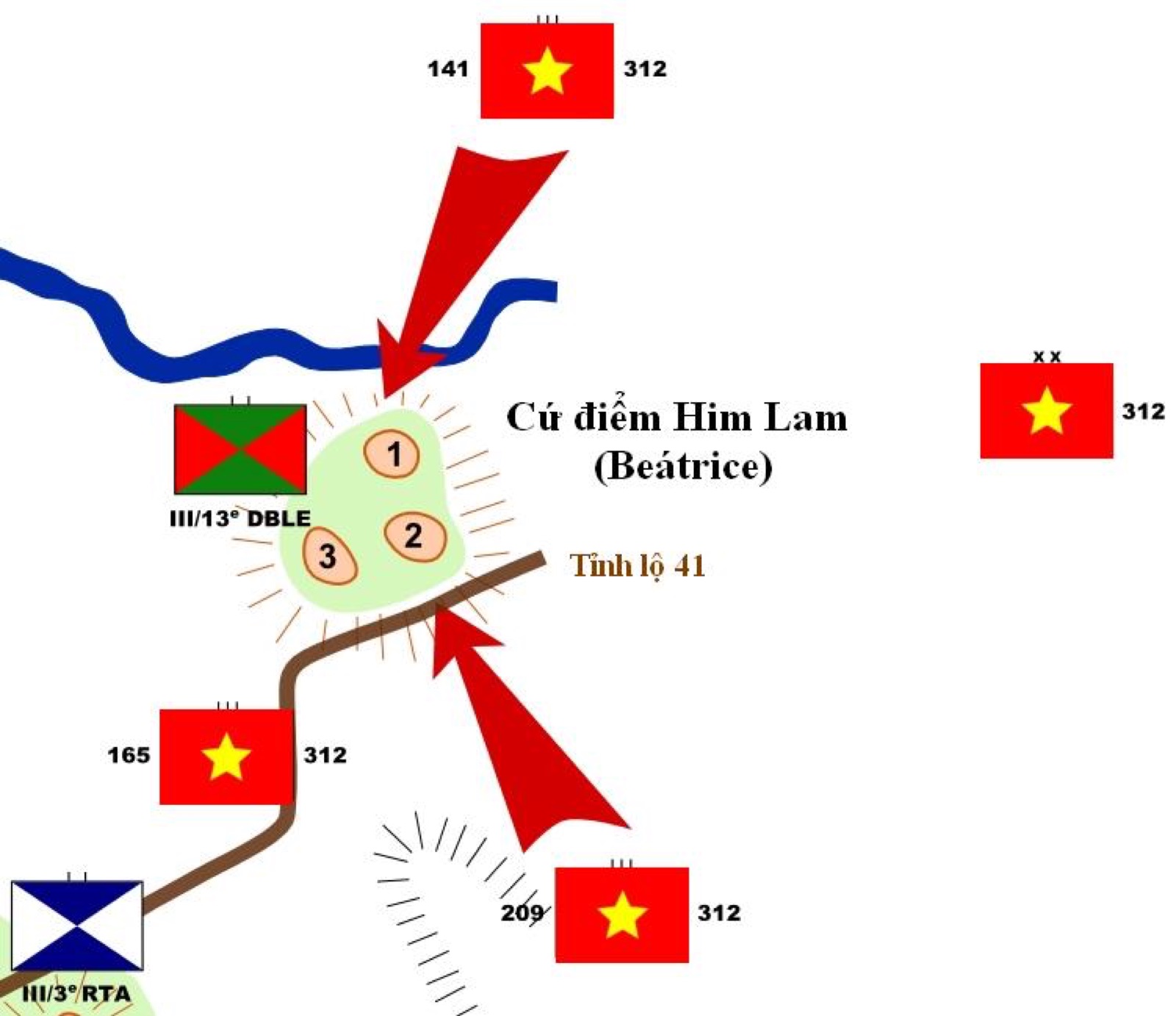
  • Map of the fighting for Him Lam (Béatrice), one of the first French strongpoints to fall at Dien Bien Phu (modern map).

    The attack on Him Lam, the strongpoint the French called Béatrice, March 1954. This is a modern map.

    user:BrunoLC, CC0, via Wikimedia Commons

The Battle of Điện Biên Phủ, usually written Dien Bien Phu in English, was a siege that ran from 13 March to 7 May 1954 in a valley in north-west Vietnam. A Viet Minh army led by Võ Nguyên Giáp surrounded a French Union garrison and forced it to surrender after 56 days. The defeat helped force the Geneva settlement of 1954 and hastened the end of French rule in Indochina. The Geneva agreements of 20 to 21 July 1954 set the terms for ending the fighting, but the ceasefires took effect in stages rather than all at once: 27 July in northern Vietnam, 1 August in central Vietnam, 6 August in Laos, 7 August in Cambodia and 11 August in southern Vietnam. For the wider story, see our hub on the Vietnam War.
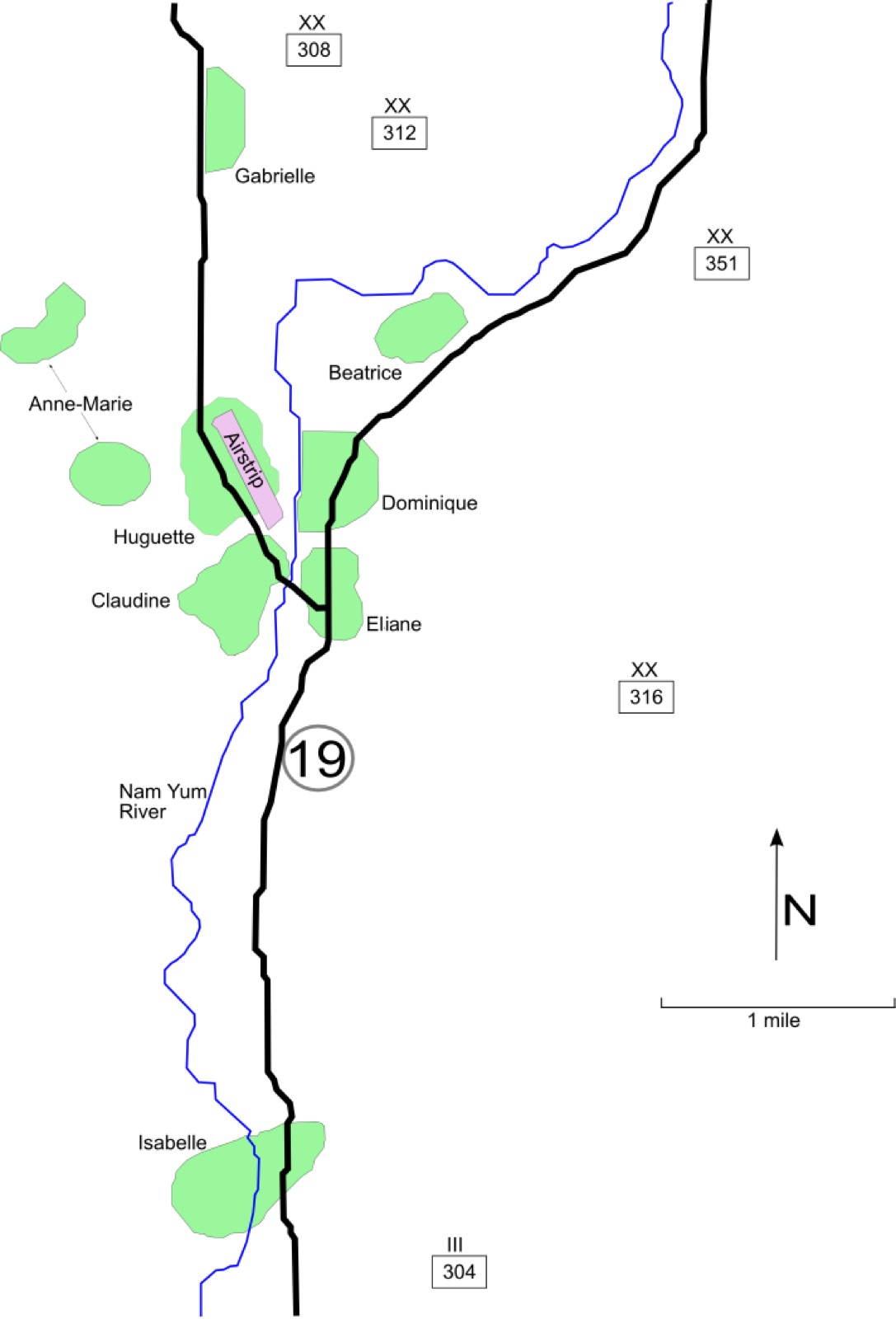
Map of the Dien Bien Phu valley with the French strongpoints marked (modern map).
The Dien Bien Phu valley and its French strongpoints, shown on a modern map. Unknown author, CC BY-SA 3.0, via Wikimedia Commons

In five minutes

France set out to hold a remote valley in north-west Vietnam, far from its main lines. On 20 November 1953 the French command ordered the site occupied, and paratroopers landed there under the name Operation Castor. The plan was to draw the Viet Minh into a set-piece battle in which French artillery and air power could decide the result. The Viet Minh did something different. They surrounded the base, hauled guns into the hills above the camp, and dug trenches toward the French positions a step at a time.

The first attack came in the late afternoon of 13 March 1954, against Béatrice, a post on high ground above the road. Within hours it had fallen, and the outer positions followed one by one. Air supply could not match what the garrison needed, and French guns could not silence the enemy artillery on the heights. On 7 May, after the last defences had been overrun, the French command surrendered, and the garrison commander, Colonel Christian de Castries, was taken prisoner.

Remember the geography first. The camp sat on the valley floor, and the hills around it were in Viet Minh hands. Whoever held the heights could see the camp and shell it.

Three problems explain most of the outcome. The side that held the heights could shell the valley floor. A garrison that depends on air supply is only as strong as its airstrip. And a fortified base with little room to manoeuvre cannot easily break out of a siege. The battle shows all three problems in one place.

The turning points, at a glance:

  • 13 March: the first attack on Béatrice.
  • By 17 March: the northern posts largely lost.
  • 1 to 2 May: Éliane 1, Dominique 3 and Huguette 5 taken in a night attack.
  • 7 May: the garrison surrenders.

Why France chose the valley

Henri Navarre took command of French forces in Indochina in May 1953. He faced a Viet Minh army that would not fight on French terms, and he wanted to force a decisive battle on ground of his choosing. The French had fought at Nà Sản in late 1952, another fortified camp that could be supplied only by air. Navarre planned the valley base to draw the enemy into the open, where French artillery and aircraft could do the damage.

The valley lay far from French lines. Everything the garrison needed would have to come in by air or along one road. Navarre went ahead anyway. The decision to occupy the site was taken on 20 November 1953, and the work of digging in began within days.

Who fought at Dien Bien Phu

The French side was a mixed force. Its core was French and colonial infantry and paratroop battalions. Vietnamese and Tai soldiers in French service also held positions. The French Ministry of the Armed Forces puts the encircled force at between 11,000 and 15,000 men. Its commander was Colonel Christian de Castries.

The Viet Minh were the army of the independence movement led by Hồ Chí Minh. Their regular force was the People's Army of Vietnam (PAVN), and at the start of the battle it numbered tens of thousands of regular troops. Giáp commanded them through a plan built around siege warfare. The French Ministry of the Armed Forces records that from early 1954 thousands of Vietnamese porters carried weapons, supplies and heavy artillery. Many were civilians. Some pushed loaded bicycles along the mountain tracks, and this supply effort is what made a long siege possible.

The valley and its strongpoints

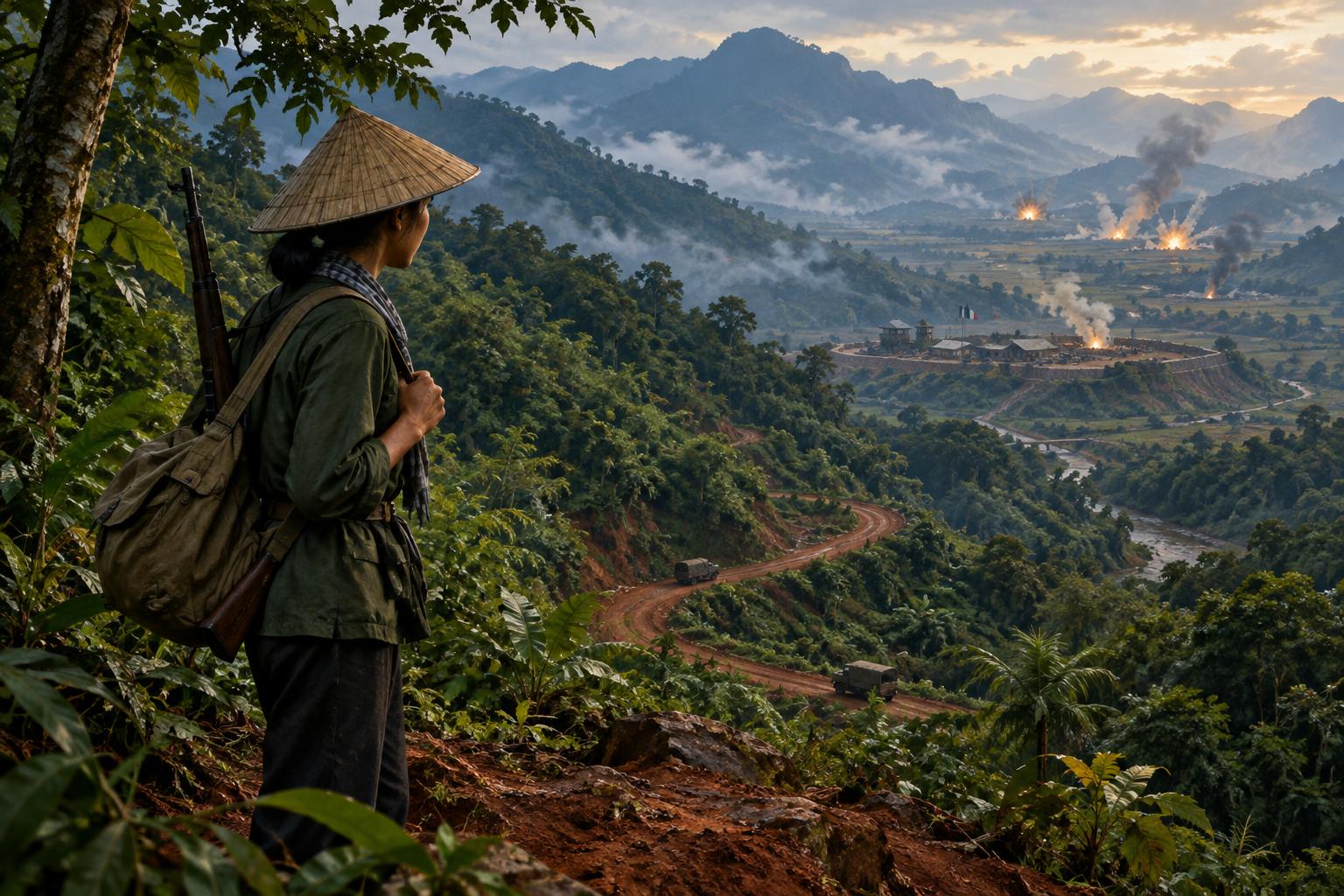
The camp was a ring of fortified positions across the valley floor and the hills around it. The French gave each post a woman's first name: Béatrice, Gabrielle, Anne-Marie, Huguette, Isabelle, Éliane and Dominique. Béatrice, known in Vietnamese as Him Lam, stood on a height overlooking the road from Tuần Giáo. Gabrielle and Anne-Marie anchored the northern part of the valley. Huguette covered the airstrip. Isabelle was the most isolated post, and Éliane and Dominique held hills and ridges.
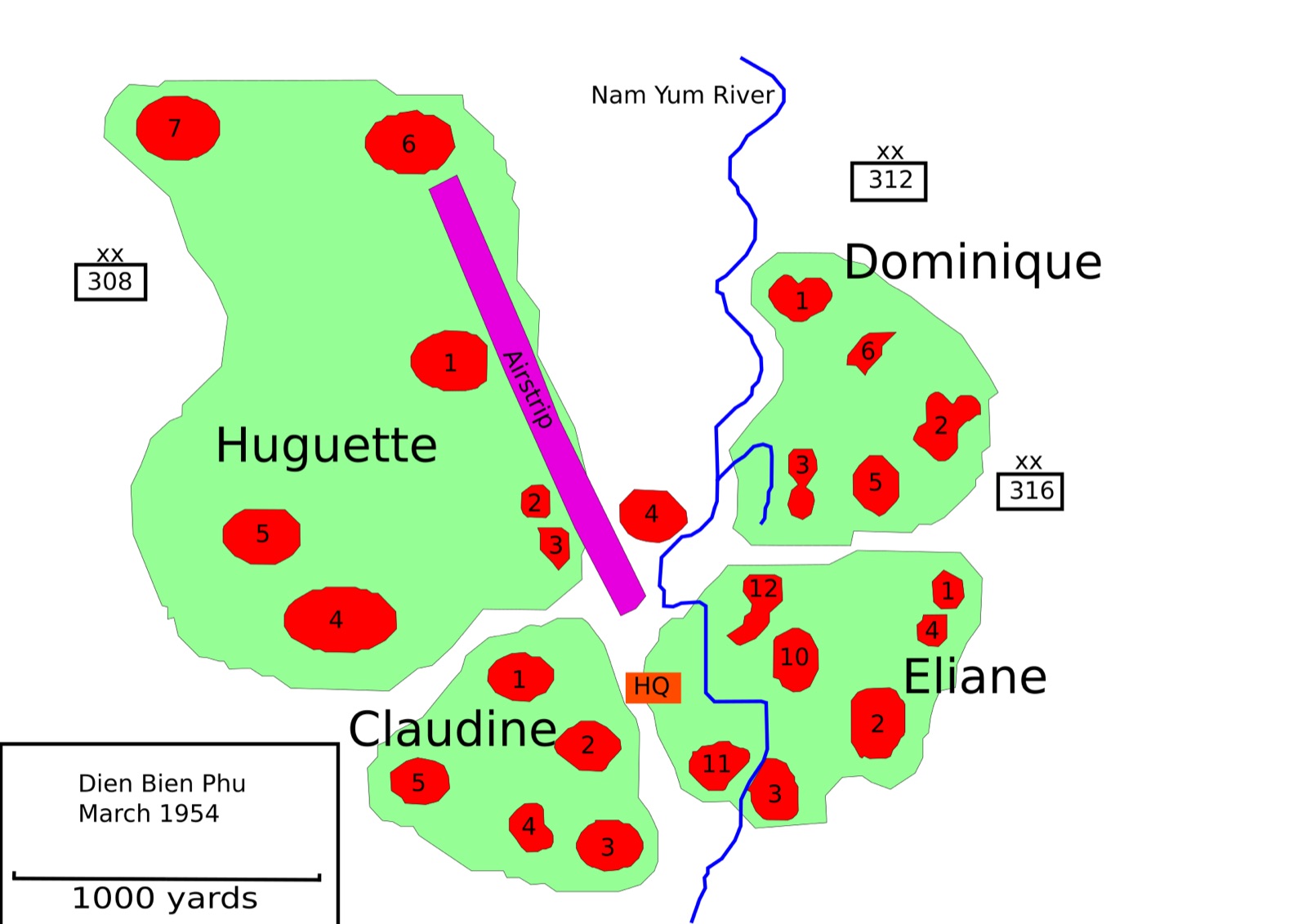
Close-up plan of the Dien Bien Phu entrenched camp and the surrounding hills (modern map).
Plan of the Dien Bien Phu entrenched camp in the valley, shown on a modern map. Unknown author, CC BY-SA 3.0, via Wikimedia Commons

Each post had its own bunkers, wire and small garrison, but the posts depended on one another for artillery cover. When an outer post fell, the guns covering the inner ring lost their observation and some of their protection. That is why losing one hill could quickly affect the whole camp.

The first attack and the northern posts

The Viet Minh opened the battle on 13 March 1954 with a bombardment that began in the late afternoon. The first target was Béatrice, and it fell within hours of the assault.
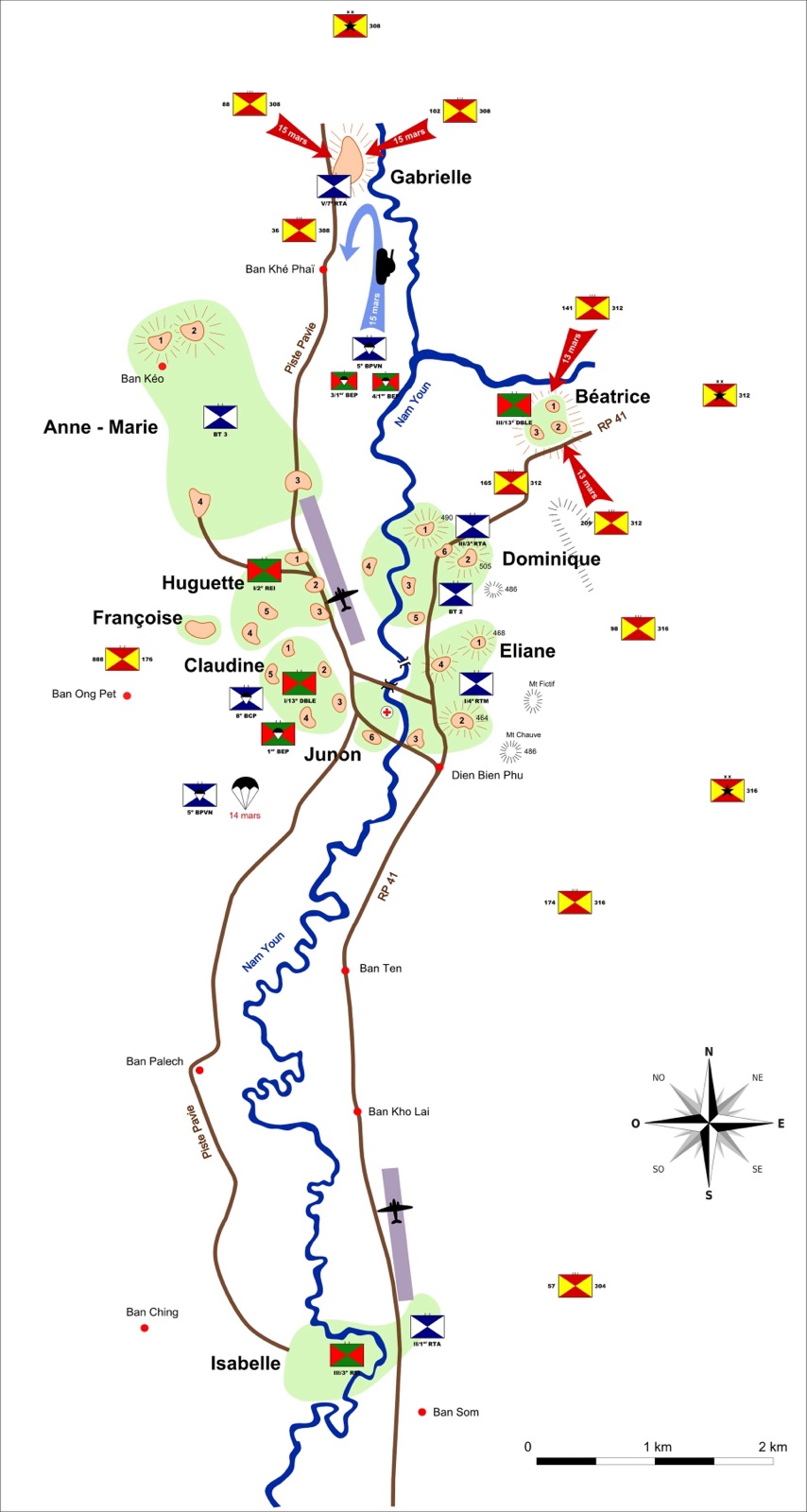
French-language battle map of the opening of Dien Bien Phu, 13–15 March 1954, showing the French strongpoints and the first Viet Minh attacks.
The valley at the start of the battle, 13–15 March 1954: French strongpoints and the first assaults. This is a modern map. BrunoLC, CC0, via Wikimedia Commons
Map of the fighting for Him Lam (Béatrice), one of the first French strongpoints to fall at Dien Bien Phu (modern map).
The attack on Him Lam, the strongpoint the French called Béatrice, March 1954. This is a modern map. user:BrunoLC, CC0, via Wikimedia Commons

Gabrielle and Anne-Marie, the northern posts, were lost within days. By 17 March the northern cluster had been largely overrun. With the north gone, the Viet Minh could look down onto the valley floor, and the French lost much of the perimeter they had planned to hold.

Trenches, guns and the airstrip

Giáp's first plan had been a fast assault. He and his commanders then chose a slower, more deliberate advance. The Viet Minh moved their artillery onto the hills, then pushed trenches and tunnels forward toward the French positions. By April, trench warfare and sapping were under way.

Trench work was slow and dangerous. Every metre dug under fire carried a cost, but the method kept pressure on the garrison without an assault in the open. That patience was central to Giáp's plan.

The Viet Minh brought field guns and anti-aircraft guns over the mountains in pieces and reassembled them on the hills. Their anti-aircraft fire made the airstrip too dangerous for most transport landings.

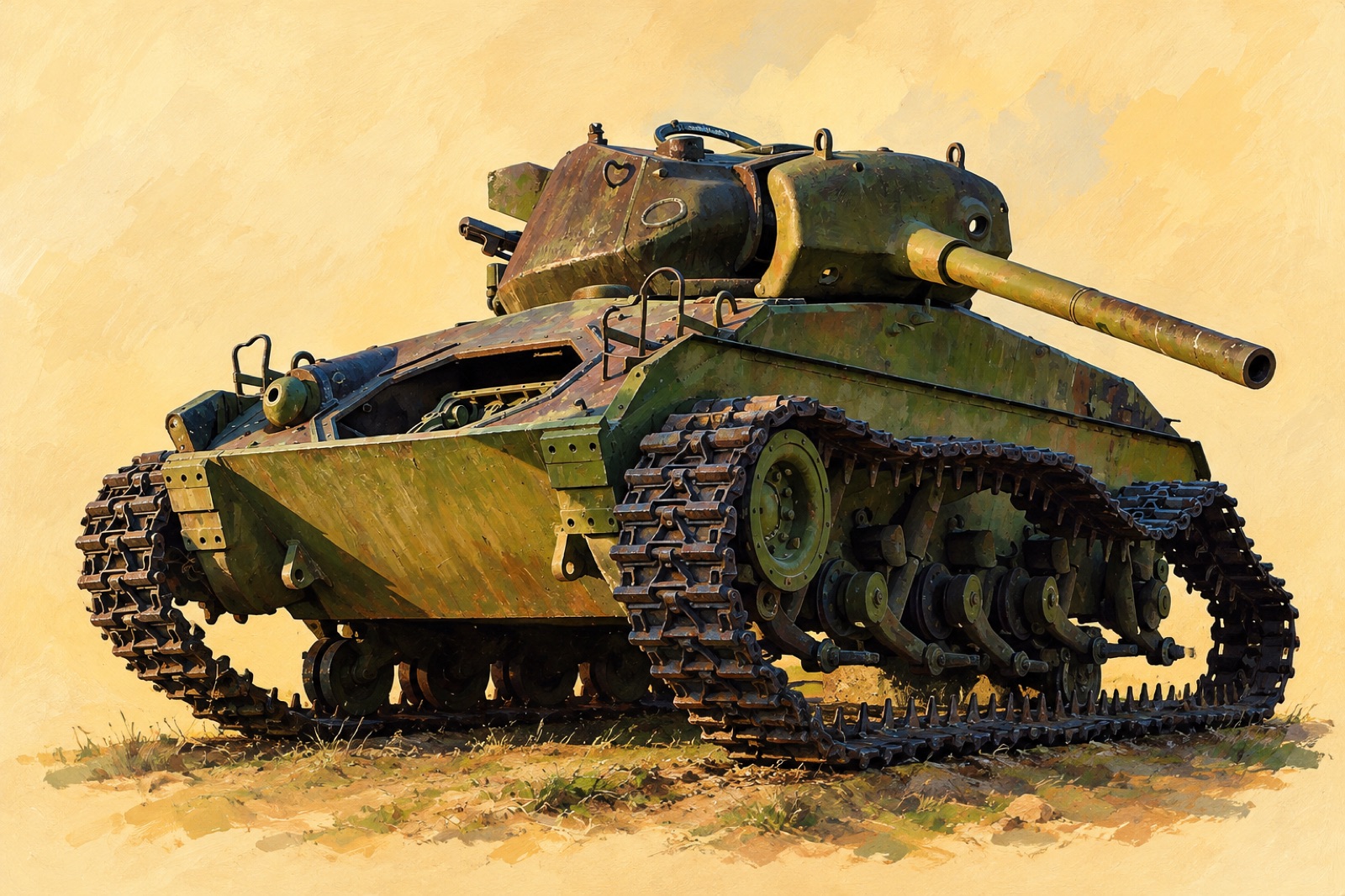
The French had a small number of tanks, including M24 Chaffee light tanks that had been flown in dismantled and reassembled inside the camp. The heaviest French guns were 155 mm howitzers. Their fire could not silence the guns on the hills, and artillery alone could not decide the fight.

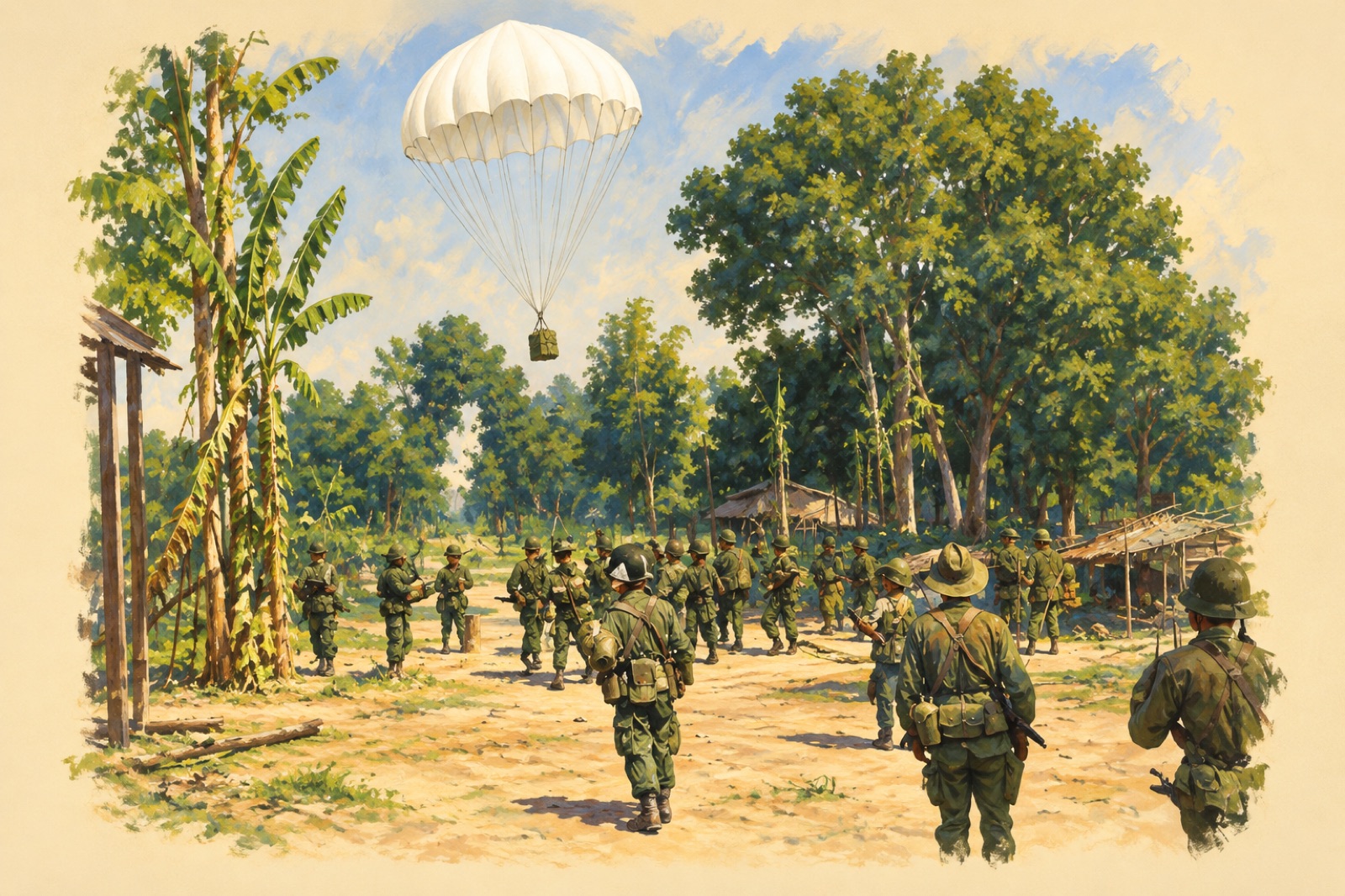
Air supply was the French lifeline, but it could not keep pace with the garrison's needs. Transport aircraft dropped food, ammunition and medicine and flew out some of the wounded. The drops were often scattered, and the landings grew more dangerous. The longer the siege ran, the more the garrison depended on a runway the enemy could hit.

April and early May: the hills change hands

The French did not give up the hills without a fight. In late March the Viet Minh took Dominique and Éliane 1, and French counterattacks followed over the next weeks. Each side lost and regained ground on the same ridges.

In April further posts fell, and each lost post shortened the French line and brought the attackers closer to the airstrip.

In the night of 1 to 2 May, the Viet Minh took Éliane 1, Dominique 3 and Huguette 5. A French army log for that night and a United States diplomatic telegram sent from Saigon on 2 May both record the losses. The inner ring became smaller, and the garrison had less room to manoeuvre.

The final days and surrender

The Geneva Conference opened on 26 April 1954. Diplomats from several countries gathered to discuss Korea and, from 8 May, Indochina. The fighting in the valley went on while the delegates talked.

The final attack came on 7 May. The last French defences were overrun that day, and the French command surrendered. Colonel de Castries was taken prisoner. The siege had lasted 56 days.

Losses and prisoners

Both sides suffered heavy losses in the fighting. When the garrison surrendered on 7 May, its men became prisoners of the Viet Minh.

Captivity was harsh. The French Ministry of the Armed Forces records that many French prisoners held by the Viet Minh died in captivity, and that the survivors were mostly freed in the summer of 1954, sick and emaciated.

Geneva and the division of Vietnam

The fall of the garrison strengthened the Viet Minh's hand at Geneva. The agreements, dated 20 to 21 July 1954, set a temporary dividing line at the 17th parallel. French forces would withdraw to the south and Viet Minh forces to the north, pending general elections planned for 1956. Laos and Cambodia were to be neutral.

The line was meant to be temporary, but it became the border between two rival states and, in time, the front line of the Vietnam War. The 1956 elections were never held.

The United States had considered air intervention to save the garrison, but it would act only as part of a wider coalition. Britain and its allies declined to join a rescue. The United States did not endorse the conference's unsigned Final Declaration; it said only that it took note of the agreements and would not use force to disturb them. The French had to fight the siege without the outside help they had hoped for.

Why the French lost

Most accounts point to several linked causes. The Viet Minh held the high ground around the valley, which let their guns cover many French positions. French counter-battery fire did not silence those guns. Anti-aircraft fire threatened the airstrip that supplied the garrison, so supply had to come by air drops, which could not replace what was lost. Reinforcements could only arrive by air, and the runway was under fire.

There were also choices made under pressure. Navarre had committed a large force to a valley that was hard to defend and hard to supply. The battle also shows how a plan can be sound in principle and still fail in practice. A set-piece battle made sense on paper, but it depended on French guns and aircraft winning the fight for the heights, and they could not secure them. Once the siege began, the garrison's position only shrank.

Giáp, by contrast, kept his plan steady. He accepted slow progress, dug closer and kept the pressure on. Historians often stress logistics: a siege needs food, water, shells and medical supplies to keep moving. The Viet Minh moved their supplies by hand and bicycle over the mountains, while the French moved theirs by air. In the end, the side that could keep its men fed and its guns firing held the valley.

What exams ask

In world history courses, the battle is usually taught as a turning point in the end of French colonial rule in Indochina and in the wider story of decolonisation. Strong answers explain the causes (Navarre's plan and the choice of the valley and its strongpoint system), the turning point (the siege, the artillery and the airstrip) and the consequences (the Geneva agreements, the 17th parallel and the road to the Vietnam War). Dates and places matter, but the link between cause and result matters more.

It also helps to know where each fact comes from. Vietnamese official histories, French military records and US diplomatic telegrams describe the same events from different angles. A strong answer can name the kind of source behind a claim, such as a French army log, a US diplomatic telegram or a Vietnamese official history.

Read next

Armies and units

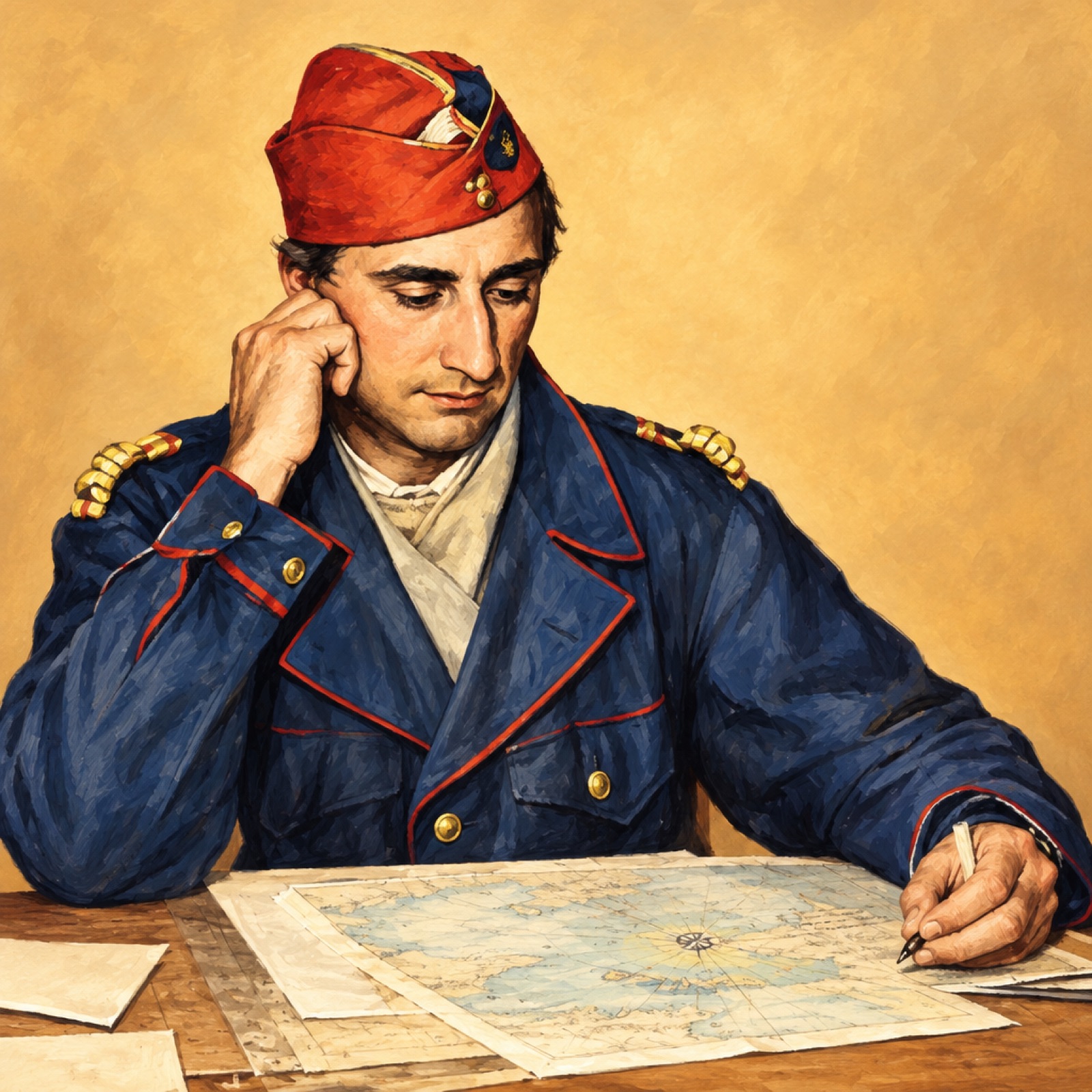
  • Portrait of Colonel Christian de Castries, French commander at Dien Bien Phu, 1954. (illustration) Commander Illustration

    France

    Colonel Christian de Castries

    Commander of the French garrison at Dien Bien Phu. He was taken prisoner when the garrison surrendered on 7 May 1954.

    Illustration after Unknown author, public domain · Original

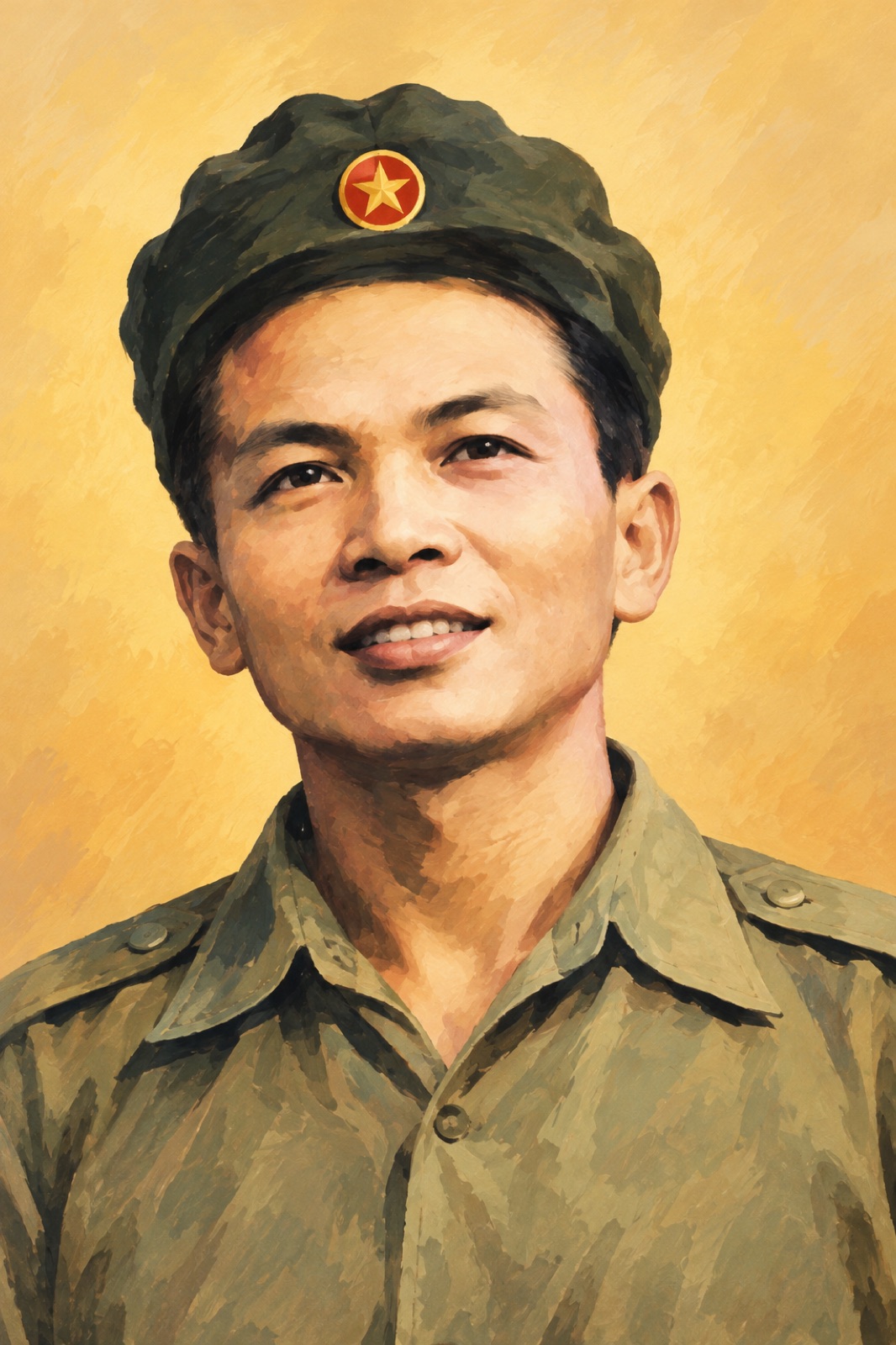
  • Portrait of General Võ Nguyên Giáp in 1951, during the Indochina War. (illustration) Commander Illustration

    Viet Minh

    General Võ Nguyên Giáp

    Commander-in-chief of the Viet Minh forces at Dien Bien Phu. He replaced the plan for a quick assault with a slower siege.

    Illustration after Unknown author, public domain · Original

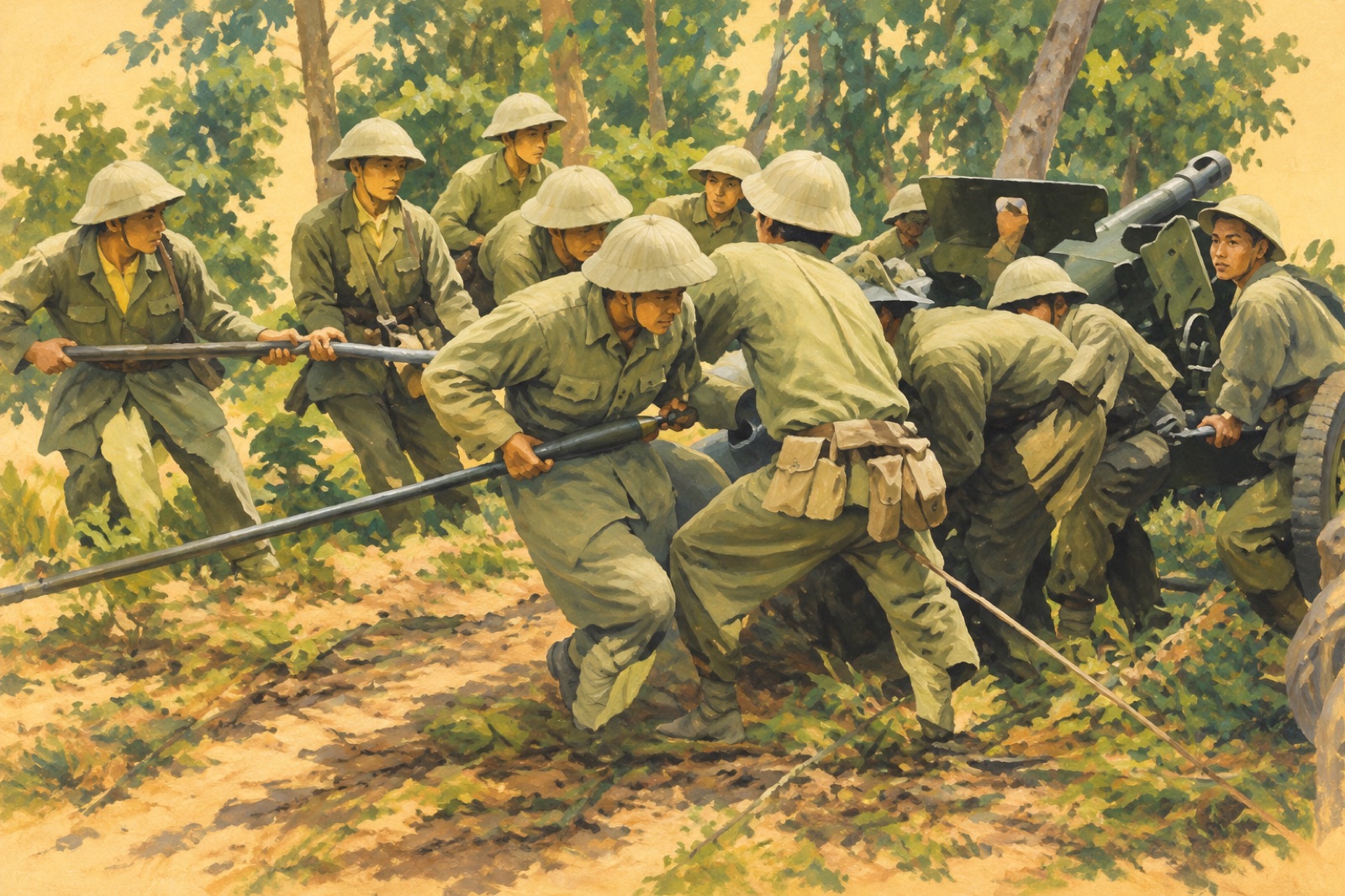
  • Viet Minh artillery in position during the battle of Dien Bien Phu, 1954. (illustration) Artillery Illustration

    Viet Minh

    Viet Minh artillery

    The Viet Minh hauled field guns and anti-aircraft guns by hand into the hills around the valley. Their fire made the airstrip too dangerous for most French transport landings.

    Illustration after Vietnam, public domain · Original

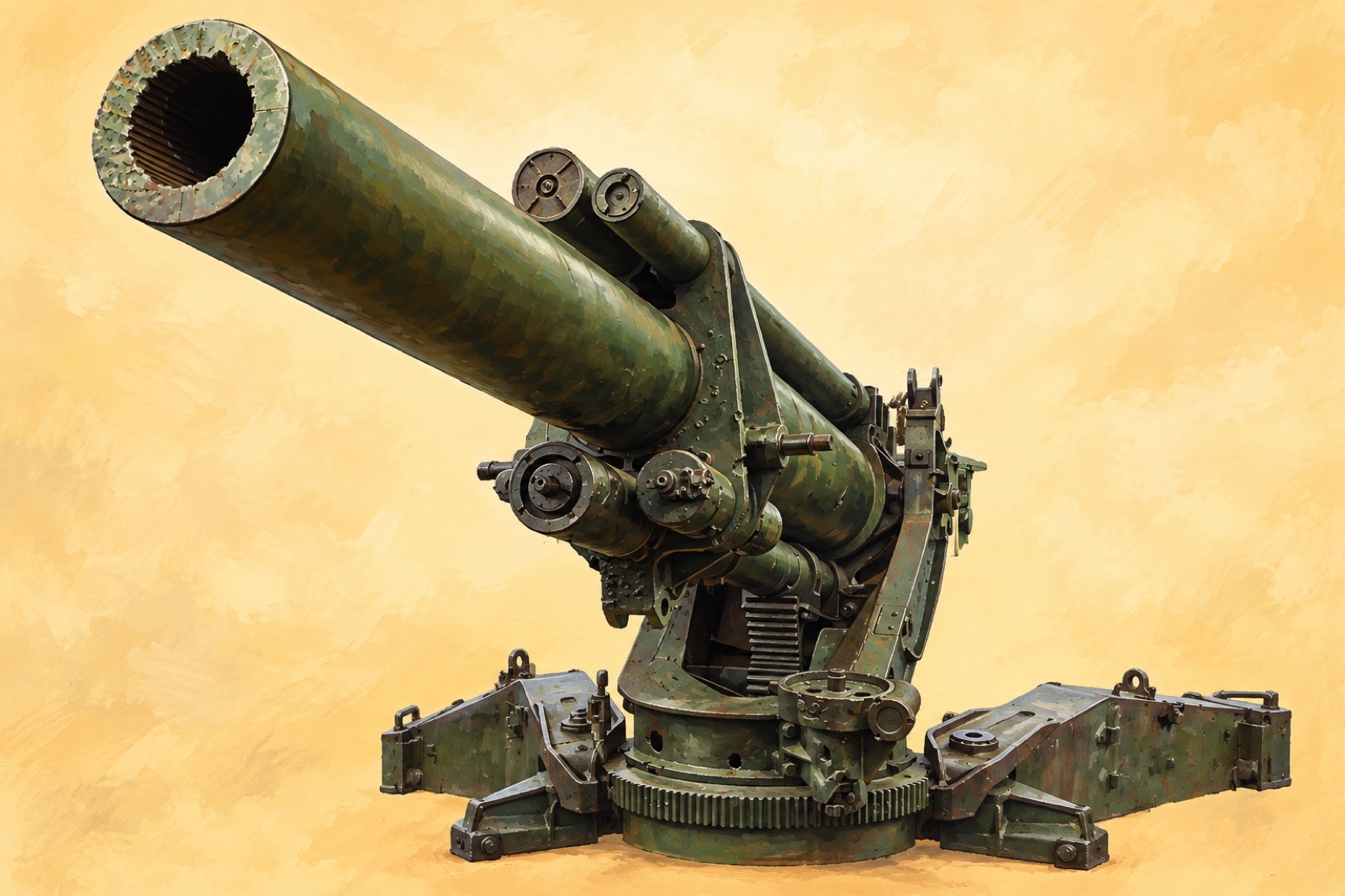
  • A captured French 155 mm howitzer on display at Dien Bien Phu. (illustration) Weapon Illustration

    France

    French 155 mm howitzer

    The heaviest guns in the French camp were 155 mm howitzers. Viet Minh guns on the hills made it hard for French artillery to hit back.

    Illustration after Adam Jones from Kelowna, BC, Canada, CC BY-SA 2.0; this illustration CC BY-SA 2.0 · Original

  • The wreck of a French M24 Chaffee tank, kept as a monument in the rice fields near the Dien Bien Phu airfield. (illustration) Tank Illustration

    France

    M24 Chaffee light tank

    The French flew in dismantled M24 Chaffee tanks and reassembled them in the camp. The wreck of one such tank is kept as a monument in the rice fields near the airfield.

    Illustration after Curt Mühe, CC BY-SA 4.0; this illustration CC BY-SA 4.0 · Original

  • A French army doctor treats a wounded Vietnamese paratrooper on the Pavie track during the battle, 1954. (illustration) Infantry Illustration

    France

    French paratroopers (8e Choc)

    The 8th Colonial Parachute Shock Battalion fought at Dien Bien Phu. A battalion doctor is treating a wounded Vietnamese paratrooper on the Pavie track.

    Illustration after Rundvald : pour les retouches (amélioration de la définition , de la luminosité , des contrastes et recadrage ), CC BY-SA 4.0; this illustration CC BY-SA 4.0 · Original

  • Vietnamese paratroopers in the field while a French Air Force C-119 transport drops supplies, early 1954. (illustration) Air Illustration

    France (Vietnamese National Army)

    Vietnamese paratroopers and supply drop

    Vietnamese paratroopers of the French-backed army watch a French Air Force C-119 drop supplies in early 1954.

    Illustration after Albert Grandolini, public domain · Original

Frequently Asked Questions

When did the Battle of Dien Bien Phu take place?

The battle ran from 13 March to 7 May 1954, a siege of 56 days in a valley in north-west Vietnam. The Viet Minh surrounded and attacked a French Union garrison, which surrendered on 7 May. It is a siege rather than a single day of fighting, so the dates cover the whole campaign.

Why did the French fight in the valley?

Henri Navarre hoped to draw the Viet Minh into a set-piece battle where French artillery and air power could win. The French had fought at Nà Sản in late 1952, another fortified camp supplied only by air. The valley, however, was far from French lines and depended on air supply and one road.

Who won the battle?

The Viet Minh won, and the French garrison was defeated. The Viet Minh took the strongpoints one by one, and on 7 May the French command surrendered. Colonel Christian de Castries was taken prisoner. The defeat helped force the Geneva settlement and hastened the end of French rule in Indochina.

Why did the French lose?

Most accounts point to several linked causes. The Viet Minh held the high ground around the valley, French counter-battery fire could not silence their guns, and anti-aircraft fire threatened the airstrip that supplied the garrison. Reinforcements were hard to bring in, and the Viet Minh kept a steady siege that moved closer to the French lines.

What did the battle lead to?

The Geneva agreements of 1954 set a temporary dividing line at the 17th parallel, with French forces in the south and Viet Minh forces in the north. They planned general elections for 1956, which were never held. The split became the basis for the Vietnam War that followed.

Check Your Understanding

Pick an answer for each question to see if you were right.

  1. When did the French garrison at Dien Bien Phu surrender?

  2. Who commanded the Viet Minh forces at Dien Bien Phu?

  3. Which French operation dropped paratroopers into the valley in 1953?

  4. Which line did the 1954 Geneva agreements set as a temporary dividing line?

  5. What made the airstrip hard for the French to use for supply?

More in The Indochina Wars & the Vietnam War (1945–1991)

See the full topic guide →
Share:

About the Writer

Alex Ng
Alex Ng

Software Engineer & Writer

Software engineer with a passion for distilling complex ideas into actionable insights. Writes about finance, investment, entrepreneurship, and technology.

Read more →

Keep reading

Explore the topic: The Indochina Wars & the Vietnam War (1945–1991)

Articles

Summaries