In five minutes: the best sci fi books to read
If you want the best sci fi books in one list, start with these eleven: Frankenstein, 1984, Foundation, Fahrenheit 451, The Door into Summer, Dune, Flowers for Algernon, The Left Hand of Darkness, Neuromancer, The Three-Body Problem and Project Hail Mary. Together they cover two hundred years of the genre, from a gothic experiment in 1818 to a lone-astronaut story in 2021. If you want the wider picture first, our history of science fiction shows how the genre grew.
No list can be final. This one picks books that shaped the genre, still read well today, and each show a different thing science fiction can do. Every entry says what the book is about without giving away the ending.
The 11 best science fiction books
1. Frankenstein (1818) by Mary Shelley
A young scientist, Victor Frankenstein, builds a living creature from the parts of the dead and then runs away from what he has made. The creature, left alone, learns language, longs for company and turns bitter when people reject him. Shelley published the book anonymously when she was twenty. It is often called the first science fiction novel because the story starts from a scientist's experiment, not from magic. Read it for the question it asks: what do makers owe what they make?
2. 1984 (1949) by George Orwell
Winston Smith works at the Ministry of Truth in Oceania, rewriting old newspapers so the past always matches what the Party says today. When he starts a secret diary and a forbidden love affair with Julia, he begins to test how far the state can reach. Words like Big Brother, Newspeak and doublethink come from this book. It is short, grim and easy to follow, which makes it a good first dystopia.
3. Foundation (1951) by Isaac Asimov
The mathematician Hari Seldon uses a science called psychohistory to predict that the Galactic Empire will fall and that a dark age of thirty thousand years will follow. His plan is to shorten it to one thousand years by gathering human knowledge on a remote planet, Terminus. The book is a set of linked stories across generations, so the real hero is the sweep of history, not one person. Read it if you like ideas more than action.
4. Fahrenheit 451 (1953) by Ray Bradbury
Guy Montag is a fireman in a future where firemen burn books instead of putting out fires. A chance meeting with a curious young neighbour, Clarisse, makes him question the quiet, screen-filled life around him. The novel is about censorship, but also about a society that gives up books for easy entertainment. It is short enough to read in an afternoon, so it suits readers who are new to the genre.
5. The Door into Summer (1957) by Robert A. Heinlein
Dan Davis is an engineer who builds helpful household robots. After his business partner and his fiancée betray him, he takes cold sleep and wakes in the year 2000, then uses time travel to put things right. The warmth comes from his cat, Pete, who keeps looking for a door that leads to summer. It is light, fast and clever, a good pick if you want big ideas without a heavy mood.
6. Dune (1965) by Frank Herbert
Paul Atreides, the teenage heir of a noble house, moves with his family to the desert planet Arrakis, the only source of the spice that makes space travel possible. A plot against his family leaves him among the native Fremen. Herbert built a whole world of ecology, religion and politics. The book won the first Nebula Award for Best Novel and shared the Hugo Award. It is long and full of new terms, so give it a slow start.
7. Flowers for Algernon (1966) by Daniel Keyes
Charlie Gordon, a bakery worker with a low IQ, is chosen for an experimental operation that has already made a lab mouse, Algernon, far smarter. The story is told through Charlie's own progress reports, so the spelling and thinking on the page change as he does. It won a Nebula Award and grew out of a 1959 short story that won a Hugo Award. It is the most personal book on this list.
8. The Left Hand of Darkness (1969) by Ursula K. Le Guin
Genly Ai, an envoy from a league of worlds, arrives on the icy planet Gethen, nicknamed Winter, to invite its people to join. They have no fixed sex, which changes how they think about power, loyalty and friendship. Le Guin used this setup to ask what we take for granted about gender and trust. It won both the Hugo and the Nebula awards.
9. Neuromancer (1984) by William Gibson
Case was once a gifted hacker, but his former employers damaged his nerves so he can no longer enter the network. A mysterious employer offers a cure in exchange for one last job. Gibson's book shaped cyberpunk: high technology, low lives and enormous corporations. It won the Hugo, Nebula and Philip K. Dick awards. The prose is dense, but its picture of a global network came before the World Wide Web.
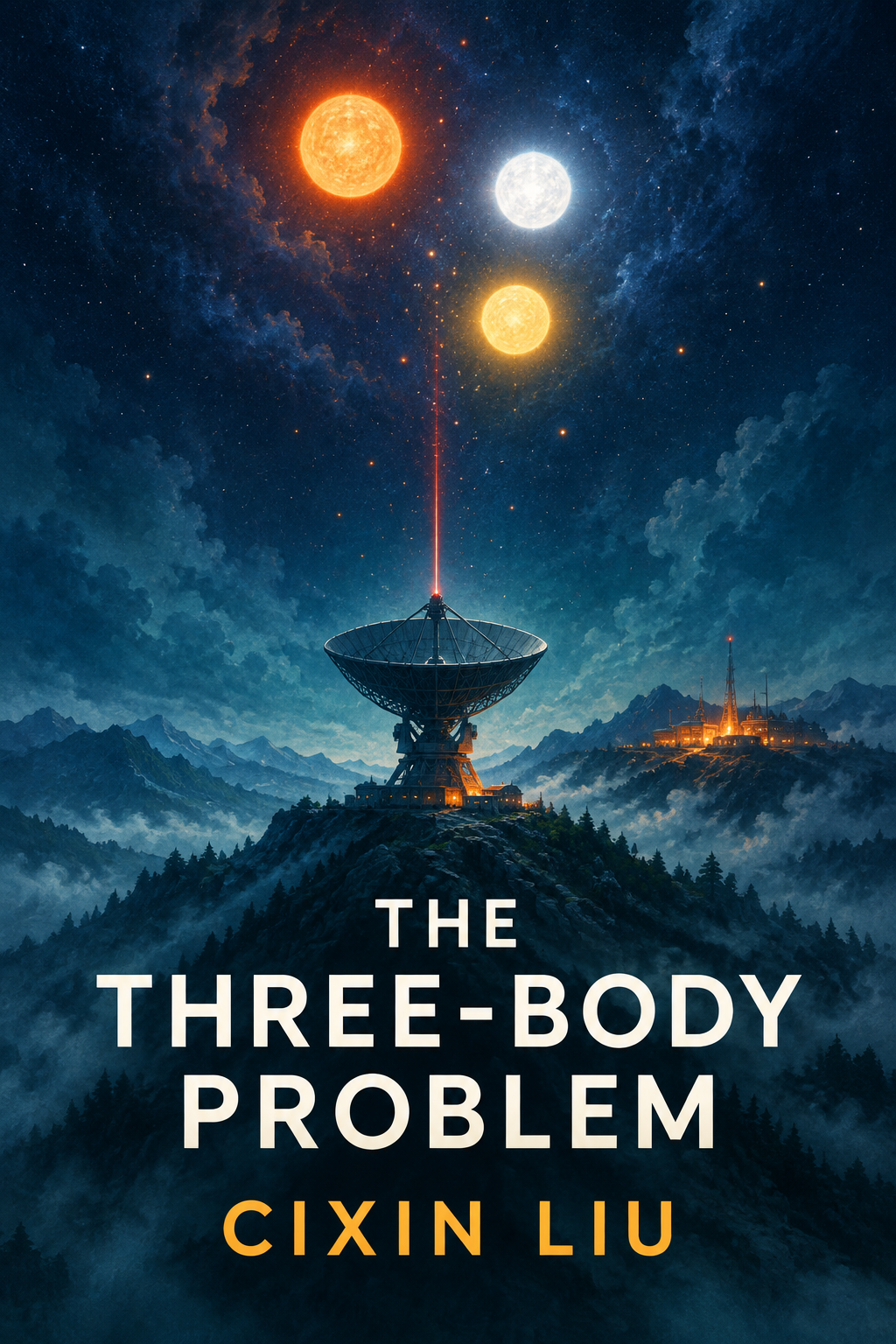
10. The Three-Body Problem (2008) by Liu Cixin
During China's Cultural Revolution, the astrophysicist Ye Wenjie makes a choice that echoes across the whole human race. Decades later, the scientist Wang Miao is drawn into a strange online game about a world with three suns. Ken Liu translated the book into English in 2014, and it won the 2015 Hugo Award for Best Novel, making Liu Cixin the first Asian author to win that prize. Read our Three-Body Problem study guide for the full breakdown.
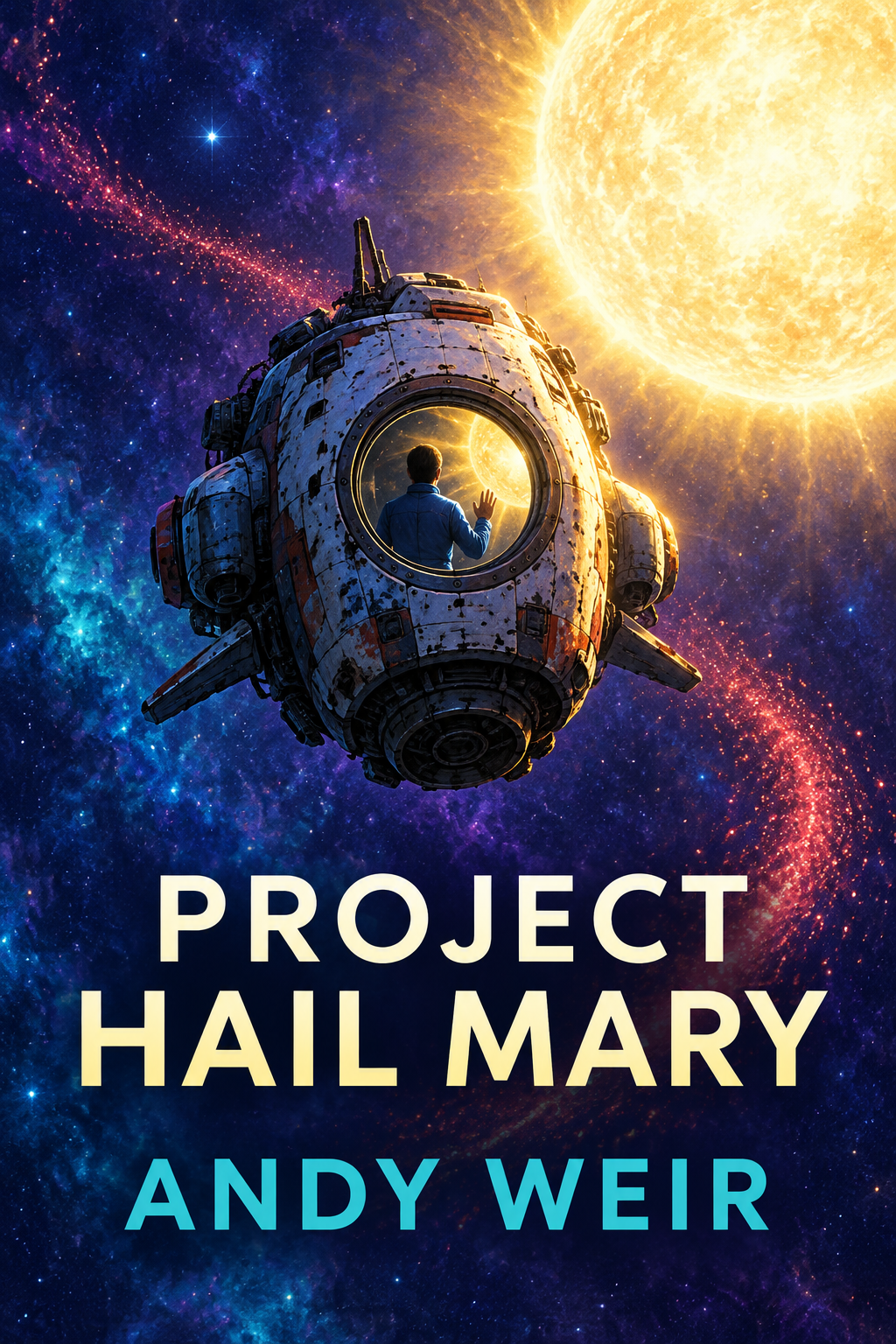
11. Project Hail Mary (2021) by Andy Weir
Ryland Grace wakes alone on a spaceship with no memory of who he is or why he is there. As his mind recovers, he learns that he is Earth's best hope against a microbe that is dimming the Sun. The book explains its science in plain steps, and solving each problem is the fun. Weir also wrote The Martian. See our Project Hail Mary study guide for more.
Best sci fi books for beginners: where to start
- Fast and friendly: Project Hail Mary, The Door into Summer, Fahrenheit 451.
- Warnings about society: 1984 and Frankenstein.
- Big ideas: Foundation and The Three-Body Problem.
- A human story first: Flowers for Algernon.
- A bigger challenge: Dune and Neuromancer.
If you only read one, pick Project Hail Mary for a modern page-turner or 1984 for a classic that takes an evening.
The real science behind the stories
Several of these books lean on real science, and some lean on pure invention. The three-body problem is a real physics question: how three bodies that pull on each other will move. It has no general formula, though special cases are solved and computers can follow it step by step. Project Hail Mary uses real ideas from astronomy and biology, but its microbe is invented. Foundation's psychohistory and Neuromancer's cyberspace are fiction, not predictions of fact.
Common misconceptions
- "Science fiction predicts the future." Most authors use an imagined future to talk about their own time. Getting a gadget right is a bonus, not the goal.
- "It is all spaceships." Frankenstein, 1984, Fahrenheit 451 and Flowers for Algernon never leave Earth.
- "Award winners are always the best fit for you." The Hugo Award is voted on by fans, which makes it a good guide but not a guarantee. Read about the Hugo Award to see how it works.
- "Old books are hard to read." Several classics here are short and clear. Start with the shortest.
Read next
- History of science fiction: see where each of these books sits in the genre's timeline.
- Hugo Award: learn how the prize that honours many of these books is chosen.
- The Three-Body Problem: a full study guide to the book that put Chinese science fiction on the world stage.
- Project Hail Mary: a spoiler-marked guide to the easiest big-science novel to start with.