Ursula K. Le Guin in five minutes
Ursula K. Le Guin (1929–2018) was an American writer who used science fiction and fantasy to ask how people might live differently: without fixed gender, without private property, without conquest. She is best known for the Earthsea fantasy series and for the science-fiction novels The Left Hand of Darkness and The Dispossessed. She is one of the writers who pushed the genre to be taken seriously as literature. For the wider story, see our history of science fiction.
Her method is easy to state. Take one big change, such as a people who are neither male nor female for most of each month, and follow it patiently through politics, family and love. The result reads less like a prediction and more like a thought experiment told through characters you come to care about.
Life and career
She was born Ursula Kroeber on 21 October 1929 in Berkeley, California. Her father, Alfred Kroeber, was a leading anthropologist, and her mother, Theodora Kroeber, was a writer. She grew up in a house full of books and of stories from many cultures, and that background shows in everything she wrote: her invented societies feel like places an anthropologist might have visited.
She studied at Radcliffe College (BA, 1951) and then took a master's degree in French literature at Columbia University (1952). On a Fulbright scholarship in France she met the historian Charles Le Guin, and they married in 1953. From 1959 the family lived in Portland, Oregon, and she stayed in the Pacific Northwest for the rest of her life.
Her first stories appeared in magazines in the early 1960s, and her first novels followed in the middle of the decade. In Rocannon's World (1966) she coined the word "ansible" for a device that sends messages instantly across space, a term other writers later borrowed. The years from 1968 to 1974 were her great run: A Wizard of Earthsea, The Left Hand of Darkness, The Lathe of Heaven, The Word for World Is Forest and The Dispossessed all appeared in that stretch. She kept writing novels, stories, essays and poems for decades more and died in Portland on 22 January 2018, aged 88.
Honours came from both the genre and the wider literary world. She was named a Grand Master by the Science Fiction and Fantasy Writers of America in 2003, and in 2014 she received the National Book Foundation's Medal for Distinguished Contribution to American Letters. The Library of America, which usually collects long-established classic authors, published her novels while she was still alive.
Her key works
Earthsea (from 1968)
In A Wizard of Earthsea, a gifted boy from a village on an island sea is sent to the wizard school on Roke. Out of pride he calls up a shadow that he cannot control, and the rest of the book is about facing it. Magic in this world works through true names, and every act of power has a cost, so the story is about balance more than conquest. The series grew with The Tombs of Atuan (1971) and The Farthest Shore (1972), and later books such as Tehanu (1990) revisit the same world, this time with more attention to women and ordinary life.
The Left Hand of Darkness (1969)
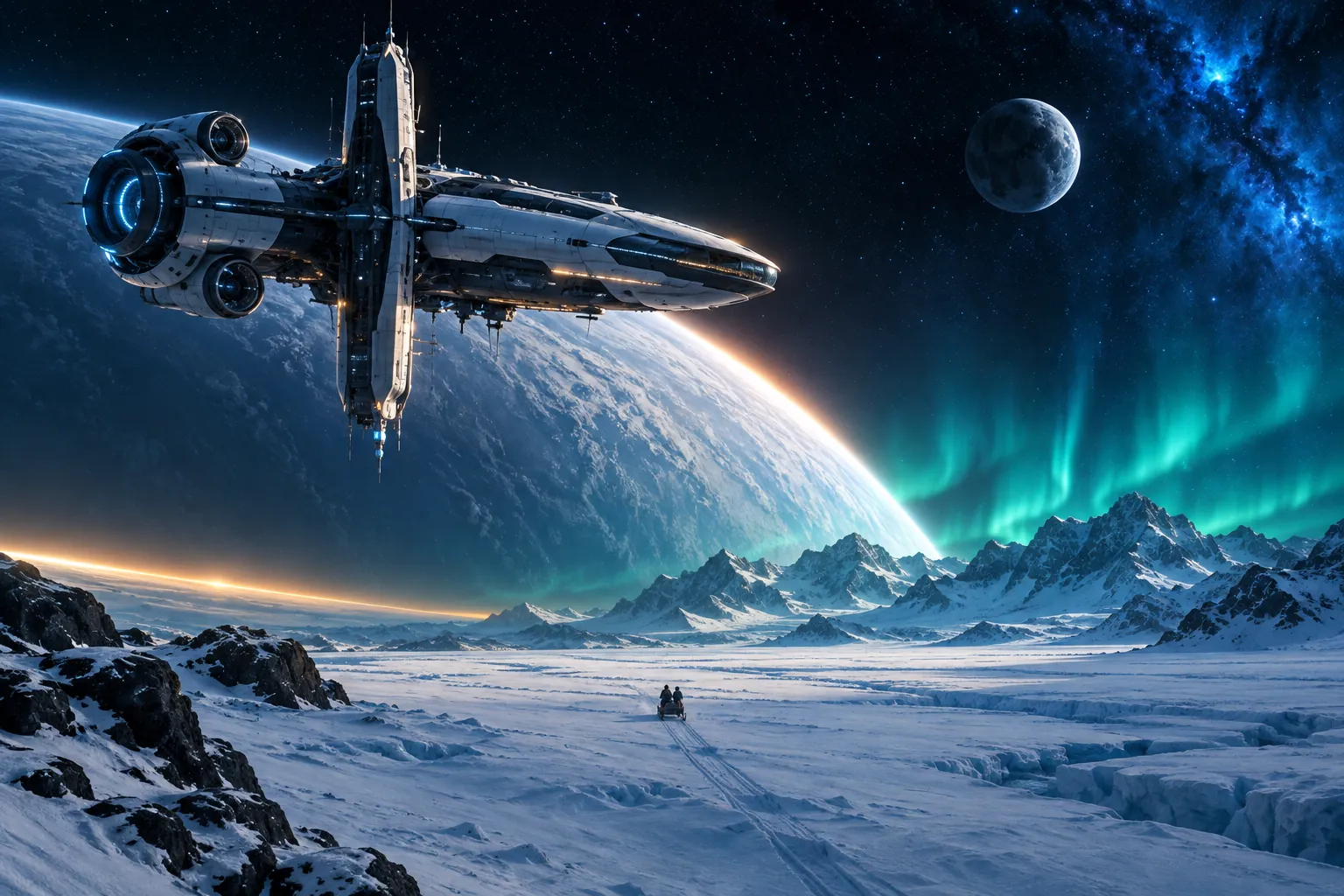
Genly Ai is an envoy of the Ekumen, a league of human worlds, sent to the icy planet Gethen, also called Winter. Its people have no fixed sex: for a few days each month each person becomes male or female. Genly must win the trust of a local politician, Estraven, and the two are forced into a long journey across the ice. The novel won both the Hugo and the Nebula awards for best novel. Its real subject is trust between people who see the world very differently. In a later introduction she wrote that science fiction describes rather than predicts.
The Lathe of Heaven (1971)
George Orr discovers that some of his dreams change reality, and that everyone around him remembers the new world as if it had always been there. His psychiatrist, William Haber, decides to use those dreams to improve the world. The book, set in a near-future Portland, is a short and gripping study of good intentions combined with the wish to control.
The Dispossessed (1974)
Two worlds circle one another: Urras, with states and private property, and its moon Anarres, settled by anarchists generations earlier. The physicist Shevek leaves Anarres to visit Urras and finds that neither society is as free as it claims. The subtitle is An Ambiguous Utopia, and the book keeps that ambiguity to the end. It won the Nebula and Hugo awards and remains a standard text for readers who want fiction about politics and ideas.
Short fiction
"The Ones Who Walk Away from Omelas" (1973) describes a happy city whose happiness depends on the misery of one child. Most citizens accept this; a few walk away. It takes only minutes to read and is often taught in schools. The Word for World Is Forest (1972), a Hugo-winning novella, shows human colonists exploiting a forest planet and the native people who fight back, written during the Vietnam War era.
Ideas that run through her work
- Societies as experiments. Many of her science-fiction stories belong to the Hainish Cycle, in which humanity was seeded across many worlds from the planet Hain. Each world then develops its own customs, and the stories explore what follows.
- Balance. She read and loved Taoist thought and published her own English version of the Tao Te Ching in 1997. A line from a poem in The Left Hand of Darkness, "Light is the left hand of darkness," points the same way: opposites depend on each other.
- Power and freedom. From Earthsea to Anarres, her books ask who holds power, who pays for it, and what a society without domination might need.
- Gender. Gethen lets her ask which differences between people are truly built in and which are habit. She later criticised her own use of "he" for the people of Gethen and discussed it in essays.
- Other kinds of story. In her 1986 essay "The Carrier Bag Theory of Fiction," she argued that the first human tool was probably a container for gathering food, not a spear, and that stories need not always be about a hero's fight.
In her 2014 National Book Foundation speech she also said: "We live in capitalism, its power seems inescapable – but then, so did the divine right of kings." It is a good summary of her habit of making the present look changeable.
Where she sits in the genre
Le Guin came to prominence in the 1960s and 1970s, when many writers were moving science fiction away from rockets and monsters and toward the social sciences: anthropology, sociology, politics, gender. She belongs to that wave alongside writers such as Joanna Russ and Samuel R. Delany. Her prose is calm and exact, which is one reason people who do not usually read science fiction often start with her.
Where to start reading
- Ten minutes: "The Ones Who Walk Away from Omelas."
- A short novel: The Lathe of Heaven, or A Wizard of Earthsea for younger readers.
- Her best-known science fiction: The Left Hand of Darkness, then The Dispossessed. Both stand alone, so you do not need to read the Hainish books in order.
Common misconceptions
- "She wrote fantasy for children." Earthsea began as a story for young readers, but she also wrote adult fantasy and a great deal of science fiction, essays and poetry.
- "Science fiction predicts the future." Le Guin said her fiction was more like a thought experiment. Gethen is a way to look at us, not a forecast.
- "The Dispossessed is a manifesto." The subtitle says "ambiguous." Anarres has its own failings, and the book shows them.
Read next
Start with our history of science fiction to see where Le Guin fits among the genre's other turning points, from early gothic tales to the New Wave.