Shinichi Hoshi in five minutes
Shinichi Hoshi was a Japanese science fiction writer who turned the very short story into an art. He wrote more than a thousand “short-shorts”: complete tales of a few pages that set up a strange idea and then close with a sharp twist. Born in Tokyo in 1926, he died in 1997. Today his stories are read in Japanese schools, and his name stands for clean, clever, dry-humoured sci-fi.
Think of him as the opposite of the space epic. There are no long battles and no huge casts. A single invention, a single odd rule, or a single wish is enough, and the ending is where the story really begins. This page is part of our History of Science Fiction series.
His life: from pharmacy heir to writer
Hoshi was born on 6 September 1926. His father, Hajime Hoshi, built a pharmaceutical company, and his mother's family had its own famous names: his grandfather, Yoshikiyo Koganei, was a noted anatomist, and Koganei was married to the sister of the great novelist Mori Ōgai. Hoshi grew up surrounded by science, medicine and books.
He studied at the University of Tokyo, where he was in agriculture and went on to graduate school. Then, in 1951, his father died, and the young Hoshi had to leave his studies and run the family company. The business was in serious trouble, and it was a hard period. Eventually he let go of the company.
The writing started during these years. In 1957 he joined Uchūjin, one of Japan's earliest science fiction fanzines, and began to publish short stories. They caught attention quickly because they looked unlike anything else: short, polished and funny. When Japan's SF community organised itself in the early 1960s, he was among the writers involved.
He also wrote serious non-fiction about his own family. One book follows his father's struggle in business; another tells the life of his grandfather. These books show a different side of him: patient, factual and curious about history.
What a short-short is, and how Hoshi writes one
A short-short is not a cut-down novel. It is a form with its own rules. In a few pages the writer must give a situation, a rule of the world, and a turn. Hoshi was a master of this because he cut everything that did not serve the idea.
- One idea per story. A robot, a hole in the ground, a machine that grants wishes. He asks “what if?” and follows it to the end.
- A twist at the last lines. The final turn often changes how the whole story reads. Good short-shorts reward a second reading.
- Plain, timeless language. Hoshi tends to avoid slang and details that mark a particular year, so his stories feel just as fresh decades later.
- Anonymous characters. “Mr. N” (エヌ氏) and similar everymen let readers step in without needing a background.
- Dry, gentle irony. He is rarely cruel, but he likes to show what happens when human greed, vanity or laziness meets a clever invention.
The real science, and how he uses it
Hoshi was trained in science, and it shows. He did not write hard sci-fi packed with equations. Instead he used science as a mirror: robots, artificial intelligence, new drugs, space travel and big machines appear because they reveal something about people. A technology is introduced, and the story asks what we would do with it.
This is why his work has aged well. Specific gadgets may look old, but the questions are current: what happens when a machine copies human conversation, when a convenient invention makes us lazy, or when we treat the planet as a place to throw things away?
Where to start reading
Hoshi wrote so many stories that it is hard to know where to begin. Two are a good start.
“Bokko-chan”
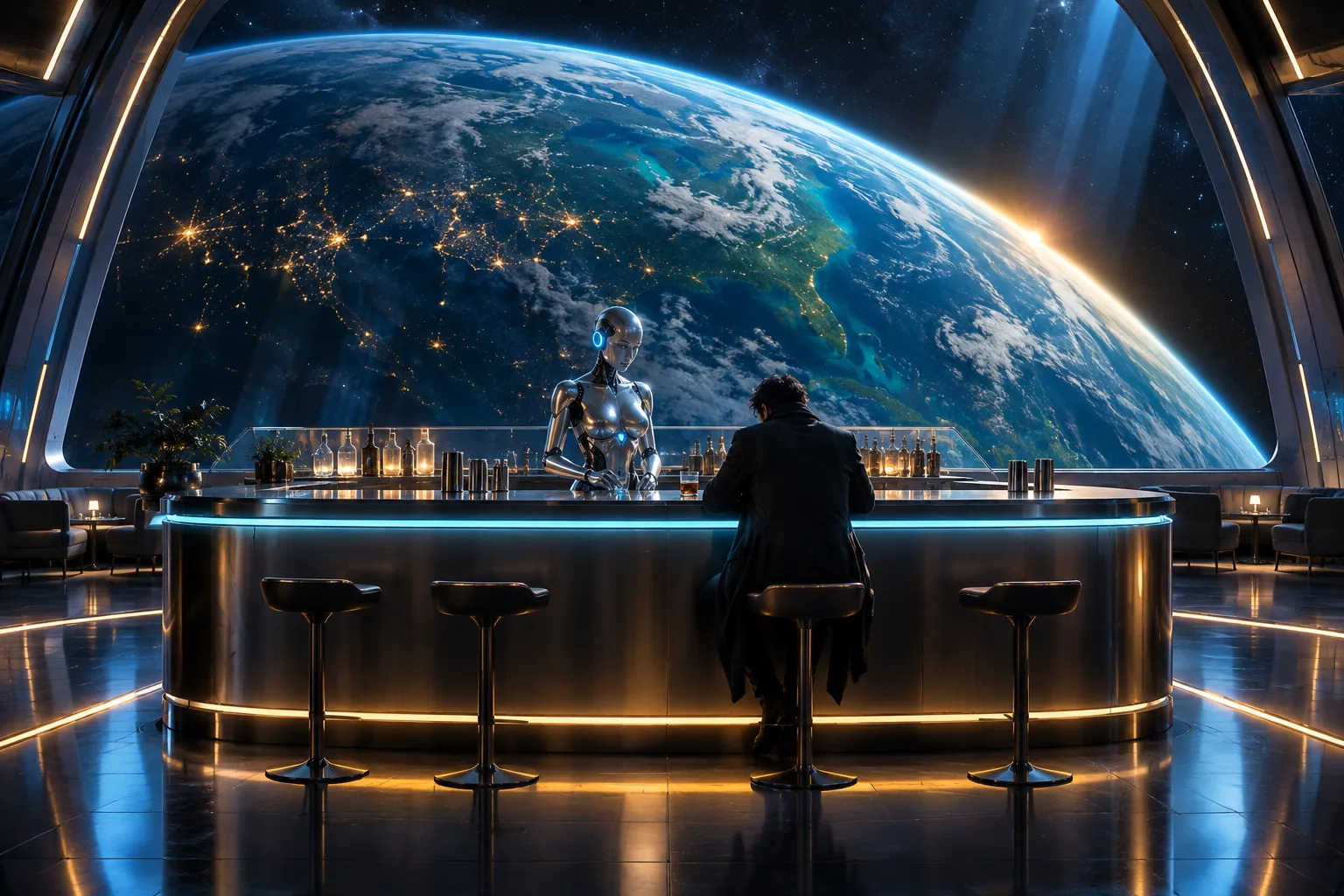
The title story of his best-known collection is set in a bar. A robot woman works there, beautiful and always ready with a reply, and customers love talking to her. It is a quiet story about conversation, loneliness and what we want from other people. The ending is famous, so read it before looking it up.
“Hey, Come On Out!” (おーい でてこーい)
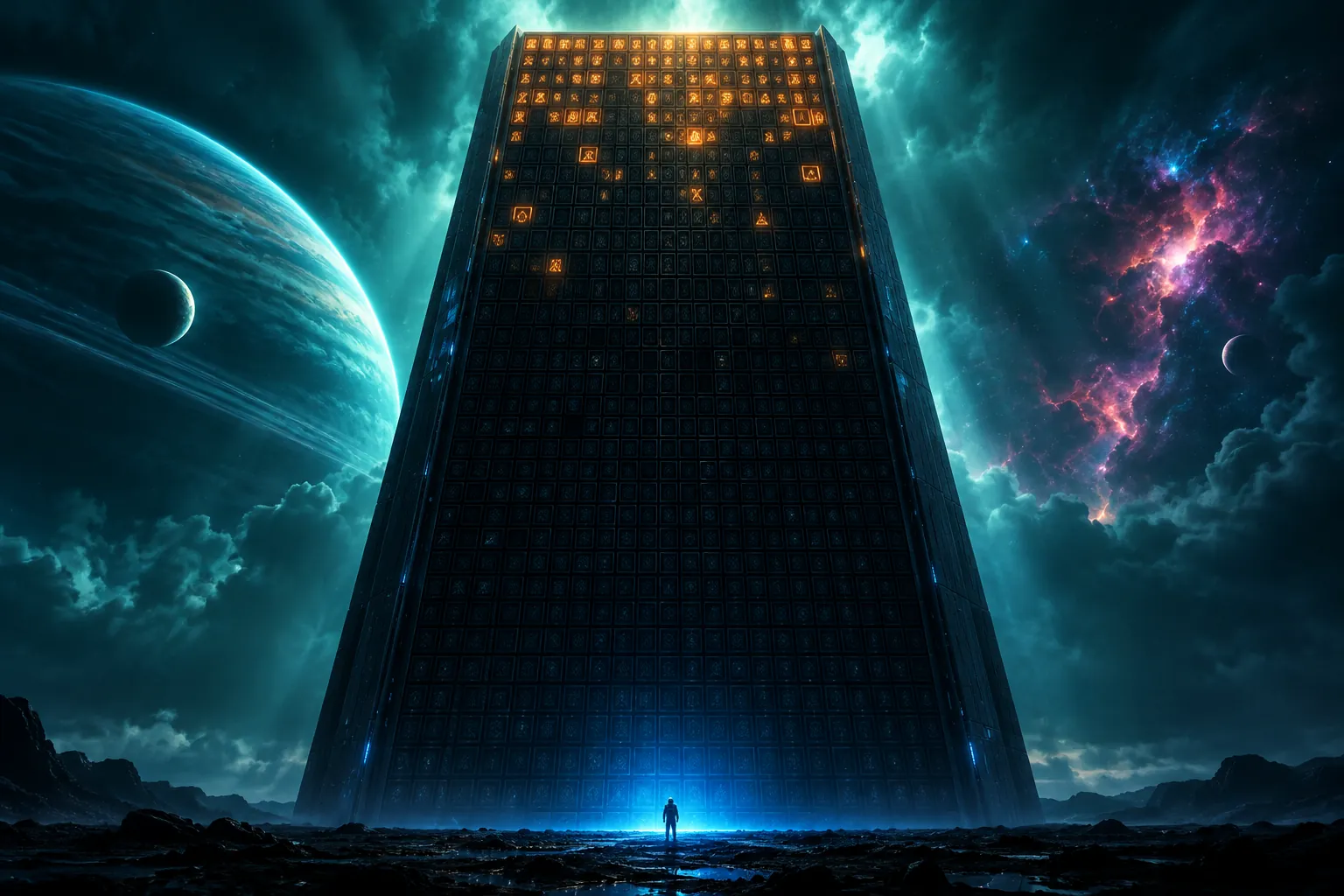
After a storm, a mysterious hole appears near a village. People shout into it and hear nothing, and then they begin to use it for something. It is a short story about waste and about how easy it is to push problems out of sight. Spoiler alert if you search for the ending: its power lies in the last few lines.
From there, try any of his collections. The stories are short enough to read one at a time, which is part of the appeal. Many readers also enjoy the line drawings that illustrated his books in Japan.
How to read a Hoshi story
Because each tale is so short, the best way to enjoy it is slowly. Read the opening lines and ask what the one odd idea is. Then notice the rule the story sets up: who has power, what the invention can do, and what the characters want. By the middle you can often guess a direction, and part of the fun is seeing how Hoshi turns away from it.
After the last line, go back to the beginning. A well-built short-short plants small details early that only make sense once you know the ending. Reading twice shows how little is wasted, and why the form is so hard to write.
It also helps to read a few stories in one sitting. Some are funny, some are eerie, and some are almost tender, so a small batch shows his range far better than a single tale. Ten minutes a day is enough to get through several.
Students can use a single story as practice. The plot fits in a few sentences, so it is a good exercise in summarising. Then ask what the story says about greed, trust or convenience, and whether you would have acted differently from the character. Those questions turn a quick read into a good class discussion or a short piece of writing of your own.
His legacy
Hoshi's influence is large in Japan. Writers of very short fiction often name him as the model, and his books are still on school and library shelves. In 2013 the Nikkei newspaper group launched the Hoshi Shinichi Prize to find new science fiction in his spirit.
One entry drew worldwide attention. In 2016 a short story created with an AI system from Future University Hakodate passed the first round of the prize. It was a project that asked whether a computer could write the kind of story Hoshi made, which seems very fitting for a writer who spent his life imagining machines.
Common misconceptions
- “He only wrote children's stories.” Many of his stories are suitable for young readers, but the themes, such as greed, loneliness and loss of control, are adult. Both children and grown-ups enjoy them.
- “Short means simple.” A short-short is hard to write. Every sentence has to carry weight, and the twist must feel fair.
- “He wrote only about the future.” Many tales are set in the present, or in a vague place and time. What matters is the single odd idea.
- “He is only popular in Japan.” He is best known there, but his stories have been translated into English and other languages, and the short-short form is easy to enjoy anywhere.
Read next
Hoshi is one chapter in the wider story of the genre. History of Science Fiction places him alongside other authors and ideas, from early imagined futures to modern robots and AI. Start there if you want the bigger picture, then return to his stories one at a time.