In five minutes
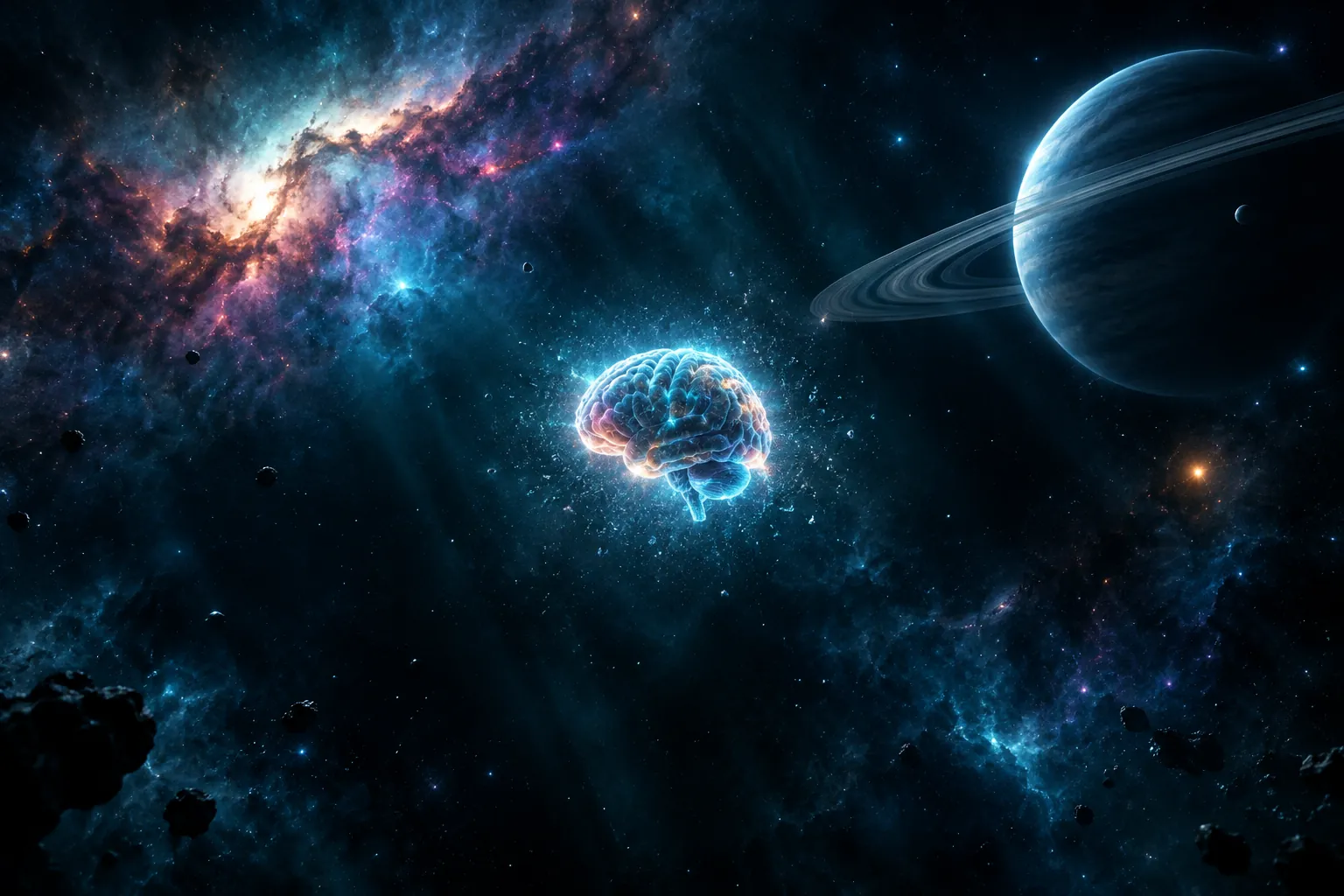
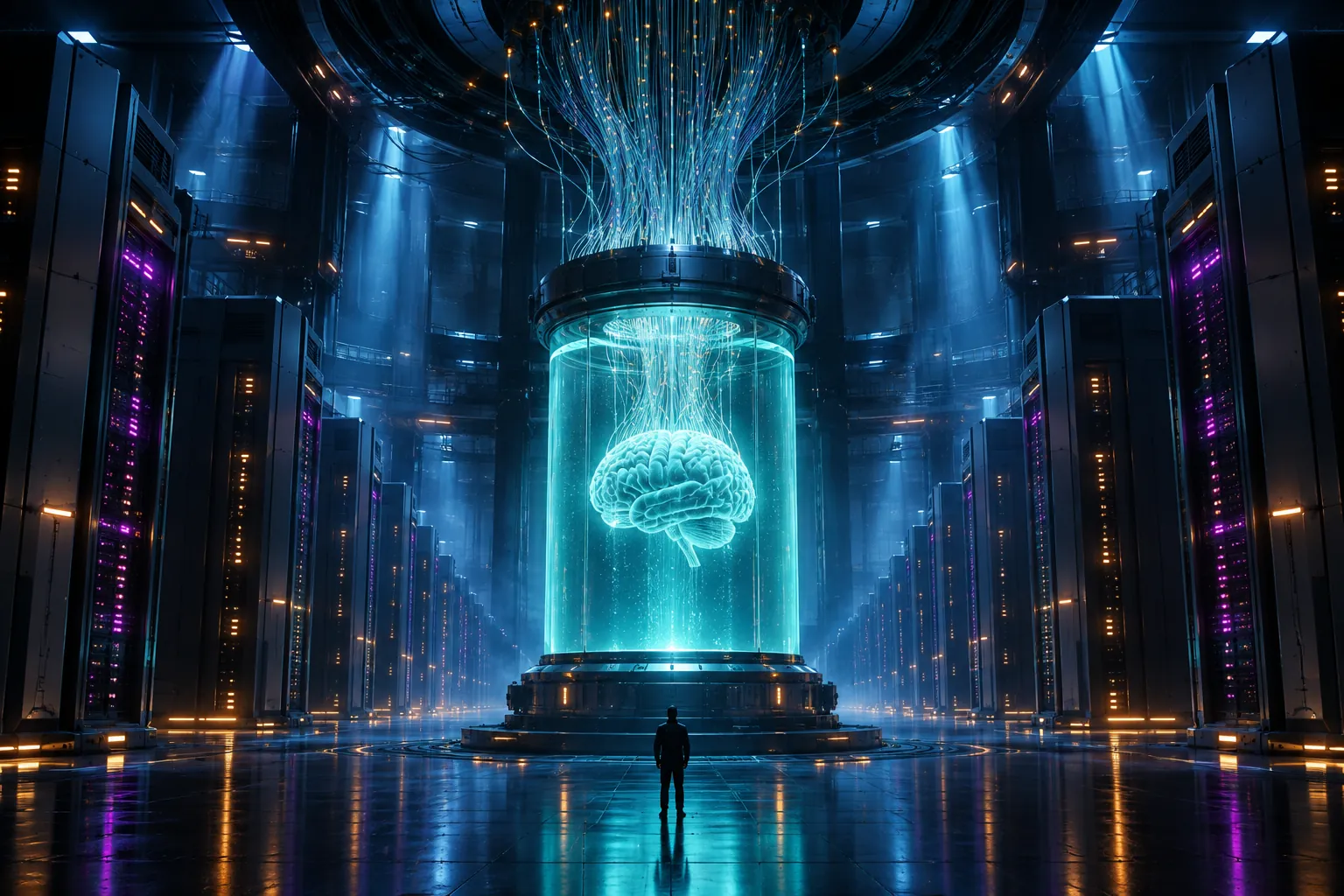
A brain in a vat is a thought experiment about certainty. Imagine your brain has been removed from your body and kept alive in a tank of nutrients. Its nerves are wired to a computer that sends it electrical signals, so everything you seem to see, hear and touch is produced by the machine. From the inside, would you ever know?
The usual answer is no, and that is the point. Every experience you have reaches you as signals in the brain. If a clever machine could produce the same signals, your evidence would look identical in both cases. So what makes you sure you have hands, a street outside, or a past?
The brain in a vat is the modern, mechanical version of an old worry called skepticism about the external world. It asks whether knowledge can rest on experience alone. Philosophers use it in two ways. Some treat it as a challenge they must answer. Others, like Hilary Putnam, use it to test what our words mean. Science fiction adds a third question: if the machine were good enough, would the difference matter? For the wider story of the genre, see the history of science fiction.
Where the idea comes from
The worry is much older than vats. The Greek philosopher Plato told the story of prisoners who see only shadows on a cave wall and take them for the real world. People have long suspected that what we see may not be everything.
The closer ancestor is René Descartes. In his Meditations on First Philosophy (1641), he asked what would follow if a powerful being spent all its effort deceiving him with false experiences. This is the famous evil demon. Descartes did not want to stay doubtful. He was looking for one fixed point that survives even total deception, and he found it in the fact that he, the one being deceived, must be thinking.
The demon became a machine once people accepted that experience is made by the brain. The philosopher Gilbert Harman used a version of the idea in his 1973 book Thought. Then, in 1981, Hilary Putnam gave it a sharp form in the first chapter of Reason, Truth and History, titled Brains in a Vat. He even added a twist: perhaps there is no mad scientist at all, and the whole universe simply happens to consist of brains in vats tended by machines. That is why the idea is usually tied to Putnam's name today.
Putnam's twist: can a brain in a vat say it is one?
Putnam asked a different question from most skeptics. He did not look for proof that we are not in a vat. He asked whether a brain in a vat could truthfully think the sentence “I am a brain in a vat.”
The answer depends on how words get their meaning. Putnam argued that meaning is not fixed by what is in the head alone. It depends on real connections between words and the world. When you say “tree”, a long chain of seeing, touching and talking about actual trees ties the word to actual trees.
Now take a brain that has been in a vat all its life. It has never met a real tree or a real vat. Its word “vat” can only point to images or computer states, not to real vats. So when it thinks “I am a brain in a vat”, it does not mean what we mean, and in its own sense the sentence is false. When we say the sentence, “vat” means a real vat, and the sentence is false too. Either way it is false, so the hypothesis undermines itself as soon as someone states it.
Many philosophers object. If a brain was moved into a vat only recently, its words may still carry their old meanings. And showing that a sentence is false is not quite the same as knowing that you are not in a vat. The argument is best read as adding a new angle, the link between language and the world, rather than closing the case.
The real science
It is a thought experiment, not a measured fact. With today's technology nobody can keep a human brain in a tank and give it a full, convincing life.
There are two big obstacles. First, a brain is not independent of the body. The heart, gut and hormones send it a constant stream of information that shapes mood and sensation. Remove the body and that input is gone. Second, the amount of detail is huge. Sight and hearing carry enormous numbers of signals, and no one knows how to recreate them all by electrical stimulation. Cochlear implants, which send signals to the auditory nerve to restore a sense of sound, already exist, but they are a very rough piece of the wiring a vat would need.
What about keeping brains alive outside the body? In 2019 a Yale team led by Nenad Sestan reported in Nature that a perfusion system called BrainEx could preserve some cell functions in pig brains for hours after death. The team saw no organised electrical activity linked to awareness. That is far from a living brain in a tank.
Brain organoids are another case. These are clumps of neural tissue, a few millimetres across, grown from stem cells in a lab. They help researchers study development and disease. There is no evidence that they think or feel, but ethicists keep discussing where lines should be drawn.
So science does not bring the vat closer so much as show how deeply brain and body are tied together.
Where it shows up in fiction
Fiction used the living-brain idea before philosophers made it famous. In Curt Siodmak's early-1940s novel Donovan's Brain, a scientist keeps the brain of a dead millionaire alive in a tank, and it slowly begins to take over his mind. Here the tank is not a way to doubt experience. It is a stage for asking whether a brain is the person.
The film The Matrix (1999) is the best-known popular cousin. Humans lie in machines and take a computer-made world for real. Strictly speaking it differs from the vat, because whole bodies are involved, not just brains.
Among our book pages, Daniel Keyes's Flowers for Algernon comes closest in theme. After an operation, Charlie Gordon's intelligence changes dramatically, and the story asks what keeps a person the same person when the brain changes. There is no vat, but the question about brain and self is the same one.
Common misconceptions
- “It predicts that we are in a vat.” No. It is a way to test what we can know from experience alone. Nobody uses it as a forecast.
- “It proves the world is fake.” No. It shows only that experience by itself cannot rule out a perfect deception. It does not show that one is happening.
- “Putnam believed we are brains in vats.” No. He used the scenario to argue that the claim cannot be truthfully stated by anyone.
- “It is the same as the simulation hypothesis.” They are related but different. The vat asks whether deception is possible, while the simulation hypothesis argues about how likely it is that minds like ours run inside computers.
- “It is the same as a Boltzmann brain.” No. A Boltzmann brain comes from physics: a brain that appears by random fluctuation. A vat brain is placed in its tank by someone or something.
Read next
- Simulation hypothesis: the probability argument about living inside a computer, and how it differs from the vat.
- Boltzmann brain: a physics idea about a mind that appears by chance, often confused with the vat.
- Flowers for Algernon: a novel about what stays of a person when the brain changes.
- History of science fiction: where ideas like this fit in the genre's long story.