In five minutes
Project Itoh (伊藤計劃, Itō Keikaku) is the pen name of Satoshi Itō, a Japanese science fiction writer who lived from 1974 to 2009. In a career of about two years he published two original novels, Genocidal Organ and Harmony, and left a third, The Empire of Corpses, unfinished.
That small body of work changed how Japanese science fiction looks. Both finished novels are now treated as modern classics, and both reached English readers.
His themes stay the same from book to book. What happens to a person when language, medicine or the state can reach into the mind and adjust it?
This page covers his life, each novel, the real technology behind them, and a sensible reading order. It is part of our history of science fiction.
Who was Project Itoh?
Satoshi Itō was born in Tokyo on 14 October 1974. He studied at Musashino Art University and worked as a web designer, and he loved films and wrote about them at length.
He lived with cancer for much of his adult life and was often in hospital. Writing was something he did around treatment, not instead of it.
His first novel, Genocidal Organ, came out from Hayakawa Publishing in 2007. It had been sent to a science fiction newcomer prize the year before and did not win, but a publisher picked it up anyway.
Harmony followed in 2008. Itō died on 20 March 2009, aged 34.
The pen name uses the old character 劃 rather than the modern 画. Read aloud, 計劃 sounds like the word for “plan” or “project”, which is where the English name Project Itoh comes from.
The novels
Genocidal Organ (2007)
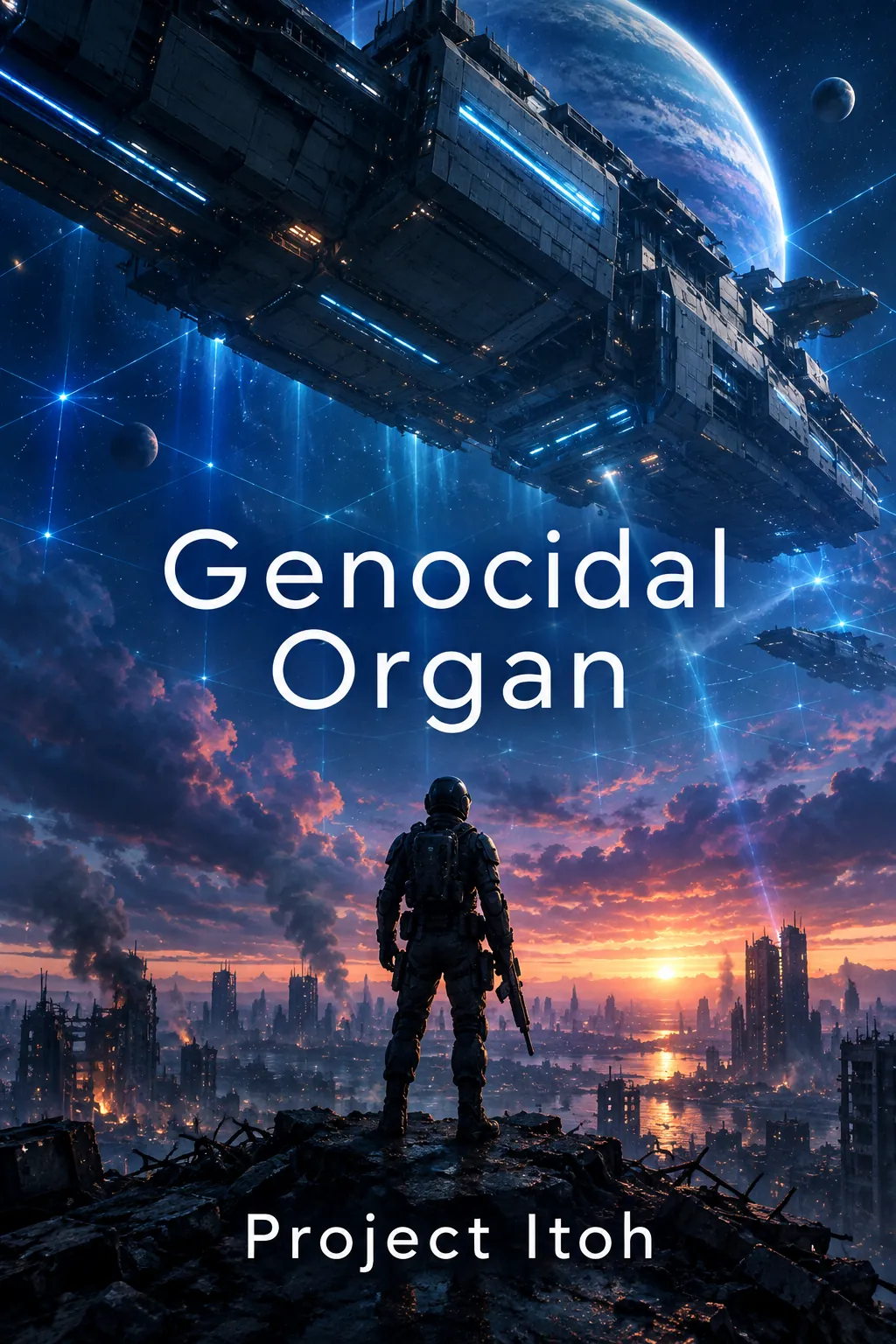
The story follows Clavis Shepherd, an American special forces officer, in a near future after a terrorist bomb has destroyed Sarajevo. Rich countries have locked down their own cities with strict identity tracking, while ugly civil wars and massacres spread through poorer regions.
Shepherd is sent to hunt John Paul, an American who seems to turn up wherever the killing starts. The question the novel keeps asking is why ordinary societies suddenly slide into atrocity.
It is dark and sometimes hard to read, but the plot moves like a thriller. Our Genocidal Organ study guide covers it without ruining the ending.
Harmony (2008)
In Harmony, a global catastrophe has pushed the world into a gentle, total health regime. Everyone’s body is monitored and protected, and getting ill or hurting yourself has almost become impolite.
Three schoolgirls, Tuan, Miach and Cian, try to resist this world in a quiet act of protest. Years later, Tuan is an adult working in the system and is pulled back into what happened.
The book asks whether a life without pain, risk or choice is still your own. It won the Japan SF Grand Prize and the Seiun Award, and in 2010 it received a Special Citation from the Philip K. Dick Award.
The Empire of Corpses (2012)
Itō left only a prologue and notes for this novel. The writer Toh EnJoe finished it, and it was published in 2012.
It imagines a nineteenth-century world where the dead can be reanimated as workers, and it takes Frankenstein and Dr John Watson as starting points. Think of it as a tribute to Victorian fiction with Itō’s questions about the soul and language inside.
Other work
Itō also wrote the Japanese novelization of the video game Metal Gear Solid 4: Guns of the Patriots in 2008. After his death, his short stories and film reviews were collected into several books.
The real science behind the fiction
Itō wrote in the years after the attacks of 11 September 2001. The surveillance, biometric ID and counter-terror measures in Genocidal Organ are exaggerations of things that were actually being built.
The central idea of that book, a grammar that can trigger killing, is fiction. There is no evidence that any real language feature can switch off moral reasoning.
In Harmony, health monitoring is real: people already wear devices that track heart rate and sleep. Nanomachines that watch and manage every body from the inside are speculation, and the book uses them as a thought experiment about consent.
Reanimating the dead in The Empire of Corpses is pure fiction. Its interest lies in the literary lineage, from Mary Shelley’s Frankenstein forward.
Where he shows up in fiction and on screen
Three animated films were made from his novels under the label “Project Itoh”. Harmony and The Empire of Corpses arrived in 2015, and Genocidal Organ followed in 2017 after production troubles at its first studio.
His influence is also clear in the work of newer Japanese authors who write about language, surveillance and the body. If you like the long history of the genre, his books show where Japanese SF stood in the 2000s.
Themes that run through his books
Language is the first thread. In Genocidal Organ it works like a weapon, and in Harmony it is something the new order tries to smooth out.
The second thread is the body. His characters live in worlds where medicine, security and data decide what a body may do, and the novels test whether that protection is a kindness or a cage.
The third thread is free will. Itō rarely gives a simple answer, so his narrators often seem unsure whether their own choices truly belong to them.
He also writes about conscience in a very personal voice. His narrators are calm and observant, which makes the events they describe feel closer and harder to look away from.
Why his short career still matters
Few debut authors reshape a genre so quickly. Itō’s two novels arrived about a year apart, and critics soon treated them as the start of a new wave in Japanese science fiction.
His film background shows in the pacing and in the way scenes are framed. Readers who love cinema often say his chapters feel like sequences shot with a steady camera.
His early death also shaped his reputation, and many readers approach the books with that in mind. It is worth reading them as finished arguments rather than as farewells.
Because the books are short and focused, they also make a good entry point into Japanese science fiction. You do not need to know the genre’s history to follow what they are asking.
Common misconceptions
- Project Itoh is not a studio or a team. It is one man’s pen name, later reused as the title of the film series.
- He did not write a long series. There are two finished original novels, one unfinished novel, and some shorter work.
- The novels are not sequels. Each one stands alone, so you can start with either.
- He did not finish The Empire of Corpses. Toh EnJoe completed it from his outline.
Where to start
If you like fast, tense stories about war and ideas, start with Genocidal Organ. If you prefer a quiet, strange story about society and the body, start with Harmony.
Read The Empire of Corpses last, once you know the themes, and treat it as a collaboration rather than pure Itō.
Tips for first-time readers
- Pick the book that matches your taste rather than going by publication date.
- Expect heavy topics: war, illness and the loss of autonomy appear throughout.
- Do not worry about technical terms, because the stories explain what you need.
- Pause after each book, since both finished novels end on ideas that are worth discussing with someone else.
Read next
Genocidal Organ: our study guide to his debut, with characters, themes and a spoiler-marked summary.
History of Science Fiction: the wider story of the genre, to see where his books fit.