In five minutes
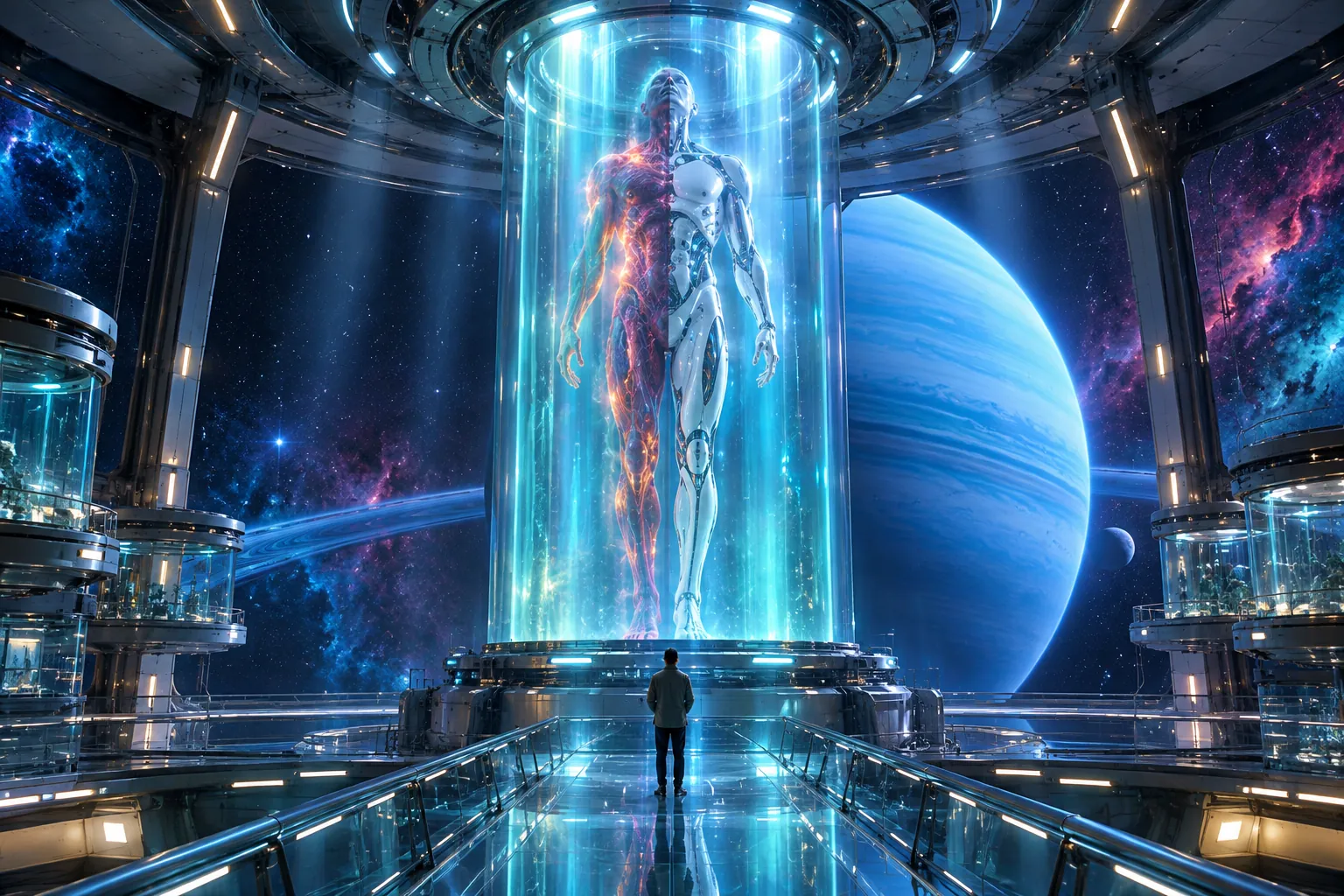
A philosophical zombie is an imagined person who is physically identical to you and behaves exactly like you, yet has no inner experience at all. It laughs at jokes and says 'ouch' when pricked, but nothing is felt.
It is a thought experiment, not a monster and not a real creature. Philosophers use it to test whether physical facts about the brain are enough to explain consciousness.
The word 'zombie' has nothing to do with the undead of horror films. A philosophical zombie is healthy, calm and, from the outside, completely ordinary.
The modern version comes from the Australian philosopher David Chalmers, who made it central to his 1996 book The Conscious Mind. He argued that if such a being is possible, then consciousness is more than physics.
The puzzle belongs to a long line of stories and ideas about minds and machines. For the wider picture, start at our History of Science Fiction hub.
The argument, step by step
Chalmers's zombie argument has four steps.
- Imagine a world identical to ours in every physical detail, down to each atom and each neuron firing.
- In that world lives your 'zombie twin': the same brain, the same body, the same words, but no experience.
- If this picture is coherent, then the physical facts alone do not settle whether anyone is conscious.
- So consciousness is something over and above the physical facts, and physicalism, the view that everything is physical, is incomplete.
Notice what the twin does. Because its brain works exactly like yours, it would say 'I feel pain', describe the redness of a rose, and believe it was conscious.
That is the strange part of the thought experiment. Everything the zombie says about its own mind would be explained without any experience, so why should we trust our own reports?
Chalmers calls this the paradox of phenomenal judgment, and it is one reason some readers find the argument uncomfortable.
Three kinds of zombie
Philosophers separate zombies by how much they share with us. A behavioural zombie only acts like a person, while a neurological zombie also has a human brain.
The strongest version, the one used in the argument, is physically identical to a person in every respect. Only this version can carry the claim about physicalism.
Where the idea comes from
The philosopher Robert Kirk discussed zombie-like beings in the 1970s, well before Chalmers. Thomas Nagel's 1974 paper 'What Is It Like to Be a Bat?' had already argued that experience has a point of view that physical description seems to miss.
Chalmers gave the problem its modern name, the hard problem of consciousness, in the mid-1990s. The zombie is his sharpest tool for showing why he thinks it is hard.
The real science
No one has ever found a philosophical zombie, and no experiment could. By definition a zombie passes every test a conscious person passes, so the idea is a tool for arguing, not a scientific hypothesis.
What science has established is that a great deal of mental processing happens without awareness. Patients with damage to the visual cortex can report seeing nothing in part of their view and still point towards objects there far better than chance.
That is called blindsight, and it shows that behaviour and conscious experience can come apart in the brain. It does not show that a full zombie is possible.
The main objections
Daniel Dennett argues that zombies are incoherent. In his view, a being with all the same inner workings would be conscious, and we only think we can imagine otherwise because we picture it badly.
A second reply grants that zombies are conceivable but denies they are possible. People once found it easy to imagine water that was not H2O, yet water is H2O, so imagining something does not prove it could exist.
Chalmers answers that consciousness differs from water, because there is no hidden physical nature behind experience for us to be mistaken about. The disagreement is still open, and surveys of professional philosophers show a split with no clear majority.
If zombies are possible, physicalism fails. If they are not, physicalism may survive, and that is the whole stake of the debate.
Where it shows up in fiction
The clearest example is Peter Watts's novel Blindsight (2006). A crew meets an alien intelligence that seems to think brilliantly without any sign of awareness, and the book asks whether consciousness is useful at all or only an accident.
The zombie idea also stands behind many stories about androids and artificial minds. A robot that looks, talks and cries like a person raises the question of whether anyone is home, and films such as Ex Machina circle exactly that doubt.
Two related thought experiments sit close by. The Turing test judges a machine only by its behaviour, so a zombie would pass it.
The brain in a vat asks how you can know your experiences match reality, while the zombie asks whether experience is there at all.
Why it matters for machines
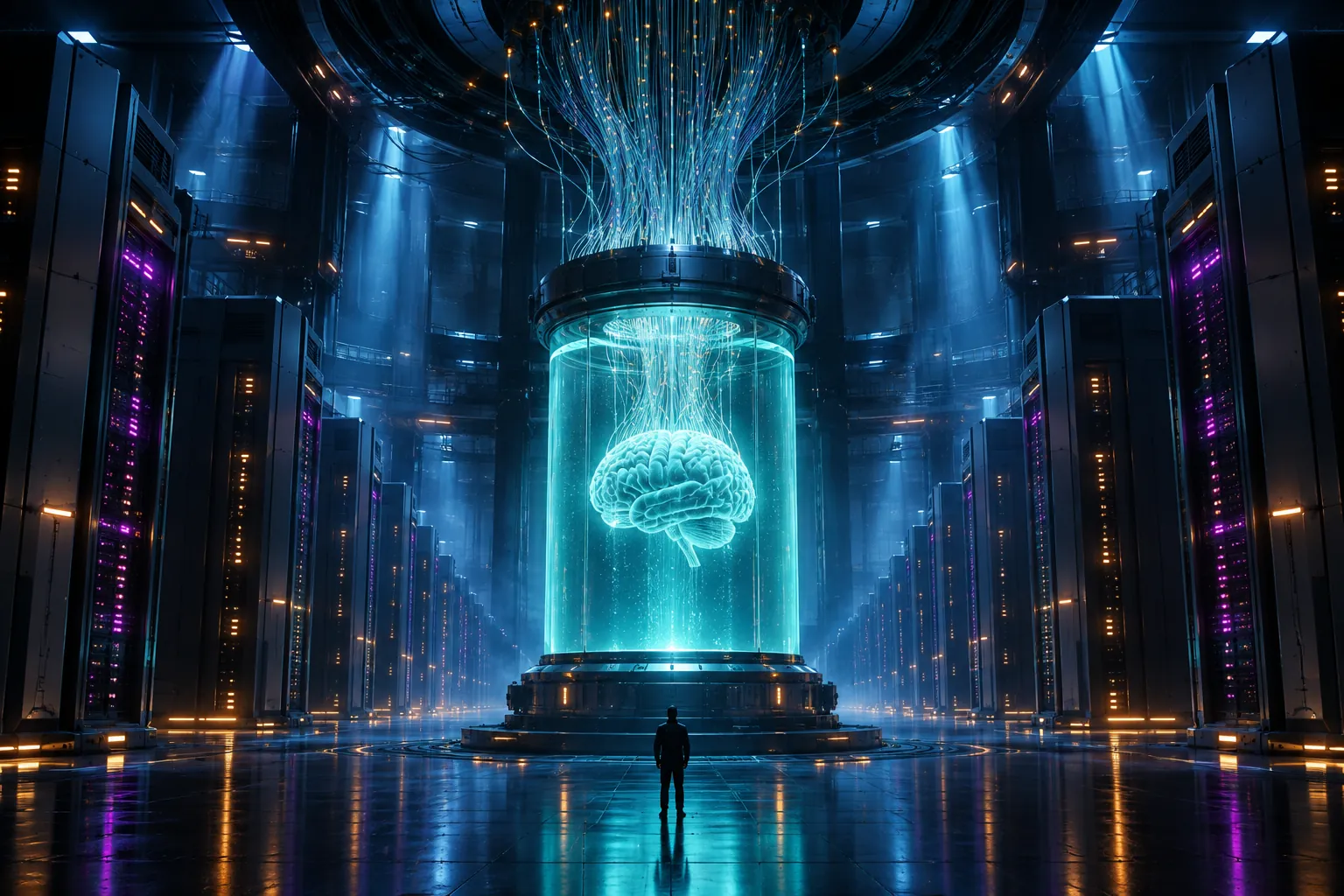
Today's language models produce fluent text about feelings, which makes the zombie question practical. Fluent talk about experience is exactly what a zombie would produce, so the words alone cannot settle the matter.
That does not mean current systems are zombies, and it does not mean they are conscious. It means we need evidence beyond behaviour, such as how a system is built and what it does inside.
Researchers in consciousness science are still working out which internal features would count as that evidence. No theory has won general agreement.
The zombie therefore works as a warning label: passing for human in conversation is not the same as having an inner life.
Common misconceptions
- Zombies are undead. No. The term only names a being that looks and acts normal but lacks experience.
- Chalmers thinks zombies exist. No. He argues only that they are possible in principle, and that this possibility would show consciousness is not purely physical.
- A zombie is slow or stupid. No. It is as clever and as talkative as you are, and that is why it is hard to spot.
- Most philosophers accept the argument. No. Many reject it, either because zombies are incoherent or because conceivable does not mean possible.
- The idea proves a machine is, or is not, conscious. No. It only shows that behaviour by itself is weak evidence.
Read next
- History of Science Fiction: the hub for how fiction has imagined minds, machines and other worlds.
- Turing test: why judging a machine by its behaviour is the very test a zombie would pass.
- Brain in a vat: another thought experiment about what we can know of our own experience.