In five minutes
Room 101 is the last room in George Orwell's novel Nineteen Eighty-Four (1949), where the Party faces each prisoner with the one thing they fear most.
Spoiler warning: this article explains the novel's final act, including what happens to Winston.
For the hero, Winston Smith, that thing is rats.
The idea is simple and frightening: a state that knows what breaks you can make you give up anything, even the person you love.
Room 101 is one of the best-known ideas in the history of science fiction, the genre's long habit of asking how power could remake people.
Outside the book, “Room 101” has become a phrase for a personal nightmare, and a long-running BBC TV show borrowed the name for comedy.
Where Room 101 sits in the story
Winston is a low-ranking Party worker in London, in the superstate of Oceania, where the Party and its leader Big Brother watch everyone.
He secretly rebels, writes a forbidden diary, and begins a love affair with a colleague named Julia.
At the end of Part Two, they are arrested when Mr Charrington, the man who rented them a quiet room, turns out to be a Thought Police agent.
Winston is taken to the Ministry of Love, where he meets O'Brien, a Party official he had hoped was a secret ally.
O'Brien runs weeks of beatings, questioning and lectures, and Winston slowly learns to say that two plus two makes five if the Party says so.
But the Party does not want obedience alone.
It wants Winston to believe sincerely and to love Big Brother, and for that it keeps one stage in reserve.
That stage is Room 101, which appears in Part Three, chapter 5.
What happens inside the room
Winston is strapped to a chair so tightly that he cannot move his head.
O'Brien explains that the room holds “the worst thing in the world”, and that it is different for every person.
For Winston it is rats, a fear the book has shown from the moment a rat appears in the shabby room above Mr Charrington's shop.
O'Brien brings in a cage with two rats and holds it close to Winston's face, with a sliding door that can open at the touch of a lever.
Winston is overcome by terror and screams that it should be done to Julia instead.
That cry, “Do it to Julia!”, is the point of the whole scene.
Nobody has to open the cage, because the Party has already won what it wanted.
Winston has betrayed the one person he promised himself he never would, and he cannot take it back.
The book then moves quickly to its close.
Winston is released as a broken man, meets Julia once more, and finds that neither feels anything for the other.
The final line tells us that he loves Big Brother.
Why the Party uses it: the idea behind the room
The Party's slogans are for crowds, but Room 101 is for one person at a time.
Its key insight is that everyone has a different breaking point, so the state studies the individual and builds the answer from their own mind.
This is also why the room is not for gathering information.
By this stage Winston has already confessed to everything, so nothing more can be learned from him.
The aim is to destroy the last private loyalty, the small corner of himself that still says no.
O'Brien is open about this goal earlier in the Ministry of Love, when he says that the Party wants to change people, not simply punish them.
There is a quiet irony in the book as well.
Early on, Winston dreams of a voice promising they will meet “in the place where there is no darkness”.
That place turns out to be the Ministry of Love, where the lights never go off.
Where the story comes from
Orwell wrote Nineteen Eighty-Four on the Scottish island of Jura in the late 1940s, and it was published in London on 8 June 1949.
He died in January 1950, only months after it came out.
A widely repeated story links the number to a meeting room at BBC Broadcasting House, where Orwell worked in the early 1940s.
He joined the BBC in 1941 and left in 1943, and the idea that a dull room name became a symbol of dread is part of the novel's dark humour.
Orwell himself said the book was meant as a warning about where certain political ideas could lead, not as a prediction.
The real science: what is established, what is not
Room 101 is fiction, and no real facility works like it.
What is well established is that fears are personal: psychologists describe specific phobias of animals, heights, enclosed spaces and many other things, and they differ widely from one person to the next.
It is also well documented that people can learn fear responses through repeated experience, which is why the novel's logic feels believable.
What is not established is that threats of this kind produce real belief.
Most researchers and human rights bodies hold that statements made under torture are unreliable, because a person in terror will say whatever ends the pain.
The United Nations Convention against Torture, adopted by the General Assembly in December 1984, bans torture in all circumstances.
Some readers also compare Room 101 with modern worries about data profiling, the idea that a system could learn what you care about most.
That comparison is speculation, but it explains why the scene still feels current.
Where it shows up in fiction
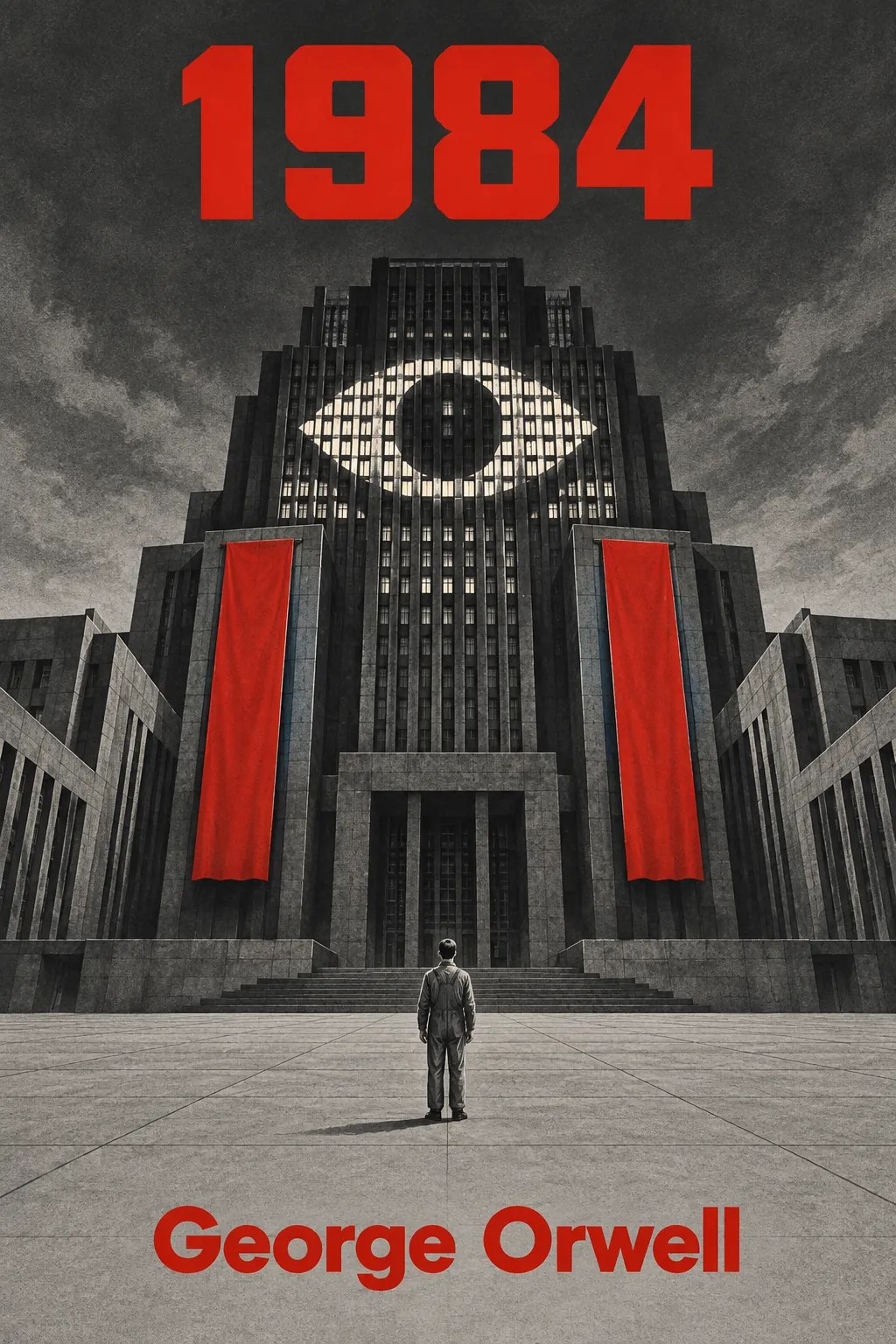
The original is Nineteen Eighty-Four itself, which the site covers in its 1984 study guide.
The Room 101 scene has been staged for television and film, including a BBC television adaptation in 1954 and Michael Radford's film of 1984.
The BBC also made a comic panel show called Room 101, running from 1994, in which guests argue for banishing their pet hates.
It flips the novel's meaning on its head, since everything sent there is something people are happy to get rid of.
In other classic dystopias, power works differently.
Aldous Huxley's Brave New World controls people with pleasure, while Orwell's world uses pain and fear.
Reading them side by side makes Room 101 easier to understand as a choice about how a state might rule.
Common misconceptions
First, the room is not the same for everyone.
That is the whole point: the Party tailors it to each prisoner, and rats are Winston's alone.
Second, the rats never touch him in the book.
The threat and his reaction are enough, and the novel does not describe a bite.
Third, it is not the first stage of interrogation, because Room 101 comes after the long sessions, as the final step.
Fourth, the BBC link is not a claim that the BBC ran a torture room.
It is only a story about where a number came from.
Fifth, Orwell did not forecast a specific year or a specific machine, and he described the book as a warning.
Read next
Big Brother (Orwellian) explains the watching figure whose love Winston is made to feel.
1984 by George Orwell gives the full chapter-by-chapter summary of the novel.
History of Science Fiction places Orwell's book among the genre's other warnings about the future.