In five minutes
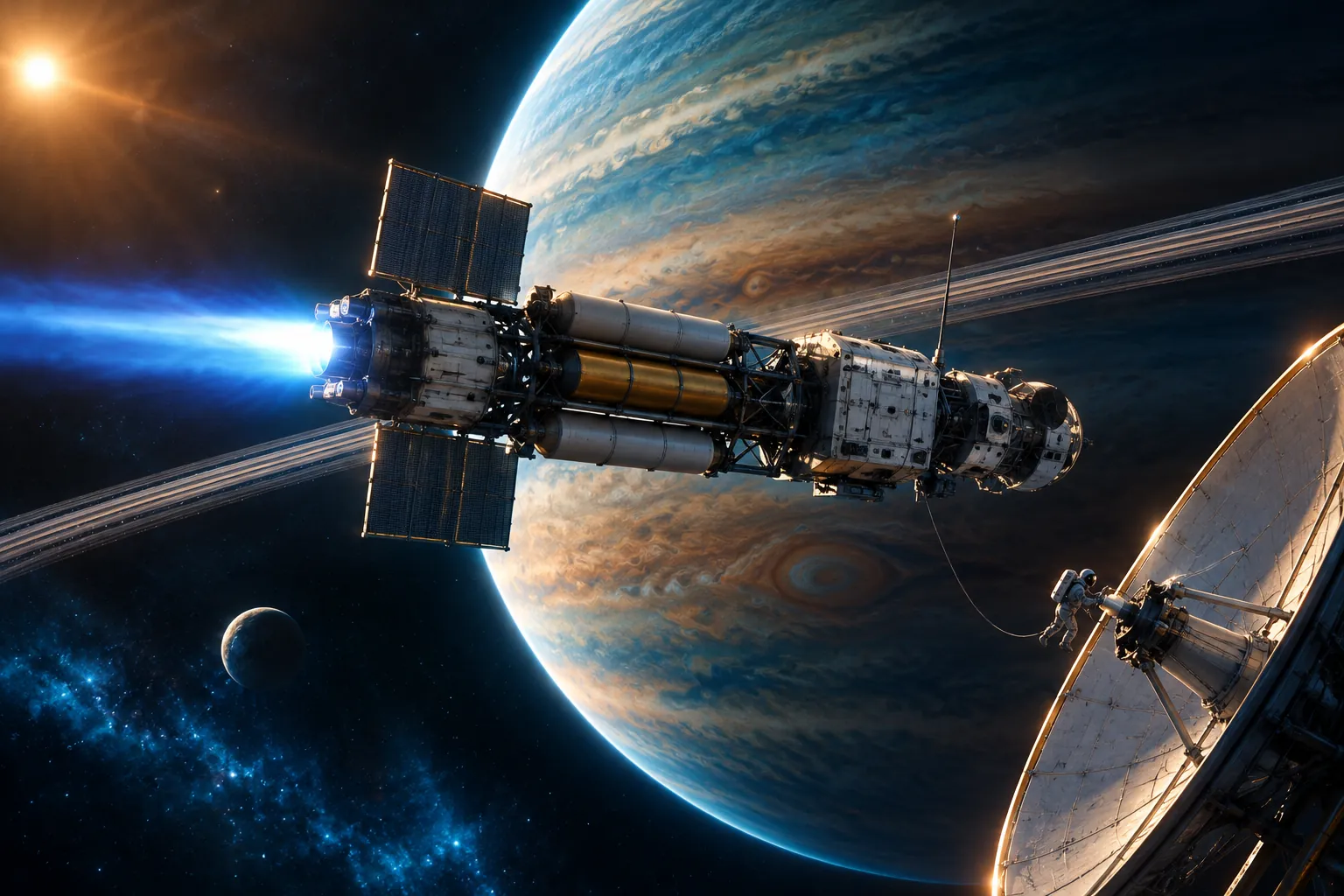
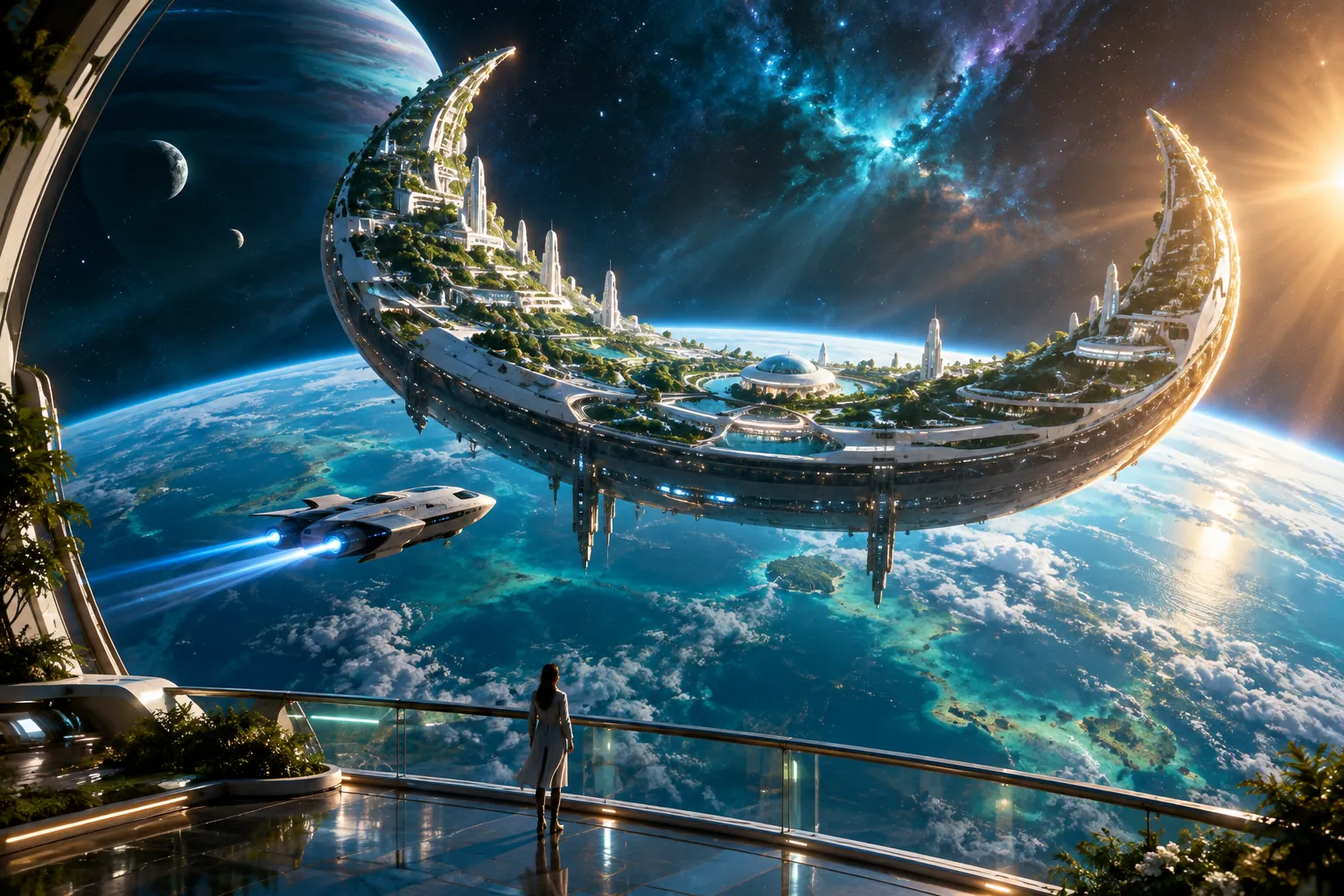
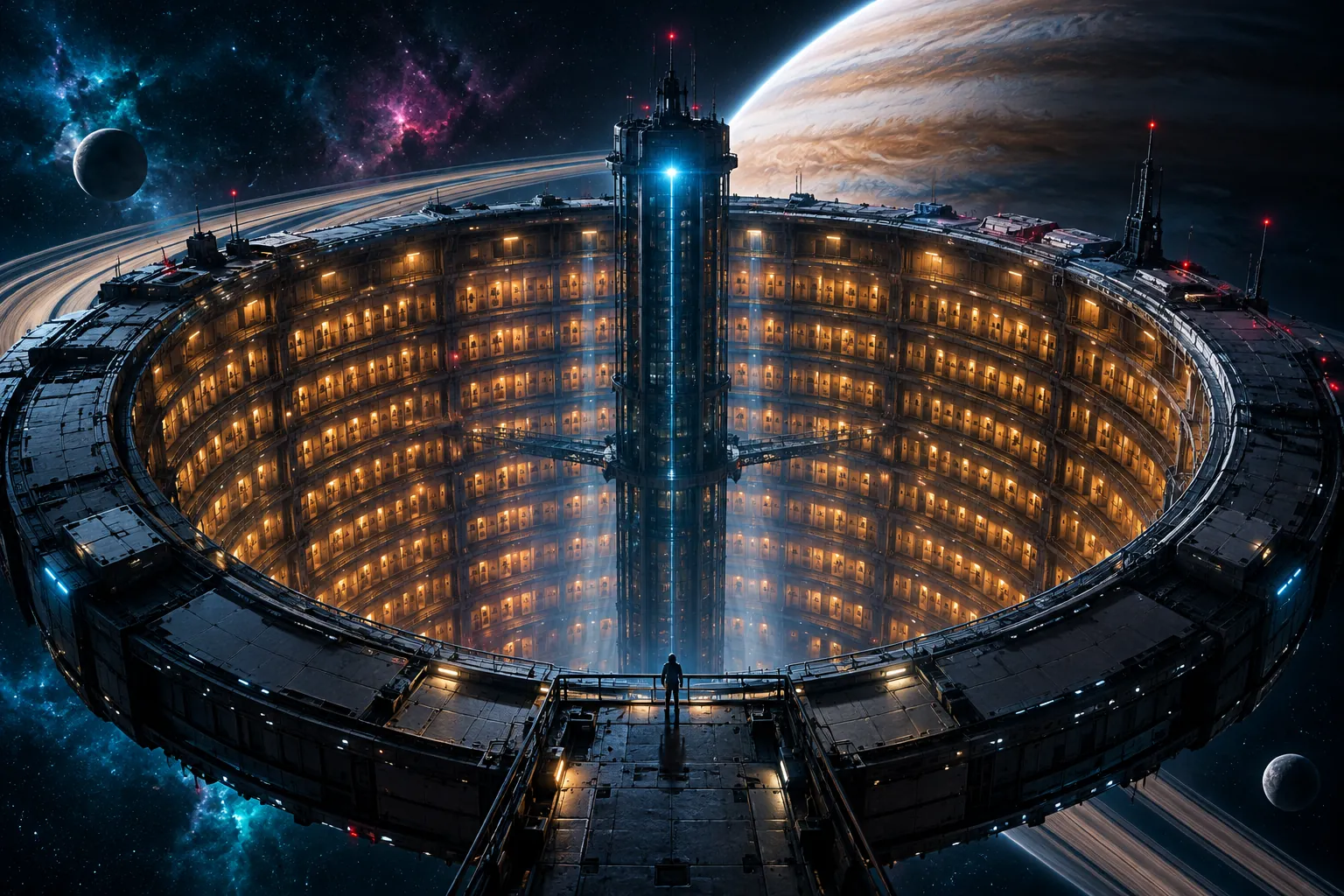
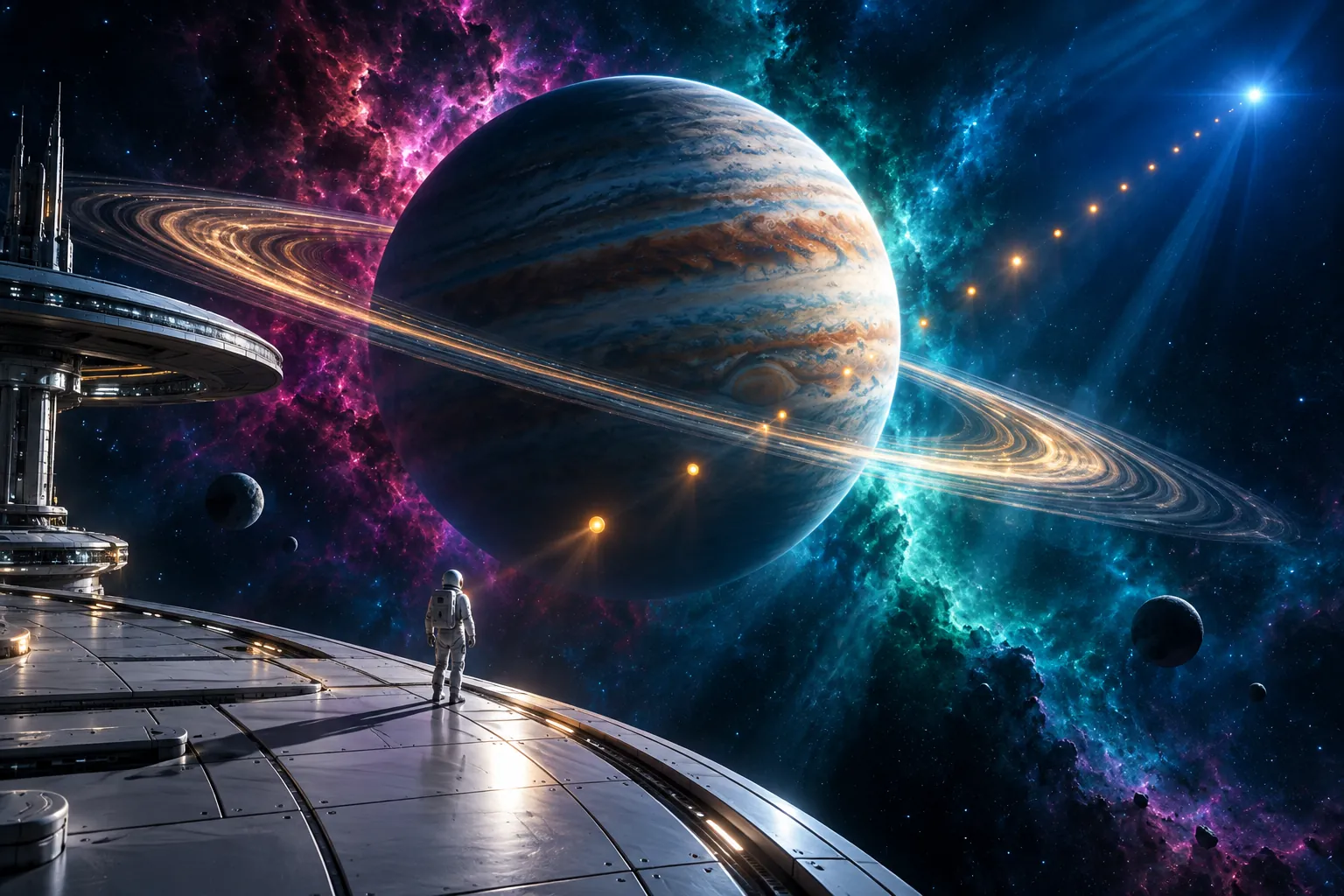
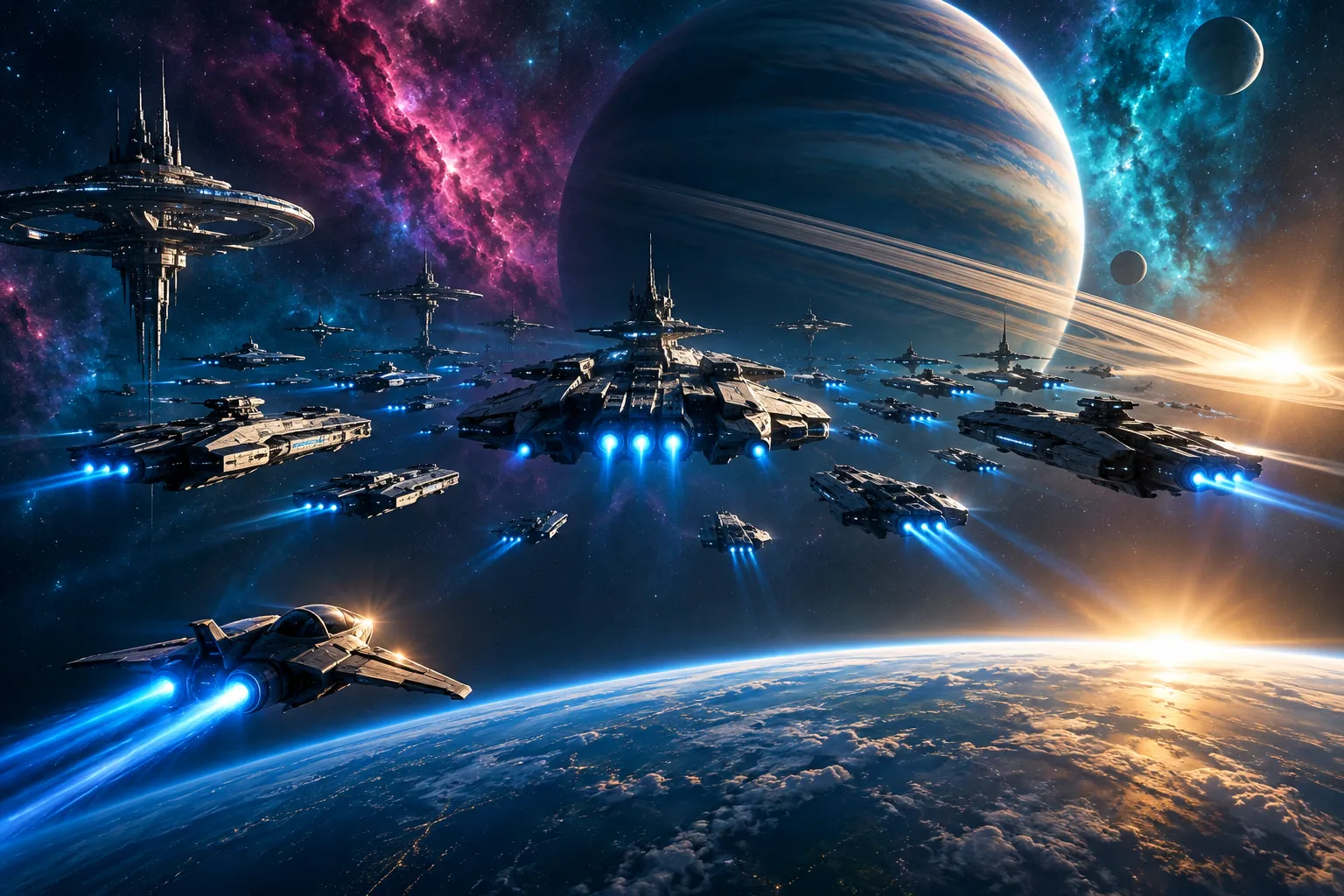
Space opera is a kind of science fiction told on a huge stage. Think starships, interstellar empires, fleets in battle and heroes whose choices change the fate of whole worlds.
It puts adventure, emotion and scale first, and the physics comes second. That is the main difference from hard science fiction, which tries to keep every idea scientifically plausible.
It is one of the oldest and most popular branches in the history of science fiction. Most people meet it first through films and TV, but it began in magazines of the 1920s and 1930s.
The short version: if a story has a crew, a ship, a galaxy full of different peoples and a conflict that matters across many star systems, it is probably space opera.
Where the name came from
The term was coined in 1941 by the fan writer Wilson "Bob" Tucker in the fanzine Le Zombie. It was meant as a joke at the expense of tired, formulaic spaceship stories.
Tucker built it on two older labels. "Horse opera" was slang for cheap western films and stories, and "soap opera" was the name for daytime radio dramas sponsored by soap companies.
So the original meaning was close to "a western with the cowboys swapped for spacemen". It was not a compliment.
Over the following decades the insult lost its sting. By the 1970s critics and editors were using the word for a genre they respected, and today it is the normal name for large-scale adventure science fiction.
The anthologist Brian Aldiss helped that shift with his 1974 collection Space Opera, which looked back at the early tales with real affection.
The ingredients of a space opera
No rule book defines the genre, but most stories share a few features.
- Scale: a galaxy, a sector or a whole empire is the setting, not one town or one laboratory.
- Starships: the ship is often a home, a weapon and a character in its own right.
- Faster-than-light travel: hyperdrives, jump gates or similar devices make interstellar trips quick enough to drive a plot.
- Politics and war: empires, federations, rebels, fleets and trade routes.
- Alien peoples: other species with their own cultures, often as allies, rivals or mirrors of human society.
- Big emotions: loyalty, duty, ambition, loss and sacrifice, played out against a backdrop of enormous events.
Not every story has all of these. The Expanse keeps travel slow and physics fairly strict, while still using a large cast and a solar-system-wide conflict.
A short history
The first stage belongs to the pulp magazines. E. E. "Doc" Smith's The Skylark of Space ran in Amazing Stories in 1928, and his Lensman series began with Triplanetary in 1934.
These tales had super-science, galaxy-wide wars and square-jawed heroes. They made readers think on the scale of a whole galaxy for the first time.
From the 1960s the genre grew more thoughtful. Frank Herbert's Dune (1965) mixed an interstellar empire with ecology, religion and politics, and many readers place it near space opera, though it is also called a planetary romance.
Then came the cinema moment. The 1977 film Star Wars made the form familiar to a worldwide audience, and the word space opera drifted back into everyday use, often applied to films and games.
In Japan the genre followed its own path. Tanaka Yoshiki began the novel series Legend of the Galactic Heroes (銀河英雄伝説) in 1982, a long story of two rival powers and their commanders.
The next wave is often called the new space opera. Iain M. Banks's Consider Phlebas (1987) opened his Culture series, a post-scarcity civilisation seen through wars and spies.
Other landmarks include Lois McMaster Bujold's Vorkosigan books, Vernor Vinge's A Fire Upon the Deep (1992), Alastair Reynolds's Revelation Space (2000), and James S. A. Corey's Leviathan Wakes (2011), the first Expanse novel.
Ann Leckie's Ancillary Justice (2013) won the Hugo Award for Best Novel in 2014. It showed that space opera could ask serious questions about identity, empire and artificial minds.
The real science
Space opera is the part of science fiction that is most willing to bend physics, so it helps to separate what is established from what is invention.
Established: nothing with mass has ever been observed travelling faster than light. Our galaxy is roughly 100,000 light-years across, and the nearest star beyond the Sun, Proxima Centauri, is about 4.2 light-years away.
That is why most space operas need a device to skip those distances. Hyperdrives, warp fields and jump gates are plot tools, not predictions.
Some ideas sit on firmer ground. Large crewed ships, long voyages and the isolation they cause are fairly realistic, and the Expanse series is known for using realistic thrust, weightlessness and communication delays.
Other familiar scenes are fiction. Explosions that roar in a vacuum, banking fighters in silent space and planets with one climate are conventions chosen for drama.
Many writers work in the middle ground. They keep one big impossible idea, such as faster-than-light travel, and then follow its consequences carefully.
Where it shows up in fiction
The best way into the genre is through novels. The original pulp tales by E. E. Smith are the roots, and Banks's Culture novels are the best-known modern example of the form at its most inventive.
Frank Herbert's Dune shows the political side of a star-spanning empire. Corey's Expanse novels show a crowded solar system sliding toward war, and Leckie's Ancillary Justice shows an empire seen from inside a ship's mind.
Beyond books, the genre is everywhere. Films such as Star Wars, the anime series Legend of the Galactic Heroes and many space-strategy video games all use its toolkit.
Cyberpunk, for example, takes the opposite approach: a small, grimy, close-up future rather than a galaxy.
Common misconceptions
- "Space opera means a story with singing." No. "Opera" here only echoes "horse opera" and "soap opera", meaning a melodramatic, formula-driven story.
- "It is the same as science fiction." No. It is one subgenre. Time-travel stories, near-future thrillers and cyberpunk are science fiction too.
- "It has to be bad science." Not always. Many modern space operas respect physics wherever they can and add only the invention the plot needs.
- "It is only about battles." War is common, but the genre also covers trade, diplomacy, exploration, mystery and family drama.
- "The term is still an insult." It began as one, but today writers, publishers and awards juries use it without any sneer.
Read next
Next, read hard science fiction to see the opposite priority, where scientific accuracy leads the story.
Then try cyberpunk for a very different mood, and return to the history of science fiction hub to see how all these branches fit together.