In five minutes
The Dune books in order are the six novels Frank Herbert wrote, read in the order they were published: Dune, Dune Messiah, Children of Dune, God Emperor of Dune, Heretics of Dune and Chapterhouse: Dune.
That publication order is also the order of the story, because each book picks up later in the same long history.
Frank Herbert died in 1986. After that, his son Brian Herbert and the novelist Kevin J. Anderson wrote many more books set in the same universe.
Those later books are a separate, optional set, and this page keeps them apart from Herbert's own six.
This page lists the novels only. Films and television adaptations are a different matter, and the books are the place to start whichever you have seen.
Frank Herbert's six Dune novels
- Dune (1965)
- Dune Messiah (1969)
- Children of Dune (1976)
- God Emperor of Dune (1981)
- Heretics of Dune (1984)
- Chapterhouse: Dune (1985)
These are the core of the series. Read them in this order and you will not miss anything.
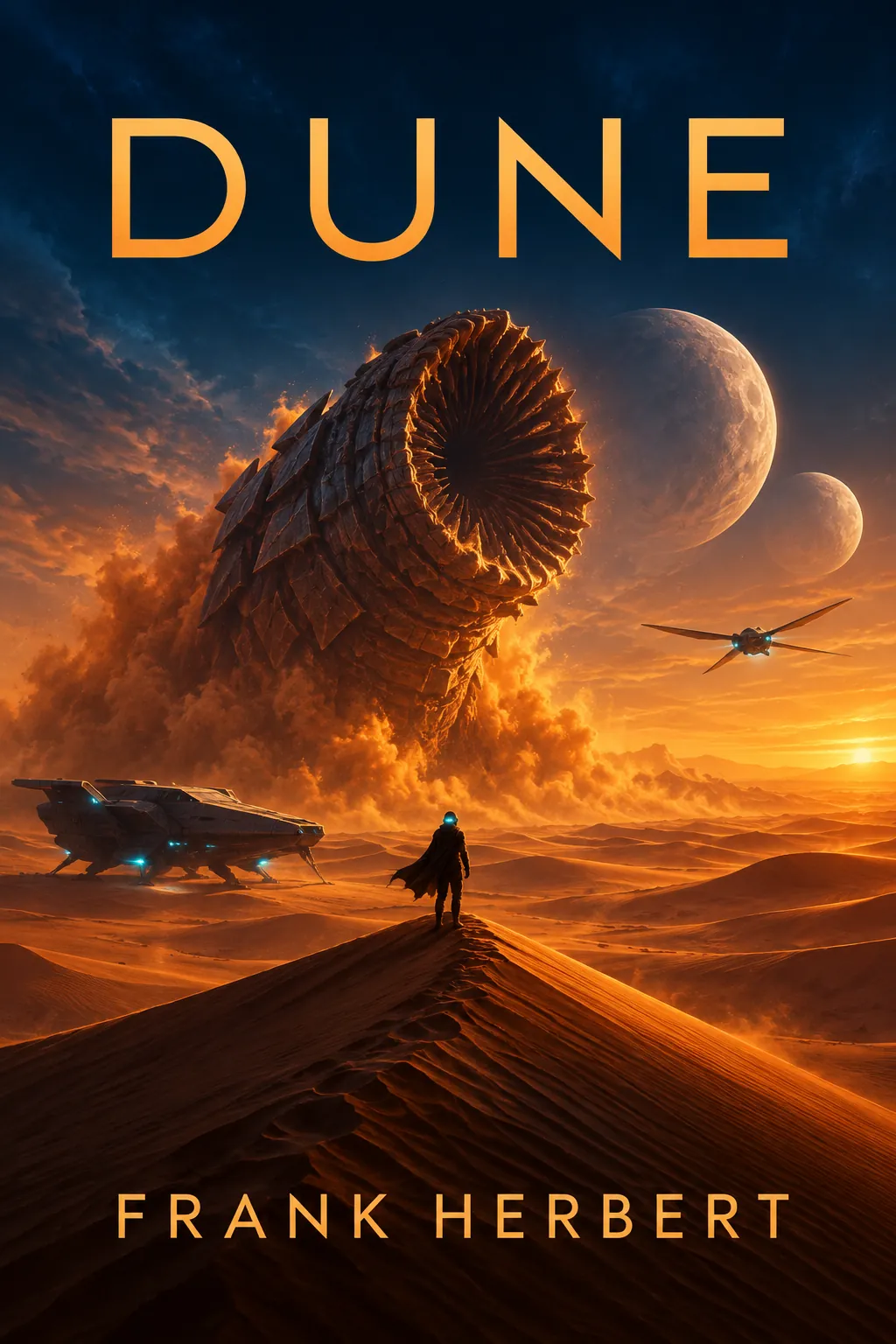
1. Dune (1965)
Dune follows Paul Atreides, the teenage heir of a noble house, whose family is given control of the desert planet Arrakis. Arrakis is the only source of the spice melange, the most valuable substance in the empire.
The book is a political thriller, an ecological story and a coming-of-age tale in one. It won the Hugo Award and the first Nebula Award for best novel, and it stands well enough alone that many readers stop here.
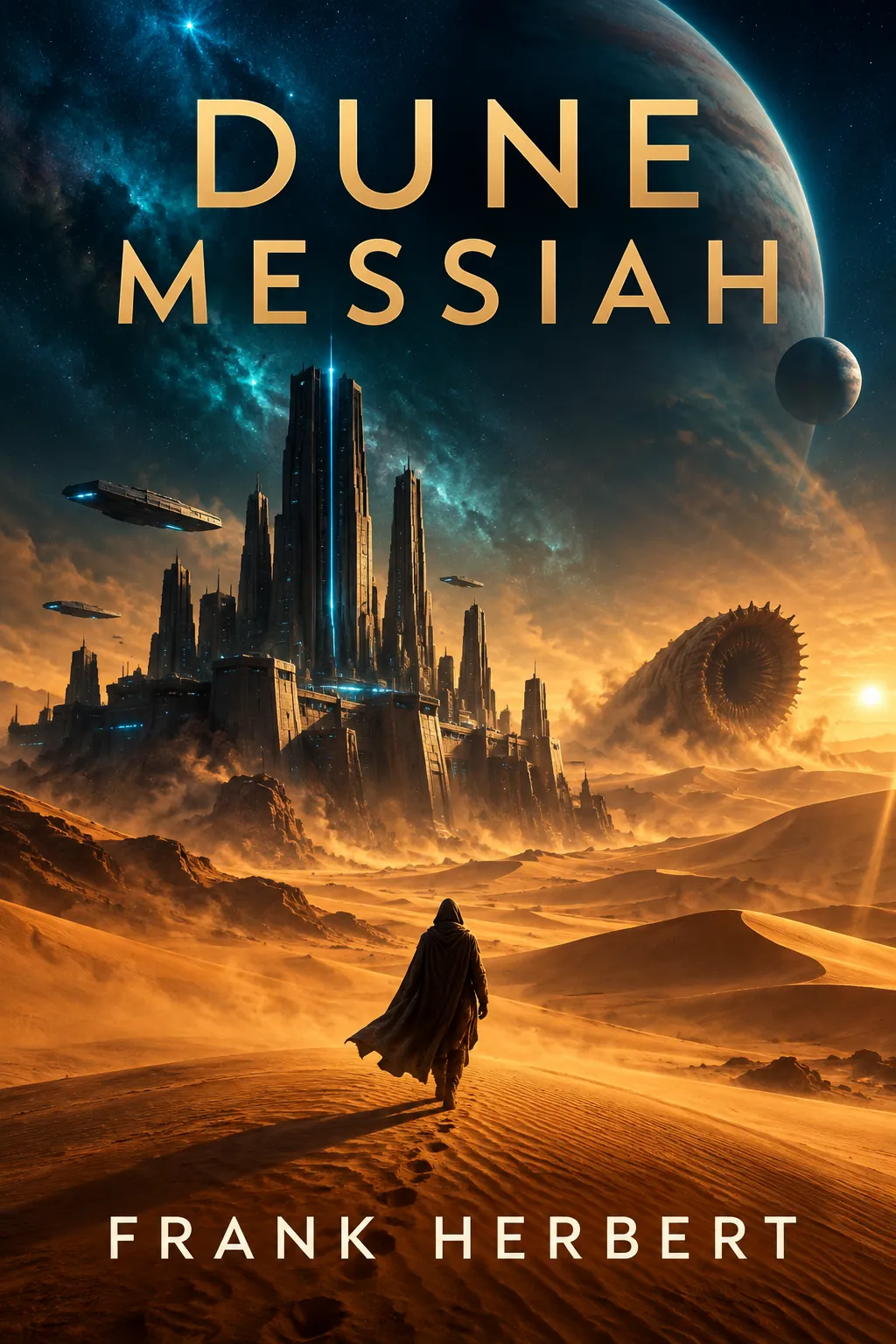
2. Dune Messiah (1969)
Dune Messiah is set about twelve years after the first novel. It is much shorter and quieter, a story of plots around a ruler rather than a rise to power.
It works as the second half of Paul's story, so read it straight after Dune. Readers who expect more of the same are often surprised, and that is deliberate: the book asks what a legend costs the person at its centre.
3. Children of Dune (1976)
Children of Dune takes place about nine years after Dune Messiah and centres on Paul's twin children, Leto II and Ghanima. Arrakis is changing, and the question is who will shape its future.
It closes the first arc of the series and sets up the long jump in time that follows. Many readers treat these first three books as one story.
4. God Emperor of Dune (1981)
God Emperor of Dune jumps about 3,500 years ahead. One ruler has held power for most of that time, and the book is mostly about what such a long reign does to a person and to a society.
It is the most philosophical and slowest-moving novel in the series. Readers are split: some call it the peak, others the hardest book to finish.
5. Heretics of Dune (1984)
Heretics of Dune is set about 1,500 years after God Emperor. The cast is mostly new, and the Bene Gesserit order moves to the centre of the story, along with Sheeana, a girl on Arrakis who has an unusual bond with the sandworms.
The pace is faster than in the previous book, and some familiar names return in unexpected ways.
6. Chapterhouse: Dune (1985)
Chapterhouse: Dune follows directly from Heretics. It takes the Bene Gesserit to their base planet, Chapterhouse, while new enemies close in.
It was Frank Herbert's last Dune novel, and it ends without a full resolution because he died before he could write the next book.
How the six books fit together
The six novels cover a very long span. The first three follow one family over about two decades, then the story leaps 3,500 years, then another 1,500.
Because of those jumps, characters change and ideas return in new forms. That is why order matters here: God Emperor of Dune makes much more sense once you have lived through the first three books.
Publication order or story order?
For Herbert's six books the two orders are the same, so there is nothing to puzzle over. Read them as they were published.
The question only appears with the later prequels, which are set before Dune but were written long after it. Reading them first can reveal things that Dune explains slowly, so it is usual to save them for later.
The later books by Brian Herbert and Kevin J. Anderson
These books are not by Frank Herbert. His son Brian Herbert wrote them with Kevin J. Anderson, starting in 1999.
They fall into a few groups, and none is needed to understand Herbert's six.
- Prelude to Dune (1999 to 2001): Dune: House Atreides, House Harkonnen and House Corrino, set shortly before Dune.
- Legends of Dune (2002 to 2004): The Butlerian Jihad, The Machine Crusade and The Battle of Corrin, set in the far past, thousands of years before Dune.
- Hunters of Dune (2006) and Sandworms of Dune (2007): a two-book ending that picks up after Chapterhouse: Dune, written from outline notes the authors say Frank Herbert left.
- Heroes of Dune: Paul of Dune (2008) and The Winds of Dune (2009), which fill in gaps around Paul's story.
- Great Schools of Dune (2012 to 2016): Sisterhood of Dune, Mentats of Dune and Navigators of Dune, set after the Legends books.
- Caladan trilogy (2020 to 2022): The Duke of Caladan, The Lady of Caladan and The Heir of Caladan, about the Atreides family before they leave their home world.
If you want closure for the main story, Hunters of Dune and Sandworms of Dune are the natural next books after Chapterhouse.
Reader opinion on these later books is mixed, and Frank Herbert's own six remain the core of the series.
A simple plan
- If you are new, read Dune and then decide whether to go on.
- If you liked it, read Dune Messiah right away, because it completes Paul's story.
- If you want the whole of Herbert's vision, continue with Children of Dune, God Emperor of Dune, Heretics of Dune and Chapterhouse: Dune.
- Only after that, try Hunters of Dune and Sandworms of Dune, or the prequels.
Common misconceptions
"Dune is one book." It is the first of six by Frank Herbert, and the story runs on for thousands of years.
"You need the prequels first." You do not.
Dune was written to be read cold, and the prequels came decades later.
"All the Dune books are by Frank Herbert." Only the first six are.
Everything from 1999 on was written by Brian Herbert and Kevin J. Anderson.
"Dune Messiah is optional." It is short and easy to skip, but it finishes the story Dune begins, and the later books assume it.
Read next
Start with Dune if you have not read it yet: our study guide covers the plot, characters and themes without giving away the ending up front.
Then read Dune Messiah to see what happens after the first book's story ends.
For the bigger picture, the history of science fiction shows where Herbert's novels sit in the genre.