In five minutes
The best books like The Hunger Games are young-adult dystopias where a teenager is trapped in a rigged system and has to fight, hide or lie to survive. This guide picks ten novels and two older classics, and says honestly why each one fits.
Plots are described without spoiling any endings. Violence levels are noted too, because a few of these books are much darker than Suzanne Collins's trilogy.
Dystopia is one branch of the history of science fiction, and this list follows that branch from 1949 to the 2010s.
What makes a Hunger Games book
The Hunger Games (Suzanne Collins, 2008) mixes three things: a deadly contest, a society that uses fear and spectacle to stay in control, and a young narrator who slowly turns from survivor into rebel. You can read our Hunger Games study guide if you want a refresher.
A book that matches only one of those three can still be a great read, so this list is sorted by which part you want more of.
Readers who want the contest should start with the first group, and readers who want the society or the uprising can skip to the second or third.
Group 1: Deadly contests
Battle Royale by Koushun Takami (1999)
A Japanese ninth-grade class is taken to an island and ordered by the state to fight until only one student is left. It is the closest match to the Hunger Games premise, and it is far more graphic, so it suits older teens and adults.
Read it to see the same kind of idea told through a whole class of ordinary teenagers instead of one chosen heroine, in a novel first published in Japan and translated into English in 2003.
The Long Walk by Stephen King, writing as Richard Bachman (1979)
One hundred teenage boys enter a yearly walking contest in which anyone who drops below a set speed is warned and then shot. Ray Garraty's story has no weapons to find and no arena to explore, only a road and a watching crowd, yet it is as tense as any fight.
It is bleak and slow-burning, and it suits readers who liked the emotional side of the Games more than the action.
The Maze Runner by James Dashner (2009)
Thomas wakes with no memory in a glade full of teenage boys, surrounded by a huge maze whose walls move, and the group's survival depends on the runners who map it.
It has the same puzzle-and-survival drive as the arena chapters, though it leans more on mystery than on character. It is a good pick for readers aged twelve and up who want a fast start.
Scythe by Neal Shusterman (2016)
In a world where death has been conquered, licensed killers called scythes must end a fixed number of lives to keep the population steady. Citra and Rowan are chosen as apprentices to one of them, and neither wanted the job.
The contest here is moral rather than physical, and it asks whether a fair system for killing can exist. Fans of Katniss's refusal to play along will recognise the question.
Group 2: Controlled societies
The Giver by Lois Lowry (1993)
Twelve-year-old Jonas lives in a calm community with no pain and no real choice, until he is picked to receive the memories everyone else has given up. We host a study guide to The Giver.
It is shorter and quieter than Collins, and it shows the idea behind many later dystopias: comfort bought by giving up freedom. It is the gentlest book on this list.
Uglies by Scott Westerfeld (2005)
Tally Youngblood looks forward to turning sixteen, when everyone gets an operation that makes them "pretty", until a friend shows her what the surgery really costs.
This book aims at appearance and conformity rather than hunger and war. Readers who enjoyed the Capitol's makeovers and TV glamour will find the same satire, with more adventure than politics.
Divergent by Veronica Roth (2011)
In a future Chicago, society is divided into five factions by personality, and sixteen-year-old Beatrice Prior must choose one, knowing that her test result makes her unusual.
The initiation chapters feel like the preparation phase of the Games, and the plot moves fast toward open conflict. It works well for readers who like a heroine finding her place in a hard system.
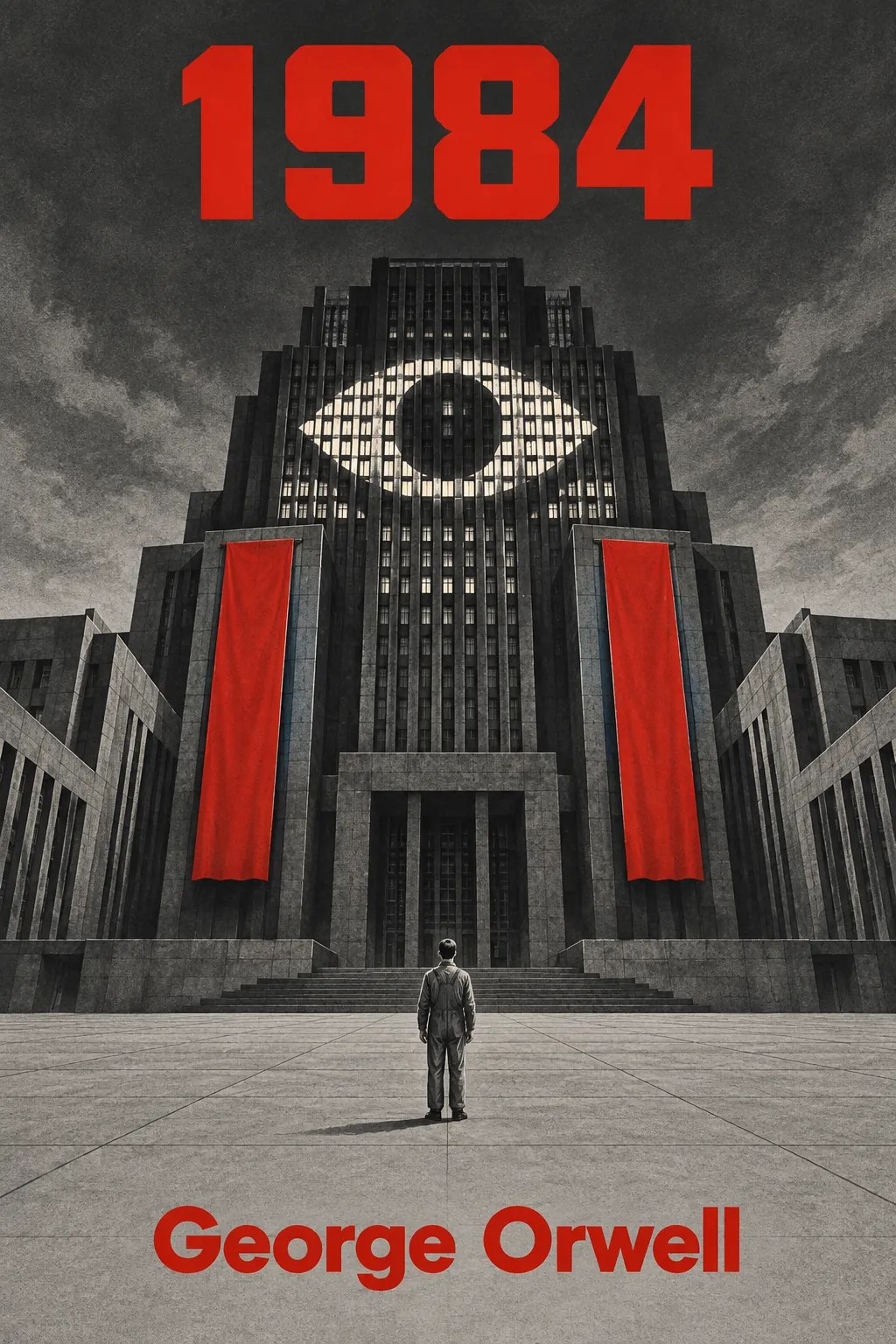
1984 by George Orwell (1949)
Winston Smith rewrites records for the Party in Oceania, until a forbidden love affair pushes him to question the state. Our 1984 study guide covers the plot and themes.
It is one of the adult roots of the genre: constant surveillance, a leader on every wall and control over what counts as true. The Capitol is lighter than Oceania, but the logic is related.
Group 3: Rebellion
Legend by Marie Lu (2011)
In a militarised western United States called the Republic, June, a prodigy soldier, hunts Day, the country's most wanted criminal, and both slowly discover what the state is hiding.
The two alternating narrators and the sense of a government lying to its young people make it a strong match for fast, plot-driven readers.
Red Rising by Pierce Brown (2014)
Darrow, a miner on Mars, learns that his people have been lied to for generations and infiltrates the ruling class through a brutal school where students fight for rank.
It is aimed at older readers and is bloodier and more political than most books here. Pick it up if the revolution in Mockingjay was your favourite part.
Two older classics
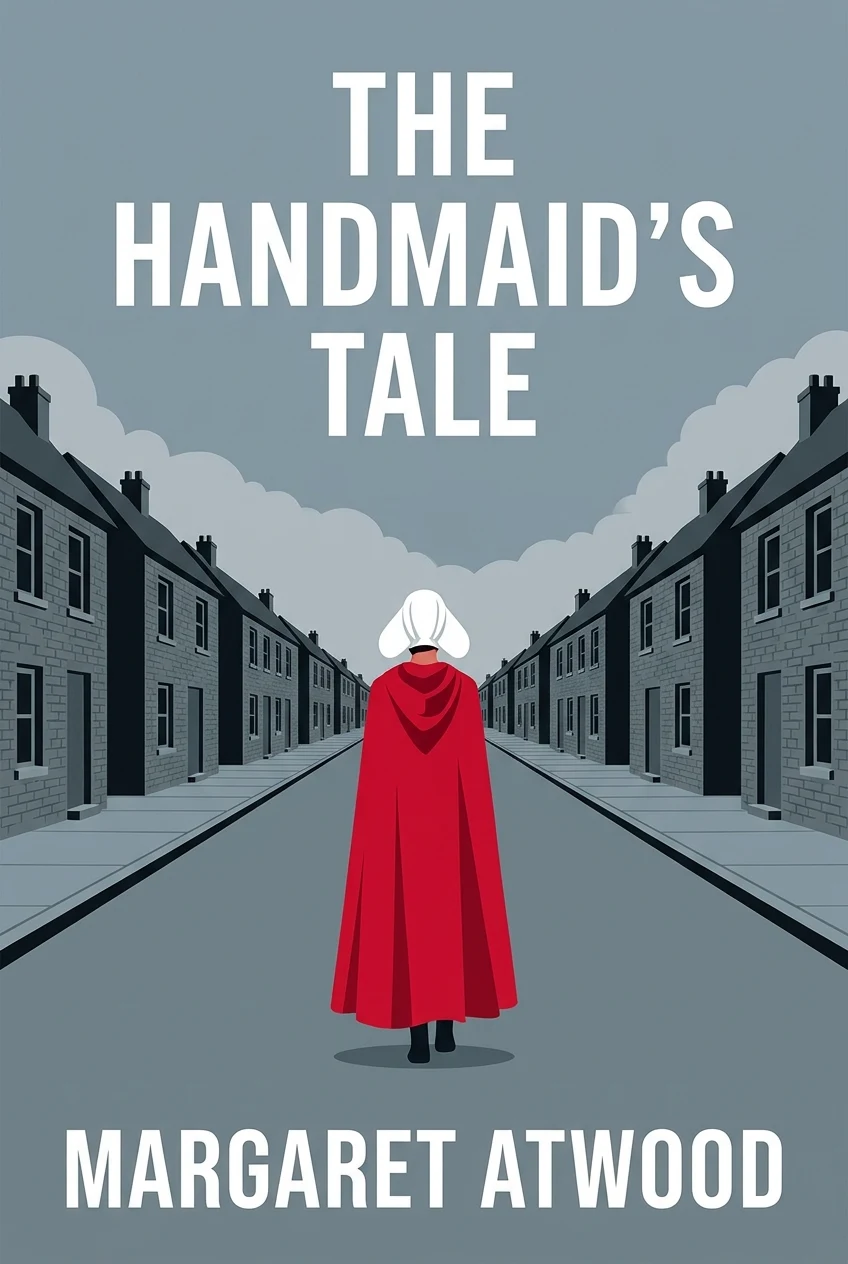
The Handmaid's Tale by Margaret Atwood (1985) follows Offred, a handmaid in the theocratic state of Gilead, which controls women's lives and bodies. Fahrenheit 451 by Ray Bradbury (1953) follows the fireman Guy Montag, whose job is to burn books.
Both are adult reads, but they are short and widely taught, and both show where today's young-adult dystopias came from. We host a Handmaid's Tale guide and a Fahrenheit 451 guide.
Where the idea comes from
Collins has said that the idea came to her while she switched between reality television and news coverage of war. She has also pointed to the Greek myth of Theseus and the Minotaur and to Roman gladiator games.
That mix explains why the series sits comfortably beside both classic dystopias and modern contest stories.
Common misconceptions
"Battle Royale is just a copy." Readers often compare the two, but they come from different countries and have a different tone: Takami's novel is a satire of school and state pressure, and Collins's is a story about media and war.
"Dystopia is only for teenagers." The genre began in adult literature, and 1984, Brave New World and The Handmaid's Tale are still its best-known examples.
"A dystopia must have an arena." Most do not, and many show control through schools, factions, surgery or quiet comfort.
Which one first?
Use these age bands as a rough guide, not a rule.
- Ages 12-14: The Giver, The Maze Runner, Uglies.
- Ages 14 and up: Divergent, Legend, Scythe.
- Older teens and adults: Battle Royale, The Long Walk, Red Rising, 1984.
Read next
The Hunger Games: the study guide for the book that started this list.
The Giver: the quiet, short dystopia that many later novels build on.
History of Science Fiction: how dystopia fits into the bigger story of the genre.