In five minutes: Jane Austen and her England
Jane Austen (1775–1817) was an English novelist who turned ordinary village and country-house life into some of the sharpest comedy in the language. She published four novels in her lifetime: Sense and Sensibility, Pride and Prejudice, Mansfield Park and Emma. Two more, Northanger Abbey and Persuasion, appeared just after her death. All six follow young women who must find a place in a world where money, rank and marriage decide almost everything.
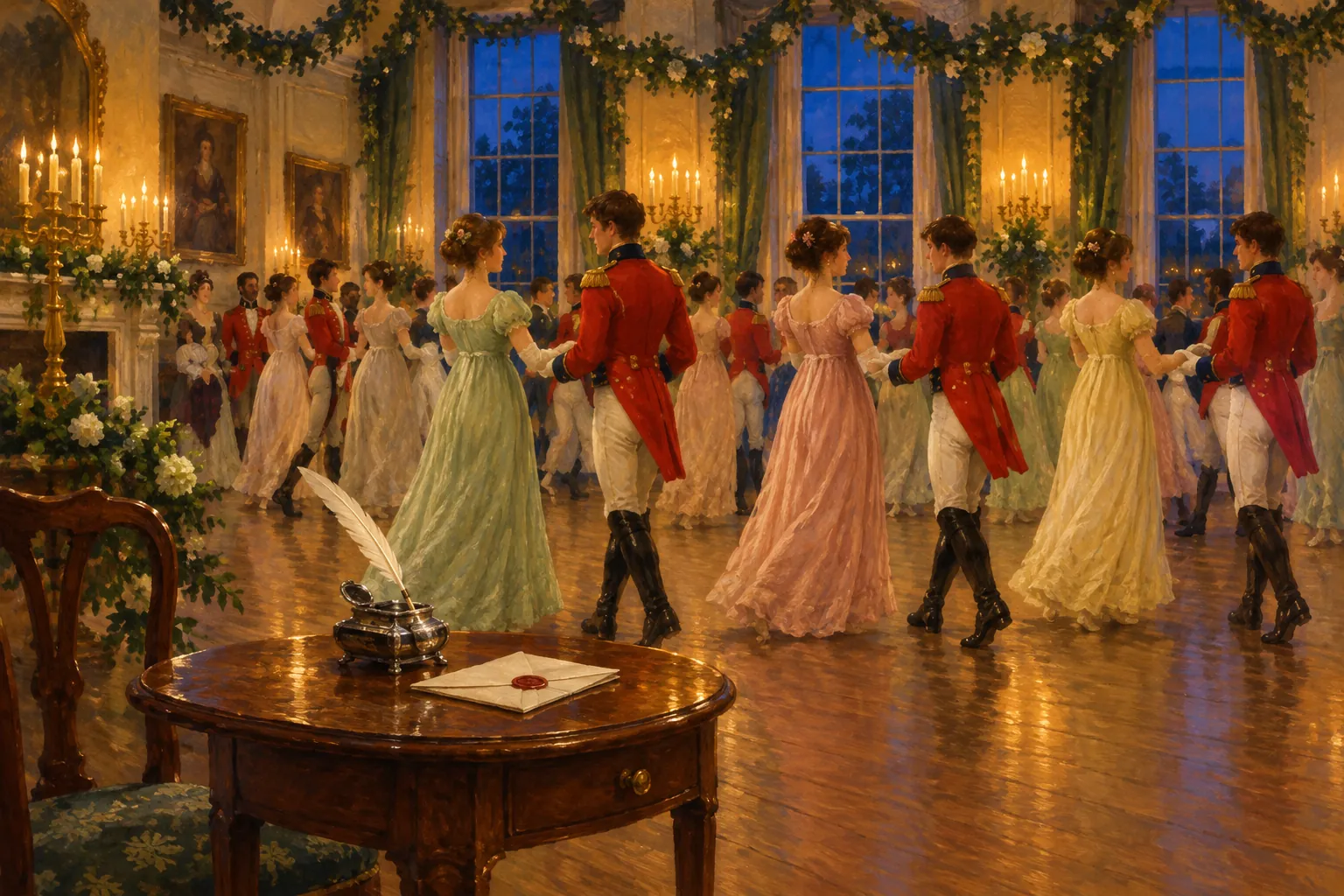
Her England is not yet Victorian. Queen Victoria was born in 1819, two years after Austen died, and took the throne in 1837. Austen belongs to the Georgian age and, in her last years, the Regency, the period from 1811 to 1820 when the future George IV ruled for his ill father. She matters to the story of Victorian Britain because the Victorians were the readers who made her famous. For the wider period, see The Victorian Era (1837–1901).
Early life in Steventon (1775–1801)
Jane was born on 16 December 1775 in Steventon, Hampshire. She was the seventh of eight children of George Austen, the village rector, and Cassandra Leigh. The family was respectable but not rich. George farmed and took in boarding pupils to add to his income.
The brothers went different ways. Edward was adopted by wealthy relatives, the Knights, and later inherited their land. Francis and Charles joined the Royal Navy. Jane read widely in her father's library and, as a teenager, wrote stories, short plays and parodies to amuse the family. Her closest companion all her life was her older sister Cassandra.
By the late 1790s she had drafted early versions of what became Sense and Sensibility, Pride and Prejudice and Northanger Abbey. The wider world also reached the rectory. Britain went to war with revolutionary France in 1793, and in 1794 Jane's cousin Eliza lost her first husband, a French count, to the guillotine.
Moving house: Bath, Southampton and Chawton (1801–1809)
In 1801 George Austen retired and moved the family to Bath. These were unsettled years for Jane, and she finished little. In December 1802 she accepted a marriage proposal from Harris Bigg-Wither, a well-off young landowner, and withdrew her answer the next morning. She never married.
George Austen died in January 1805. His widow and daughters now had very little income of their own and relied on money from Jane's brothers. They lived in lodgings, then in Southampton from 1806. In 1809 her brother Edward offered his mother and sisters a cottage on his estate at Chawton, Hampshire. For the first time in years Jane had a settled home, and it was here that her novels reached print.
The novels (1811–1817)
Sense and Sensibility came out in the autumn of 1811. It was published "on commission", which meant Austen carried the risk of any loss, and the title page said only "By a Lady". It made a profit. Pride and Prejudice followed on 28 January 1813, and she sold the copyright to her publisher Thomas Egerton for £110. Her brother Henry helped her deal with publishers.
- Sense and Sensibility (1811): two sisters, one careful and one passionate, lose their home and must find security.
- Pride and Prejudice (1813): Elizabeth Bennet and Mr Darcy learn to see past first impressions.
- Mansfield Park (1814): the quiet Fanny Price is raised among richer cousins.
- Emma (December 1815, dated 1816): a confident young woman who loves matchmaking gets it wrong.
- Northanger Abbey and Persuasion (December 1817, dated 1818): a comic send-up of Gothic novels, and a mature story of a second chance.
Austen's readers included the Prince Regent, who admired her books. In 1815 she dedicated Emma to him. Her name appeared in print only after her death, when Henry added a short biographical note to the last two novels.
Her England: money, marriage and war
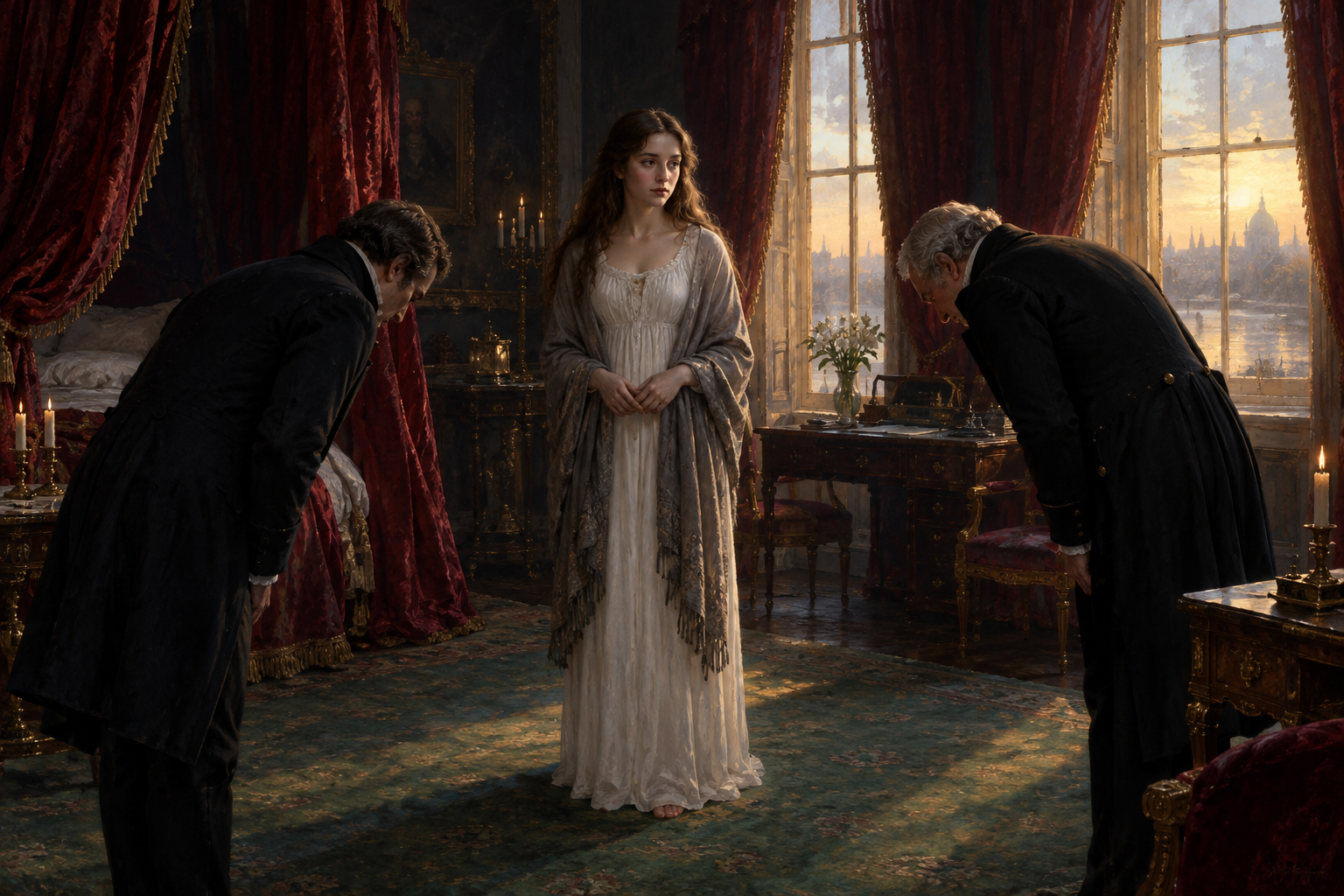
Austen's plots make sense once you know the rules her characters live under. Land was the main source of wealth, and it usually passed to the eldest son. Some estates were "entailed", which meant they had to go to a male heir and could not be left to daughters. A married woman's property generally belonged to her husband. Respectable jobs for women were few, mostly teaching or working as a governess, and they paid badly. For most women of the gentry, marriage was the main route to security.
That is why the books keep returning to money. In Pride and Prejudice, the Bennet family's estate is entailed to a distant cousin, Mr Collins, so five daughters face a thin future. In Sense and Sensibility, the Dashwood women lose their home when it passes to a half-brother. Austen is funny about all this, but she is never vague about the numbers.
War sits at the edge of the page. The Napoleonic Wars ran, with a short break, from 1803 to 1815, and Austen's two brothers in the navy lived them. In Persuasion, Captain Wentworth returns from the war with a fortune won in naval prize money, which changes how the proud Elliot family sees him. In Mansfield Park, Sir Thomas Bertram's wealth is tied to a plantation in Antigua. Britain banned its slave trade in 1807 and abolished slavery in most of its empire from 1833, and readers still discuss how much weight Austen gave to that brief connection.
Illness and death (1816–1817)
Austen's health failed during 1816. She kept writing, and began a new novel, Sanditon, in January 1817, but she put it aside in March and left it unfinished. In May 1817 Cassandra took her to Winchester to be near a doctor. Jane died there on 18 July 1817, aged 41, and was buried in Winchester Cathedral.
After her death: how the Victorians made her famous
During her life Austen was admired by a small circle of readers. The novelist Walter Scott praised her realism in an unsigned review of Emma. Her fame grew slowly through the 1800s. A big step came in 1869, when her nephew James Edward Austen-Leigh published A Memoir of Jane Austen. It showed her as a gentle, quiet aunt, a picture later biographers have corrected, but it brought new editions and many new readers.
Today she is among the best-known English writers. In July 2017, the 200th anniversary of her death, the Bank of England issued a £10 note carrying her portrait.
What exams ask
- Significance: Austen records the lives of the English gentry in the Georgian and Regency years, and shows how inheritance law and marriage shaped women's choices.
- Key terms: entail, primogeniture, coverture (a married woman's legal position under her husband), the Regency, novel of manners.
- Period link: she wrote during the Napoleonic Wars and before Victoria's reign; the Victorians were the ones who raised her reputation.
- Typical question: "How do Austen's novels show women's economic dependence in early nineteenth-century England?" Use entail, the Bennet and Dashwood families, and the limits on women's work as evidence.
Read next
- The Victorian Era (1837–1901): the age that followed Austen's, and the one that turned her into a classic.
- Who Was Queen Victoria?: the monarch who took the throne twenty years after Austen died.
- Jack the Ripper and Victorian London (1888): a very different picture of England, in the city of the late Victorian years.