In five minutes
Japan’s annexation of Korea was a short treaty with a huge result. Signed in Seoul on 22 August 1910 and announced on 29 August, it abolished the Korean Empire as a state. Korea was renamed Chōsen, and a Japanese governor-general ruled it from Seoul until Japan’s surrender in 1945. That is why historians speak of Korea under Japanese rule as a period of thirty-five years, from 1910 to 1945.
The treaty did not come out of nowhere. Japan had been tightening its grip for about five years. It took control of Korea’s foreign policy in 1905, then of its domestic government and army in 1907. By 1910 the treaty gave a legal form to control that already existed. The story is part of the wider change described in Qing China, Japan and the West (1793–1912).
A simple order to remember: 1904 (advisers), 1905 (foreign affairs), 1907 (domestic affairs and the army), 1910 (annexation).
Why Japan wanted Korea
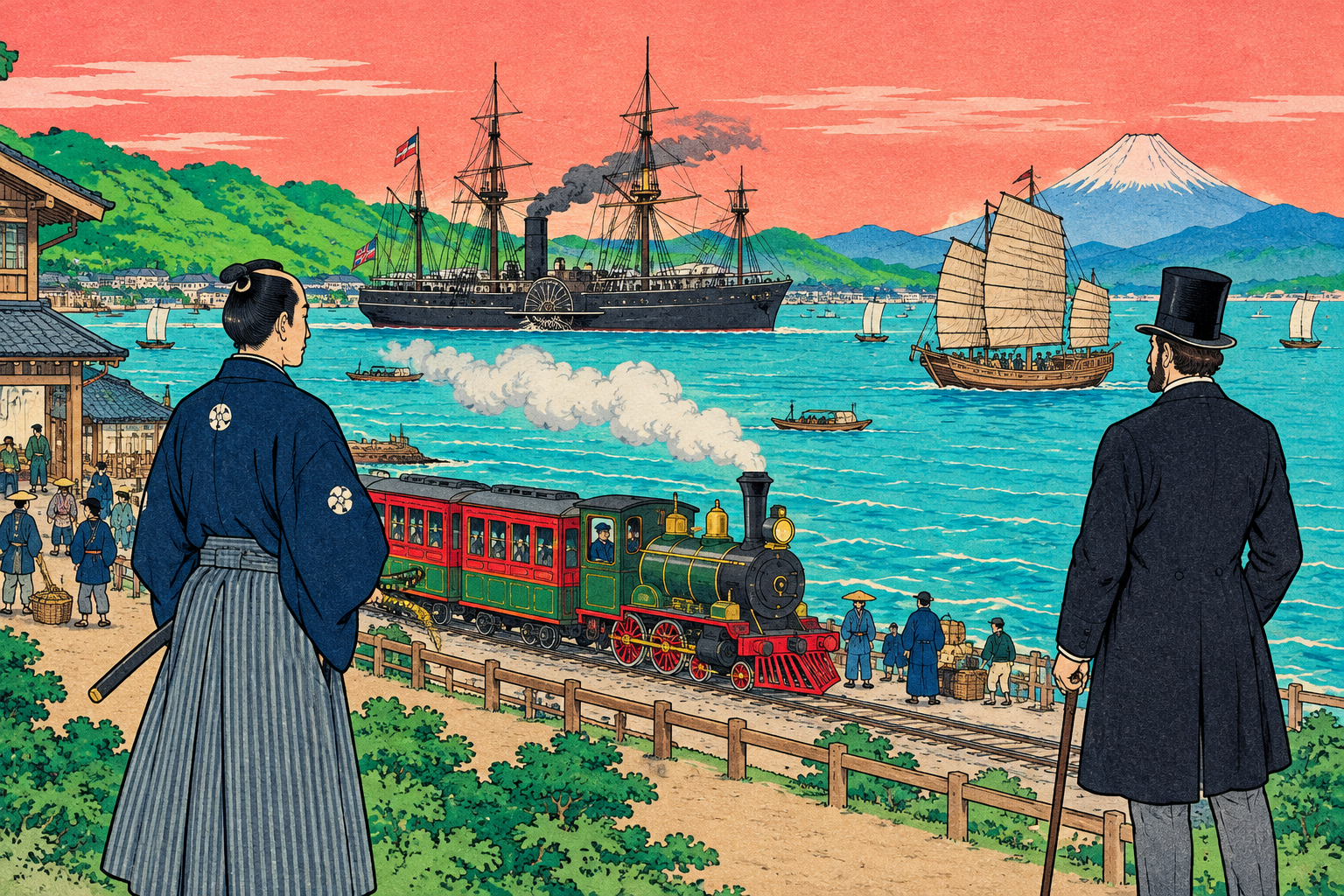
The Korean peninsula lies a short sea voyage from Japan. After the Meiji Restoration, Japan’s leaders worried that a strong rival in Korea, first China and later Russia, would threaten their new state. They also saw control of territory abroad as a sign of being a great power, as the Western empires were.
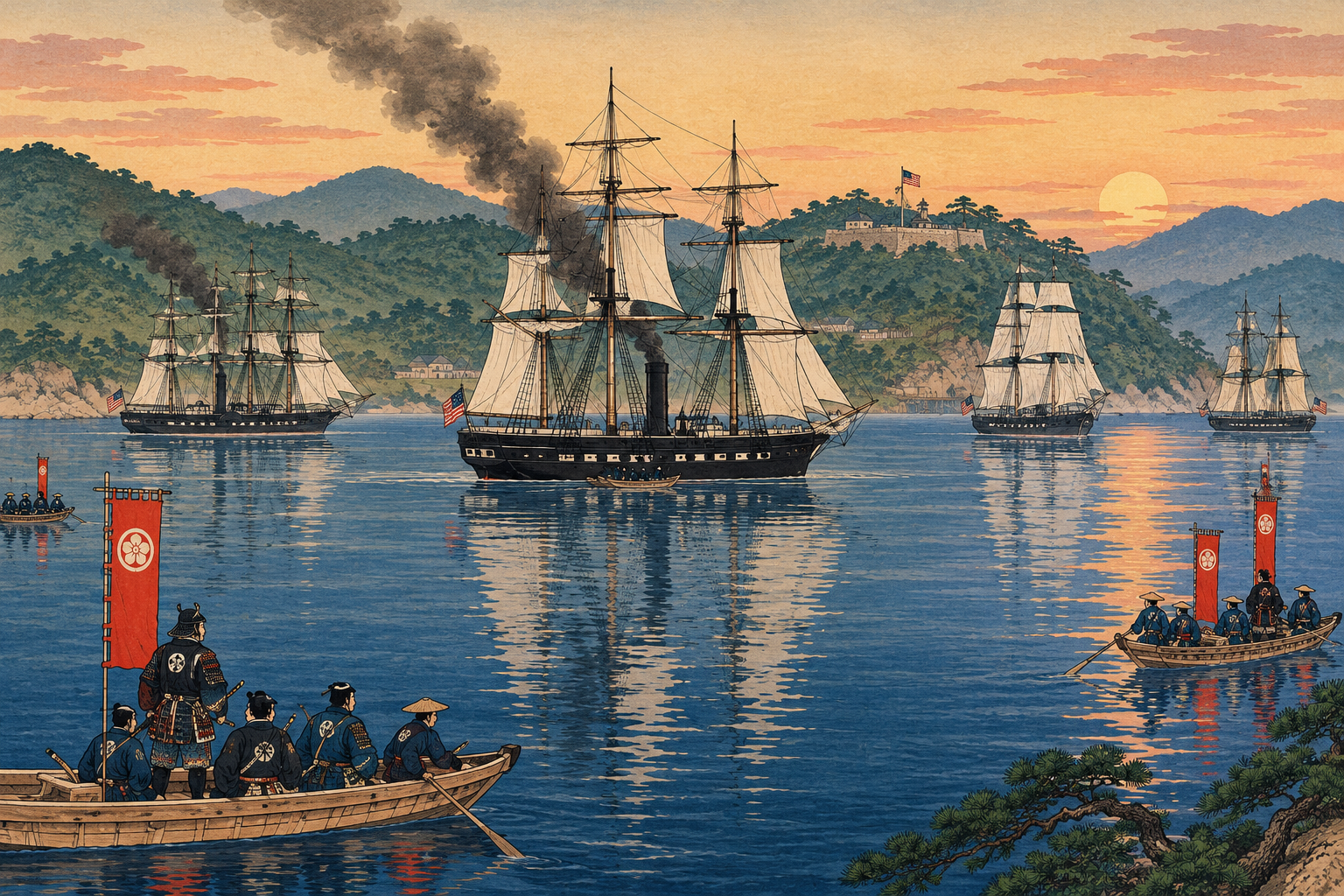
For centuries the Joseon kingdom had followed a cautious, nearly closed foreign policy and kept a traditional tributary relationship with China. In 1875 a clash at Ganghwa Island gave Japan a pretext to send warships. In 1876 Korea signed the Treaty of Ganghwa, an unequal treaty much like those that Western powers had forced on Japan. Inside Korea, reformers who wanted to modernise quarrelled with conservatives who wanted to keep close ties with China, and soldiers’ riots in 1882 and a failed coup in 1884 drew both Chinese and Japanese troops.
In 1894 a large peasant uprising, the Donghak rebellion, led both China and Japan to send soldiers, and the First Sino-Japanese War followed. In the Treaty of Shimonoseki in 1895, China recognised Korea as fully independent. That ended Chinese influence, but it also left Japan with more room to act. In October 1895 Queen Min, who opposed Japanese influence, was killed in her palace by a group that included Japanese agents, and many Koreans turned strongly against Japan. In 1897 King Gojong proclaimed the Korean Empire and took the title of emperor, partly to show that Korea was a sovereign state.
From protectorate to annexation, 1904–1910
1904: war and advisers
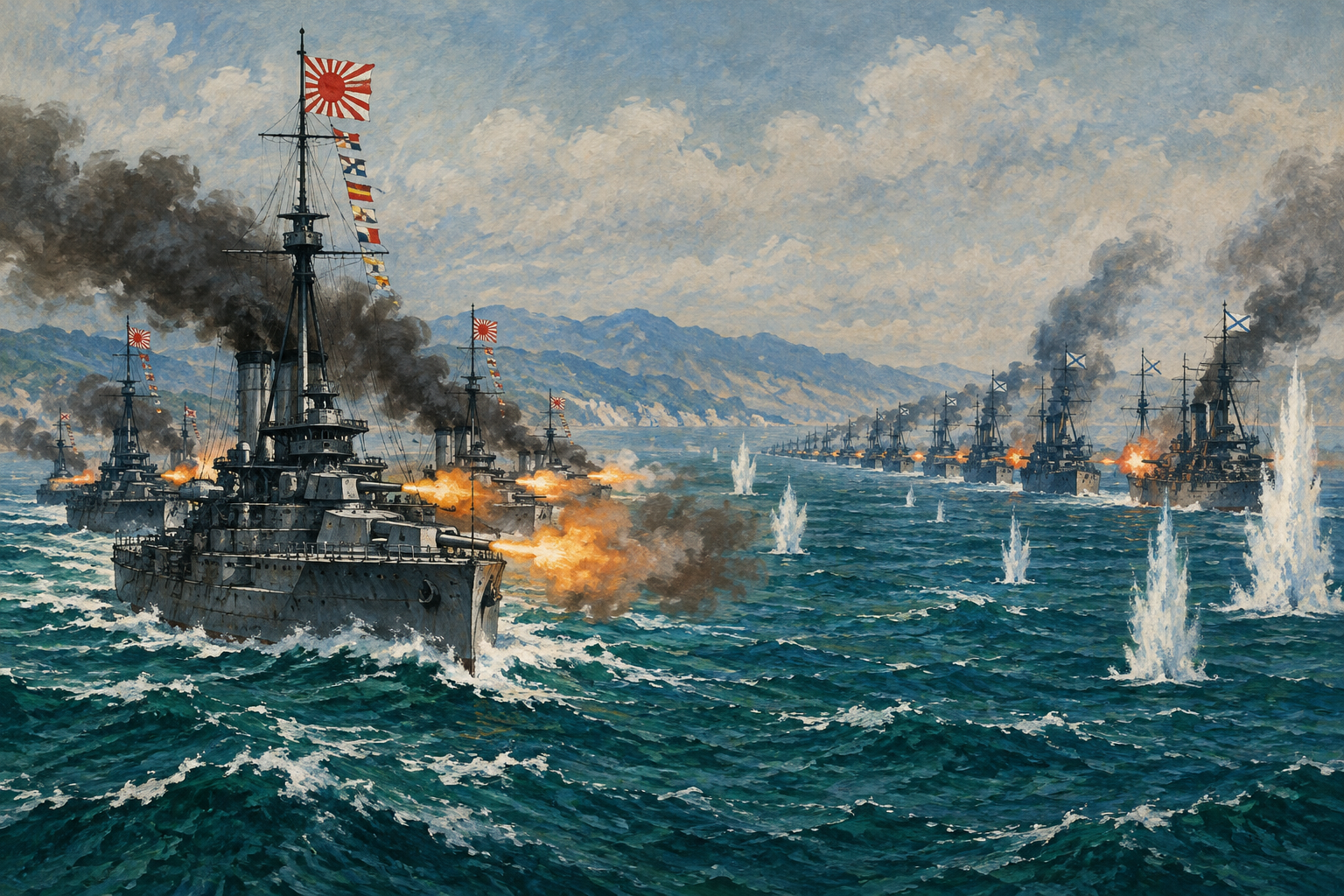
When the Russo-Japanese War began in February 1904, Japan sent troops into Korea and made the Korean government sign a protocol promising cooperation. In August a first agreement made Korea accept financial and diplomatic advisers chosen by Japan.
1905: the powers step aside
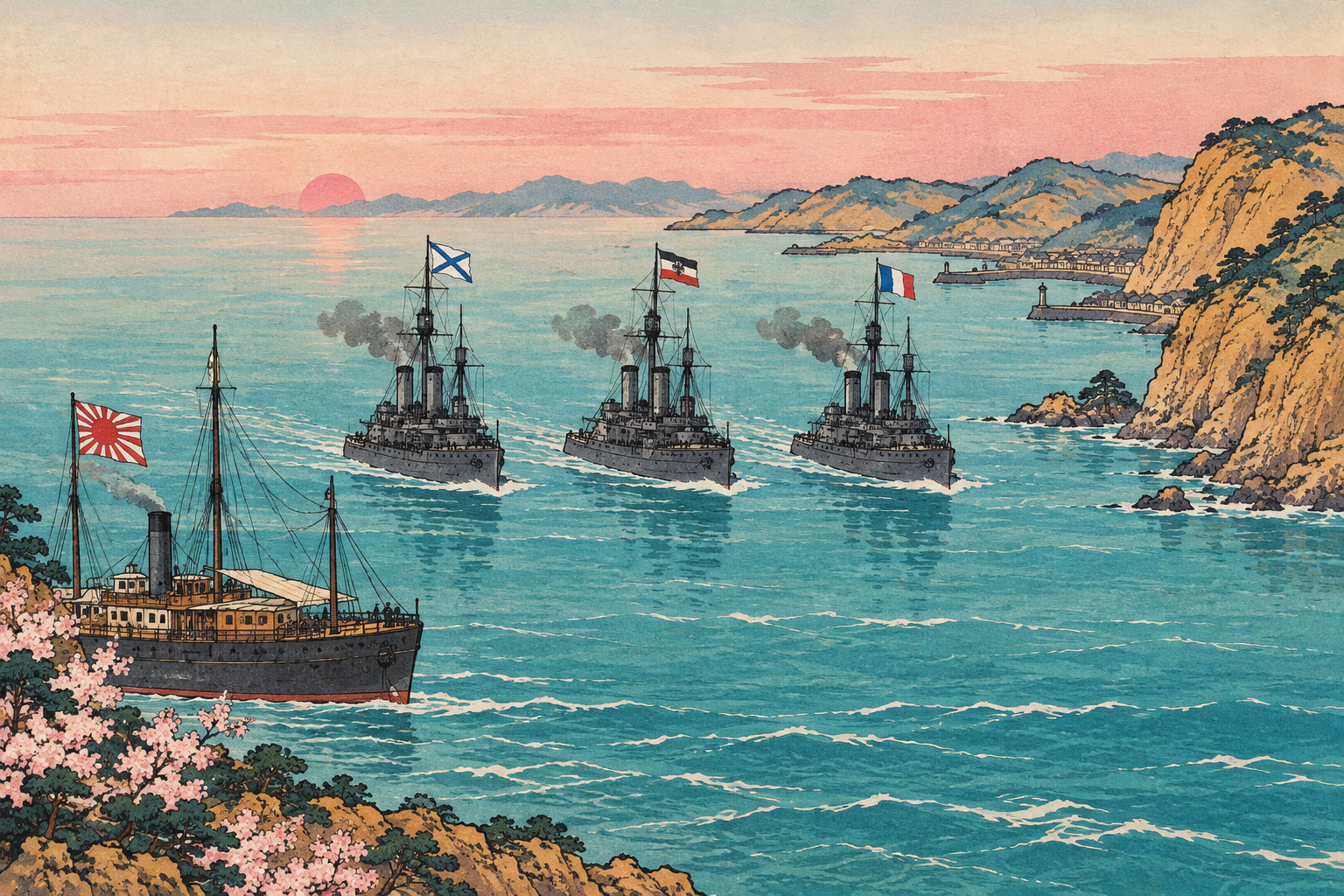
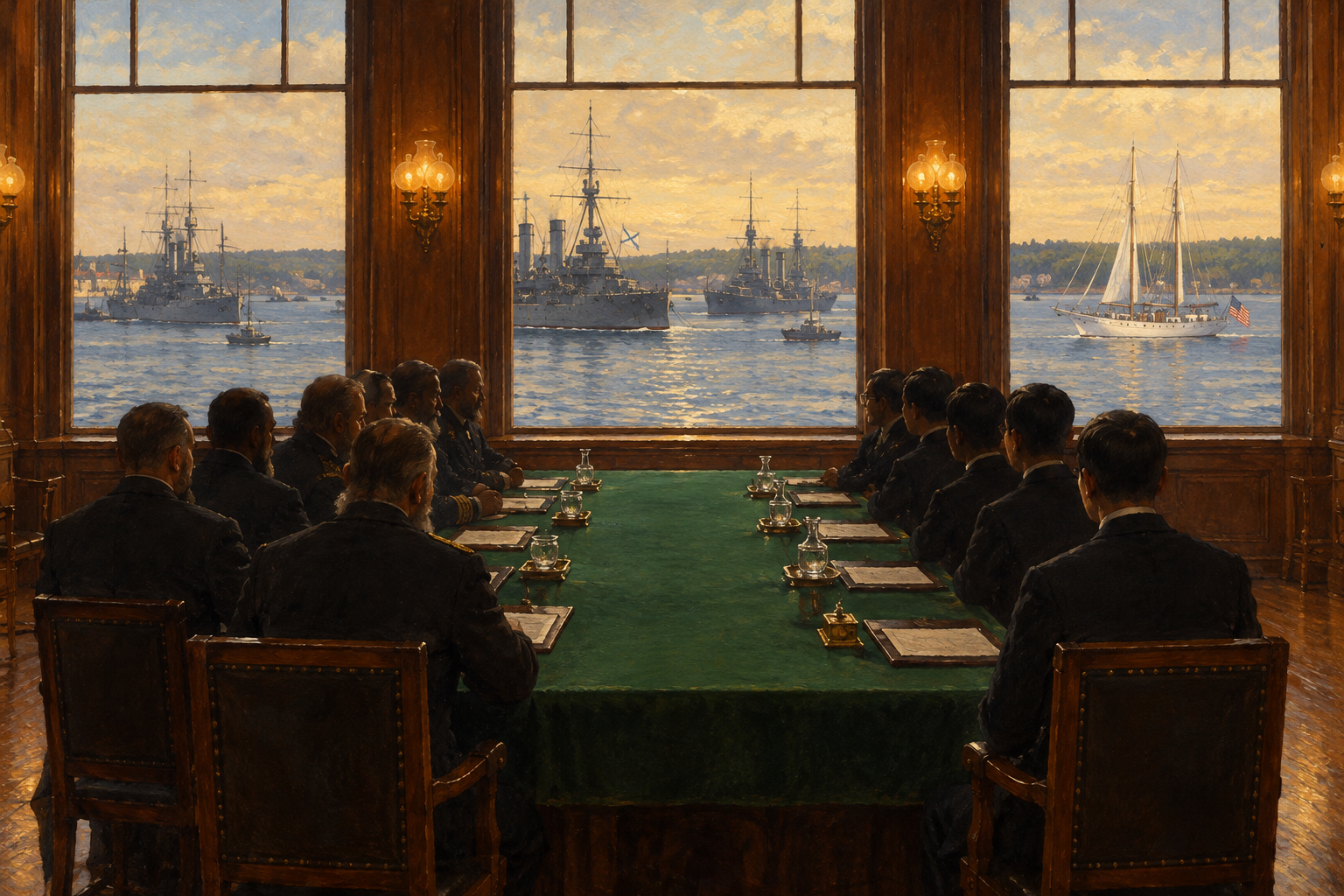
Japan also prepared the diplomatic ground. In July 1905 US Secretary of War William Taft and Prime Minister Katsura Tarō talked in Tokyo; the record of their talks showed that the United States would not interfere in Korea while Japan respected US rule in the Philippines. It was a memorandum, not a treaty. In August the renewed Anglo-Japanese Alliance recognised Japan’s leading interests in Korea, and in September the Treaty of Portsmouth, which ended the war with Russia, did the same.
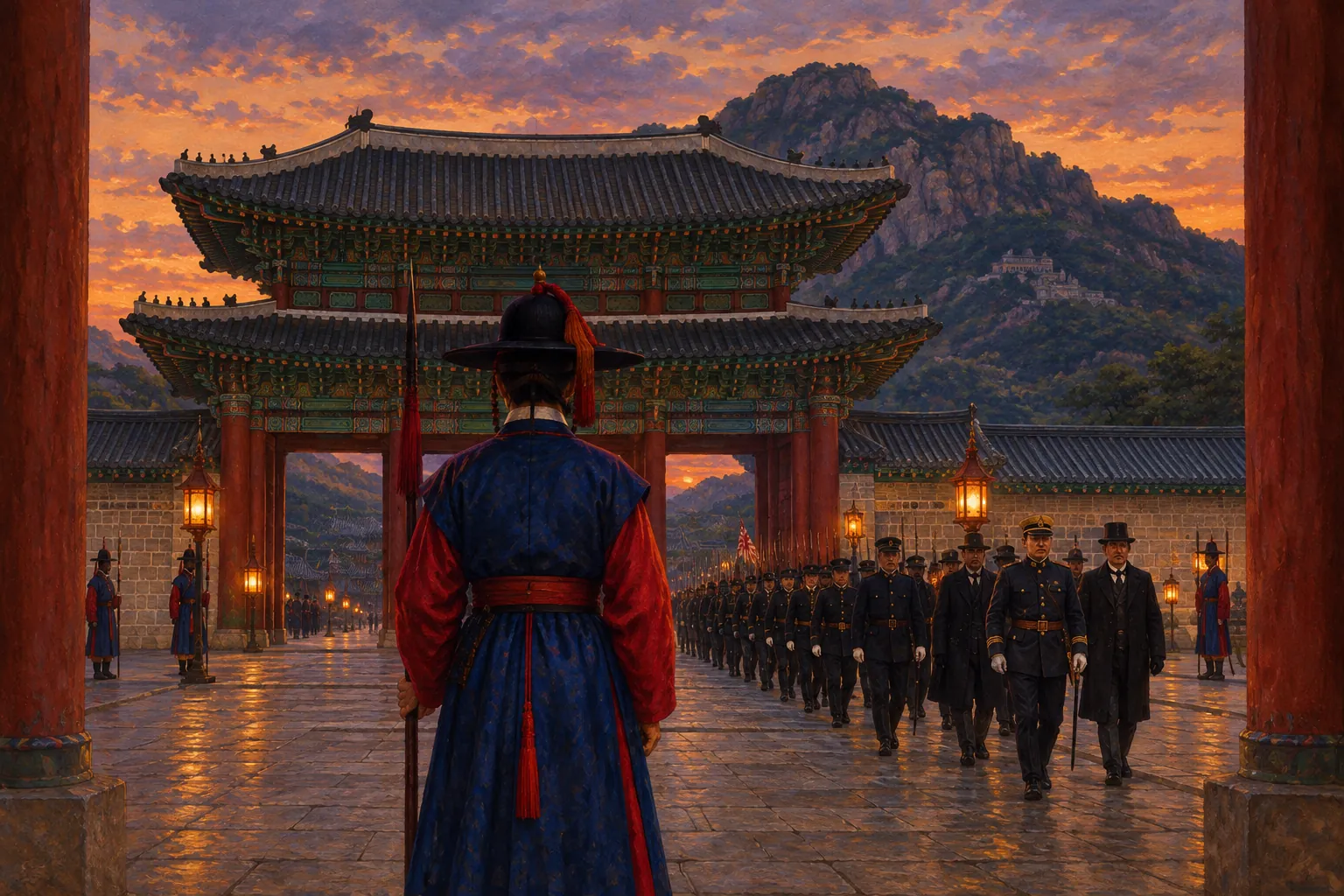
On 17 November 1905 Japan then obtained the Japan–Korea Agreement of 1905, often called the Eulsa Treaty. Japanese troops were stationed around the Korean palace while the talks went on. Korea’s foreign affairs passed to Japan, and a Japanese Resident-General was to sit in Seoul; the first was Itō Hirobumi. Emperor Gojong did not ratify the treaty, and the ministers who signed it were later condemned in Korea as traitors. Korean critics ever since have argued that the agreement was invalid from the start.
1907: The Hague and the army
In June 1907 Gojong secretly sent three envoys to the Second Hague Peace Conference to appeal against the 1905 treaty. The great powers refused to let them take part, because Korea’s diplomacy was now in Japanese hands. Japan used the affair to force Gojong to abdicate in favour of his son Sunjong. On 24 July a new agreement let the Resident-General direct Korea’s internal administration, and Japanese officials entered the government. In August the Korean army was disbanded. Some of its soldiers joined the “righteous armies”, guerrilla groups that fought Japanese forces in the countryside for several years. Japan suppressed them harshly.
1909–1910: the last year
In July 1909 the Japanese cabinet approved the principle of annexing Korea at a suitable time. Itō, who had resigned as Resident-General that June, is often described as the more cautious of Japan’s leaders. On 26 October 1909 he was shot dead at Harbin railway station by An Jung-geun, a Korean independence activist, who was executed in March 1910. The killing did not cause the decision, but it strengthened calls in Japan to act. In December a pro-Japanese group, the Iljinhoe, issued a statement asking for union, which Japan used as support.
In May 1910 General Terauchi Masatake took the post of Resident-General, brought in more troops and gendarmes, and tightened control of the press and public meetings. In July Japan and Russia signed another agreement that respected each other’s interests in the region. On 22 August Terauchi and Prime Minister Yi Wan-yong signed the treaty. In it, the Korean emperor handed over all rights of rule to the Japanese emperor. Sunjong lost the throne and became a Korean “King Yi” within the Japanese imperial system. The treaty was made public on 29 August. No major power protested.
Korea under Japanese rule, 1910–1945
In October 1910 the Government-General of Korea was set up in Seoul, with Terauchi as the first governor-general. Governors-general were senior military officers answerable to the Japanese emperor, and they held legislative, executive and military power. In the 1910s a gendarmerie also acted as the police, and meetings and newspapers were tightly restricted. A land survey (1910–18) registered land ownership, and some peasants who could not prove their claims lost their land. Railways, ports and schools were built, but mainly to serve Japan’s economy and rule, and Koreans had no political voice.
On 1 March 1919 a declaration of independence was read in Seoul and mass demonstrations spread across the country. This March First Movement was put down by force, but it led Japan to shift to a so-called “cultural rule” with fewer police powers and some Korean-language publications. A Korean Provisional Government was founded in Shanghai the same year.
In the 1930s and during the wars with China and the United States, Japan pushed assimilation: attendance at Shinto shrines, more Japanese in schools, and from 1940 a policy that led many Koreans to take Japanese-style family names. Many Koreans were also mobilised as workers and soldiers. Japanese rule ended with Japan’s surrender on 15 August 1945.
Was the treaty valid?
This is the main dispute. Korea’s view is that the 1905 treaty was forced under military pressure and never ratified by the emperor, so the 1910 annexation was illegal from the beginning. For a long time Japan’s government held that the treaties were concluded under the legal procedures of the time and ceased to be effective only when the Republic of Korea was established in 1948. The 1965 Treaty on Basic Relations says the old treaties are “already null and void”, but the two sides read the word “already” differently.
Japan’s prime minister Murayama Tomiichi expressed “deep remorse” and a “heartfelt apology” for colonial rule in 1995, and in 2010 Prime Minister Kan Naoto said that Koreans had been placed under colonial rule against their will. The two countries even use different words: in Japanese both 韓国併合 and 日韓併合 appear, and in Korea 29 August is remembered as a day of national humiliation.
What exams ask
- Order of events: three Japan–Korea agreements (1904, 1905, 1907) then annexation (1910). Know what each gave Japan: advisers, foreign affairs and a Resident-General, then internal affairs and the end of the army.
- Why the powers allowed it: the Taft–Katsura memorandum, the Anglo-Japanese Alliance and the Treaty of Portsmouth. Japan’s victory over Russia and the support of Britain and the United States made annexation possible.
- People: Itō Hirobumi (first Resident-General), An Jung-geun (assassin), Terauchi Masatake (last Resident-General and first governor-general), Gojong and Sunjong.
- Significance: annexation is a clear example of imperial expansion in East Asia, and the March First Movement shows how resistance reshaped colonial policy.
Read next
- Qing China, Japan and the West (1793–1912): the overview of East Asia in which Korea’s fate fits.
- The First Sino-Japanese War (1894–95): the war that removed China from Korea and opened the way for Japan.
- The Meiji Restoration in World History: how Japan built the state that later took Korea.