In five minutes
The Treaty of Shimonoseki was the peace settlement that ended the First Sino-Japanese War (1894–95). Japan and Qing China signed it on 17 April 1895 in the port city of Shimonoseki, at the western tip of Honshu. Its main terms were simple: China gave up its claim over Korea, handed over Taiwan, the Penghu Islands and the Liaodong Peninsula, paid an indemnity of 200 million silver taels, and opened more ports to Japanese trade. It is the clearest single document showing how the balance of power in East Asia flipped in 1895. It belongs to the larger story told in Qing China, Japan and the West (1793–1912).
- Signed: 17 April 1895, at the Shunpanro inn, Shimonoseki
- Negotiators: Ito Hirobumi and Mutsu Munemitsu for Japan; Li Hongzhang for the Qing
- Ratified: 8 May 1895, at Chefoo (now Yantai)
- Outcome: Japan won territory, money and trading rights; Liaodong was soon returned after pressure from three powers
Why the war ended in early 1895
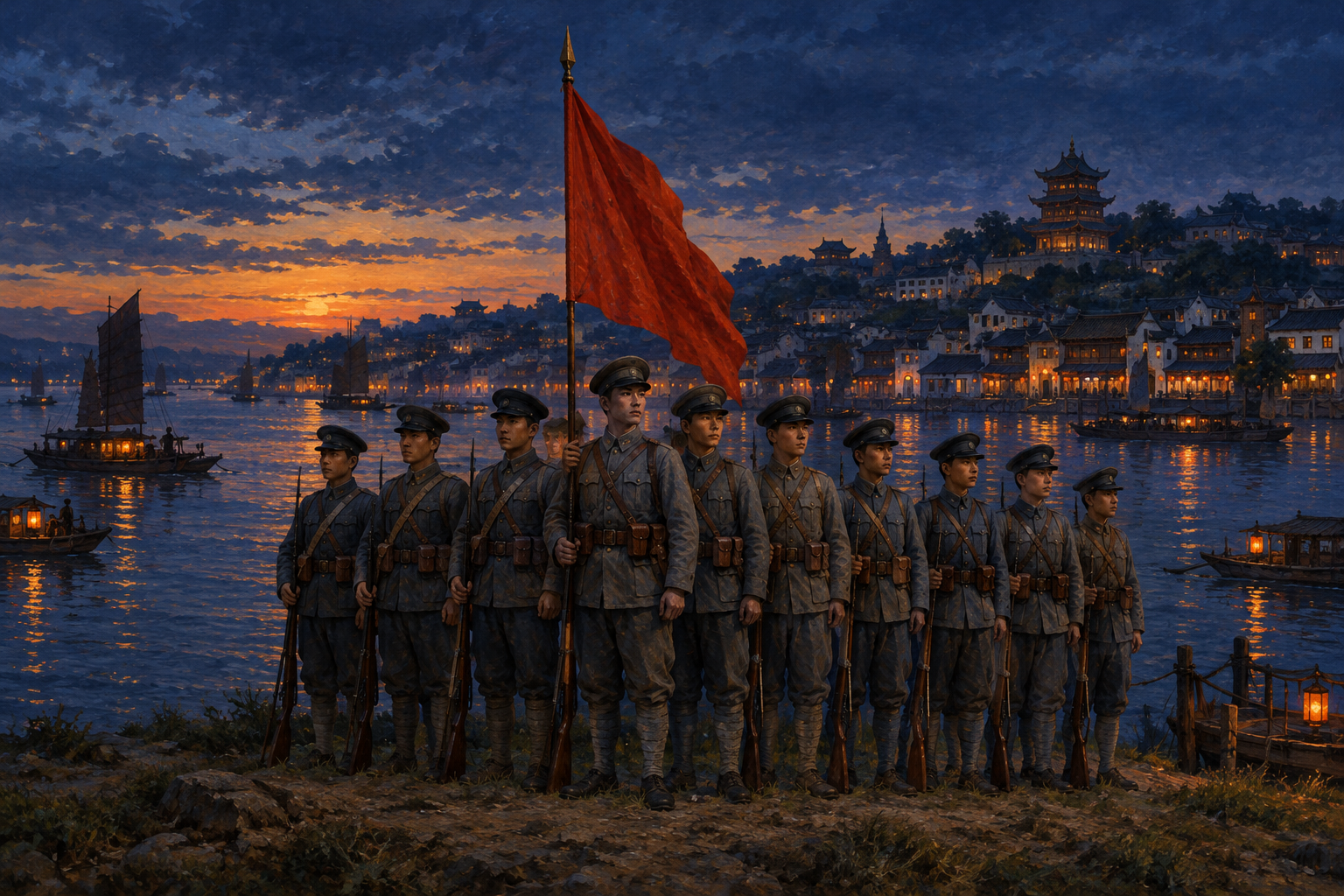
Japan declared war on China on 1 August 1894, after the two countries clashed over influence in Korea. The fighting went Japan's way almost everywhere. Its army won at Pyongyang in September 1894, its navy defeated the Chinese fleet off the Yalu River, and Port Arthur fell in November. In February 1895 Japanese forces took Weihaiwei in Shandong, and the Beiyang Fleet, the pride of the Qing navy, surrendered. For more on the fighting, see The First Sino-Japanese War (1894–95).
By then the Qing court wanted peace. A first mission, led by Zhang Yinhuan and Shao Youlian, reached Hiroshima in early February 1895, but Japan refused to talk with envoys it judged to lack full powers. The court then turned to its most senior statesman, Li Hongzhang, who had built the very fleet that had just been destroyed. He was in his seventies, and he was given the authority to sign.
The talks at Shimonoseki
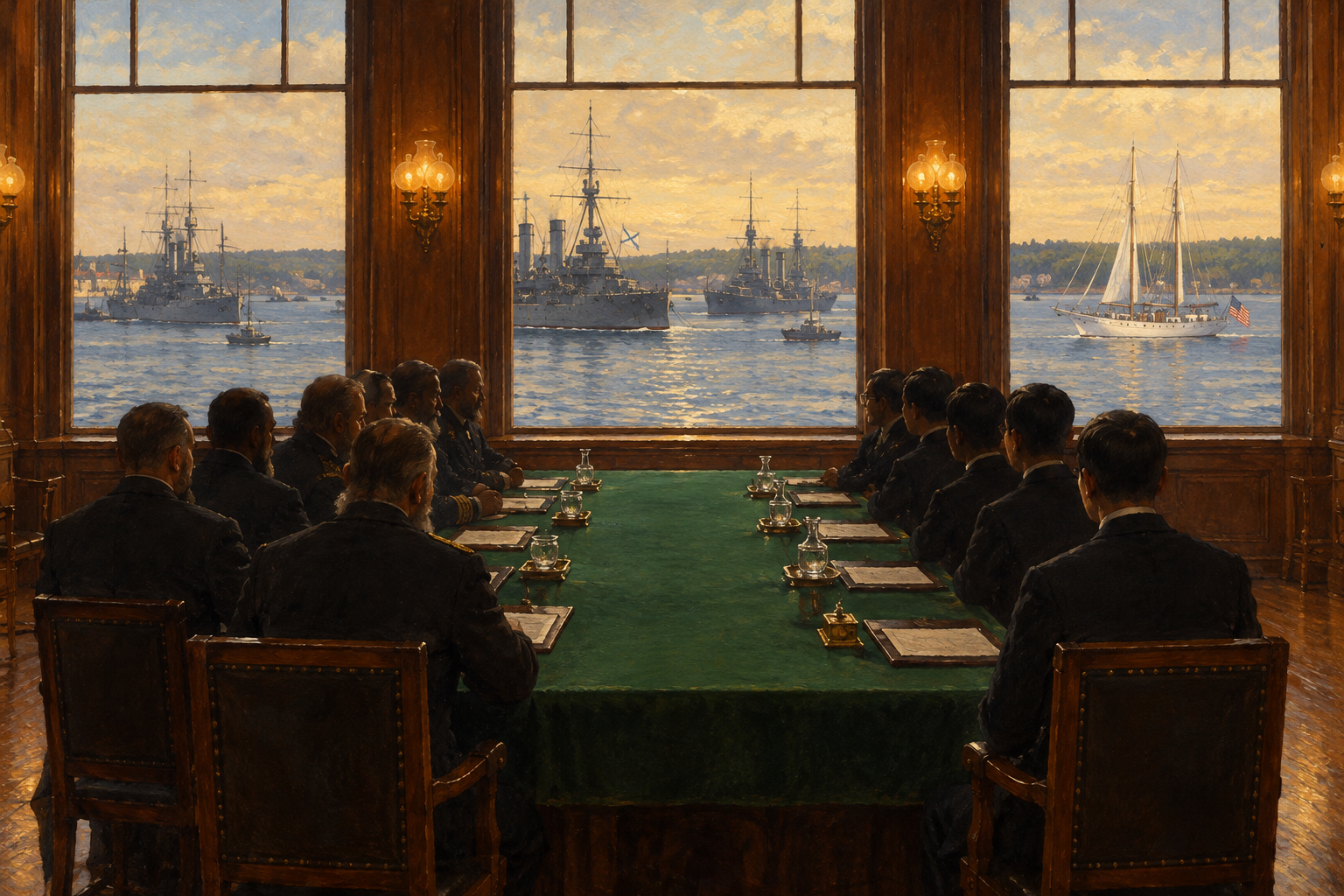
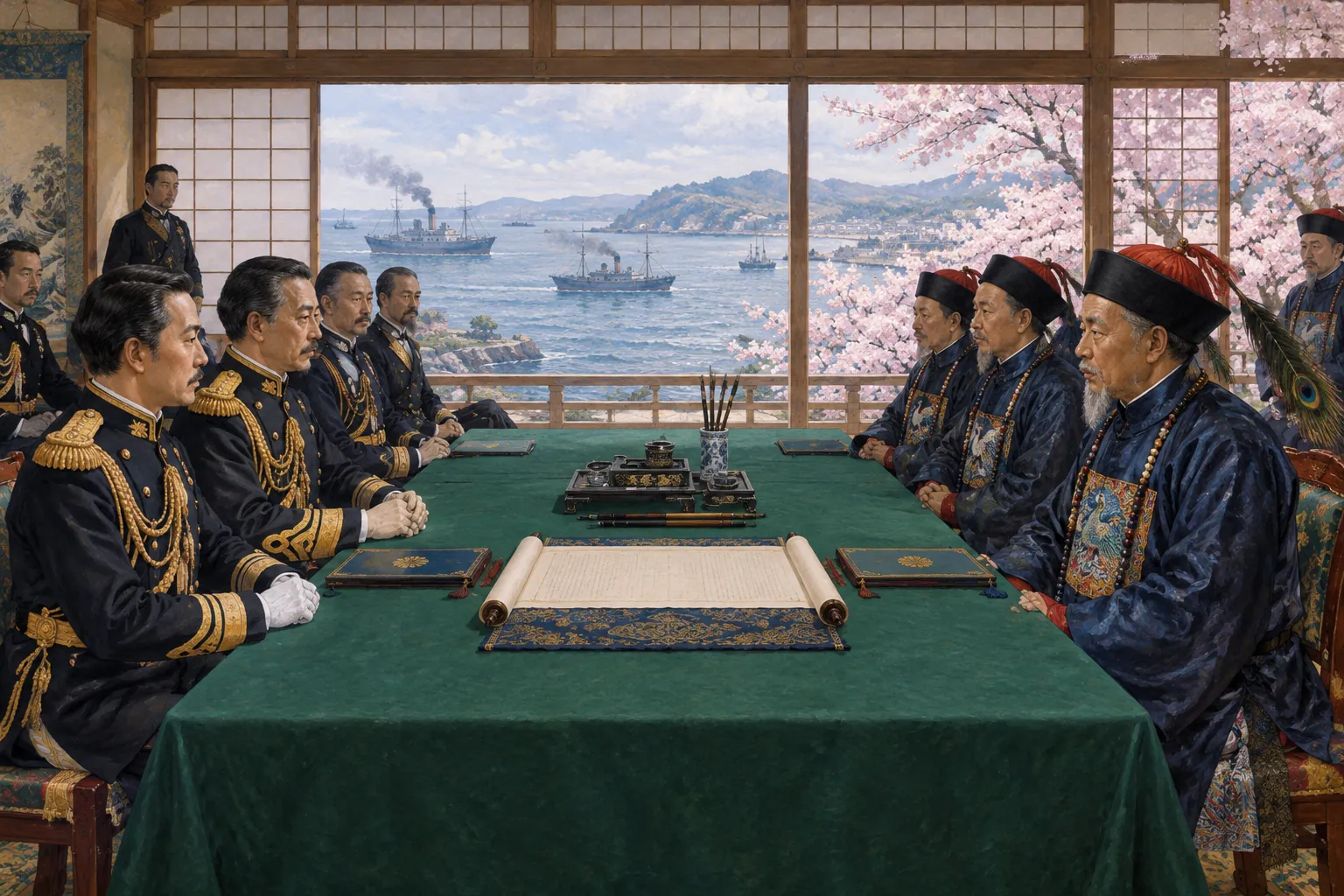
Talks opened on 20 March 1895 at the Shunpanro, a seaside inn that is still a well-known site in the city. Japan was represented by Prime Minister Ito Hirobumi and Foreign Minister Mutsu Munemitsu. Japan was negotiating from strength: its armies were also preparing to move on Beijing, and it was ready to ask for a great deal.
On 24 March, after the third session, a Japanese man named Koyama Toyotaro shot Li Hongzhang in the face as his sedan chair left the venue. Li survived. The attack embarrassed Tokyo, which feared that foreign powers would blame Japan, and it quickly agreed to a ceasefire in the main war zones. Li's wound did not stop the talks, and he returned to the table once he had recovered enough. Japan's first demands stayed largely in place. The treaty was signed on 17 April.
What the treaty said
The text has eleven articles. The most important are these.
- Korea. China recognised Korea as a fully independent state and gave up the old tributary ties. In practice this removed China's influence on the peninsula and opened it to Japan.
- Territory. China ceded the southern part of Fengtian province, including the Liaodong Peninsula, as well as Taiwan and the Penghu Islands, which lie between Taiwan and the mainland.
- Indemnity. China agreed to pay 200 million Kuping taels of silver, in installments over several years. Japan was allowed to hold Weihaiwei as a guarantee until payment was in hand.
- New ports. Shashi, Chongqing, Suzhou and Hangzhou were opened to Japanese trade, and Japanese ships gained rights to travel on the upper Yangtze and on routes to Suzhou and Hangzhou.
- Trade and industry. Japan received most-favoured-nation treatment and the right to set up factories in the treaty ports. Other powers could then claim the same rights, so the clause gave a wider opening to foreign industry in China.
- Residents. People living in the ceded areas had two years to sell their property and leave, or else they would be treated as Japanese subjects.
For Japan, the money mattered as much as the land. The indemnity was several times the government's yearly budget. Much of it was spent on the army and navy, and part of it supported the move to the gold standard in 1897 and the building of the Yawata Steel Works.
The Triple Intervention
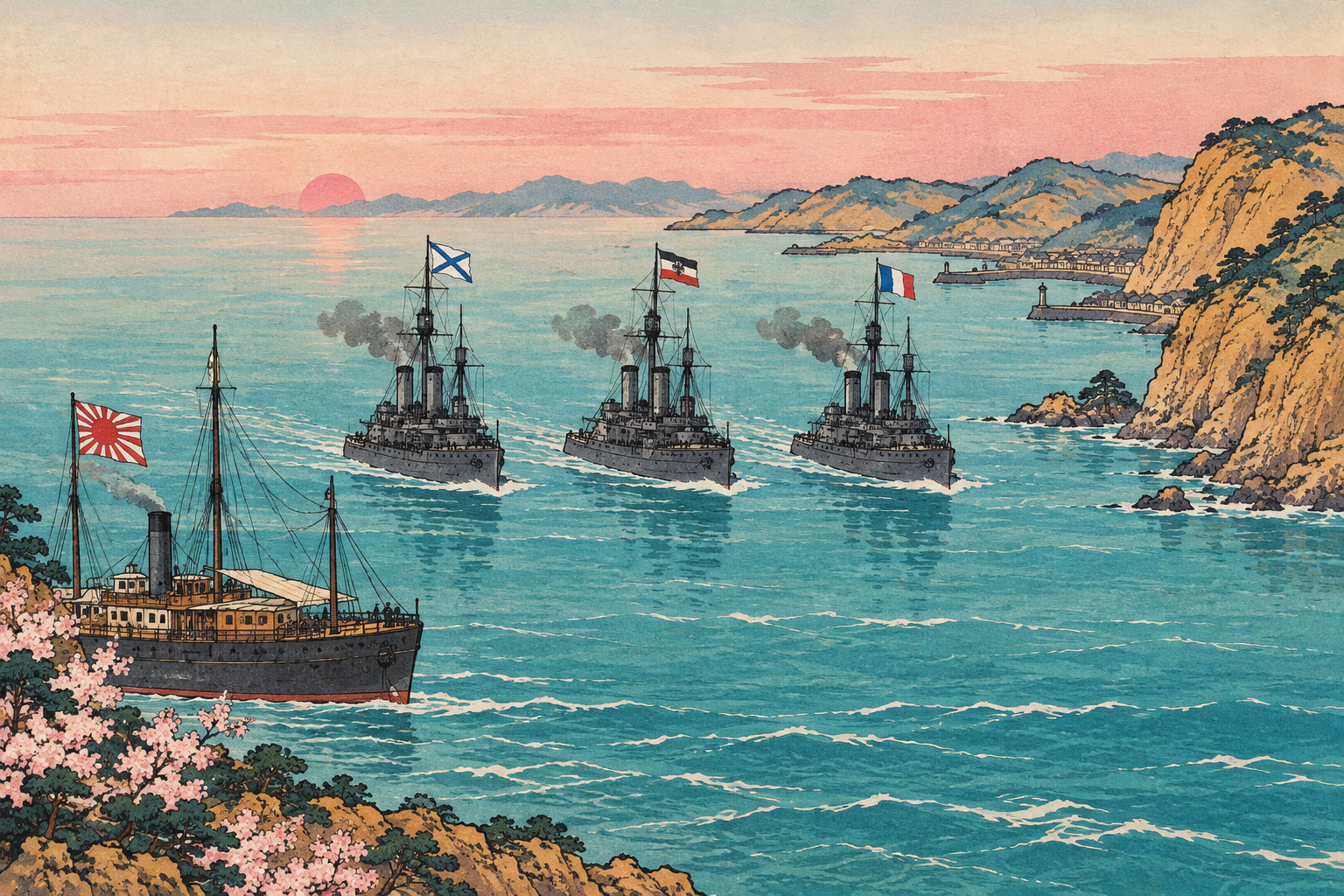
Six days after the signing, on 23 April 1895, Russia, Germany and France each told Japan that holding the Liaodong Peninsula would threaten Beijing and make Korean independence meaningless. They advised Japan to give it back. Russia, which wanted its own influence in Manchuria, led the move. Japan had no way to fight three great powers on top of a long war, and on 5 May it agreed to return the peninsula. In a separate agreement on 8 November 1895, China paid an additional 30 million taels in return.
The episode left deep resentment in Japan. The slogan gashin-shotan, meaning to endure hardship to win revenge, spread through the press and public. Three years later, in 1898, Russia itself leased Port Arthur and the southern tip of Liaodong from China. That fed the rivalry that led to the Russo-Japanese War of 1904–05.
What changed after 1895
Taiwan. The people of Taiwan were not asked. In May 1895 local leaders declared a short-lived Republic of Formosa, but Japanese troops landed late that month and took the island's capital, Tainan, in October. Taiwan then remained a Japanese colony until 1945. Taiwan's later status is a separate and still contested question.
Japan. The war and treaty gave Japan its first overseas colony, a large payment and a new standing in the eyes of Western powers. Japan had already revised its unequal treaties with Britain in 1894. The victory in 1895 confirmed that it was now a country to be taken seriously.
China. The defeat by a country that had long been seen as smaller exposed the weakness of the Qing's modernisation effort. Foreign powers then rushed to claim leases and spheres of influence in China, including Port Arthur, Weihaiwei, Jiaozhou Bay and Guangzhou Bay in 1898. Reformers argued that deeper reform was needed, which led to the Hundred Days' Reform of 1898.
Korea. Korea's independence on paper did not protect it. Japan, Russia and others competed for control over it, and in 1897 the Joseon king proclaimed the Korean Empire. Japan later made Korea a protectorate in 1905 and annexed it in 1910.
What exams ask
In AP-style questions, the treaty is used as evidence of Japan's rise and China's decline, and of the way imperial powers competed in East Asia. Be ready to connect these points:
- The treaty ended the First Sino-Japanese War and ended China's role as Korea's suzerain.
- Territorial terms: Taiwan, Penghu and the Liaodong Peninsula (the last returned within months).
- The Triple Intervention by Russia, Germany and France shows that Japan's power still had limits in 1895.
- After 1895, the scramble for concessions in China sped up.
In a comparison question, set it beside the Treaty of Nanjing (1842). In 1842 a Western power forced open Qing ports. In 1895 an Asian power did the same, and used the same tools: indemnity, territory and trade privileges.
Read next
- The First Sino-Japanese War (1894–95): the campaigns that put Japan in a position to dictate these terms.
- The Meiji Restoration in World History: how Japan built the state and army that won in 1895.
- Qing China, Japan and the West (1793–1912): the full era this treaty belongs to.