In five minutes
The First Sino-Japanese War (1894–95) was fought between Qing China and Meiji Japan over who would have influence in Korea. It lasted about nine months. Japan's modern army and fleet beat the larger but poorly coordinated Qing forces at Pyongyang, in the Yellow Sea, and at Port Arthur and Weihaiwei. In the Treaty of Shimonoseki, signed on 17 April 1895, China recognised Korea's independence, handed over Taiwan and the Penghu Islands, and agreed to pay a very large indemnity. This page belongs to the hub Qing China, Japan and the West (1793–1912).
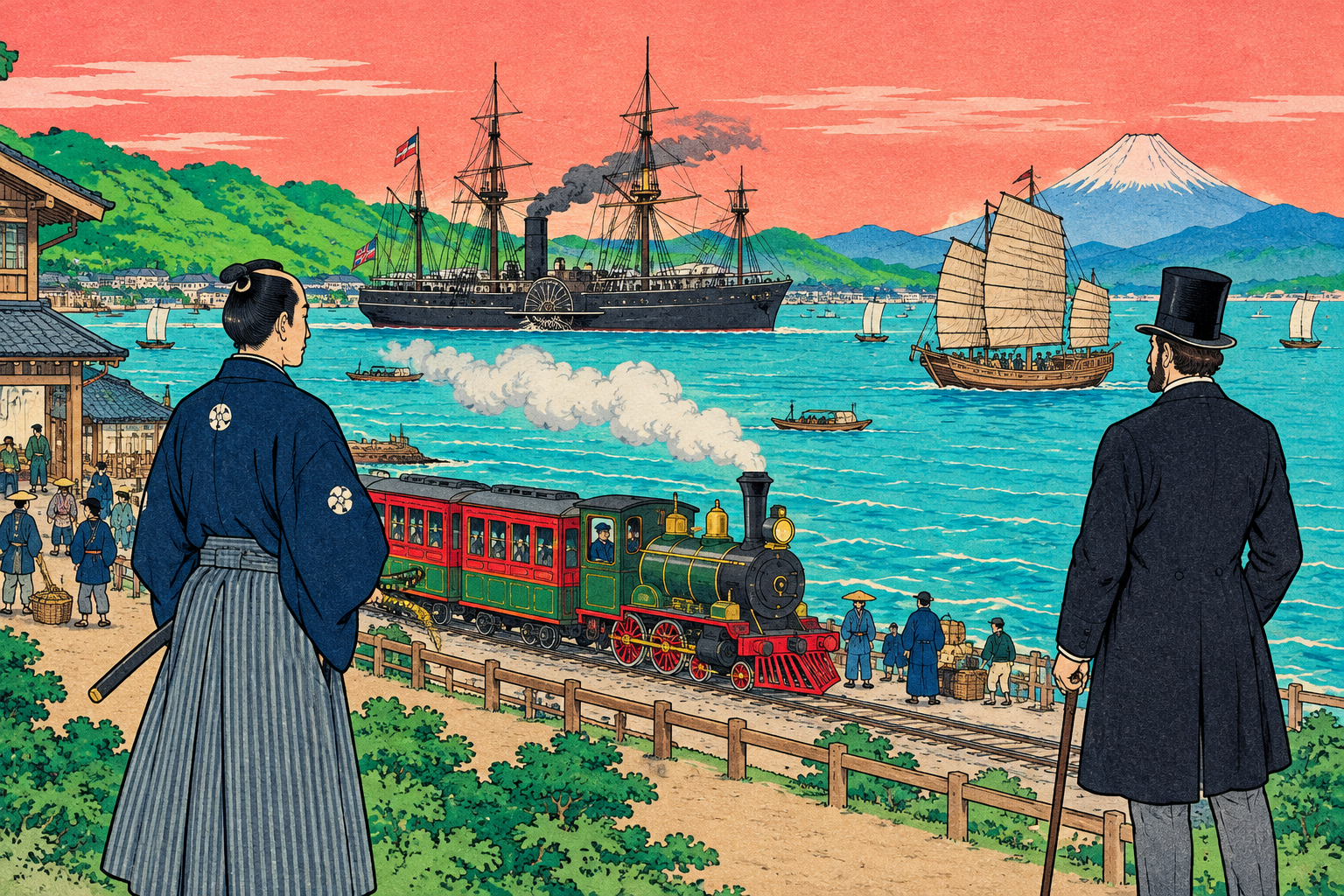
The result surprised many observers. Forty years earlier Japan had been a closed country, while China was still seen as the great power of East Asia. After 1895 Japan was treated as a rising imperial state, and the idea that a weak Qing empire could be carved up by foreign powers suddenly looked very real.
Causes: why did the war start?
Korea was the centre of the dispute. For centuries the Joseon kingdom had been a tributary state of China: it sent envoys to Beijing and accepted Chinese recognition of its kings, but governed itself. After the Meiji Restoration, Japan wanted Korea to be independent of China. Part of this was principle, and part of it was fear: a peninsula controlled by a hostile great power would point straight at Japan. In 1876 Japan forced Korea to sign the Treaty of Ganghwa, which opened ports and described Korea as an independent state, a description Beijing did not accept.
Inside Korea the court was split between reformers who looked to Japan and conservatives who relied on China. Two crises in the 1880s, a soldiers' riot in 1882 and a failed reformers' coup in 1884, brought both Chinese and Japanese troops into Seoul. To avoid a direct clash, Li Hongzhang and Itō Hirobumi signed the Tianjin Convention in 1885. Each side promised to tell the other before sending troops to Korea and to withdraw them when order returned. Nine years later this agreement became the trigger for war.
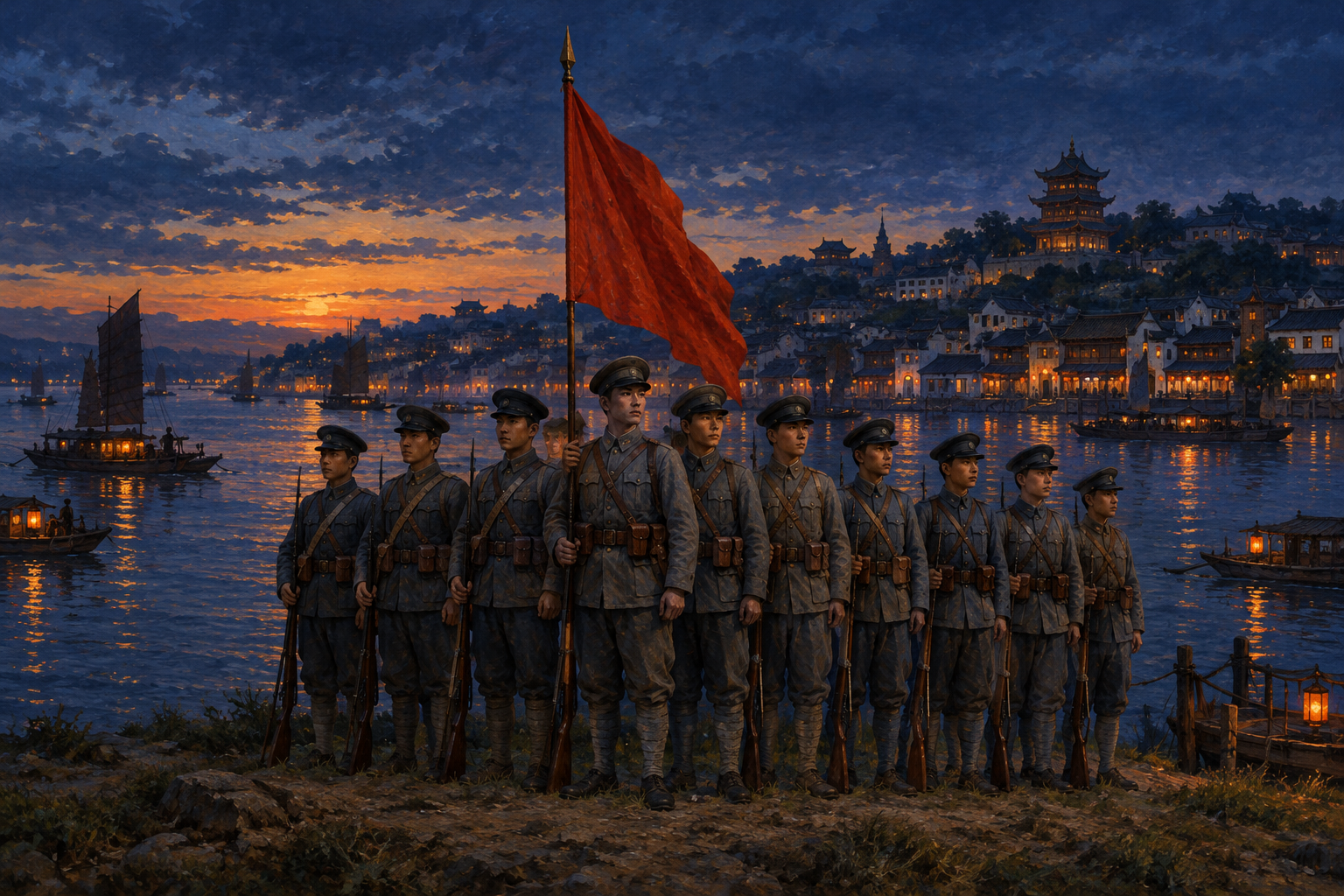
Behind the Korean question lay a difference in strength and organisation. Japan had a written constitution from 1889, a conscript army trained on European models, and a navy with modern quick-firing guns. China had far more people and money, but its forces were split among regional commanders. Li Hongzhang, the governor-general who ran the Beiyang Army and Beiyang Fleet, carried much of the burden himself, and the fleet was short of funds and standard ammunition. Russia's plan for a railway across Siberia added to Japan's worry that Korea might fall under a third power if Japan waited.
The immediate spark was a Korean peasant rising. In spring 1894 the Donghak movement, which opposed corrupt officials and foreign influence, spread through the south. In early June the Korean government asked Qing China for help, and China sent a couple of thousand soldiers to Asan, informing Japan as the Convention required. Japan answered by sending a much larger force. The rebels soon agreed to a truce, so both sides could have gone home. Instead Japan proposed that the two countries reform Korea together. China refused, and Japan decided to stay.
What happened
Seoul and the first shots (July 1894)
On 23 July Japanese troops entered the royal palace in Seoul and put a pro-Japanese government in place. That government then asked Japan to drive out the Chinese soldiers. On 25 July Japanese cruisers met Chinese ships off Pungdo island and opened fire before any declaration of war. The same day they sank the Kowshing, a British-owned steamer carrying Chinese troops, and about a thousand men were lost. Britain protested, but legal experts accepted that Japan had acted within the rules of war. Both governments formally declared war on 1 August.
Pyongyang and the Yalu (September 1894)
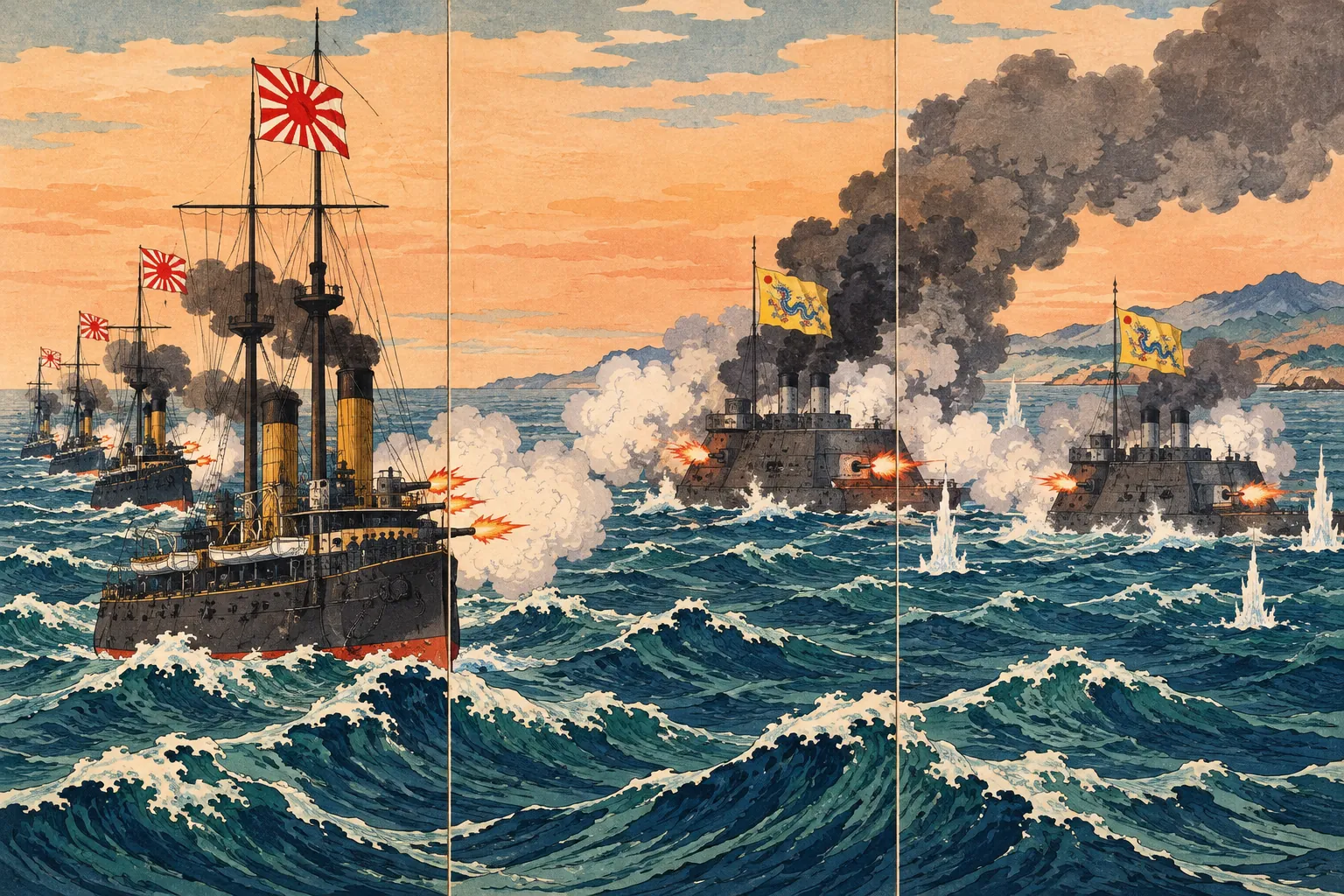
Japanese armies closed in on Pyongyang, where Chinese forces had gathered. On 15 September the Chinese garrison broke and retreated north. Two days later the two fleets met near the mouth of the Yalu River, in what is called the Battle of the Yalu River or the Battle of the Yellow Sea. The Beiyang Fleet under Admiral Ding Ruchang had two large German-built ironclads, the Dingyuan and the Zhenyuan. The Japanese Combined Fleet under Itō Sukeyuki was faster and fired more quickly. Japan lost no ships, China lost several, and the Beiyang Fleet withdrew to its base at Weihaiwei. From then on Japan controlled the sea routes it needed to supply its armies.
Into Manchuria: Port Arthur (October–November 1894)
In late October Yamagata Aritomo's First Army crossed the Yalu into Manchuria, while Ōyama Iwao's Second Army landed on the Liaodong Peninsula. Port Arthur, China's main naval base, fell on 21 November. Foreign correspondents reported that Japanese troops killed many civilians in the following days. Historians still debate the scale, but the reports damaged Japan's image abroad and the government promised stricter discipline.
Weihaiwei and peace talks (January–March 1895)
In January 1895 Japanese forces landed in Shandong and took the forts around Weihaiwei, then attacked the remaining Chinese ships trapped in the harbour. Ding Ruchang surrendered the fleet and took his own life on 12 February. Li Hongzhang was sent to Japan to ask for peace. On 24 March, in Shimonoseki, a Japanese man shot and wounded him. The incident embarrassed Tokyo, which agreed to a ceasefire, and talks moved forward.
The Treaty of Shimonoseki (17 April 1895)
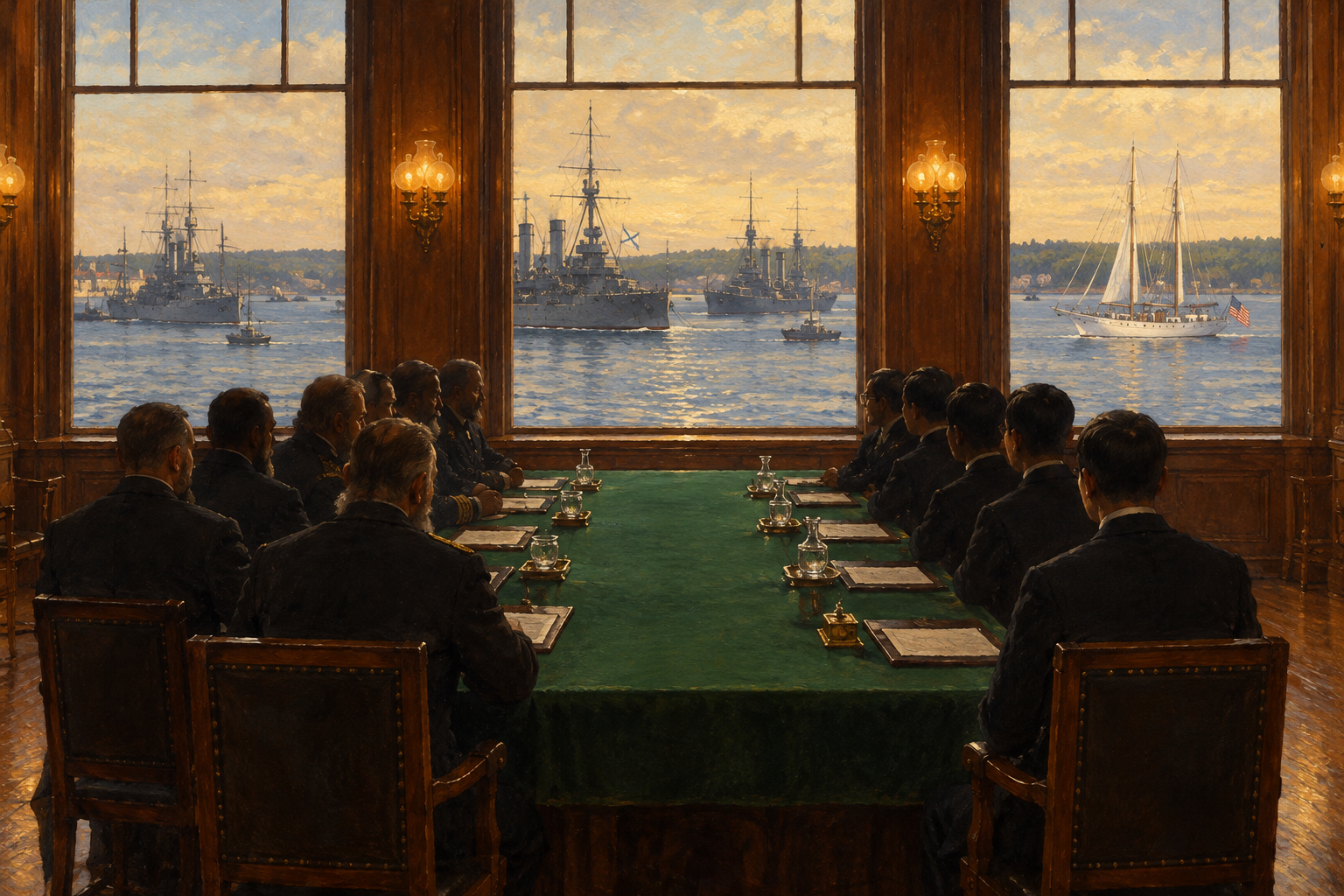
Itō Hirobumi and Foreign Minister Mutsu Munemitsu negotiated for Japan, and Li Hongzhang for China. The main terms were these:
- China recognised Korea as fully independent, ending its old tributary claim.
- China ceded Taiwan, the Penghu Islands and the Liaodong Peninsula to Japan.
- China paid an indemnity of 200 million silver taels, a sum several times Japan's yearly government revenue.
- China opened more ports and rivers to Japanese trade and allowed Japanese firms to operate factories in treaty ports.
Consequences
The Triple Intervention. Within a week, Russia, Germany and France advised Japan to give up the Liaodong Peninsula, which would have put Japanese power next to Russia's interests in Manchuria. Japan was not ready to fight three powers and agreed in May. China paid an extra 30 million taels in return. Many Japanese felt humiliated, and the slogan 「臥薪嘗胆」, roughly “endure hardship to prepare revenge”, spread as the public supported larger armed forces.
Taiwan. Japan took over Taiwan by force in 1895, after local resistance and a short-lived Republic of Formosa. It became Japan's first overseas colony and stayed under Japanese rule until 1945.
Korea. Korea was free from China but not free in practice. Japanese-backed reforms in 1894–95 met resistance, and in October 1895 Queen Min was killed by Japanese-linked assailants. Seeking protection, the Korean king took refuge at the Russian legation in 1896, and Korea became a contest between Japan and Russia. That rivalry led to the Russo-Japanese War of 1904–05.
China. The defeat shocked Chinese reformers. If even the Beiyang Fleet, the pride of the Self-Strengthening Movement, could be destroyed by Japan, buying Western machines was clearly not enough. The loss fed calls for political reform, which led to the Hundred Days' Reform of 1898, and it encouraged foreign powers to demand leased ports and spheres of influence. The wounds of the Taiping Rebellion decades earlier had already left the dynasty financially and politically stretched.
Japan. The indemnity helped the government expand the army and navy, build steelworks and, in 1897, adopt the gold standard. Just as important, the war ended Japan's image as a country that merely copied the West. Japan had joined the imperial powers and was now negotiating treaty revisions as an equal.
What exams ask
- Cause: the Donghak Peasant Uprising in Korea and the Tianjin Convention of 1885.
- Dates: war declared 1 August 1894; Treaty of Shimonoseki 17 April 1895.
- People: Li Hongzhang and Itō Hirobumi at the treaty talks; Mutsu Munemitsu as foreign minister.
- Terms: Korean independence, Taiwan, Penghu and Liaodong ceded, 200 million taels paid.
- Significance: the Triple Intervention, the scramble for concessions in China, Japan's rise, and the road to the Russo-Japanese War. A strong answer links the war to the earlier Meiji reforms and to the later decline of Qing authority.
Read next
- Qing China, Japan and the West (1793–1912): the hub for this topic, with the full sweep of the period.
- The Meiji Restoration in World History: how Japan built the army, navy and state that won this war.
- The Taiping Rebellion (1850–1864): why the Qing state was already weakened and in debt by 1894.