In five minutes
The Treaty of Kanagawa, signed on 31 March 1854, was the first treaty between Japan and the United States. It opened two ports, Shimoda and Hakodate, so that American ships could get coal, water and food, and it promised kind treatment for shipwrecked sailors. It did not allow regular trade. The Harris Treaty of 29 July 1858, formally a treaty of amity and commerce, went much further. It opened more ports, allowed trade and foreign residents, placed Americans under their own consuls' courts and fixed Japan's import duties by agreement.
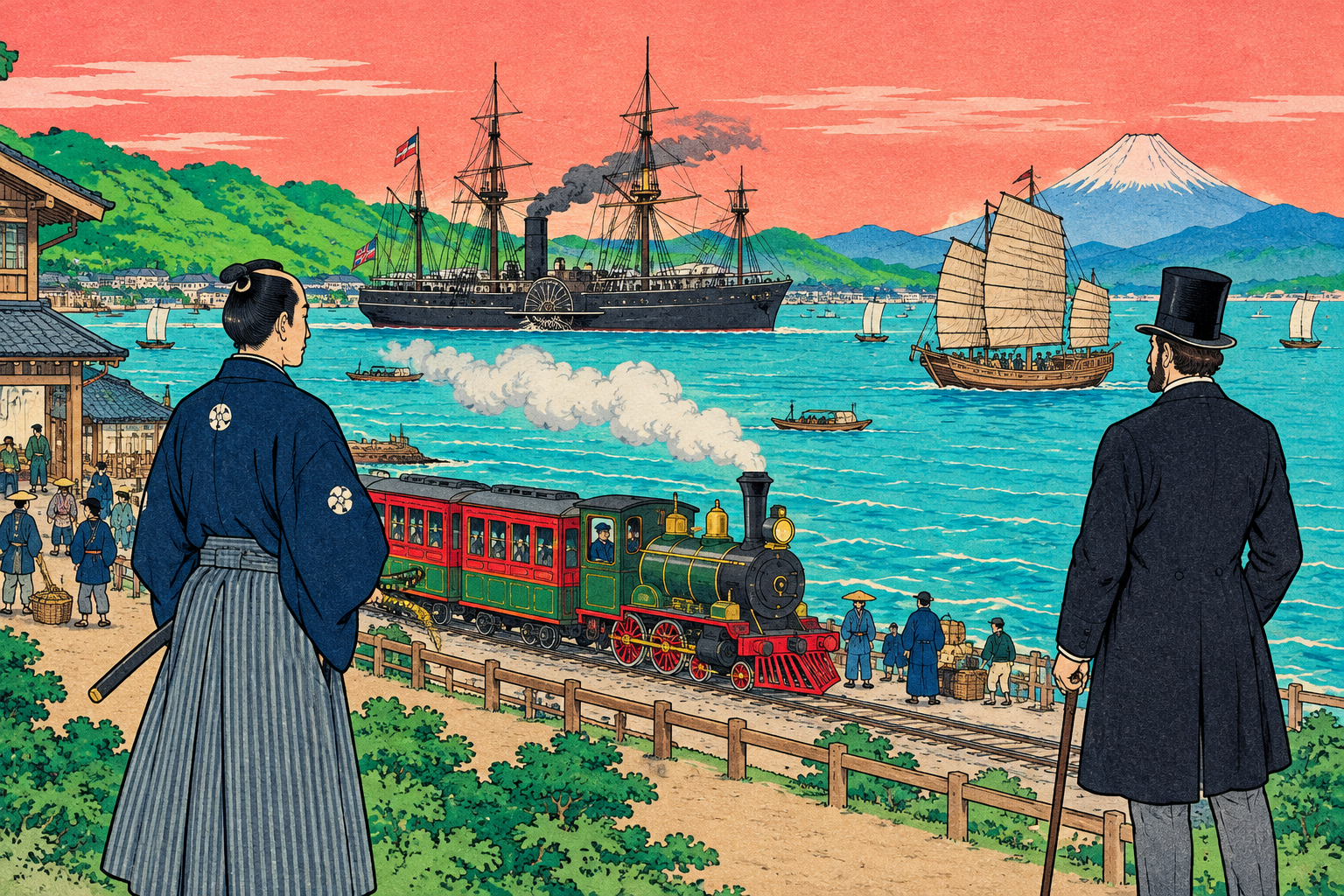
A simple way to remember it: 1854 let ships stop, 1858 let merchants stay. Both treaties belong to the wider story of Asia meeting the industrial West, which our hub article Qing China, Japan and the West (1793–1912) follows from China to Japan.
Why the United States came to Japan
For about two centuries before 1853, the Tokugawa shogunate tightly controlled foreign contact. Dutch and Chinese traders were allowed at Nagasaki, and limited links ran through Tsushima to Korea, through Satsuma to the Ryukyu Kingdom and through Matsumae to the Ainu. Ships from other countries were generally turned away. Historians often call this policy sakoku, "closed country", although many now prefer to describe it as controlled contact.
By the 1840s the situation was changing. Britain's victory over Qing China in the First Opium War (1839–42) showed Japanese officials what steam-powered warships could do. In 1842 the shogunate softened its order to drive foreign ships away and allowed them to be given fuel and water. At the same time American whalers were working the north Pacific, and steamship lines wanted coal stations on the route between California and China. A friendly port in Japan was both useful and profitable.
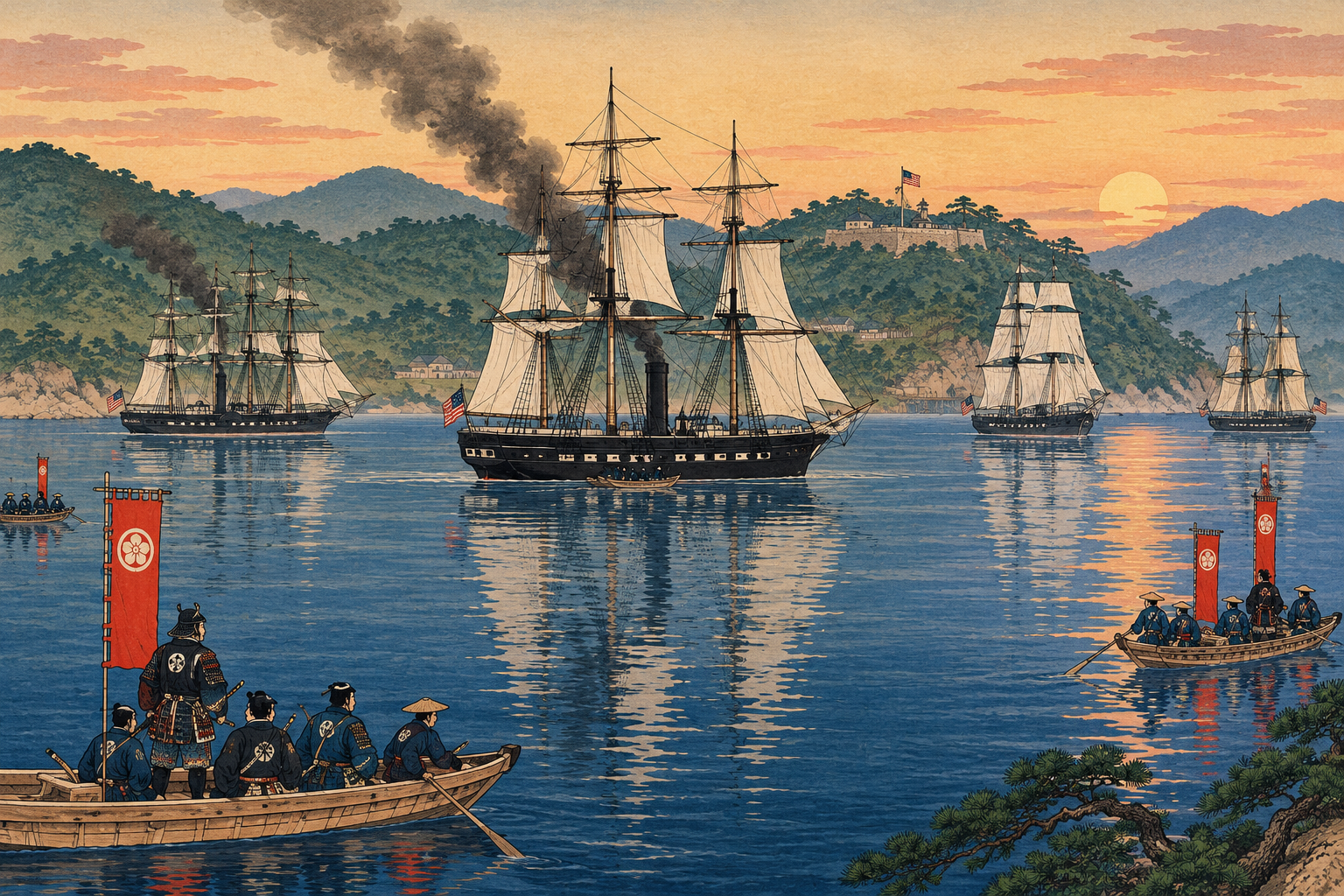
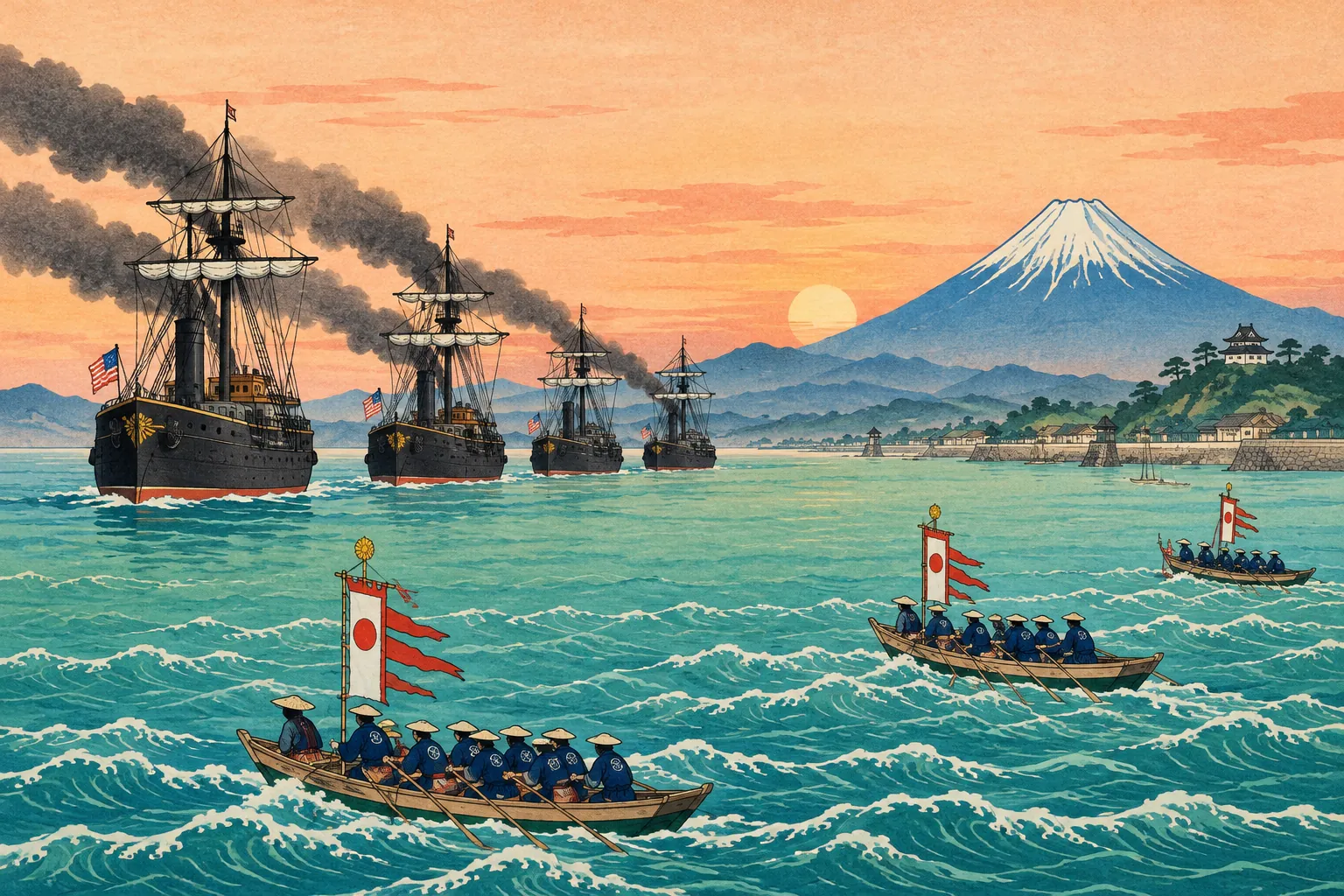
In late 1852 President Millard Fillmore sent Commodore Matthew Perry to ask for a treaty. Perry reached Uraga, at the mouth of Edo Bay, on 8 July 1853 with four ships, two of them steam-powered. He delivered Fillmore's letter, refused to go to Nagasaki, where foreigners were normally sent, and left after a few days, saying he would return the next year for an answer.
The Treaty of Kanagawa, 1854
The shogunate's chief councillor, Abe Masahiro, did something unusual: he asked daimyo and officials for their opinions. Most feared Western guns but disliked the idea of opening the country. Their answers were divided, and that division would shape Japanese politics for the next fifteen years.
Perry came back in February 1854 with a larger squadron. Talks were held at Yokohama, with Hayashi Akira leading the Japanese side, and the treaty was signed on 31 March 1854. It has twelve articles, and what it asks for is modest:
- Peace and friendship between the two countries.
- Shimoda and Hakodate open to American ships for coal, water, food and other supplies, bought through Japanese officials.
- Help for shipwrecked sailors and their kind treatment.
- A most-favoured-nation clause: any right Japan later gave to another country would also go to the United States.
- A provision allowing an American consul to live at Shimoda.
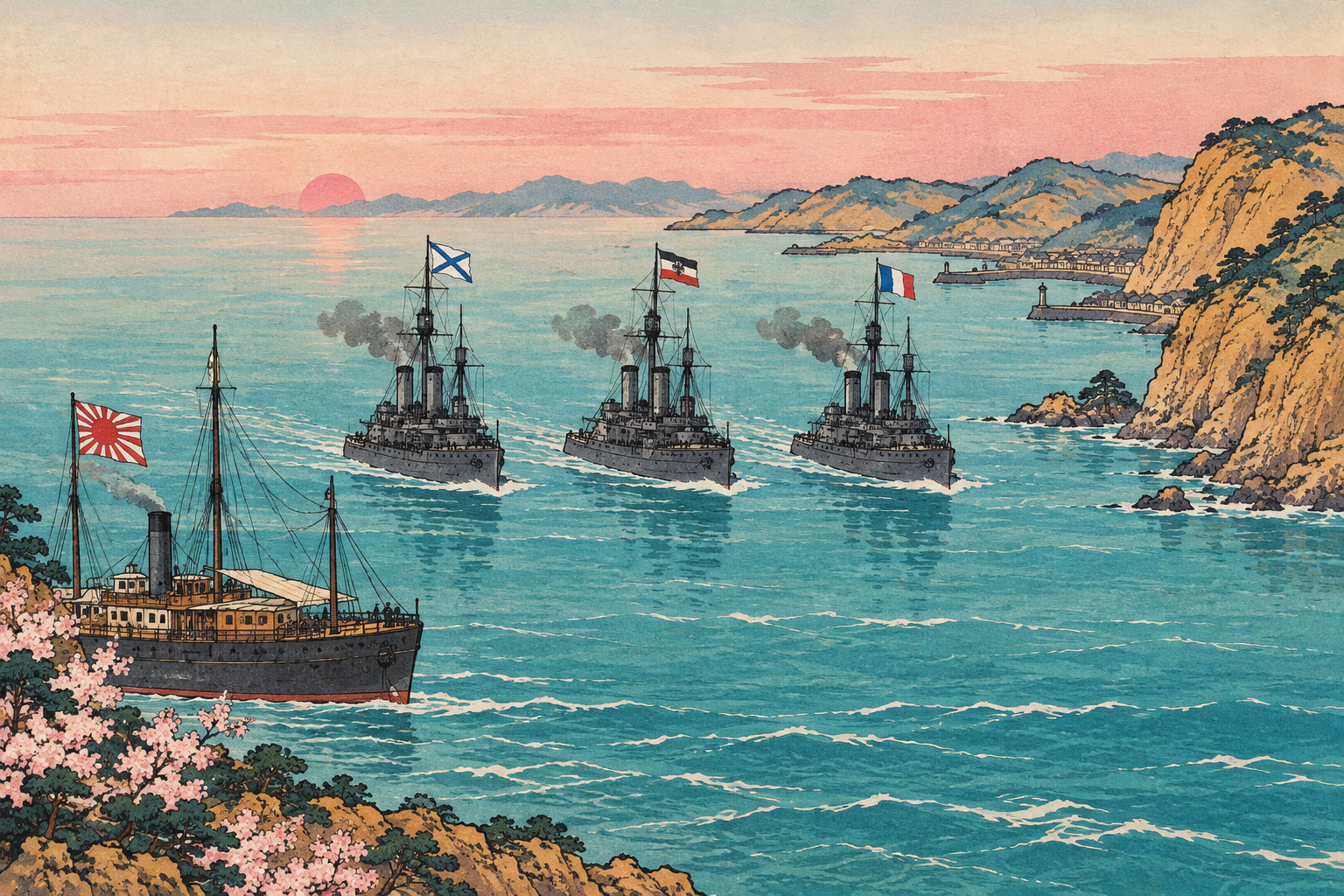
What it left out matters just as much. There was no general right to trade, no fixed tariff, and no foreign courts on Japanese soil. The shogunate could present the treaty at home as a humane arrangement for sailors in trouble rather than the end of the old order. Britain (1854), Russia (1855) and the Netherlands (1855–56) made similar agreements soon after, and the most-favoured-nation clause meant that a right won by one country could reach the others.
Townsend Harris and the road to 1858
The first American consul general in Japan was Townsend Harris, a New York merchant who reached Shimoda in August 1856. At first he was isolated and treated with suspicion. His patience paid off in 1857, when he signed a further convention at Shimoda that gave Americans more rights, including residence at Shimoda and Hakodate. In December 1857 he was received by the shogun Tokugawa Iesada in Edo.
Harris's main argument was timing. Britain and France were fighting China again in the Second Opium War, also called the Arrow War, and he warned that their fleets would soon turn to Japan with harsher demands. A treaty with the United States, he said, would be gentler and could serve as a model for the others.
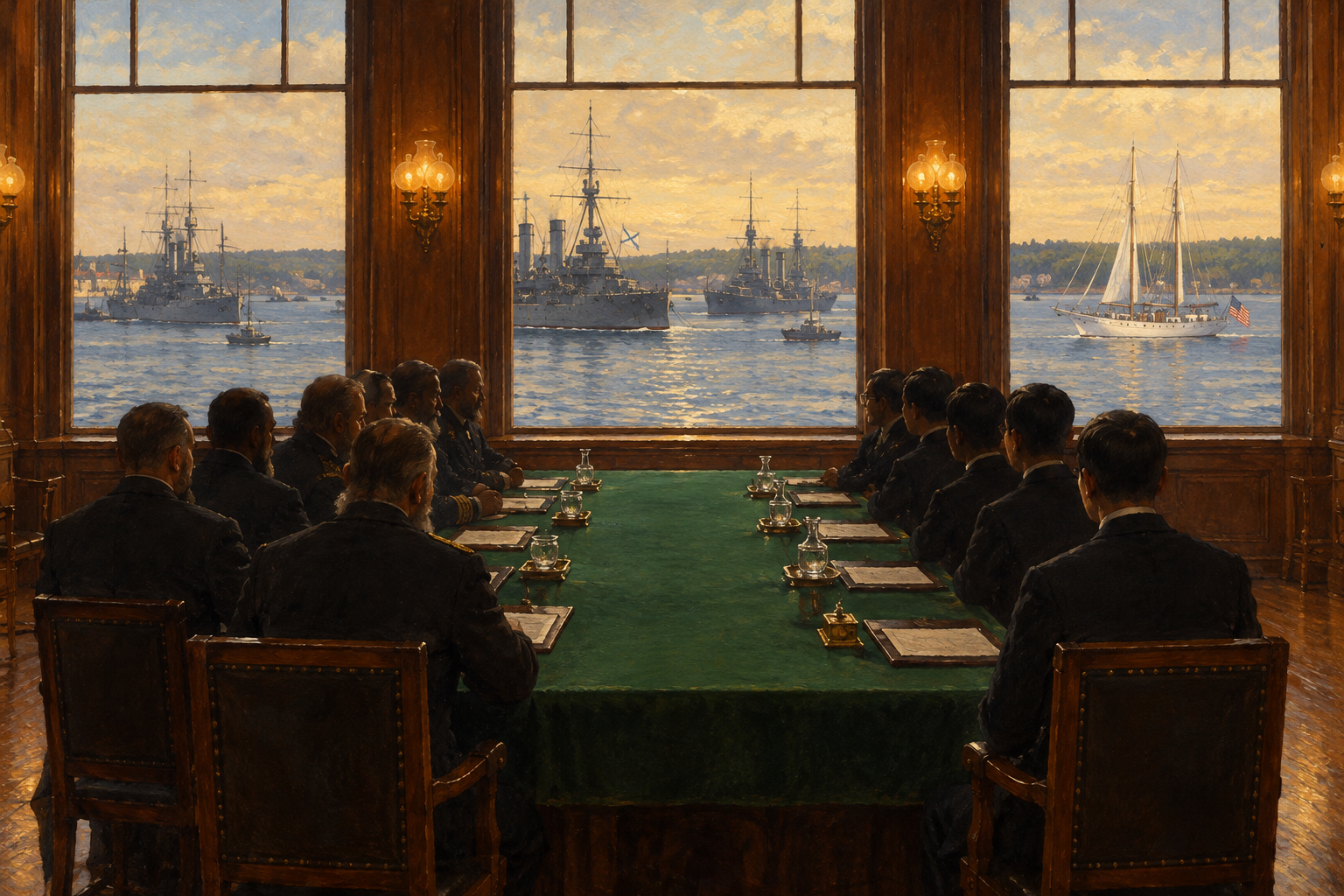
Hotta Masayoshi, the senior councillor in charge of foreign affairs, was persuaded. But the imperial court in Kyoto, under Emperor Komei, refused to approve, which showed how much political weight Kyoto now carried. Ii Naosuke became tairo, or great elder, in April 1858. In June 1858 Britain and France forced the Treaties of Tianjin on China, and when the news reached Japan, Harris pressed his case. On 29 July 1858 the shogunate's negotiators, Inoue Kiyonao and Iwase Tadanari, signed aboard the American warship USS Powhatan off Kanagawa, without waiting for imperial approval.
The Harris Treaty, 1858
The Treaty of Amity and Commerce has fourteen articles. Its main points were these:
- Ports: Kanagawa, Nagasaki and Hakodate opened in 1859, with Niigata and Hyogo (Kobe) to follow. Edo and Osaka were opened for foreign residence and trade, though later in the 1860s.
- Trade: Americans could buy and sell freely at the open ports, without Japanese officials as go-betweens.
- Diplomats: an American minister could live in Edo, and consuls could live at the open ports.
- Consular jurisdiction: Americans accused of crimes in Japan were tried by American consuls under American law.
- Tariffs: import and export duties were set in trade regulations attached to the treaty, at low rates (about 5 percent on many goods), and Japan could not change them alone.
- Other terms: opium imports were banned, Americans could practise their own religion, and the treaty could be reviewed after 4 July 1872 with a year's notice.
Treaty of Kanagawa vs Harris Treaty: the differences
- Purpose: 1854 was about supplies and shipwrecks; 1858 was about trade and regular diplomatic relations.
- Ports: two in 1854 (Shimoda, Hakodate); five in 1858 (Kanagawa, Nagasaki, Hakodate, Niigata, Hyogo), plus Edo and Osaka for residence and trade.
- Trade: none in 1854, apart from buying supplies; free trade in 1858.
- Foreigners in Japan: only a consul was provided for in 1854; in 1858 there were settlements, merchants and a minister in Edo.
- Law: nothing on foreign courts in 1854; consular jurisdiction in 1858.
- Tariffs: none in 1854; fixed by treaty in 1858.
- How it was signed: 1854 followed negotiation under the guns of Perry's squadron; 1858 was signed without imperial approval, which made it politically explosive.
The 1858 treaty is the one usually called an unequal treaty. Foreign residents were outside Japanese courts, and Japan could not set its own tariffs. The 1854 clause was also one-sided: Japan had to extend its concessions to the US, but gained nothing in return.
What happened next
In 1859 the fishing village of Yokohama opened as the foreign settlement in place of the Tokaido post town of Kanagawa. Silk and tea exports boomed. Gold flowed out of Japan because its gold-to-silver ratio differed from the world's, and the shogunate recoined its money in 1860. Prices rose, and many townspeople and samurai blamed foreigners and the shogunate.
Politics grew harsher. Ii Naosuke punished his critics in the Ansei Purge of 1858–59, then was assassinated outside the Sakuradamon gate of Edo Castle on 24 March 1860. Anti-foreign slogans such as sonno joi, "revere the emperor, expel the barbarians", turned against the shogunate itself, which fell in 1868. The new Meiji government made treaty revision a main goal, as our article on the Meiji Restoration explains. Japan ended consular jurisdiction through a treaty with Britain in 1894 (in force from 1899), and regained full tariff autonomy in 1911.
What exams ask
- Compare: 1854 means refuelling, two ports and no trade. 1858 means trade, more ports, consular courts and fixed tariffs.
- Names: Perry and the 1854 treaty; Harris and the 1858 treaty. Do not mix them up.
- Significance: the treaties ended Tokugawa-era limits on foreign contact, brought the treaty-port system from China to Japan, and fed the political crisis that ended the shogunate.
- Context: link them to China's treaties after the Opium Wars, and to Japan's later push for equal status.
Read next
- Qing China, Japan and the West (1793–1912): the hub for this topic, showing how the same pressures reached China first.
- The Meiji Restoration in World History: how the fall of the shogunate led to the new government that revised the treaties.
- The First Sino-Japanese War (1894–95): the war that followed just as Japan won its first treaty revision.