In five minutes: Lincoln's quotes and where they come from
Abraham Lincoln (1809–1865), the 16th president of the United States, is quoted more than almost any other American. The reliable quotes come from a short list of texts: a speech on the safety of the republic (1838), the House Divided speech and the debates with Stephen Douglas (1858), the Cooper Union address (1860), two inaugural addresses (1861 and 1865), a letter to Horace Greeley (1862) and the Gettysburg Address (1863).
Read in order, they follow one argument that grew over almost thirty years: the nation could not stay half slave and half free, and the Union had to be saved in a way that left it more free than before. For the wider story, see the hub article 19th-Century America: Expansion, Civil War and the Gilded Age.
One warning first. Many lines on the internet are credited to Lincoln but appear nowhere in his speeches or letters. Every quote below can be traced to a named speech, debate or letter, and the quotes are given in the original English.
Ten Lincoln quotes and what they mean
1. “If destruction be our lot, we must ourselves be its author and finisher.” (1838)
“If destruction be our lot, we must ourselves be its author and finisher.”
In January 1838, a 28-year-old Lincoln spoke to a young men's society in Springfield, Illinois, about the survival of American institutions. Mob violence was spreading across the country. He warned that no foreign army could break the United States; the real danger was citizens learning to ignore the law. Read after the Civil War, the line sounds like a prediction.
2. “A house divided against itself cannot stand.” (16 June 1858)
“A house divided against itself cannot stand.”
Lincoln spoke these words in Springfield when the Illinois Republicans chose him as their candidate for the US Senate. The sentence echoes a saying in the Gospel of Mark. He went on to say the government could not last “half slave and half free.” The Kansas–Nebraska Act (1854) and the Dred Scott decision (1857) had made many Northerners fear that slavery would spread across the whole country. He lost that Senate race, but the speech made him known nationally.
3. “As I would not be a slave, so I would not be a master.” (about August 1858)
“As I would not be a slave, so I would not be a master.”
This line comes from a short private note on democracy, not from a speech. Lincoln added that it expressed his idea of democracy, and that whatever differed from it was, to that extent, no democracy. It shows how he argued against slavery: not mainly from economics or politics, but from a simple principle that no person should rule another without consent.
4. “Public sentiment is everything.” (21 August 1858)
“Public sentiment is everything. With public sentiment, nothing can fail; without it, nothing can succeed.”
Lincoln said this at Ottawa, Illinois, in the first of seven debates with Stephen Douglas. Douglas held that each territory's settlers should decide for themselves whether to allow slavery. Lincoln replied that whoever shapes public opinion matters more than whoever passes laws, and he used the debates to keep asking voters whether slavery was morally wrong.
5. “Let us have faith that right makes might.” (27 February 1860)
“Let us have faith that right makes might.”
This is the opening of the closing appeal of Lincoln's Cooper Union address in New York City. The sentence goes on: “and in that faith, let us, to the end, dare to do our duty as we understand it.” Earlier in the speech he used the record of the founders to argue that the federal government could limit slavery in the territories. The speech introduced him to Eastern audiences and helped his run for the Republican nomination that spring.
6. “The better angels of our nature” (4 March 1861)
“…by the better angels of our nature.”
Lincoln ended his first inaugural address with a plea to the South: “We are not enemies, but friends.” Seven states had already declared that they were leaving the Union. He hoped the shared memories of the Revolution would still touch them “by the better angels of our nature.” The Confederates fired on Fort Sumter on 12 April 1861, and the plea failed to prevent war.
7. “My paramount object in this struggle is to save the Union” (22 August 1862)
“My paramount object in this struggle is to save the Union, and is not either to save or to destroy slavery.”
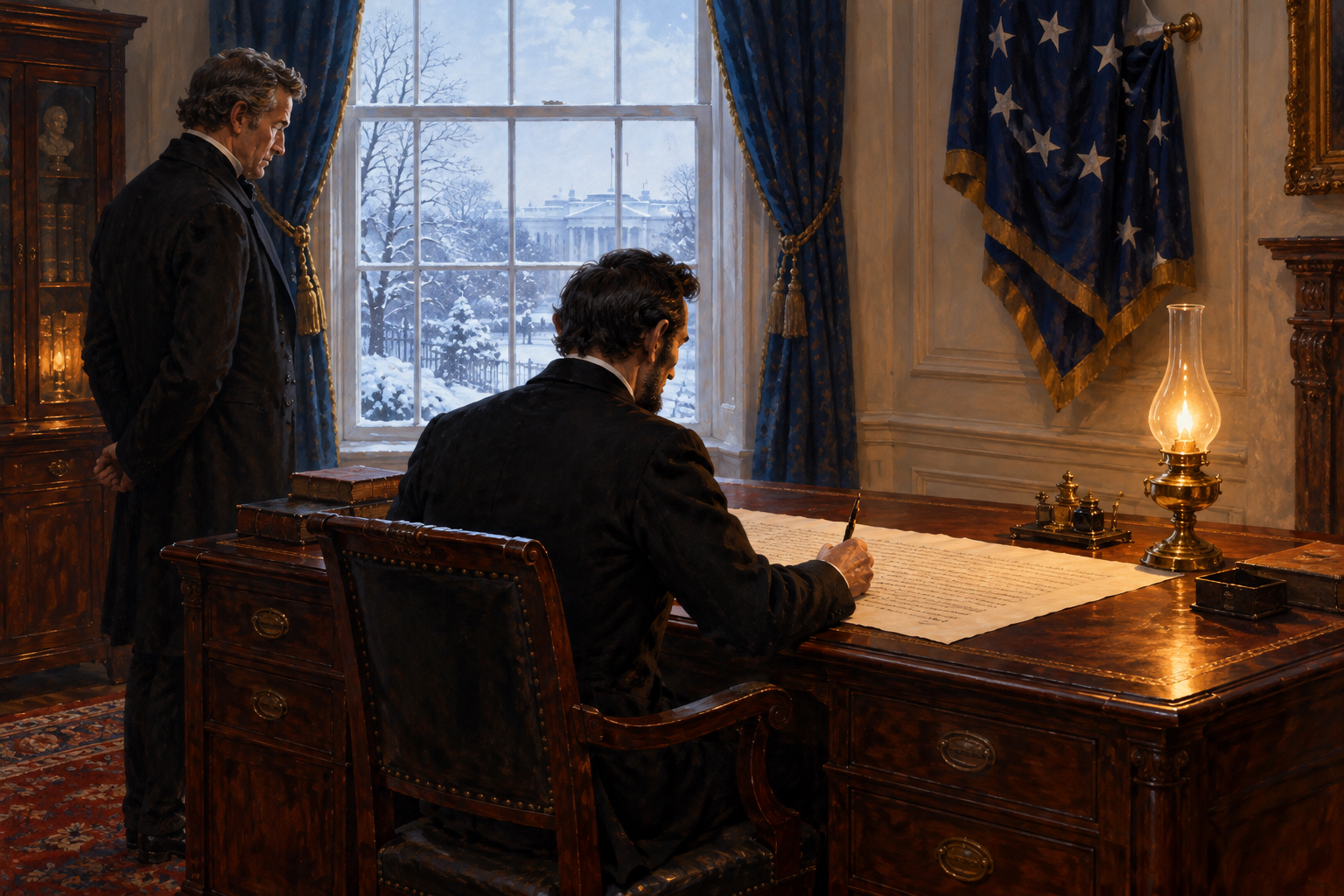
Lincoln wrote this to Horace Greeley, editor of the New York Tribune, who had publicly urged him to free the slaves. It can sound cold, but Lincoln had already shown his cabinet a draft emancipation proclamation in July and was waiting for a battlefield success. In the same letter he repeated his personal wish that all people everywhere could be free.
8. “A new birth of freedom” (19 November 1863)
“…this nation, under God, shall have a new birth of freedom.”
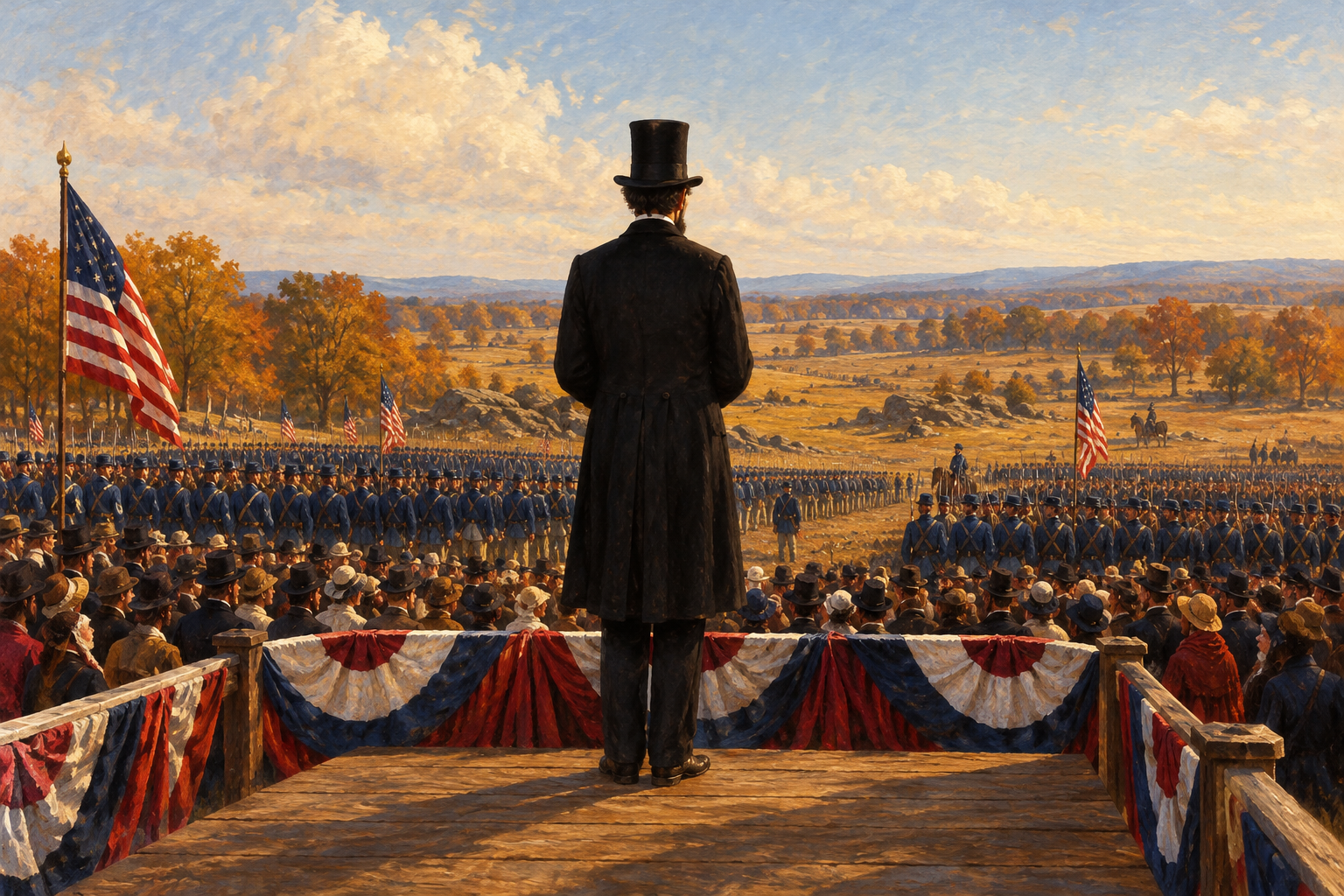
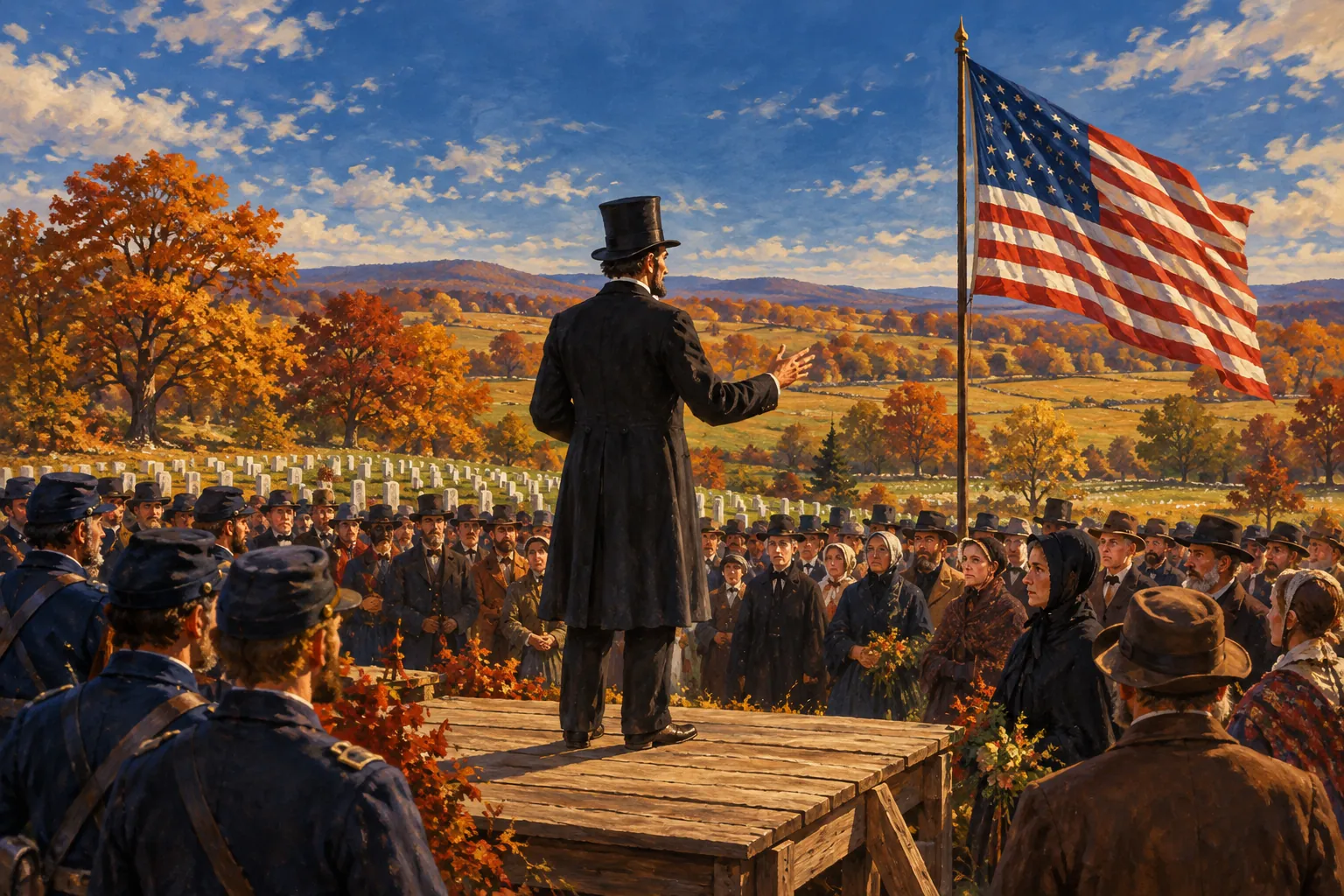
Lincoln spoke at the dedication of the soldiers' cemetery at Gettysburg, Pennsylvania, months after the battle of 1–3 July 1863. His text was only about 270 words. He placed the war inside the country's founding promise that “all men are created equal,” and the Emancipation Proclamation, issued on 1 January 1863, gave that promise a concrete meaning.
9. “Government of the people, by the people, for the people” (19 November 1863)
“…government of the people, by the people, for the people, shall not perish from the earth.”
This is the final sentence of the Gettysburg Address. Lincoln asked the living to finish the work for which the dead had fought, so that self-government itself would survive. In 1863 the question was real: could a democracy hold together through a civil war?
10. “With malice toward none, with charity for all” (4 March 1865)
“With malice toward none, with charity for all.”
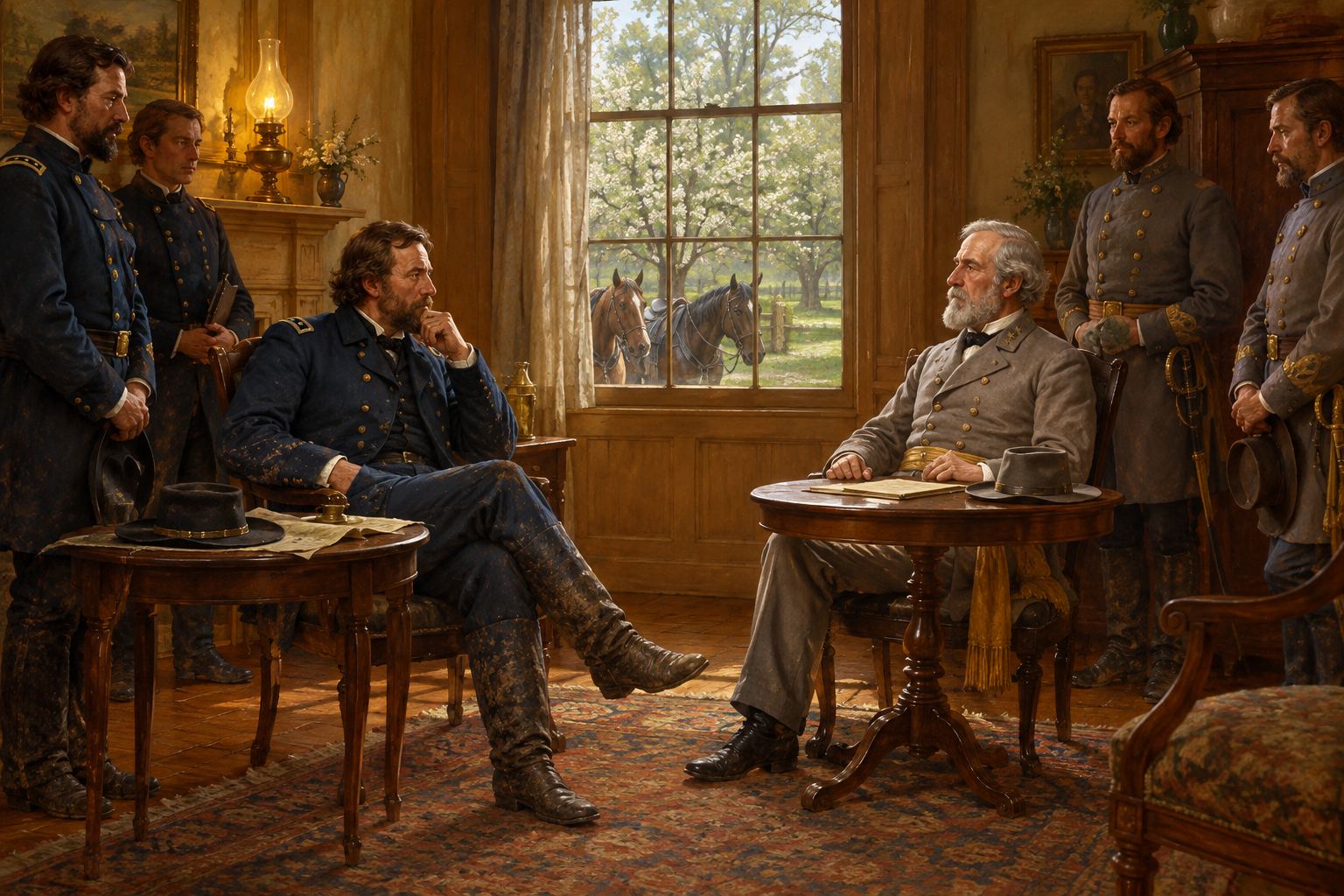
The Second Inaugural Address is very short. Lee surrendered about five weeks later, on 9 April. Lincoln did not celebrate; he said the war had come from slavery and turned to the task of binding up the nation's wounds. He was shot on 14 April and died the next morning.
The ideas that run through the quotes
The danger comes from within. From 1838 to 1858, Lincoln warned that the country would be broken by its own divisions, not by foreign enemies.
Words move politics. The Ottawa debate and Cooper Union show a lawyer who believed that careful argument could change what voters thought was acceptable.
Freedom first, then reconciliation. The Greeley letter, Gettysburg and the Second Inaugural move from saving the Union, to widening freedom, to rebuilding with “charity for all.” The Thirteenth Amendment, which ended slavery across the country, was ratified in December 1865, after his death.
What exams ask
AP US History and similar courses usually test the context, not the wording: Kansas–Nebraska Act (1854), Dred Scott decision (1857), the Lincoln–Douglas debates (1858), the election of 1860, the Emancipation Proclamation (1863), the Gettysburg Address (1863) and the Second Inaugural (1865).
Remember that the Emancipation Proclamation applied to areas in rebellion, not to the border states, and that the Thirteenth Amendment ended slavery nationwide. A typical question asks how Lincoln's stated war aims changed between 1861 and 1863.
Read next
- The Gettysburg Address: the full story behind quotes 8 and 9, and how the speech was received.
- The Assassination of Abraham Lincoln: what happened in the days after the Second Inaugural.
- Who Was Abraham Lincoln?: his life from a Kentucky log cabin to the White House.