0% • 5 min left

Dàn ý nghị luận văn học: Outline for Literary-Analysis Essays

November 16, 2026
A dàn ý nghị luận văn học is a short plan you write before a Vietnamese literary-analysis essay: an opening, three or four argument points, and a conclusion. This guide gives frames for poems, stories and characters, plus three model essays at three levels.
Dàn ý nghị luận văn học: Outline for Literary-Analysis Essays

Key facts

Task type
Nghị luận văn học (literary analysis)
Typical length
About 600 chữ in the lớp 10 and THPT exams
Frame
Mở bài, thân bài (3-4 luận điểm), kết bài
Curriculum
Chương trình GDPT 2018
Planning time
About 5-8 minutes
Texts used here
Tây Tiến, Vợ nhặt, Chí Phèo

In five minutes: what a dàn ý is

A dàn ý nghị luận văn học is a short plan that lists the main ideas of your essay before you write it.

It says what the opening will do, how many argument points the body has, and what the conclusion will settle.

Planning takes about five to eight minutes, and it keeps the essay organised, complete and on topic.

Under the 2018 national programme (Chương trình GDPT 2018), the literary-analysis task in the lớp 10 entrance exam and the THPT exam is usually about 600 words long (600 chữ), next to a social-issue paragraph of about 200 chữ.

This guide gives one frame that works for poems, short stories and characters, then three model answers at basic, good and excellent level so you can compare them with your own work.

The general frame: mở bài, thân bài, kết bài

Whether the question is about a poem or a story, the essay has three parts.

The opening (mở bài) does three jobs: it introduces the author or work, states the question's focus, and signals the direction of the essay.

The body (thân bài) has three or four argument points (luận điểm), and each point is one paragraph.

Each paragraph follows one pattern: a topic sentence, short evidence, analysis, and a closing remark that ties back to the question.

The conclusion (kết bài) restates the value of the work and, if you can, adds a brief personal link or reflection.

Four steps for reading the question

  1. Name the task type: analyse (phân tích), respond to (cảm nhận), comment (bình luận) or compare (so sánh).
  2. Underline the key words, such as “vẻ đẹp bi tráng” or “bi kịch”.
  3. Check the scope: one stanza, one scene, one character or the whole work.
  4. Write your thesis in one sentence before you plan the points.

Outline for analysing a poem or a stanza

For poetry, the points usually follow the flow of feeling or the order of the stanzas.

  • Opening: poet, circumstances of writing, where the stanza sits, a general judgement.
  • Body: one point per image or emotion, with key words, figures of speech and rhythm.
  • Conclusion: the artistic and human value, and how the stanza moves the reader.

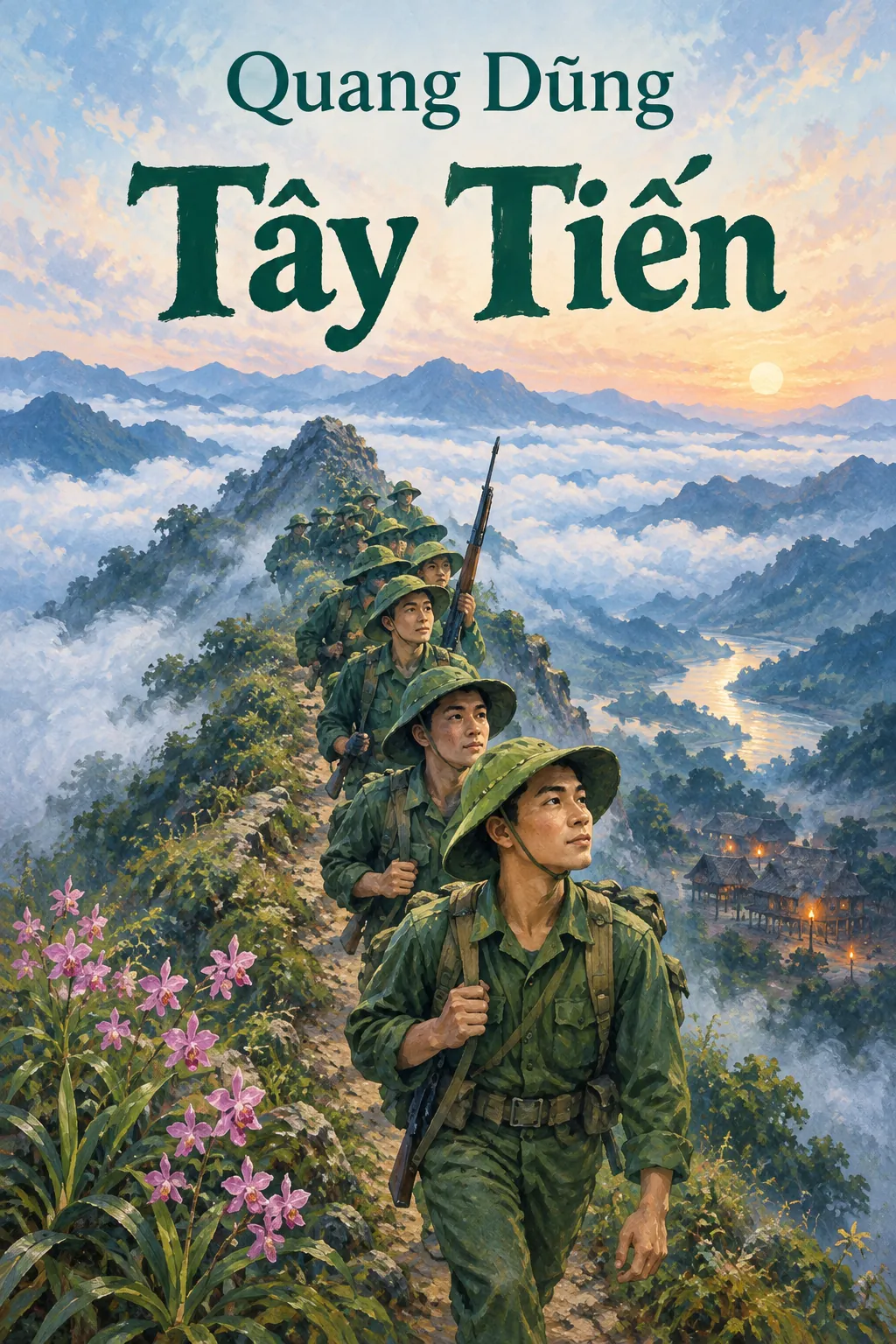
For the Tây Tiến stanza on the soldiers, the points can be their hard-won appearance, their romantic inner life, their sacrifice, and the roar of the Mã River.

Quote only the key words in each point and never copy the whole stanza.

Always explain the effect: what the word suggests, what feeling it carries, and why the poet chose it.

For Sóng by Xuân Quỳnh, the points might be the waves' opposite moods, the waves and longing, and the wish for a lasting love.

Outline for analysing a short story

For prose, the three usual axes are the situation, the characters and the art of the telling.

  • Situation (tình huống): in Vợ nhặt, a poor man “picks up” a wife in the middle of famine.
  • Characters: appearance, actions, speech and inner change.
  • Artistic details: setting, images, point of view, ending.
  • Theme and humanity: what the author values, and what hope he leaves.

You can also follow the plot: opening, development, climax, ending.

This works well for a story with a turning point, such as Chí Phèo, where a bowl of onion porridge wakes the hero's humanity.

Whichever axis you choose, keep one thesis running through the essay so the paragraphs do not drift apart.

Opening a character analysis: three ways

The search term “mở bài phân tích nhân vật” matters because many students lose marks on vague openings.

Way one, start from the author: Nam Cao is a great realist, and Chí Phèo shows a peasant pushed to the edge of ruin.

Way two, start from the context: in the 1945 famine, Kim Lân creates Tràng, a poor man who still keeps his kindness.

Way three, go straight to the point: with one bowl of porridge, Nam Cao shows that Chí Phèo still has a human side.

Whichever you choose, name the character, the work and the author, and state your thesis in three to five sentences.

Sample outline: the Tây Tiến stanza

  • Opening: Quang Dũng, written in 1948 in memory of his unit; thesis: “bi tráng” beauty.
  • Point 1: the soldiers' look, hardship against fierce spirit.
  • Point 2: dreams of Hà Nội, a romantic heart.
  • Point 3: sacrifice, Sino-Vietnamese words and understatement.
  • Point 4: the roaring river as a farewell.
  • Conclusion: the monument of tragic heroism.

Sample outline: Tràng in Vợ nhặt

  • Opening: Kim Lân, the 1945 famine, thesis: poverty with warmth and hope.
  • Point 1: background and appearance.
  • Point 2: the sudden decision to take a wife.
  • Point 3: his change on the road home and the next morning.
  • Point 4: the red flag at the end.
  • Conclusion: the humane value of the story.

Sample outline: Chí Phèo

  • Opening: Nam Cao, thesis: a double tragedy of being corrupted and then refused a return.
  • Point 1: how society turns Chí into a “devil”.
  • Point 2: awakening after the porridge, and the wish to be good.
  • Point 3: rejection by Thị Nở's aunt and the village.
  • Point 4: the ending, the circular structure and what it protests.
  • Conclusion: Nam Cao's humanity.

Common mistakes

  • Retelling the plot instead of analysing it.
  • Pasting long quotations in place of your own commentary.
  • Overlapping points that repeat one idea in different words.
  • No links between paragraphs.
  • A conclusion that only copies the opening.
  • Empty praise such as “a beautiful picture” with no explanation.

A time plan for a 600-word essay

If you have about 40 to 50 minutes for the literary part, the split below is one workable guide, and it changes with the exam.

  1. 5 to 8 minutes: read the question and write the outline.
  2. About 5 minutes: opening.
  3. 25 to 30 minutes: body.
  4. About 5 minutes: conclusion.
  5. About 5 minutes: check spelling, logic and quotes.

Practise with three model essays

Below are three questions, each with an answer at basic, good and excellent level and teacher notes.

Make your own outline first, then compare.

The samples are learning examples to compare with your own work, not essays to copy.

Exam practice: sample answers

Model answers are examples to learn from; write your own in your words.

nghị luận văn học: analysis of a poem stanza

1. Analyse the stanza in Quang Dũng's Tây Tiến that begins “Tây Tiến đoàn binh không mọc tóc” and ends “Sông Mã gầm lên khúc độc hành”. What does it show about the tragic-heroic (bi tráng) beauty of the Tây Tiến soldiers?

Outline

  1. Opening: Quang Dũng, written 1948, thesis on bi tráng beauty
  2. Point 1: appearance, hardship against fierce spirit
  3. Point 2: romantic dreams of Hà Nội
  4. Point 3: sacrifice, Sino-Vietnamese diction and understatement
  5. Point 4: the roaring Mã River as farewell
  6. Conclusion: the monument to the soldiers
Basic Model answer

The stanza from Quang Dũng's Tây Tiến shows the Tây Tiến soldiers as both suffering and heroic.

First, their appearance. They are “không mọc tóc” and pale with jungle malaria, yet still “dữ oai hùm”, fierce as tigers.

The contrast shows that hardship did not break their spirit.

Next, they are romantic. Even at the frontier they dream of Hà Nội and its elegant girls, which makes them feel human and close to us.

Finally comes sacrifice. Many lie in distant graves with only a mat for a shroud, and the Mã River roars as if it were saying goodbye.

In short, the stanza praises the tragic and heroic beauty of the soldiers in vivid language, and leaves readers moved and grateful.

Why this level: Correct and clear, with the right four stages. It stays general: few quoted words are analysed, there is no thesis sentence and no discussion of technique. To reach good: state a thesis and explain why each key word was chosen.
Good Model answer

In Tây Tiến, Quang Dũng does not glamorise war. He lets the soldiers appear through hardship and ideals together, and this stanza gathers that tragic-heroic (bi tráng) beauty most fully.

The poem was written in 1948, when the poet was already away from his old unit and remembering it, so the portrait is both realistic and warmed by comradeship.

The first lines build a portrait from contrasts. “Không mọc tóc” and “quân xanh màu lá” are real marks of jungle malaria, yet “dữ oai hùm” and the staring eyes reverse the impression: the body is worn, the spirit is not.

This contrast makes the soldiers both pitiable and admirable.

The poet then adds a romantic layer. The same men who guard the border at night dream of “dáng kiều thơm” in Hà Nội.

The dream does not weaken them. It shows they are young men with a home to miss, not figures on a poster.

The second half turns solemn. Words like “biên cương” and “viễn xứ” give the graves a dignified, faraway setting, while “chiến trường đi chẳng tiếc đời xanh” makes the sacrifice a free choice.

The image “áo bào thay chiếu” lifts a plain burial into a hero's farewell.

Finally, the roaring Mã River turns nature into a mourner, so grief becomes grandeur rather than self-pity.

In conclusion, through contrast, formal diction, understatement and the river, Quang Dũng builds a monument to the soldiers: people who lived, dreamed and fell with dignity.

Why this level: Has a thesis, specific evidence, and some analysis of effect (contrast, diction, understatement). Paragraphs are clear. To reach excellent: sharpen the argument about how bi and tráng depend on each other, comment on the stanza's change of rhythm, and place it in its context more precisely.
Excellent Model answer

If one word must name this stanza, it is “bi tráng”: the tragic cost of hardship and loss, and the heroic strength of ideals, held together so that neither cancels the other. Quang Dũng wrote Tây Tiến in 1948, after he had left the unit but not the memory, so the soldiers are both truthful and raised by comradeship.

Note first how the stanza opens. Naming the unit as the subject and calling its men “đoàn binh” gives an epic tone: an army, not a few tired people.

The poet looks at his comrades with an insider's pride.

The first four lines build the portrait from deliberate opposites. “Không mọc tóc” and “quân xanh màu lá” are real marks of jungle malaria, spoken almost with swagger, as if hardship had become ordinary.

Then “dữ oai hùm” reverses the picture: the frailty is outward, the force inward. The contrast does not erase pain.

It makes pain part of courage.

What is most distinctive is that two worlds coexist. “Mắt trừng gửi mộng qua biên giới” shows duty at the border, while “đêm mơ Hà Nội dáng kiều thơm” draws the reader into an elegant, youthful city.

The words “mộng” and “mơ” show that war has not dried up these men's hearts, and that gives their ideals the depth of real people rather than slogans.

In the second half the tone drops, without self-pity. Sino-Vietnamese words such as “biên cương” and “viễn xứ” carry the solemn echo of classical poems of war and set young deaths in a vast, far place.

“Rải rác” suggests graves scattered and alone, yet “chiến trường đi chẳng tiếc đời xanh” answers at once that this was chosen. “Đời xanh” reminds us what is paid, which makes “chẳng tiếc” weigh more.

The last two lines are the peak. “Áo bào thay chiếu anh về đất” is understatement: there is no coffin, only a mat, yet the poet calls it “áo bào”, the robe of a general.

Want becomes honour. Then “Sông Mã gầm lên khúc độc hành” turns the river into a mourner, and the verb “gầm” makes grief roar rather than whisper.

Nature and men join in one farewell.

The rhythm supports this movement. The opening lines are brisk and firm; the later ones slow and grow formal.

The shift carries the reader from admiration to sorrow without forcing tears.

The stanza also answers any view that war poetry must be only mourning. Quang Dũng admits loss but chooses to look at dignity, so the poem is a memorial more than a lament.

In conclusion, with contrast, formal diction, understatement and the river, Quang Dũng raises the Tây Tiến soldiers into a monument of tragic heroism: people who lived beautifully, dreamed beautifully and fell with dignity.

Why this level: Excellent: a sharp thesis built on bi and tráng together, precise short quotes, comments on diction, understatement, verb choice, rhythm and context, and a controlled conclusion. A student can still improve by comparing it with another war poem of the same period.

Marking rubric

  • Clear thesis on bi tráng beauty
  • Four developed points in a logical order
  • Short quotations explained, not pasted
  • Comments on diction, imagery or rhythm
  • Controlled opening and conclusion

Now write your own

Choose another stanza of Tây Tiến and write your own outline of four points, then a 600-word essay. Compare it with the three levels above.

nghị luận văn học: character analysis

2. Analyse the character Tràng in Kim Lân's short story Vợ nhặt (about 600 chữ).

Outline

  1. Opening: Kim Lân, the 1945 famine, thesis
  2. Point 1: background and appearance
  3. Point 2: taking a wife, the act of kindness
  4. Point 3: inner change on the road home and the next morning
  5. Point 4: the red flag, hope
  6. Conclusion: the humane value
Basic Model answer

Tràng is the main character of Kim Lân's story Vợ nhặt, a poor labourer living through the famine of 1945.

He is ugly and rough, laughs to himself, lives in the outcast quarter and pulls a handcart for a living. His life is very poor.

Still, he is kind. He treats a stranger to food when everyone is hungry, then agrees to take her home as his wife.

This shows his compassion.

After he has a wife, Tràng changes. He feels more grown-up and thinks of his duty to a family.

At the end he remembers the red flag and the hungry crowd, which opens a sense of hope.

Through Tràng, Kim Lân shows that poor people keep their humanity and their belief in tomorrow. In short, he is a warm and hopeful figure.

Why this level: A correct and readable summary of Tràng, but it mostly retells. It lacks a thesis, close detail and comment on technique. To reach good: explain why his choices matter and add evidence from the road home and the next morning.
Good Model answer

Tràng is a small figure with a large weight in Kim Lân's Vợ nhặt. Through him the author shows that even in famine the poor still long for happiness and keep their kindness.

First, his situation is pitiable. He is ugly and rough, lives with his old mother in the outcast quarter and earns a living pulling a handcart.

In a time when hunger threatens life, marriage seems far beyond him.

The decisive action is surprising: Tràng treats a stranger to food and then takes her home as his wife. The decision looks reckless, yet it comes from pity and a hunger for a home.

He does not count the cost. He simply feels he can shelter another person, and the ironic word “nhặt” turns out to bring him real happiness.

His feelings then keep changing. On the way home he is both anxious and delighted, walking past amazed neighbours with a light heart.

The next morning the yard and house look new to him, he feels he has become “nên người”, and he begins to think of his duties as husband and son.

At the end, the image of the red flag in his mind opens a way out of the dark. The poor already look towards the revolution.

Kim Lân builds Tràng through an unusual situation, fine psychological detail and plain dialogue, so he feels real rather than idealised.

In conclusion, Tràng is a poor man who loves life and is rich in humanity, and he carries the story's deep humane value.

Why this level: Has a thesis, specific scenes and some analysis. Paragraphs are clear. To reach excellent: argue more sharply how irony and transformation work, use shorter exact quotes, and link Tràng to the other characters and to the ending.
Excellent Model answer

In Vợ nhặt, Kim Lân gives the famine a face in Tràng. This is a man who is poor, plain and easy to overlook, yet he carries two things at once: the threat of hunger to human dignity, and the stubborn will to live and love.

The story starts from an irony. A wife is “picked up” like something found by the roadside, and the cheapness of the word measures how little life is worth in 1945.

Yet Tràng is the one who finds in that cheap thing a real happiness. The title already sets the character's paradox.

His background deepens it. Ugly and rough, living in the outcast quarter with his old mother and pulling a handcart, Tràng is an unlikely husband.

He laughs to himself, which can look foolish but also shows an innocence that hunger has not killed.

His decisive act is a mix of impulse and kindness. He treats a stranger to food and offers her a home with almost no calculation, which is reckless in a famine and generous in the same moment.

Kim Lân does not explain the choice as a plan. He lets it come from a heart that cannot walk past a hungry person.

The aftermath is where Tràng grows. On the road home, anxiety and joy alternate.

The next morning, the ordinary yard seems new, and he feels he has become “nên người”. Marriage turns an aimless man into one who thinks of duty to wife and mother.

The change is quiet, but it is the character's real arc.

Tràng also makes the others visible. His mother's mixed pity and fear and the new wife's changed manner show that hunger shapes everyone, while Tràng's warmth gives them a reason to hope together.

The ending completes him. The red flag and the hungry crowd in his mind suggest a collective future, so his private happiness joins a historical hope.

In conclusion, Kim Lân makes Tràng a figure of humanity under pressure. Through irony, small psychological steps and plain speech, he shows that people can stay kind in the darkest year and still face tomorrow.

Why this level: Excellent: argues from the title's irony, reads the decision as impulse and kindness, tracks an arc, links Tràng to other characters and to the ending, with precise short quotes. To go further, compare him with another famine-era character.

Marking rubric

  • Opening names character, work, author and thesis
  • Covers background, key action, inner change and ending
  • Evidence is short and analysed
  • Notes irony or technique
  • Conclusion states humane value

Now write your own

Write an opening of 3-5 sentences for an analysis of the mother, bà cụ Tứ, using one of the three opening ways in this guide.

nghị luận văn học: short-story analysis

3. Analyse the tragedy of Chí Phèo, a man refused the right to live as a human being, in Nam Cao's short story Chí Phèo.

Outline

  1. Opening: Nam Cao, thesis of double tragedy
  2. Point 1: society turns Chí into a “devil”
  3. Point 2: awakening after the porridge
  4. Point 3: rejection by the aunt and the village, then the cry at Bá Kiến's house
  5. Point 4: ending and circular structure
  6. Conclusion: Nam Cao's humanity
Basic Model answer

Chí Phèo by Nam Cao tells the tragedy of a peasant who is refused the right to be a human being.

Chí is abandoned as a baby and grows up with no family. He works for the landlord Bá Kiến and is sent to prison for no good reason.

When he returns he has changed into a drunk who slashes his own face and curses the village.

Later he meets Thị Nở, who gives him a bowl of onion porridge. For the first time he feels cared for and wants to live an honest life.

But Thị Nở's aunt forbids the marriage, and Thị Nở leaves him. In despair, Chí kills Bá Kiến and then kills himself.

The story shows that society first ruins a person and then does not allow him to come back.

Why this level: Gets the plot and the main idea right. It lacks quotation, a thesis about the two stages of the tragedy and any technique. To reach good: separate being corrupted from being refused, and add detail.
Good Model answer

The tragedy of Chí Phèo has two stages: he is first pushed out of humanity, and then, when he wants to return, he is refused. Nam Cao makes both stages the work of society, not only of one man.

First, the corruption. Chí is abandoned, grows up without love, and is used by the landlord Bá Kiến, who sends him to prison out of jealousy.

When he comes out, his face and behaviour belong to a “devil”: he drinks, slashes his face and curses everyone. The village sees only the monster.

Nam Cao shows the cause behind it.

Second, the awakening. A bowl of onion porridge from Thị Nở is a small gesture, but it reaches a man long without kindness.

Chí wakes up, notices the morning, and for the first time wants to live honestly and make peace with the people around him.

Third, the refusal. Thị Nở's aunt rejects him because of his past, and Thị Nở obeys.

The village's prejudice shuts the door that kindness has just opened. His despair is not weakness.

It is the result of a world that offers no path back. Drunk and desperate, he goes to Bá Kiến's house and shouts “Tao muốn làm người lương thiện!”.

The ending is violent. Chí kills Bá Kiến, the root of his ruin, and then himself.

It is a protest, but also a defeat.

Nam Cao also ends with the image of the old brick kiln, hinting that another Chí may be born. In conclusion, the story is a deeply humane accusation of a society that destroys people and then denies them a return.

Why this level: A thesis with two stages, specific scenes and some comment on technique. To reach excellent: build one argument around Chí's question to Bá Kiến, “Ai cho tao lương thiện?”, and what it says about the whole society, use exact short quotes, and discuss Nam Cao's attitude and the circular ending.
Excellent Model answer

The tragedy of Chí Phèo is double. Society first strips away his appearance and his character, turning him into a “devil”, and then, when a human spark returns, refuses him the chance to live by it.

Nam Cao's great insight is that the second wound is worse than the first.

The story opens with Chí cursing as he walks, a sound that sets the village's view of him: a nuisance, not a person. Nam Cao then goes back to the cause.

Abandoned at birth, passed from hand to hand, Chí becomes a farm hand and is sent to prison through Bá Kiến's jealousy. The prison does not reform him.

It finishes the damage.

When Chí returns, his slashed face and drunken rages are the weapons of someone who has no other way to be heard. Nam Cao does not excuse the violence, but he refuses to blame Chí alone.

The one who gains from the village's misery, Bá Kiến, stays safe.

The turning point is almost nothing: a bowl of onion porridge. Because Chí has never been cared for, this small kindness is enormous.

He sees the morning, hears the sounds of village life, and wants to live honestly and be at peace with people. Nam Cao shows that the human part of Chí was not destroyed, only buried.

This is why the refusal hurts so much. Thị Nở's aunt rejects him because of what he has been, and Thị Nở yields.

The village's prejudice becomes the force that blocks the road back. Drunk and desperate, Chí goes to Bá Kiến's house and shouts “Tao muốn làm người lương thiện!”, then throws “Ai cho tao lương thiện?” at the very man who ruined him.

Bá Kiến answers with mockery, and the whole structure of village society offers no real answer either. That silence behind the mockery is the story's accusation.

The ending is therefore both protest and failure. By killing Bá Kiến, Chí names the source of his ruin, but by killing himself he admits there is no place for him in that world.

The final image of the old brick kiln recalls where he began and suggests the cycle may repeat. This circular structure gives the story the weight of a social verdict.

Behind the cruelty lies Nam Cao's compassion. He treats Chí not as a monster but as a person who deserved to be good, and he believes humanity can survive even the worst degradation.

In conclusion, Chí Phèo is a tragedy of a man who is deprived of humanity and then barred from regaining it. Through the porridge scene, the refusal and the circular ending, Nam Cao makes the reader ask what kind of society produces such a fate.

Why this level: Excellent: a sharp two-stage thesis, precise short quotes, attention to structure, symbols and the author's stance, with a controlled conclusion. A final step would be to compare Chí with another character crushed by society in the same period.

Marking rubric

  • Thesis names both stages of the tragedy
  • Uses key scenes: prison, porridge, refusal, ending
  • Quotes are short and analysed
  • Comments on structure or symbol
  • Shows Nam Cao's attitude

Now write your own

Write your own 600-word answer to this question, then mark it against the rubric and the notes on each level.

Frequently Asked Questions

What is a dàn ý nghị luận văn học?

It is a short plan written before the essay. It lists the opening idea, three or four argument points with evidence, and the conclusion, so the essay stays organised and on topic.

How many argument points should the body have?

Three or four is usual for an essay of about 600 chữ. Each point gets one paragraph with a topic sentence, brief evidence, analysis and a closing remark.

How do I outline a poem analysis?

Follow the poem's emotion or its stanzas. Give each point one image or feeling, quote only key words, and explain the effect of each word choice.

How do I write a good opening for a character analysis?

Name the character, work and author, add a short lead-in from the author or the context, and state your thesis in three to five sentences.

Can I copy the model essays?

No. They are labelled learning examples. Write your own outline and essay first, then compare it with the three levels.

Check Your Understanding

Pick an answer for each question to see if you were right.

  1. How many parts does the general essay frame have?

  2. Roughly how long should planning take?

  3. What should one body paragraph contain?

  4. Which is a common mistake?

  5. Which axes often organise a short-story analysis?

Share:

About the Writer

Alex Ng
Alex Ng

Software Engineer & Writer

Software engineer with a passion for distilling complex ideas into actionable insights. Writes about finance, investment, entrepreneurship, and technology.

Read more →

Keep reading

Explore the topic: Văn mẫu THPT (Vietnam)

Articles

Summaries