In five minutes: what a dàn ý is
A dàn ý nghị luận văn học is a short plan that lists the main ideas of your essay before you write it.
It says what the opening will do, how many argument points the body has, and what the conclusion will settle.
Planning takes about five to eight minutes, and it keeps the essay organised, complete and on topic.
Under the 2018 national programme (Chương trình GDPT 2018), the literary-analysis task in the lớp 10 entrance exam and the THPT exam is usually about 600 words long (600 chữ), next to a social-issue paragraph of about 200 chữ.
This guide gives one frame that works for poems, short stories and characters, then three model answers at basic, good and excellent level so you can compare them with your own work.
The general frame: mở bài, thân bài, kết bài
Whether the question is about a poem or a story, the essay has three parts.
The opening (mở bài) does three jobs: it introduces the author or work, states the question's focus, and signals the direction of the essay.
The body (thân bài) has three or four argument points (luận điểm), and each point is one paragraph.
Each paragraph follows one pattern: a topic sentence, short evidence, analysis, and a closing remark that ties back to the question.
The conclusion (kết bài) restates the value of the work and, if you can, adds a brief personal link or reflection.
Four steps for reading the question
- Name the task type: analyse (phân tích), respond to (cảm nhận), comment (bình luận) or compare (so sánh).
- Underline the key words, such as “vẻ đẹp bi tráng” or “bi kịch”.
- Check the scope: one stanza, one scene, one character or the whole work.
- Write your thesis in one sentence before you plan the points.
Outline for analysing a poem or a stanza
For poetry, the points usually follow the flow of feeling or the order of the stanzas.
- Opening: poet, circumstances of writing, where the stanza sits, a general judgement.
- Body: one point per image or emotion, with key words, figures of speech and rhythm.
- Conclusion: the artistic and human value, and how the stanza moves the reader.
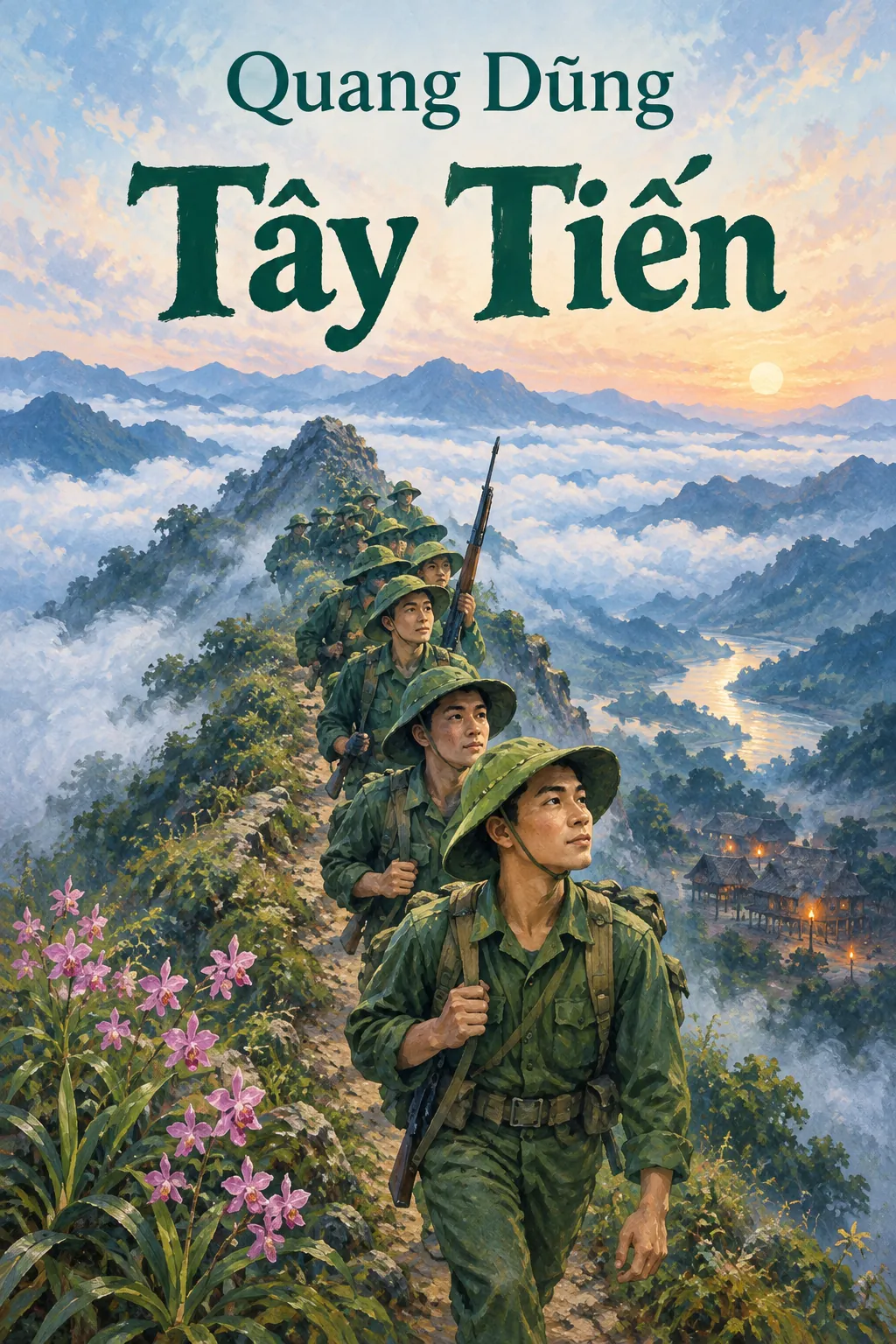
For the Tây Tiến stanza on the soldiers, the points can be their hard-won appearance, their romantic inner life, their sacrifice, and the roar of the Mã River.
Quote only the key words in each point and never copy the whole stanza.
Always explain the effect: what the word suggests, what feeling it carries, and why the poet chose it.
For Sóng by Xuân Quỳnh, the points might be the waves' opposite moods, the waves and longing, and the wish for a lasting love.
Outline for analysing a short story
For prose, the three usual axes are the situation, the characters and the art of the telling.
- Situation (tình huống): in Vợ nhặt, a poor man “picks up” a wife in the middle of famine.
- Characters: appearance, actions, speech and inner change.
- Artistic details: setting, images, point of view, ending.
- Theme and humanity: what the author values, and what hope he leaves.
You can also follow the plot: opening, development, climax, ending.
This works well for a story with a turning point, such as Chí Phèo, where a bowl of onion porridge wakes the hero's humanity.
Whichever axis you choose, keep one thesis running through the essay so the paragraphs do not drift apart.
Opening a character analysis: three ways
The search term “mở bài phân tích nhân vật” matters because many students lose marks on vague openings.
Way one, start from the author: Nam Cao is a great realist, and Chí Phèo shows a peasant pushed to the edge of ruin.
Way two, start from the context: in the 1945 famine, Kim Lân creates Tràng, a poor man who still keeps his kindness.
Way three, go straight to the point: with one bowl of porridge, Nam Cao shows that Chí Phèo still has a human side.
Whichever you choose, name the character, the work and the author, and state your thesis in three to five sentences.
Sample outline: the Tây Tiến stanza
- Opening: Quang Dũng, written in 1948 in memory of his unit; thesis: “bi tráng” beauty.
- Point 1: the soldiers' look, hardship against fierce spirit.
- Point 2: dreams of Hà Nội, a romantic heart.
- Point 3: sacrifice, Sino-Vietnamese words and understatement.
- Point 4: the roaring river as a farewell.
- Conclusion: the monument of tragic heroism.
Sample outline: Tràng in Vợ nhặt
- Opening: Kim Lân, the 1945 famine, thesis: poverty with warmth and hope.
- Point 1: background and appearance.
- Point 2: the sudden decision to take a wife.
- Point 3: his change on the road home and the next morning.
- Point 4: the red flag at the end.
- Conclusion: the humane value of the story.
Sample outline: Chí Phèo
- Opening: Nam Cao, thesis: a double tragedy of being corrupted and then refused a return.
- Point 1: how society turns Chí into a “devil”.
- Point 2: awakening after the porridge, and the wish to be good.
- Point 3: rejection by Thị Nở's aunt and the village.
- Point 4: the ending, the circular structure and what it protests.
- Conclusion: Nam Cao's humanity.
Common mistakes
- Retelling the plot instead of analysing it.
- Pasting long quotations in place of your own commentary.
- Overlapping points that repeat one idea in different words.
- No links between paragraphs.
- A conclusion that only copies the opening.
- Empty praise such as “a beautiful picture” with no explanation.
A time plan for a 600-word essay
If you have about 40 to 50 minutes for the literary part, the split below is one workable guide, and it changes with the exam.
- 5 to 8 minutes: read the question and write the outline.
- About 5 minutes: opening.
- 25 to 30 minutes: body.
- About 5 minutes: conclusion.
- About 5 minutes: check spelling, logic and quotes.
Practise with three model essays
Below are three questions, each with an answer at basic, good and excellent level and teacher notes.
Make your own outline first, then compare.
The samples are learning examples to compare with your own work, not essays to copy.