0% • 6 min left

AP Lit Essay Prompts and Model Essays

November 16, 2026
AP Lit essay prompts come in three types: poetry analysis, prose analysis and a literary argument about a work you choose. Each is scored out of six points for thesis, evidence and commentary, and sophistication. This guide explains the exam format and rubric, then gives annotated model essays at three levels.
AP Lit Essay Prompts and Model Essays

Key facts

Exam length
3 hours, two sections
Section I
55 multiple-choice questions, 1 hour, 45% of the score
Section II
3 free-response essays, 2 hours, 55% of the score
Essay types
Poetry analysis, prose fiction analysis, literary argument
Rubric
6 points per essay: thesis 1, evidence and commentary 4, sophistication 1
Reading list
None required; you choose the work for Question 3
Official source
College Board AP Central

In five minutes

AP Lit essay prompts come in three types: a poem to analyze, a passage of prose fiction to analyze, and a literary argument about a whole work that you choose. Every essay is scored on the same six-point rubric.

This guide explains the AP Lit exam format and rubric in plain words. It then shows how to approach each prompt and gives annotated model essays at three levels, tied to a poem and a novel you can study.

The prompts here are our own, and none come from the College Board. Use the models to compare with your own writing, never to copy.

AP Lit exam format

The exam lasts three hours and has two sections. You can read the official outline on the College Board’s AP Central course page.

Section I is one hour long. It has 55 multiple-choice questions on short passages of prose and poetry, and it counts for 45 percent of your score.

Section II is two hours long. It has three free-response questions and counts for 55 percent of your score, so each essay is worth about 18 percent.

The essays always come in the same order. Question 1 is poetry analysis, Question 2 is prose fiction analysis, and Question 3 is a literary argument.

A common plan is about 40 minutes per essay, with the first few minutes spent marking the prompt and planning a thesis. Practise with a timer so that the third essay is not rushed.

Exams are reported on a scale of 1 to 5, and each college sets its own credit policy.

The AP Lit rubric in plain words

Each essay earns up to six points across three rows. The College Board publishes the exact wording in its scoring guidelines, so check the current version before the exam.

  • Thesis (1 point). You need a defensible interpretation that answers the prompt. Restating the question or only naming techniques does not earn it.
  • Evidence and commentary (up to 4 points). You need specific details from the text and an explanation of how they support your line of reasoning. The top scores come from commentary that is consistent and well explained, not from summary.
  • Sophistication (1 point). You show an understanding of tension or complexity in the text, or you write with control and precision. One clever phrase is not enough, because the quality has to run through the essay.

Most of the marks sit in the middle row. That is why model essays at different levels are useful: the gap between them is almost always the quality of the commentary.

A thesis that earns the point

A weak thesis says, “Shelley uses imagery to show that power is temporary.” It names a device and a general idea, but it takes no position that anyone could argue with.

A stronger thesis says, “By letting the ruin speak instead of the king, Shelley shows that power is a story that outlives the ruler’s control.” It makes a claim, points to a method and gives a reason.

Plan your thesis after you have gathered your evidence, then place it first in your essay so that you know it fits what you found.

A five-step plan for any prompt

  1. Underline the task words in the prompt, such as “analyze,” “how” or “evaluate.”
  2. Annotate the poem or passage for shifts, repeated words and strong images, or choose three scenes from your chosen work.
  3. Draft a thesis that answers the prompt and takes a clear position.
  4. Outline two or three body paragraphs, each with a claim, short evidence and commentary.
  5. Write the essay, then use the last two minutes to check that every quotation is explained.

Question 1: poetry analysis

You get one poem and must explain how the poet uses literary elements to develop a meaning, attitude or effect. Read it twice, once for what happens and once for what changes.

Look for the turn, the speaker’s distance from the subject, and any shift in imagery, tone or rhythm. Good thesis statements name the change and the technique that causes it.

Always quote briefly and explain the quoted words. The model essay on “Ozymandias” below shows how a short poem rewards this approach.

Question 2: prose fiction analysis

You get a passage from a novel or story, and the prompt asks how the writer uses technique to develop a character, relationship or idea. The passage is the only text you must use.

Track point of view, diction, sentence length, imagery and what the narrator leaves unsaid. Tie each detail to a larger meaning, such as how a character changes or where the passage shifts.

A strong paragraph makes a claim, gives two or three short pieces of evidence, and then spends more words on commentary than on the quotation.

Question 3: literary argument

You are asked to defend a position about an idea such as an outcast, a setting or a moral conflict, using a work of literary merit that you choose. No reading list is required, so the choice is yours.

Pick a work you know in detail and can discuss from several angles. Build the thesis around the prompt’s idea, not around retelling the plot.

A strong essay also draws scenes from across the work, so the argument can develop instead of resting on the opening chapters. The model essay on Frankenstein below shows one way to do this.

AP Lit reading list: books that work well

The College Board does not publish a required AP Lit reading list, so students and teachers choose works with enough complexity to support an argument. Check your own teacher’s list first.

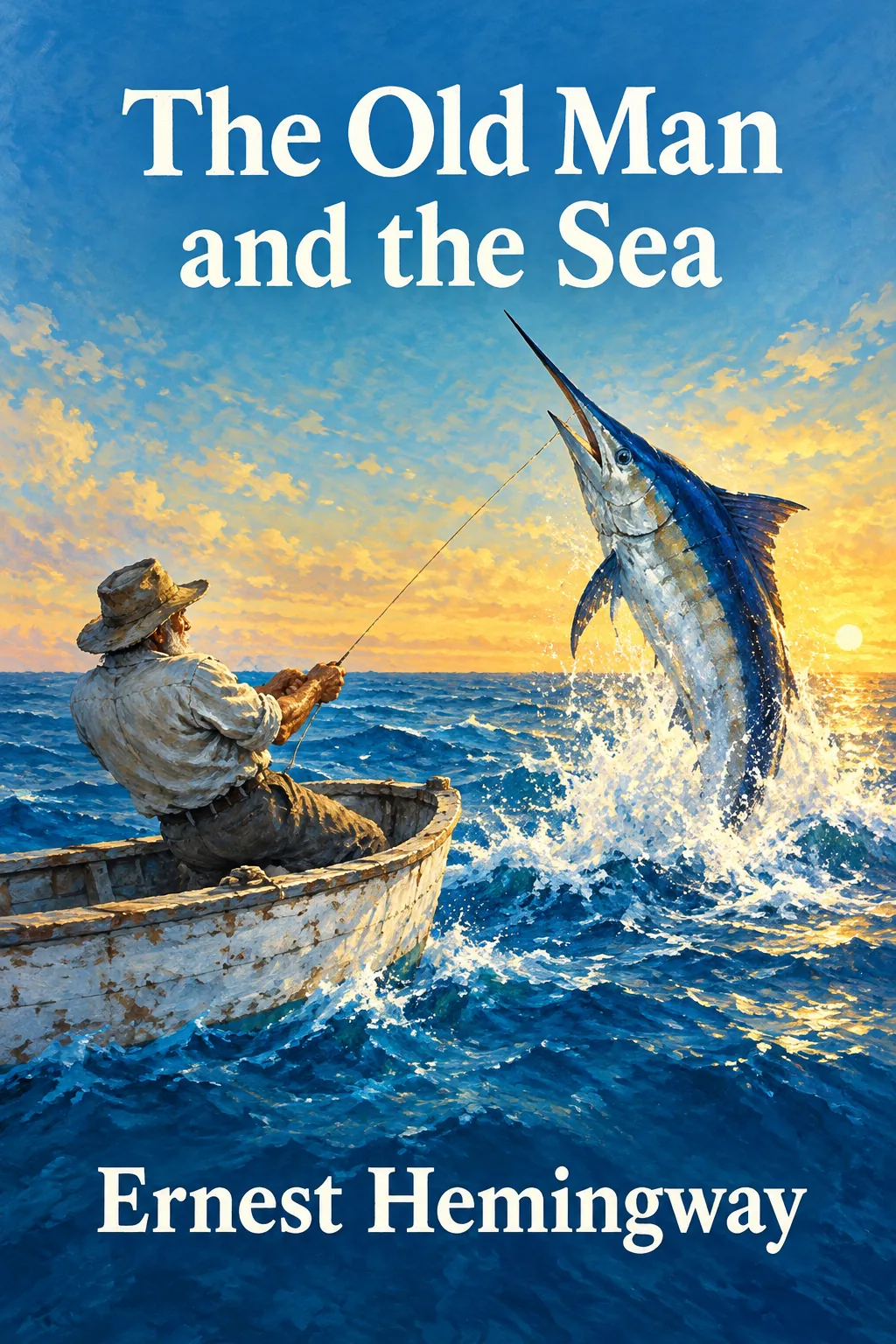
Novels often used for literary argument include Frankenstein, 1984, Brave New World, Fahrenheit 451, The Handmaid’s Tale and The Old Man and the Sea. Plays and epics such as Macbeth and The Odyssey are also strong options.

Whatever you choose, know three or four key scenes well enough to describe them in detail without notes. Specific scenes matter more than a long list of titles.

Common mistakes to avoid

  • Writing a thesis that only repeats the prompt.
  • Retelling the plot instead of explaining how details create meaning.
  • Listing literary devices without saying what each one does.
  • Using long quotations; short quoted phrases are easier to analyze.
  • Ending with a conclusion that only repeats the introduction.

How to use the model essays

Each question below has three answers: basic, good and excellent. Read the basic one first and try to say what is missing before you read the teacher notes.

The samples are for learning and for comparing with your own work. Write your own answer to each prompt, then check it against the rubric points listed with it.

Read next

Pair this guide with a study guide for the work you plan to write about. The Old Man and the Sea is a short, rich choice for a literary argument.

Poetry and prose practice come from the questions on this page, and the three levels show how a thesis, evidence and commentary grow stronger.
Exam practice: sample answers

Model answers are examples to learn from; write your own in your words.

literary argument: poetry analysis

1. Question 1 style (poetry analysis). Read Percy Bysshe Shelley’s sonnet “Ozymandias” (1818). In a well-developed essay, analyze how Shelley uses literary elements to develop his attitude toward power.

Outline

  1. Thesis: power is a story that outlives the ruler’s control
  2. Body 1: the frame and the traveler’s report
  3. Body 2: the inscription against the ruin
  4. Body 3: form, the turn and the empty desert
  5. Conclusion: who decides what is remembered
Basic Model answer

In the poem “Ozymandias,” Shelley shows that power does not last forever. The speaker meets a traveler who describes a broken statue in the desert.

The statue’s face has a “sneer of cold command,” which tells us the king was proud and harsh.

On the base are the words “Look on my Works, ye Mighty, and despair!” The king wanted other rulers to fear how great he was.

But the poem ends by saying that only sand is left around the ruin, so his boast now sounds empty.

Shelley uses imagery of the broken legs, the shattered face and the endless desert to show his attitude. He seems to think that rulers who trust in their own power will be forgotten.

The sculptor’s skill lasted longer than the king’s empire, which is another way the poem shows time defeating pride.

In conclusion, the poem teaches that human power is temporary, and it does this by letting the ruins speak instead of the speaker. This makes the poem’s message feel more believable than a simple statement would.

Why this level: What works: a clear main idea, correct details, and two short accurate quotations. What is missing: the thesis names a theme but not how the poem creates it, the quotations are described rather than analyzed, and the structure is a list of observations. To reach good: state a claim about method (for example the framing), explain what each quoted word does, and link the paragraphs.
Good Model answer

In “Ozymandias,” Shelley argues that the pride of rulers is destroyed by time, and he develops this idea by placing layers of storytelling between the reader and the ruin. The speaker repeats what “a traveller from an antique land” saw, so the king’s fall is told at second hand, which makes it feel like a fact that has outlived any single witness.

Shelley first builds the king as a figure of fear. The face has a “frown, / And wrinkled lip, and sneer of cold command,” and these harsh details suggest that the king ruled by contempt.

The inscription, “Look on my Works, ye Mighty, and despair!”, is addressed to other powerful people, so the king sees himself as the greatest of all.

The poem then reverses this image. The line “Nothing beside remains” follows the boast immediately, and the “colossal Wreck, boundless and bare” is surrounded by “lone and level sands.”

The size of the statue is set against the emptiness of the desert, so the king’s greatness becomes a joke at his own expense.

The sonnet form helps. The first part describes the ruin, and the turn at the pedestal brings in the king’s boast, so the reader hears the boast only after seeing what became of it.

There is also a quiet tribute to the sculptor, whose hand “mocked” the passions it copied. The artist’s work survives while the king does not, which suggests that art can outlast power.

Shelley’s attitude is therefore ironic and critical. He does not simply say that kings die.

He shows that their claims to permanence become a source of mockery, which is why the poem still feels sharp: the boast and the ruin sit together in the same few lines.

Why this level: Why it is good: it has an arguable thesis tied to a technique (the frame), several specific quotations, and each is followed by an explanation. Paragraphs are clear and follow the poem’s order. What the next level adds: sharper reading of single words (the double meaning of “mocked”), links between frame, form and irony, a real sense of complexity, and a conclusion that adds a new thought instead of summarizing.
Excellent Model answer

Shelley’s “Ozymandias” turns a boast into evidence against itself. By wrapping the king’s inscription in a traveler’s report, a sculptor’s craft and an indifferent landscape, the sonnet suggests that power depends on being remembered, and that memory is controlled by those who make and retell the image rather than by the ruler.

The poem’s frame is the first sign of this idea. The speaker does not see the ruin himself; he meets “a traveller from an antique land,” so the statue reaches us through at least two voices.

Even the king’s own words come to us as something read from a stone, with no way for him to correct or defend them. A ruler who wanted to speak directly to the “Mighty” has become a text that others can interpret.

The description of the face shows how that interpretation works. The “frown, / And wrinkled lip, and sneer of cold command” are carved details, and the poem credits the sculptor with reading them accurately: “those passions read” by an artist whose hand “mocked” them.

The verb carries a double meaning, since it can mean both imitated and ridiculed. The sculptor copied the king’s arrogance and, in doing so, made it permanent but also made it visible as arrogance.

The king’s power gave the artist a subject, yet the artist, not the king, determines what survives.

The pedestal then delivers the central irony. “My name is Ozymandias, King of Kings” asserts a rank beyond comparison, and “Look on my Works, ye Mighty, and despair!” invites rivals to measure themselves against him.

The command only makes sense if the works still stand. The next line, “Nothing beside remains,” drains the sentence of meaning, and the despair it demanded now belongs to anyone who reads it as a warning about their own ambition.

Form reinforces the point.

The sonnet is a compressed form often associated with controlled argument, but Shelley disturbs its usual pattern with an unusual rhyme scheme, so the poem has the shape of a sonnet without the comfort of a settled one.

That formal instability matches a subject whose order has collapsed. The turn at the pedestal moves from description to inscription, and the final lines widen the view from a single statue to endless sand.

The ending completes the movement from the human scale to the vast one. “Colossal” and “boundless” describe the wreck, but they are quickly overtaken by “bare” and by sands that “stretch far away.”

Size becomes emptiness, and the adjectives that once flattered the king now measure how much has vanished.

The poem’s refusal to name a modern target is part of its strength. By choosing an ancient king, it lets the reader supply the comparison, and the leap from ruin to the present is the reader’s own.

Ultimately, “Ozymandias” argues that power is a story told to the future, and stories escape the control of the powerful. The sculptor’s skill, the traveler’s retelling and the patient desert all reshape the king’s message until it says the opposite of what he intended.

The poem is therefore less a lament for lost greatness than a lesson in who decides what is remembered.

Why this level: Why it is excellent: the thesis is a precise, arguable claim about how meaning is made (memory controlled by tellers), and every paragraph returns to it. Quotations are short and exact, and the commentary reads individual words (“mocked,” “bare”), links the frame to the sculptor to the form, and recognises irony and complexity, which supports the sophistication point. The conclusion adds a final idea about who controls memory. Note that the essay stays inside the poem and does not rely on outside history.

Marking rubric

  • Thesis: a defensible claim about how Shelley develops his attitude toward power
  • Evidence: accurate short quotations from across the poem
  • Commentary: explains how word choice, framing, irony and form create meaning
  • Sophistication: recognises the double meaning of “mocked” or the tension between the boast and the ruin

Now write your own

Write your own answer to this prompt in 40 minutes, then compare your thesis and commentary with the three samples. Which level does your commentary match, and what would move it up?

literary argument: Question 3

2. Question 3 style (literary argument). Literature often presents an outcast to question the values of the community that rejects that person. Choose a novel and, in a well-developed essay, analyze how the author uses an outcast character to comment on that community. Do not merely summarize the plot.

Outline

  1. Thesis: the community’s cruelty helps create the monstrousness it fears, yet the Creature is not made innocent
  2. Body 1: Victor’s abandonment
  3. Body 2: the De Lacey cottage
  4. Body 3: the Creature’s own account and the framed narration
  5. Conclusion: what a society owes those it finds frightening
Basic Model answer

In Mary Shelley’s novel Frankenstein, the Creature is an outcast who shows how cruel people can be when they judge by appearance. Shelley uses his story to criticize a society that rejects people who look different.

At first the Creature wants kindness. He watches the De Lacey family in the cottage and learns to speak and read by listening to them.

He hopes they will accept him, but when they see him they are horrified and drive him away. This shows that the problem is not what he does but how he looks.

Shelley also shows that Victor Frankenstein is to blame. Victor runs away from his creation as soon as it comes alive and never teaches it right from wrong.

Because of this, the Creature says that he was good until misery made him a fiend.

In conclusion, the Creature is an outcast whose suffering is used by Shelley to criticize people who reject others without knowing them. The reader feels sympathy for him even when he does terrible things, and that sympathy is the author’s way of blaming the community and not only the monster.

Why this level: What works: a clear position, correct scenes (the cottage, Victor’s flight) and a sensible conclusion. What is missing: the thesis is general, there is no precise quotation, and the essay does not discuss the Creature’s violence or how Shelley tells the story. To reach good: add exact quotations, explain what each scene proves, and begin to qualify the claim.
Good Model answer

In Frankenstein, Mary Shelley uses the Creature as an outcast to argue that a society’s cruelty can create the very monstrousness it fears. Through his rejection by Victor, the De Laceys and the villagers, the novel shows a community that judges by appearance and then blames the victim for how he reacts.

The first rejection comes from his creator. When the experiment succeeds, Victor says that “breathless horror and disgust” filled his heart.

He abandons the Creature at once, leaving a being with no name, no guide and no knowledge of the world. Shelley therefore places the first failure of care with the person who should have taken responsibility, not with the Creature.

The cottage episode is the clearest test of the community’s values. The Creature secretly learns language and kindness from the De Lacey family, and he plans to approach the blind father first because the old man cannot judge by sight.

When the others return, they beat him and flee, so a being who has earned his gentleness through observation is punished for his face. The scene shows that the family’s goodness has limits, and that those limits are set by appearance.

The Creature later explains the result: “I was benevolent and good; misery made me a fiend.” This sentence places the cause of his violence in his treatment and not in his nature.

Shelley supports the claim by contrast, since the Creature is eloquent, reads Paradise Lost and asks for companionship, which are the wishes of a social person.

Shelley’s narrative design keeps the reader close to this argument. The Creature tells his own story inside Victor’s, so the monster becomes the most persuasive narrator in the book.

A reader who listens to him is placed in the position the villagers refused to take.

In conclusion, the Creature’s exclusion is Shelley’s way of asking who the real monster is. The novel does not excuse the murders, but it insists that a society which refuses compassion shares responsibility for the violence it later condemns.

Why this level: Why it is good: the thesis names the claim and the method, evidence comes from three parts of the book, and the commentary connects each scene to the thesis. What the next level adds: a complication (the Creature is guilty too), analysis of Shelley’s allusions and of the framed narration, and sentences that make links across scenes rather than moving one scene at a time.
Excellent Model answer

Mary Shelley’s Frankenstein uses an outcast to indict not only individual cruelty but a whole way of valuing people, one in which visible difference outweighs moral conduct.

By giving the rejected Creature the best language in the novel and the most reasoned argument, Shelley turns the community’s judgment against itself: the society that calls him a monster is shown to fail the test of sympathy.

Yet she complicates the argument by refusing to make the Creature innocent.

The failure begins with the maker. Victor’s “breathless horror and disgust” arrives the moment his project succeeds, which means the Creature is condemned before he has acted.

Shelley sharpens this by contrasting Victor’s ambition with his lack of responsibility: he wanted to be the source of a new species, but he refuses the duties of a parent. In this way the novel connects scientific ambition to social neglect, and the first outcast is created by a private act of avoidance.

The cottage sequence widens the critique from one man to a community.

The Creature learns language by watching the De Laceys, and the novel makes his education a moral one as well as a verbal one: he sees affection, labour and mutual care and wants to join them.

His plan to speak first to the blind father shows a shrewd understanding of prejudice, because the one person who cannot see him may listen. When the family drive him out, the lesson is brutal: the virtues the Creature has studied are practised only within a circle that appearance decides.

The irony is sharper because the De Laceys are themselves exiles, so people who know what rejection costs still inflict it.

Shelley then lets the Creature name the cause of his violence. He tells Victor, “I ought to be thy Adam, but I am rather the fallen angel,” and he says that misery made him a fiend.

The allusion to Milton’s Eden and to Satan makes his case in the language of creation and fall, so his situation is framed as theological as well as social: a creator has failed his creature. The reader must hold two views at once, sympathy for the abandoned being and horror at what he does to William, Clerval and Elizabeth.

This double response is the novel’s most important complication. If Shelley wanted only to blame society, she could have made the Creature gentle to the end.

Instead she lets him murder, and she lets him narrate the murders with a clarity that disturbs. The effect is to prevent an easy reading of the outcast as a pure victim and to suggest that rejection damages moral judgment even as it explains it.

The argument is therefore about shared responsibility, not transferred responsibility.

The framing structure supports this. The Creature’s account sits inside Victor’s narration, which sits inside Robert Walton’s letters, so every claim is heard through another listener.

Walton listens and, at the end, sees the Creature himself, which suggests that the community can still be made to look, but only at the cost of great suffering. The chain of tellers makes the reader decide whether to be a De Lacey or a Walton.

Frankenstein therefore asks what a society owes to those it finds ugly, strange or frightening. Shelley’s answer is that compassion is not a reward for good behavior but the condition that makes good behavior possible.

The Creature’s failure to receive it is both his tragedy and the community’s indictment.

Why this level: Why it is excellent: the thesis already contains its own complication (the community is guilty, but the Creature is not innocent), and the essay follows that tension to the end. It uses exact, brief quotations, notices irony (the De Laceys are exiles) and allusion (Milton), and links the framed narration to the argument about who listens. The commentary is consistently longer than the evidence, which supports the top row of the rubric and the sophistication point. Quotations are cited by scene because chapter numbers differ between the 1818 and 1831 texts; check your own edition.

Marking rubric

  • Thesis: a defensible claim about how Shelley uses the outcast to comment on the community
  • Evidence: specific scenes and brief quotations from at least three parts of the novel
  • Commentary: explains why each detail supports the claim, not only what happens
  • Sophistication: handles the tension between sympathy for the Creature and his responsibility for the murders

Now write your own

Choose a different novel with an outcast character, such as 1984 or The Handmaid’s Tale, and write your own 40-minute response to this prompt. Then mark your essay against the four rubric points.

Frequently Asked Questions

What is the AP Lit exam format?

The exam takes three hours. Section I has 55 multiple-choice questions in one hour and counts for 45 percent. Section II has three essays in two hours and counts for 55 percent: poetry analysis, prose fiction analysis and a literary argument.

What does the AP Lit rubric score?

Each essay earns up to six points. One point is for a defensible thesis, up to four are for specific evidence and commentary that explains it, and one is for sophistication, which means showing complexity or writing with real control.

Is there an official AP Lit reading list?

No. The College Board does not require a set list, so for the literary argument you choose a work of literary merit. Pick one you know well enough to describe several scenes in detail, and ask your teacher for suggestions.

Where can I find AP Lit essay prompts and FRQ examples?

Past free-response questions and scoring guidelines are on the College Board’s AP Central site. This page uses original prompts and model essays so that you can practise the same skills without copying official material.

How long should an AP Lit essay be?

There is no fixed length. In about 40 minutes most strong essays have an introduction with a thesis, two or three body paragraphs and a short conclusion. Focus on clear commentary on well-chosen evidence rather than on word count.

Check Your Understanding

Pick an answer for each question to see if you were right.

  1. How many multiple-choice questions are in Section I?

  2. What is the order of the three free-response questions?

  3. How many points can one essay earn?

  4. Which row of the rubric is worth the most points?

  5. For Question 3, who chooses the work you write about?

Share:

About the Writer

Alex Ng
Alex Ng

Software Engineer & Writer

Software engineer with a passion for distilling complex ideas into actionable insights. Writes about finance, investment, entrepreneurship, and technology.

Read more →

Keep reading

Explore the topic: US High School Literature

Articles

Summaries