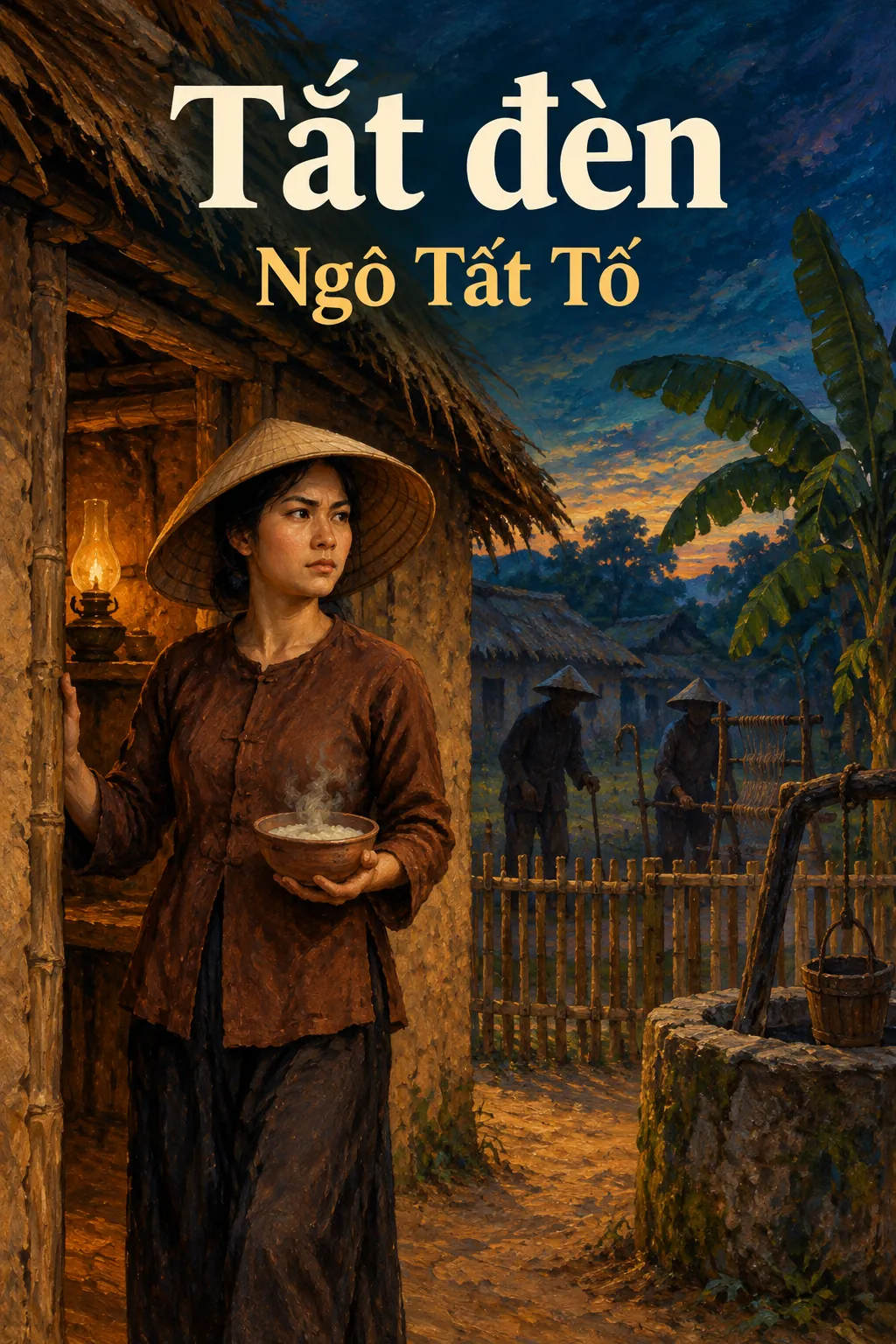
Tắt đèn
Ngô Tất Tố 著
Tắt đèn (When the Lights Go Out) is a Vietnamese novel by Ngô Tất Tố about a poor peasant family in a northern village under colonial rule. Tax season arrives, and Chị Dậu must find money to save her sick husband from beatings and arrest. She sells what little she has, begs, and swallows insults, until one confrontation pushes her past patience. The book is a sharp portrait of poverty, power and a woman's courage.
核心的なアイデア
"Tắt đèn shows how a colonial-era tax system crushes a peasant family, and how Chị Dậu, pushed past endurance, turns from pleading to fighting back."
重要な洞察
Tax as a machine of ruin
The sưu is not just money. It is a chain that runs from colonial rule to village officials to a single poor household, and each link takes its share. Because it is collected by force, a family can lose its dog, its child and its health in one season. The novel never explains the tax system in theory; it shows its cost in objects, bodies and people, which is why the reader feels the injustice so directly.
Chị Dậu sells her dogs and her daughter cái Tí and still faces arrest for the dead brother's tax.
Love is the root of both patience and rebellion
Chị Dậu does not change character when she fights. The same love that makes her beg and endure insults makes her strike when her sick husband is about to be tied up. The book suggests that gentleness and courage are not opposites. For an essay, this is a useful way to avoid describing her as two separate people: the patient wife and the fighter are one woman reacting to different levels of danger.
She calls the cai lệ “sir” at first, then throws him to the ground when he moves to bind her husband.
Power without a face
The cai lệ has no name and gives no reasons, only commands and blows. Ngô Tất Tố uses him to stand for a whole system of petty authority rather than one cruel man. His quick defeat also mocks a power that looks solid but is hollow. The author lets him fall almost comically, which shows contempt for the confidence of men who act in the name of the law without any sense of right.
A man who bullies the whole village cannot withstand one woman pushed to her limit.
Wealth buys people
Nghị Quế is the quiet winner of the tax season. He buys when the poor are desperate, taking a mother's dogs and her child at a low price. The novel ties poverty to the people who profit from it. Because he rarely raises his voice, his cruelty seems respectable, and that makes him a sharper picture of village power than the loud enforcers.
He buys the litter of dogs and the child cái Tí from a mother who has nothing else left to sell.
Speech shows status
Vietnamese pronouns carry rank, so a change of address is a change of power. Chị Dậu begins with the lowest forms and ends with the highest, and the reader can follow her inner shift without any comment from the narrator. This is why teachers ask students to look closely at how she names herself and the officials: the grammar itself tells the story of the scene.
She moves from “child” and “sir” to “I”, and finally speaks to the cai lệ as a superior would.
章ごとの解説
Chapter-by-chapter summary
Spoiler warning: this section covers the whole plot, including the ending.
Tắt đèn was serialised in the newspaper Việt nữ in 1937 and has 27 chapters, so this guide groups them into five parts. The five-part division is our own, not the book's, and the parts are not numbered chapters.
The famous excerpt Tức nước vỡ bờ, which students study in school, is chapter XVIII and falls in the third part.
Part 1: Tax season in the village
The story opens in a village in northern Vietnam during the season when the poll tax (sưu) must be paid. Chị Dậu's household is among the poorest in the village.
Her husband, anh Dậu, is ill, and the family must also pay the tax owed for his brother, who has died. Village officials press every household hard, and anyone who cannot pay is tied up and beaten.
The village is run by its own officials, who answer to the colonial administration above them. Each level wants its share, so the pressure on a poor household grows as it travels down.
Anh Dậu is dragged to the communal house, so Chị Dậu must find money at once. This opening matters because it creates the pressure behind every later choice: nothing she does afterwards makes sense unless we feel how close the family is to ruin.
Part 2: Selling what they have
To pay the tax, Chị Dậu sells her litter of dogs and her eldest daughter, the child cái Tí, to the household of the rich Nghị Quế. The price is very low, and it is still not a fortune.
With the money, anh Dậu is released and carried home, but the family has lost its child and nearly everything of value.
Chị Dậu's grief is quiet but clear: she knows the sale is a betrayal of her child and does it only because the alternative is her husband's death. The author lets the reader feel that choice without a speech.
This part shows how the tax turns even a mother's love into a transaction. It also introduces Nghị Quế, who profits from the village's misery.
Part 3: Tức nước vỡ bờ
Anh Dậu lies at home, barely alive. A kind neighbour lends a little rice, and Chị Dậu cooks porridge and coaxes her husband to eat.
Just then the cai lệ and the village head's man burst in, demanding the tax owed for the dead brother. Chị Dậu begs politely, calling them “sir” and herself “child”, but the cai lệ pushes her aside and hits her.
When he moves to tie up her husband, she stops begging. She argues, then fights, and throws down both men.
Notice how quickly the scene moves: a few lines of dialogue, a push, a blow, then the reversal. The speed makes the turn feel like a breaking point rather than a plan.
This scene matters because it shows that the gentle woman of the opening is not weak: she is patient only for as long as patience can protect her family.
Part 4: After the fight
The fight brings her no safety. Chị Dậu is arrested and brought before the district magistrate (quan huyện).
He tries to assault her, and she throws the silver coins in his face and runs away.
Escaping him does not clear the debt, because part of the tax is still unpaid. A man from the household of the old mandarin, quan cụ, a provincial official, gives her two đồng toward it and offers her work as a wet nurse (ở vú), giving her milk to the old man because he has lost his teeth.
She leaves her baby, cái Tỉu, with a neighbour and goes to town.
This part matters because the author refuses an easy victory: one brave act frees her from one predator, not from the debt, so a mother must again sell her labour to survive.
Part 5: Into the dark
For a while she sends money home from her work in town. Then, one dark night, the old mandarin, quan cụ, creeps into her room intending to assault her.
Chị Dậu escapes and runs out into a night as black as ink, as dark as her own prospects.
The book ends there, without rescue or answer. Many readers feel the open ending is the book's sharpest argument, since no authority steps in to help her.
The ending matters because it carries the meaning of the title: the lamp of this family has been put out, and the reader is left to ask who is responsible.
Characters
- Chị Dậu: a poor peasant wife and mother, the heart of the novel. She is tender, resourceful and patient, and she fights only when her husband is in danger.
- Anh Dậu: her sick husband, beaten for unpaid tax. He stands for the weak peasant who cannot defend himself.
- The cai lệ: a petty enforcer who carries out the tax demands with shouting and blows. He has no name and no argument, only the confidence of someone acting for authority.
- The village head's man: the cai lệ's partner, who adds his own threats and insults.
- Nghị Quế: a rich village notable who buys Chị Dậu's litter of dogs and her daughter cái Tí.
- Cái Tí: the eldest daughter, sold to raise tax money. She is the book's clearest victim.
- The district magistrate (quan huyện): the official before whom Chị Dậu is brought after the fight. He tries to assault her, and she throws the silver in his face and runs.
- The old mandarin (quan cụ): the old official of the provincial household who hires Chị Dậu as a wet nurse to pay the rest of the tax. He creeps into her room at night, and she flees.
- The kind neighbour: an old woman who lends a little rice, a small sign that poor people still help each other.
Writing about this book
Most school questions ask you to analyse Chị Dậu in the excerpt Tức nước vỡ bờ. Start with a thesis: she is both a loving wife and a woman with hidden strength.
Then build three points: her love for her husband, her patience before the officials, and her explosion of resistance. For each, give one concrete detail, such as the porridge, the polite way she addresses the officials, or the moment she throws the cai lệ down.
Look at her pronouns. She moves from “child” and “sir” to “I”, and finally to a tone that treats the cai lệ as an inferior.
That change is a quick way to show how the author reveals character through speech.
Then widen the view with the author's purpose: the scene accuses the tax system and praises the hidden courage of peasant women. Add a limit to show depth: one fight does not free her, and the novel ends in darkness.
A short plan helps under exam pressure: one sentence for each of the three points, one for the author's skill, one for the limit. Spend your last minutes on the conclusion, which should return to your thesis instead of repeating the plot.
Quote briefly, under 25 words, and use your own words for the rest. The model answers below show three levels, and they are for learning and for comparing with your own work.
アクション
今日から実践できるステップ:
-
When you analyse a character, track how their way of speaking changes; here the pronouns show the turn from pleading to fighting.
-
Link a scene to its context: tax, class and village power explain why Chị Dậu is pushed so far.
-
Argue that patience and courage can come from the same love instead of treating them as opposites.
-
Show depth by noting limits: the fight is a spark of resistance, not a solution.
注目すべき引用
"“My husband is ill, and you have no right to mistreat him.” (excerpt Tức nước vỡ bờ, our translation)"
— Ngô Tất Tố
"“Tie up my husband right now and I'll show you!” (excerpt Tức nước vỡ bờ, our translation)"
— Ngô Tất Tố
"“I beg you, sir, my husband has only just come round. Please let him be.” (excerpt Tức nước vỡ bờ, our translation)"
— Ngô Tất Tố
おすすめの読者
Students in lower and upper secondary school who study Tắt đèn in Vietnamese literature class, and readers who want a short, powerful picture of peasant life under colonial rule. It is also helpful for anyone preparing an essay on Chị Dậu or on the excerpt Tức nước vỡ bờ, including students who read Vietnamese literature in translation.
Ngô Tất Tố について
Ngô Tất Tố (1893–1954) was a Vietnamese journalist, scholar and novelist from a village near Hanoi. He wrote about peasant life and the abuses of village officials. Tắt đèn was serialised in the newspaper Việt nữ in 1937 and published as a book in 1939, and remains his best-known work. He later joined the resistance and died in 1954.
要約作成者

Software Engineer & Writer
Software engineer with a passion for distilling complex ideas into actionable insights. Writes about finance, investment, entrepreneurship, and technology.
すべての要約を見る →レビュー
レビューはまだありません。最初のレビューを書きましょう!
レビューを書く
続けて読む
このテーマを探る: 学習ガイド要約
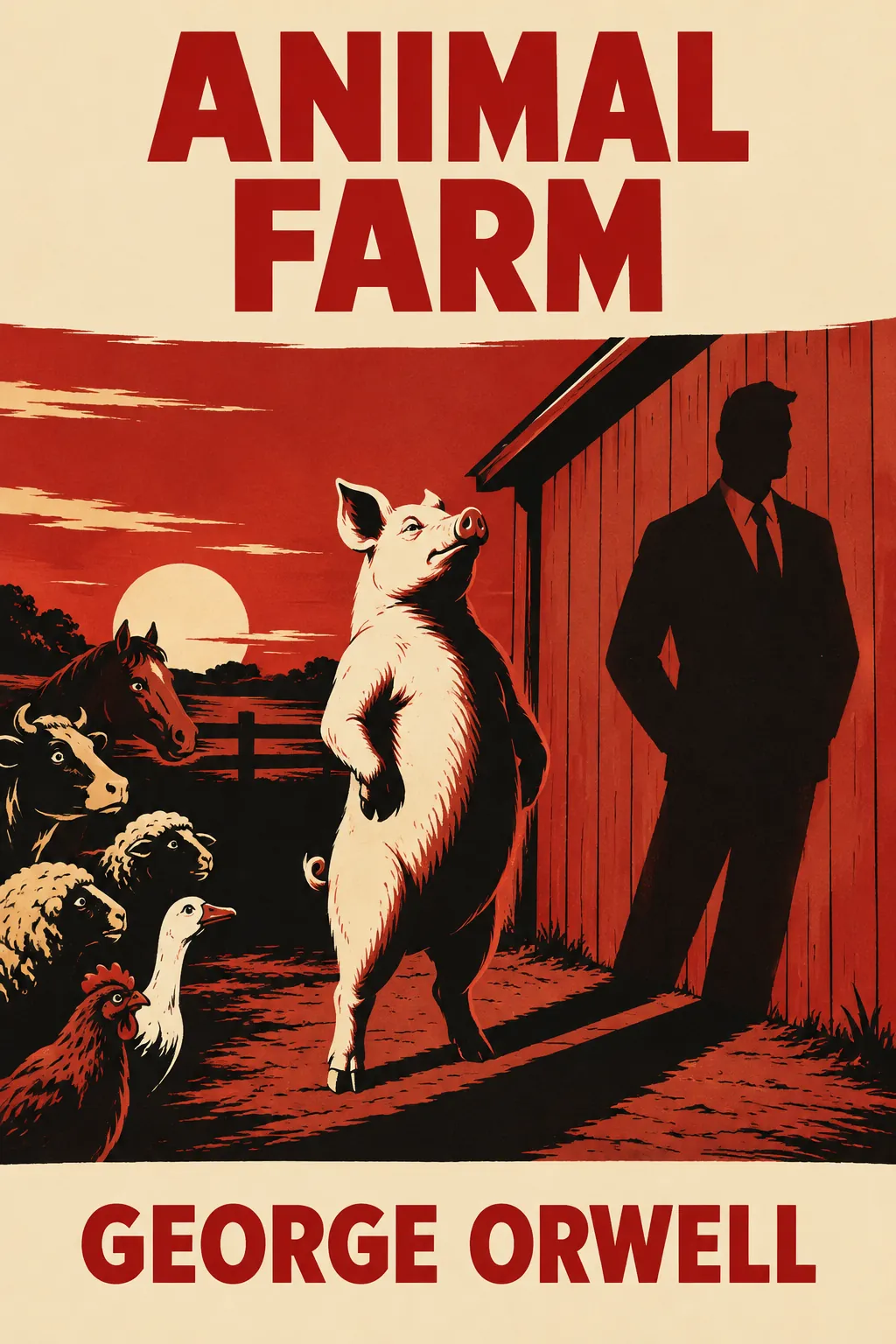
ジョージ・オーウェル『動物農場』— 要約と分析
George Orwell
マナー農場の動物たちが人間を追い出し、「平等」を掲げたユートピアを建設しようとするが、次第に豚たちが権力を掌握し独裁体制を築く。最終的に、…

アウトサイダーズ(S.E.ヒントン著)
S.E. Hinton
1960年代のオクラホマを舞台に、貧困層の「グリース」と富裕層の「ソッシュ」という対立する二つのグループの少年たちの葛藤を描いた物語。主人…

F・スコット・フィッツジェラルド『グレート・ギャツビー』— 要約と分析
F. Scott Fitzgerald
ニック・キャラウェイの視点から、謎の富豪ジェイ・ギャツビーの人生が描かれます。ギャツビーは失った恋人デイジーを取り戻すため、狂信的なまでに…

ハツカネズミと人間たち(ジョン・スタインベック)
John Steinbeck
大恐慌時代のアメリカを舞台に、知的に優れたジョージと、心優しいが知能に制限のある巨漢レニーが、自分たちの農場を持つという夢を追い求める物語…