
Built to Last
by Jim Collins, Jerry Porras
Built to Last (1994) by Jim Collins and Jerry Porras asks why some companies stay great for decades while rivals fade. The authors studied 18 “visionary” companies, such as Disney, Hewlett-Packard, Johnson & Johnson and Sony, and compared each with a close rival. They found that lasting firms are not built on a brilliant idea or a famous leader. They build the organization itself: a stable core of values and purpose, bold goals, strong culture, steady experimentation and leaders grown from within.
The Big Idea
"Great companies last because they are built like clocks, not carried by one great idea or leader: a core ideology that never changes, paired with relentless change in everything else."
Key Insights
See the company as the product
Products age and leaders retire. Lasting companies design the machinery that keeps working through both: values, routines, hiring and succession. Treating the organization as your best creation is the heart of clock building.
Hewlett and Packard started without a fixed first product and tried several ideas. They were gifted engineers, but they also shaped the values and working style that later outlived their own roles.
Decide what never changes
Separating what you protect from what you adjust lets a company move boldly. Protect core values and purpose. Change strategy, products, methods and structure whenever the world requires it. Without this line, each change risks erasing the company’s identity.
Johnson & Johnson kept its Credo, which puts customers first, as it grew. When Tylenol was tampered with in 1982, the company pulled the product, a choice that matched its stated priorities.
Aim at one daring goal
A ten-to-thirty-year goal that is clear, measurable and slightly frightening gives people a shared direction and energy. It works best when it grows out of the core ideology, not out of a wish to look impressive.
Wal-Mart set out in 1990 to become a $125 billion company by 2000. Boeing put its resources behind the 707 to lead in jet airliners. Both goals told employees exactly what winning meant.
Evolve through experiments
The book argues that many great moves came from many tries and lucky accidents, not from a perfect plan. Try more things, keep what works and drop the rest. That cycle keeps a company fitted to a changing world.
3M let engineers spend about 15 percent of their working time on their own projects. Many new products and uses grew from that room to experiment, and failed trials counted as lessons, not shame.
Chapter Breakdown
Chapter-by-chapter summary
Chapter 1: The Best of the Best
Collins and Porras began with a survey of top executives and chose 18 companies that were leaders in their fields, widely admired, and decades old, with more than one generation of CEOs and more than one product cycle. Each was paired with a comparison company in the same industry that was good but less lasting: 3M with Norton, Ford with GM, Sony with Kenwood, Disney with Columbia Pictures, Hewlett-Packard with Texas Instruments. Comparing winners with strong rivals, not with failures, is what makes the findings useful. Why it matters: the rest of the book asks what the winners did differently, so the method decides how far you can trust each answer.
Chapter 2: Clock Building, Not Time Telling
Most people picture a founder with a brilliant product. The authors report that many visionary companies began without any clear idea, and that founders such as Hewlett and Packard tried several products before one worked. Their greatest creation was the company itself. The book calls this clock building: designing an organization that keeps running after any single product or leader is gone. Time telling means relying on one leader’s charisma or one lucky idea. Why it matters: the question changes from “what is the big idea?” to “what kind of organization will still work in thirty years?”
Chapter 3: More Than Profits
Visionary companies wanted profit, but profit was not the reason they existed. Merck’s people spoke of preserving and improving human life, and Disney of bringing happiness to people. The book argues that such purposes guide decisions better than a profit target does, and that these firms still did well on the stock market over the long run. The authors treat ideals and money as partners, not rivals. Why it matters: a purpose gives people a reason to stay and a test for hard choices, while profit becomes a result, as necessary as breathing but not the point of life.
Chapter 4: Preserve the Core / Stimulate Progress
The core ideology is the pairing of core values and core purpose, and the authors say it should stay fixed. Strategies, products, methods and structures can and should change. Johnson & Johnson’s Credo, which puts customers first, stayed in place as the company grew, and in the 1982 Tylenol crisis its executives leaned on it when they pulled the product. The book also rejects the idea that you must pick stability or change, purpose or profit. Why it matters: a fixed core is what lets a company change boldly without losing itself.
Chapter 5: Big Hairy Audacious Goals
A Big Hairy Audacious Goal, or BHAG, is a clear, daring target set ten to thirty years ahead. It is easy to tell when it is reached, and big enough to feel a little frightening. The book points to Boeing staking its future on the 707 jet airliner, to Wal-Mart’s 1990 aim of becoming a $125 billion company by 2000, and to Sony’s postwar pledge to change Japan’s image for poor-quality goods. Why it matters: a shared finish line pulls effort in one direction. A goal cut off from the core ideology, though, is just a stunt.
Chapter 6: Cult-like Cultures
The authors found that visionary companies are often tight-knit places where people who share the values feel at home and people who do not tend to leave. Disney calls employees “cast members” and trains them carefully in its own ways of speaking and acting. Nordstrom is known for stories of staff going out of their way for customers. The authors do not mean a real cult; they mean consistent hiring, training, stories and rewards built around the core. Why it matters: values written on a wall fade, but values built into daily routines survive changes of staff.
Chapter 7: Try a Lot of Stuff and Keep What Works
Many of the best moves came from experiments and lucky accidents more than from grand plans. 3M let engineers spend about 15 percent of their time on projects of their own choosing, and new products grew from that freedom. Sony’s first products did not all succeed, yet its trial and error led to hits. The authors compare this to evolution: many small variations are tried and the ones that fit the environment survive. Why it matters: successful firms do not avoid failure by standing still. They test small and learn fast.
Chapter 8: Home-Grown Management
Visionary companies promoted their next leaders from inside far more often than their comparison rivals did, and outside CEOs were very rare. People raised in the company have absorbed its core ideology, so it is less likely to fade at each handover. GE is often cited for its long habit of developing successors. Why it matters: choosing and grooming leaders is part of keeping the core alive. Treated this way, succession becomes a way to pass on the ideas, and the company no longer depends on one outstanding leader.
Chapter 9: Good Enough Never Is
Even when things go well, these companies press themselves to improve. Wal-Mart’s Saturday-morning meetings, where managers review numbers and stores, and Boeing’s habit of worrying about falling behind are examples. The authors describe a kind of self-made discomfort: creating internal pressure before the market forces a change. The benchmark is yesterday’s performance, not just the nearest rival. Why it matters: the biggest threat to a lasting company is often not a competitor but the complacency that follows success.
Chapter 10: The End of the Beginning
The closing chapter ties the ideas together under one test: alignment. Goals, rewards, hiring, training and even office layout should all push in the same direction as the core ideology. A fine statement of values on the wall means little if pay and promotion reward the opposite behavior, and people notice at once. The authors suggest checking each practice with two questions: does it protect the core, and does it help the company make progress? Why it matters: a vision only works when the daily machinery of the organization backs it up.
Key people and terms
Jim Collins
American management researcher and author. He taught at Stanford Graduate School of Business before starting his own research lab, and he led the writing of this book with Jerry Porras. His later book Good to Great (2001) asks a related question about companies that make a lasting leap.
Jerry Porras
Professor of organizational behavior and change at Stanford Graduate School of Business and Collins’s co-author. His research on vision and values in organizations shaped the study’s focus on how companies hold on to what matters.
Visionary company
The authors’ term for a premier, widely admired institution in its industry that has left a lasting mark and kept going through many CEOs and product cycles. The study picks 18 of them, all decades old.
Comparison company
The rival matched with each visionary company: same industry, similar start, similar chances, and still a respectable business. Pairing them lets the authors separate what lasting firms do differently from what any good firm does.
Core ideology
The combination of core values and core purpose that defines a company. It is meant to stay fixed for a century or more, while strategies and practices keep changing. It is the part you hold on to.
Core purpose
The deepest reason a company exists, beyond making money. Merck’s aim of preserving and improving human life and Disney’s wish to bring happiness are examples. A purpose is never fully finished, like a guiding star rather than a finish line.
BHAG
Short for Big Hairy Audacious Goal: a clear, daring target set ten to thirty years out. It should be easy to tell when it is reached, and bold enough to feel a little scary. It gives the team a shared finish line.
Clock builder
A leader who invests in the design of the organization: its values, processes, culture and succession. The opposite is the time teller, who relies on personal charisma or a single product. The book argues that clock builders create firms that outlast their founders.
Cult-like culture
A culture so clear about its values that people who fit feel at home and people who do not fit leave. The authors do not mean a real cult; they mean strong, consistent selection, training and storytelling around the core ideology.
Genius of the AND
The ability to hold two goals at once, such as purpose and profit, or continuity and change, instead of choosing one. The authors contrast it with the “Tyranny of the OR”, which treats such goals as opposites.
Applying it in real life
The book is about companies, but its questions also work for a school club, a small shop or your own career. Try four of them.
- Why do we exist beyond money? Write the answer in one sentence.
- Which three to five values would we keep even if they cost us something? Check whether recent decisions honored them.
- Where do we want to be in ten years? Set one bold goal you can clearly measure.
- How many small experiments can we run this year? Keep only those that work.
You can also ask whether your work would keep running if you stepped away. Writing down your procedures so a successor can pick them up is clock building on a small scale. One caution: several of the 18 companies stumbled later, and the study looks backward at winners. Treat the book as a set of good questions, not a guarantee of success.
Take Action
Practical steps you can implement today:
-
Write down your core values and purpose, then test your hiring and your hard decisions against them.
-
Set one clear goal ten years out that is bold enough to feel a little uncomfortable, and make it measurable.
-
Run small experiments often, keep only what works, and treat failures as useful information about what to drop.
-
Grow your successors from within, and treat passing on the core ideology as a designed part of the job.
Notable Quotes
"“Clock building, not time telling.” (Chapter 2)"
— Jim Collins, Jerry Porras
"“More than profits.” (Chapter 3)"
— Jim Collins, Jerry Porras
"“Preserve the core / Stimulate progress.” (Chapter 4)"
— Jim Collins, Jerry Porras
"“Try a lot of stuff and keep what works.” (Chapter 7)"
— Jim Collins, Jerry Porras
"“Good enough never is.” (Chapter 9)"
— Jim Collins, Jerry Porras
Who Should Read This
Managers, founders and business students who want a research-based look at why some companies last. It suits readers from about 16 up, including university students of business and management. No finance background is needed, though the full book is long; this guide gives the core ideas in one sitting.
Frequently Asked Questions
What is Built to Last about?
Built to Last is a business book from 1994. Jim Collins and Jerry Porras compared 18 visionary companies with close rivals to find out why some firms stay outstanding for decades. Their answer is that lasting firms build the organization itself, around a stable core ideology, bold goals, strong culture, experimentation and home-grown leaders.
Who wrote Built to Last?
Jim Collins and Jerry Porras, who worked together at Stanford. Collins is a researcher and author who later wrote Good to Great. Porras is a Stanford Graduate School of Business professor known for studying organizational vision and values.
What is a BHAG?
BHAG stands for Big Hairy Audacious Goal. It is a clear, daring target set ten to thirty years ahead, such as Wal-Mart’s 1990 aim of reaching $125 billion in sales by 2000. A good BHAG is easy to measure, slightly frightening, and consistent with the company’s core ideology.
How is Built to Last different from Good to Great?
Built to Last studies companies that stayed outstanding over very long periods and asks how they were designed. Good to Great (2001), also by Collins, studies a group of companies that jumped from average to excellent results and asks what triggered that leap. They are separate studies with different questions.
Is the book still useful today?
Its questions about purpose, values, goals and succession still fit most organizations. But the research looks back at successful American firms, and several of them struggled later. Readers get the most from it by treating its ideas as prompts for their own situation, not as a formula that guarantees lasting success.
Check Your Understanding
Pick an answer for each question to see if you were right.
-
What did the authors compare each visionary company with?
A close rival in the same industry — Each visionary company was paired with a comparison company in the same industry that was good but less lasting.
-
What does “clock building” mean in the book?
Designing an organization that outlasts any leader or product — Clock building means designing the organization so that it keeps working without depending on one person or product.
-
According to the book, which part of a company should stay fixed?
Its core ideology — Core values and purpose stay fixed while strategies, products and practices change.
-
What does BHAG stand for?
Big Hairy Audacious Goal — A BHAG is a Big Hairy Audacious Goal, a bold target set ten to thirty years out.
-
Which company’s Credo guided its response to the 1982 Tylenol crisis?
Johnson & Johnson — Johnson & Johnson leaned on its Credo, which puts customers first, when it pulled Tylenol in 1982.
About Jim Collins, Jerry Porras
Jim Collins is an American researcher and author who studied at Stanford and went on to write about why some organizations last. Jerry Porras is a professor at Stanford Graduate School of Business, known for his work on organizational vision and values. Together they published Built to Last in 1994 after years of research.
Summary Written By

Software Engineer & Writer
Software engineer with a passion for distilling complex ideas into actionable insights. Writes about finance, investment, entrepreneurship, and technology.
View all summaries →Reviews
No reviews yet. Be the first to share your thoughts!
Write a Review
Keep reading
Explore the topic: Business StrategySummaries
The 7 Habits of Highly Effective People
Stephen R. Covey
Stephen Covey’s foundational framework for personal and professional effectiveness through character development.
Strategy: A History
Lawrence Freedman
“Strategy: A History” by Lawrence Freedman is a comprehensive exploration of the evolution of strategy in various realms, from military…

Why Nation Fail
Daron Acemoglu and James A. Robinson
“Why Nations Fail” by Acemoglu and Robinson examines the deep-rooted factors influencing nations’ prosperity or poverty. It argues that inclusive…

How to Win Friends and Influence People
Dale Carnegie
“Dale Carnegie’s ‘How to Win Friends and Influence People’ is a timeless self-help guide that offers practical advice on improving…
Articles

Let Them Theory vs task separation: where responsibility starts
Let Them Theory and task separation both ask you to stop managing other people’s choices, but they start from different…
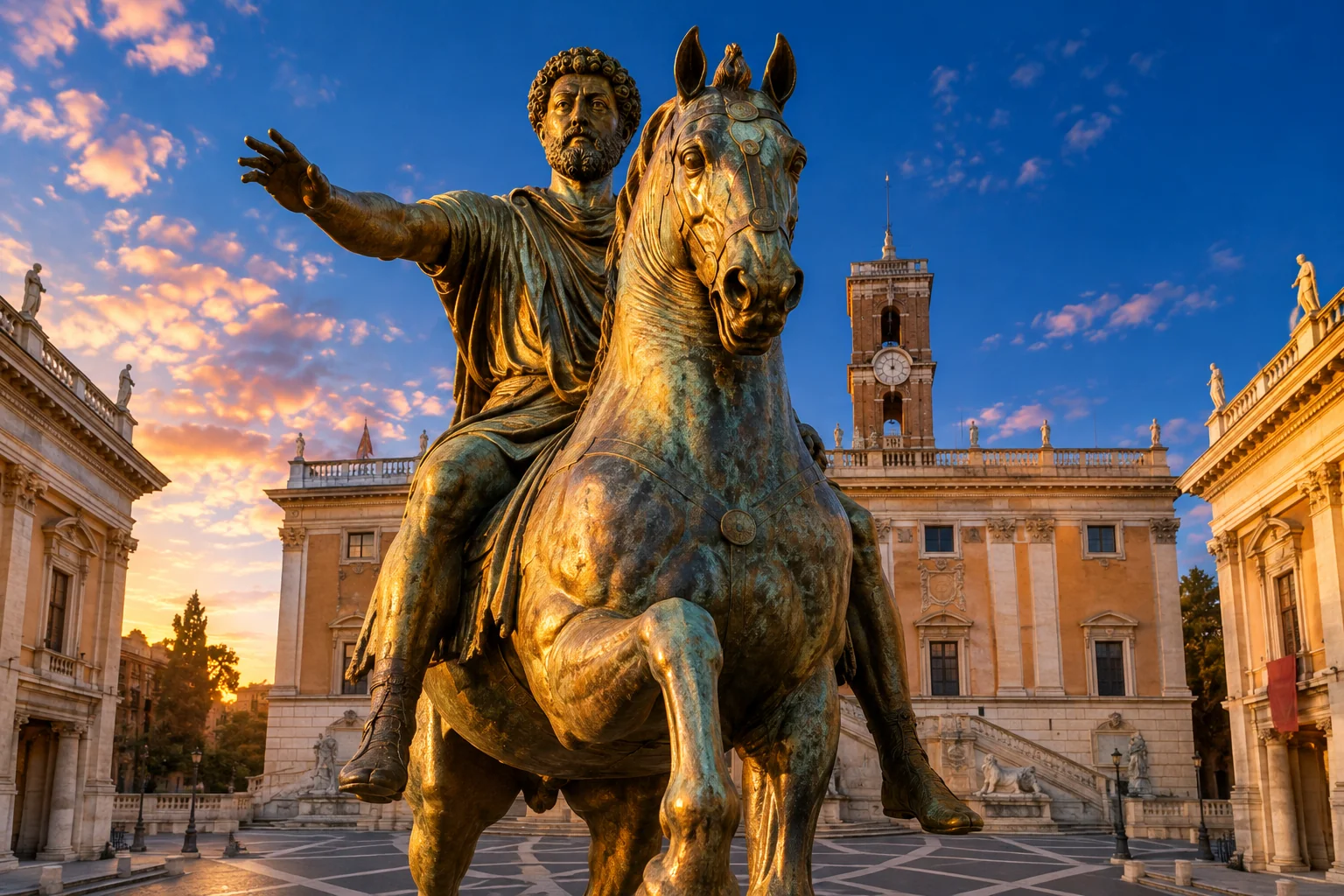
Who Was Marcus Aurelius? The Roman Emperor Behind Meditations
Marcus Aurelius was a second-century Roman emperor who practiced Stoic philosophy, leaving behind a collection of private notes known today…

The Industrial Revolution Timeline
Follow the timeline of the Industrial Revolution from early innovations to the second industrial revolution.