Intrinsic elements in five minutes
Intrinsic elements (unsur intrinsik) are the building blocks inside a story: theme, characters and characterisation, plot, setting, point of view, style and moral message.
If you can answer seven questions about what is on the page, you can analyse any short story (cerpen) or novel.
This guide explains each element in plain words and tests the method on a short sample story that we wrote ourselves.
It follows the Bahasa Indonesia aims for Fase E-F of Kurikulum Merdeka, but the method works for any language class.
What are intrinsic elements?
The word intrinsic means from the inside. These are the parts you can point to in the text without leaving it.
Extrinsic elements (unsur ekstrinsik) come from outside the text, such as the author's life and the society around the book.
A full analysis uses both, but exams usually begin with the intrinsic ones.
The seven intrinsic elements
1. Theme (tema)
The theme is the central idea the story keeps returning to, such as friendship, poverty, courage or responsibility.
Write it as a short phrase, then test it: does every major event connect to it?
Do not confuse the theme with the plot. The plot is what happens, and the theme is what it is about.
2. Characters and characterisation (tokoh dan penokohan)
Tokoh are the people in the story, and penokohan is how the writer shows what they are like.
The analytic method tells us directly, while the dramatic method shows traits through speech, actions, thoughts and looks.
Also name the role: protagonist, antagonist or supporting character, and flat or round.
3. Plot (alur)
The plot is the chain of events linked by cause and effect.
It can move forward, backward or mixed. Name the type and show the stages: introduction, conflict, rising tension, climax and resolution.
4. Setting (latar)
Setting has three parts: place, time and social atmosphere.
Always ask what the setting does. A hot, empty afternoon can make a character restless, and a crowded market can raise pressure.
5. Point of view (sudut pandang)
This is who tells the story. First person uses I (aku), and third person uses he or she.
Third person can be limited to one character's mind or all-knowing. The choice decides what the reader is allowed to know.
6. Style (gaya bahasa)
Style covers word choice, sentence rhythm and figures of speech such as simile and personification.
Quote a short phrase and say what effect it creates. Naming a figure of speech without its effect earns few marks.
7. Moral message (amanat)
The amanat is the lesson or value a reader can take from the story.
Write it as a full sentence, for example: we should keep our promises even when something fun tempts us.
Topic, theme and moral message: keep them apart
Three words are often mixed up. The topic is the subject in one word, such as a shop; the theme is the idea about that subject, such as responsibility; and the amanat is the lesson a reader takes away.
For Kunci Warung Nenek the topic is a shop, the theme is responsibility and the amanat is that a kept trust matters more than a short pleasure.
If you can write all three without repeating yourself, you understand the story.
Extrinsic elements (unsur ekstrinsik)
The main extrinsic elements are the author's background, the society and period in which the work was written, and the values of the readers.
For a novel, they explain why a story about school poverty or migration feels urgent to its first audience.
Keep them in a separate paragraph so the marker sees that you can tell the two groups apart.
Short story text structure (struktur teks cerpen)
School lessons often describe a short story in six parts: abstrak (an optional summary), orientasi, komplikasi, evaluasi, resolusi and koda (an optional closing comment).
Orientasi introduces people, place and time, and komplikasi starts the problem.
Evaluasi is where the tension peaks and the characters react, and resolusi settles the problem.
Not every story has an abstrak or koda, so only name the parts you can really find.
Novel or short story: what changes?
A short story usually has one main conflict, a few characters and a setting that changes little, so each element can be named in a sentence or two.
A novel stretches the same seven elements over many chapters. It may have several plot lines, a crowd of minor characters, settings in different places and a theme that develops slowly.
For a novel, pick the most important example of each element instead of listing everything. Say which chapter or scene you are using, so the marker can see you know the book.
Point of view can also shift in a novel, for example when different chapters follow different characters. Mention the shift if it happens, because it changes what the reader knows at each stage.
Sample story and quick analysis
Our sample story, Kunci Warung Nenek (The Key to Grandma's Shop), is original and written for practice.
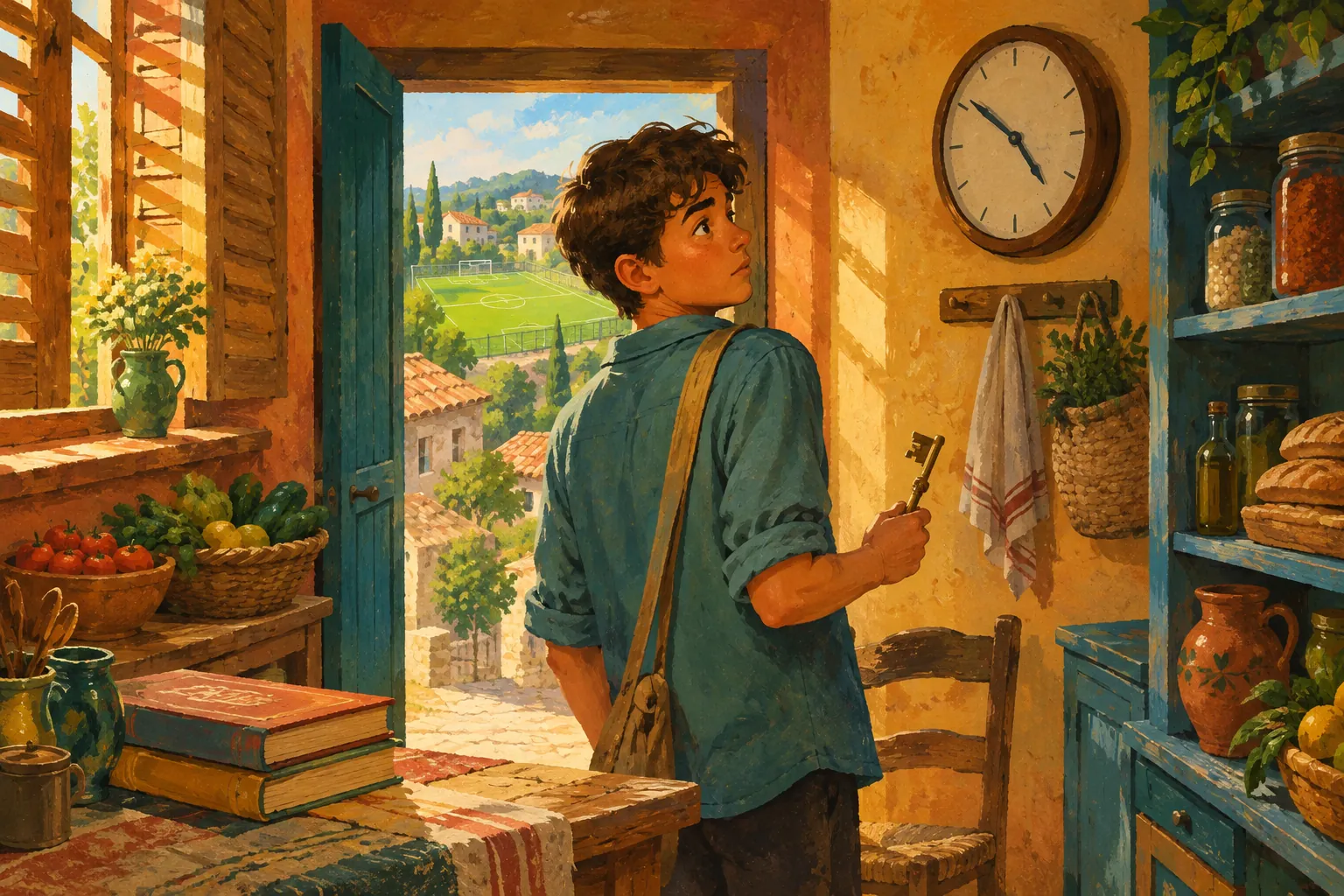
Fifteen-year-old Dimas is trusted with his grandmother's shop for one Saturday while she visits the village clinic.
He badly wants to watch the village football match at three o'clock.
Old Pak Harun arrives and needs slow, patient help to count his money, and a queue forms behind him.
Dimas stays, misses the match, and his grandmother returns to find the shop open and the ledger tidy.
Quick analysis: the theme is responsibility, and Dimas is the protagonist, a round character who becomes more patient.
The plot moves forward, the setting is a wooden shop on a village road from noon to late afternoon, and the point of view is third person limited.
The moral message is that keeping a trust matters more than a short pleasure.
How to analyse step by step
Read once for the story, then again with a pencil.
Mark one piece of evidence for each element, and write one sentence that says what it does for the story.
Link at least two elements together, for example how the setting raises the conflict.
Finish with the moral message in your own words.
Tracing one element through the story
Take setting in Kunci Warung Nenek. At noon the road is empty and the shop is quiet, so Dimas's wish to leave feels easy to follow.
By late afternoon the shop is busy, and the queue makes leaving costly. The same place therefore pushes the plot from temptation to pressure.
Notice the pattern: name the element, give a detail, say what it does. Repeat it for each of the seven, and your analysis already has evidence and commentary.
Do the same for style. A phrase such as the clock ticking louder than the radio uses personification to make time feel like a person pressing him.
Writing one analytic paragraph
Most exam answers are built from paragraphs with three moves: claim, evidence and commentary.
The claim says what the element is, the evidence is a short detail or phrase from the text, and the commentary explains what it does for the story or the theme.
Example: Dimas is a round character because he changes (claim). He first checks the clock again and again, but later reads every price aloud to Pak Harun (evidence).
This shows that his impatience is replaced by care, which supports the theme of responsibility (commentary).
Keep each paragraph on one element, or on two linked elements. Start a new paragraph when you change the point.
Exam tips for Fase E-F
Read the question words first. Analisislah asks for explanation, sebutkan asks only for naming, and bandingkan asks for similarities and differences.
Use the technical terms exactly, such as forward plot, round character and third-person limited. The right term shows that you know the material.
Spend a few minutes planning. A list of seven short evidence notes saves you from forgetting an element halfway through.
Leave a minute at the end to check that every claim has evidence and that the moral message is a full sentence.
Common mistakes
Listing elements without evidence is the most common mistake.
Another is copying a long passage instead of quoting a short phrase, and a third is mixing the theme and the moral message.
Students also forget the type of plot or the point of view, which are easy marks.
Practise
Use the three-level model answers below to compare your own work.
They are learning examples, so write your own answer first and then check what the next level adds.