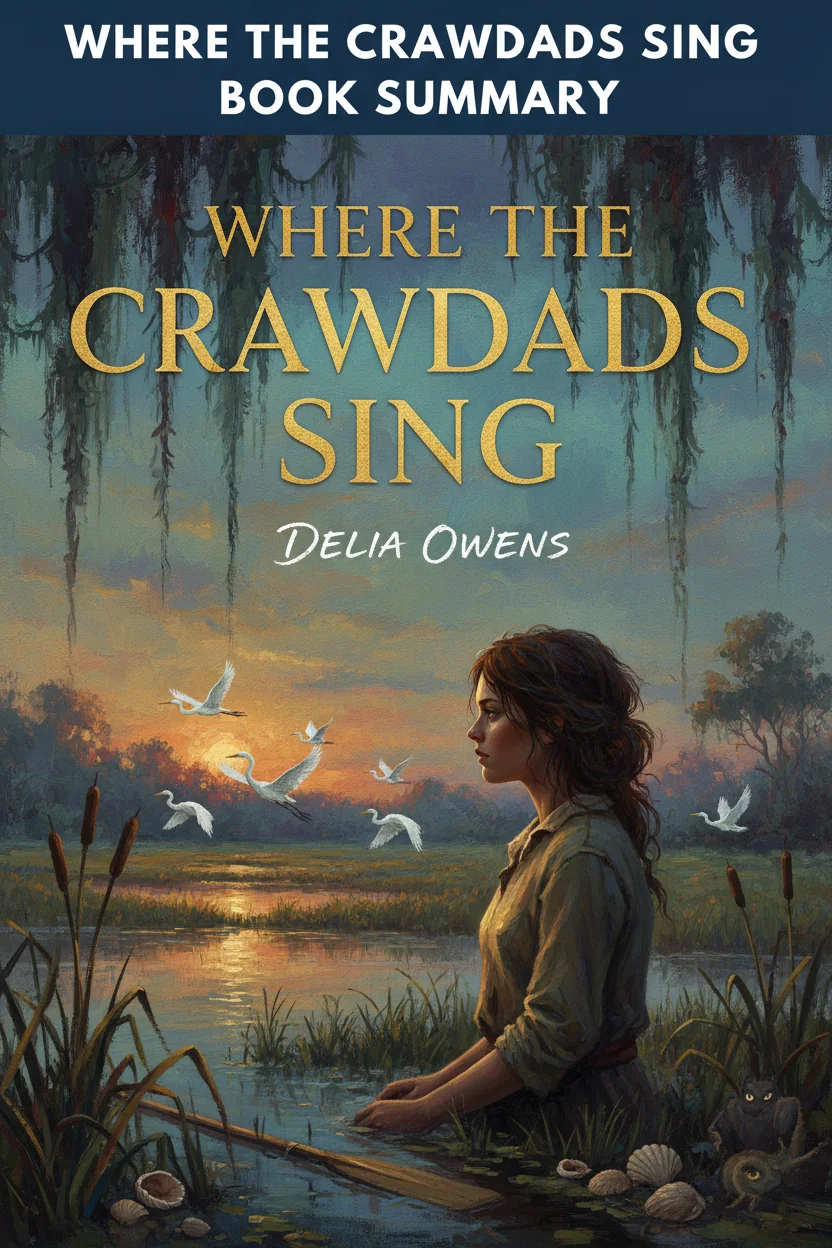
ザリガニの鳴くところ
による Alex Ng
デリア・オーウェンズによる『ザリガニの鳴くところ』は、切ない成長物語と殺人ミステリーが交錯する作品。ノースカロライナ州の湿地帯を舞台に、「湿地の娘」と呼ばれるキア・クラークの視点から、孤独、自然、愛、そして偏見というテーマを掘り下げ、彼女がある男性の殺人事件の容疑者となるまでを描く。
核心的なアイデア
"孤独は人を深く変える。すべての人に見捨てられた少女は、自然との絆を通じて生き抜く術を身につけるが、人間にはやはり人の愛が必要である。そして、孤独がもたらす代償は、予期せぬ形で訪れる。"
重要な洞察
Nature as Teacher and Sanctuary
When human society fails us, nature can provide both education and solace. Kya learns to read the marsh like a book—understanding tides, seasons, and creatures teaches her more about life than any school. Nature becomes both her classroom and her refuge.
Kya learns to survive by observing natural patterns: when fish run, where birds nest, how to read weather. The marsh provides food, shelter, and eventually the basis for her scientific career. What society denied her, nature provided.
Abandonment Echoes Through Life
Early abandonment creates wounds that shape everything that follows. Kya's experience of being left—first by her mother, then siblings, then father—forms her understanding of love as something that always leaves. This affects every relationship she forms.
When Tate leaves for college without saying goodbye, it confirms Kya's deepest fear: everyone leaves. Even though he returns, the wound reopens. Chase's betrayal reinforces the pattern. Abandonment becomes her lens for understanding all human connection.
Society Creates Its Own Outsiders
Communities decide who belongs and who doesn't, then treat outsiders as less than human. The town's treatment of Kya as 'trash'—while ignoring their own responsibility for a neglected child—shows how societies create the very outcasts they then condemn.
No teacher checked on why Kya stopped attending school. No neighbor offered help. The town called her 'Marsh Girl' as an insult, then blamed her for being wild. They created her isolation then punished her for it.
Love and Violence Can Coexist
The novel explores how love and damage intertwine. People who love us can also hurt us. People we love may be capable of terrible things. The human heart contains contradictions that simple moral judgments can't capture.
Kya's relationship with Chase begins as genuine connection but becomes abusive. Her relationship with Tate is loving but marked by his abandonment. Even her parents—her father's occasional kindness, her mother's early love—mixed affection with harm.
Survival Has Its Own Morality
Those who must survive alone may develop their own moral code, different from society's rules. What seems like justice to the survivor may look like crime to the community. The novel asks us to consider whose judgment matters.
The ending reveals Kya's secret, forcing readers to reconcile their sympathy with her actions. Was it murder or self-defense? Justice or crime? The marsh has its own laws, and Kya lived by them.
章ごとの解説
The Marsh Girl
Kya Clark is six years old when her mother walks away, down the sandy lane that leads to the road. Her siblings leave next, one by one. Finally, her abusive father disappears, leaving Kya alone in a falling-down shack on the North Carolina marsh.
She raises herself, learning from the land: where to find mussels and fish, when to gather seeds, how to navigate the labyrinth of waterways. The marsh becomes her mother, her teacher, her world. The townspeople of Barkley Cove call her the Marsh Girl and keep their distance.
Two Timelines
The novel alternates between two timelines: Kya's childhood and development from 1952-1969, and a 1969-1970 murder investigation. Chase Andrews, a popular local athlete, is found dead beneath an old fire tower. Suspicion falls on Kya—the outsider, the Marsh Girl, the one who never belonged.
As the investigation unfolds, we learn about Kya's relationships: with Tate, the gentle boy who taught her to read and broke her heart by leaving; and with Chase, whose charm concealed something darker.
Science and Survival
Despite having almost no formal education, Kya becomes a naturalist and published scientist. Her meticulous observations of the marsh's ecosystems eventually bring her recognition in the scientific community. The marsh that society saw as her prison became her path to achievement and some measure of human connection.
The Trial
Kya is arrested and tried for Chase's murder. Her defense lawyer must convince a hostile jury to see past their prejudices and consider whether the town's outcast is capable of murder—or whether she's simply an easy target for blame.
The Revelation
The ending reveals secrets that reframe everything that came before. Readers must reconsider what they thought they knew about Kya, about justice, and about the line between survival and violence. The marsh keeps its secrets, and Kya kept hers.
アクション
今日から実践できるステップ:
-
Connect with nature as a source of learning and peace—observation of the natural world teaches patience and wonder
-
Recognize how early experiences of abandonment may be affecting your current relationships and attachment patterns
-
Notice when you're participating in excluding 'outsiders'—every community creates outcasts, often unjustly
-
Accept that the people we love are complicated; love doesn't make someone all good or their actions all acceptable
-
Consider whose moral framework you're using to judge others—survival creates perspectives that comfort may not understand
要約作成者
Software Engineer & Writer
Software engineer with a passion for distilling complex ideas into actionable insights. Writes about finance, investment, entrepreneurship, and technology.
すべての要約を見る →レビュー
レビューはまだありません。最初のレビューを書きましょう!