The Metamorphosis by Franz Kafka
by Franz Kafka
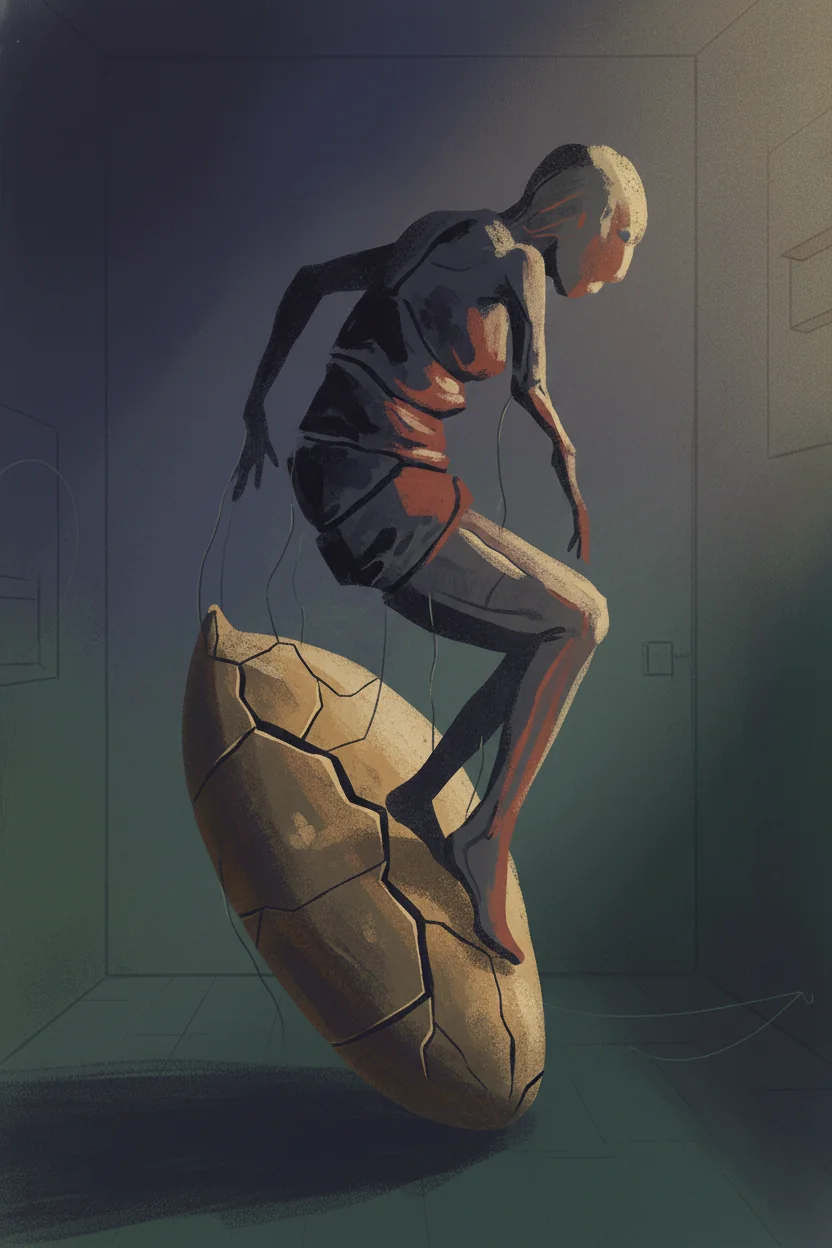
Gregor Samsa wakes up transformed into a giant insect, forcing his family to deal with his presence. Over time, his role as the sole provider shifts to that of a burden, leading to his eventual neglect and death.
The Big Idea
"The physical transformation of Gregor Samsa serves as a metaphor for the profound alienation and dehumanization experienced by individuals who are valued only for their economic utility."
Key Insights
The Utility of Identity
A person's value in a capitalist society is often tied strictly to their ability to produce income.
Gregor's family only cares for him as long as he is the breadwinner; once he cannot work, he is viewed as a monster.
Internalized Alienation
Physical change often reflects a pre-existing psychological state of isolation.
Gregor's first thought upon becoming an insect is about his commute, showing he was already a slave to his routine.
The Paradox of Care
Caregiving can transform from an act of love into a source of resentment when the burden becomes too great.
Grete's evolution from a compassionate sister to the one who insists the family must rid themselves of Gregor.
The Power of the Absurd
The most horrific events are often treated with a mundane, bureaucratic indifference.
The lack of an explanation for why Gregor transformed focuses the story on the reaction rather than the cause.
Familial Betrayal
Family bonds can be fragile and conditional, breaking under the pressure of social shame and financial hardship.
The father's violent reaction to Gregor's presence, treating his own son like a pest.
Chapter Breakdown
The Absurdity of Existence: Background and Context
Published in 1915, The Metamorphosis is the definitive work of Franz Kafka, a writer whose name has become an adjective ("Kafkaesque") to describe surreal, nightmarish bureaucratic labyrinths. Written during a period of intense personal alienation and professional frustration, the novella reflects Kafka's own strained relationship with his domineering father and his struggle to find a place within the rigid social structures of early 20th-century Prague. The story begins not with a slow descent into madness, but with a sudden, inexplicable physical transformation that serves as a visceral metaphor for psychological isolation and the fragility of human identity.
The Descent: Plot Overview
The narrative opens with one of the most famous lines in literature: Gregor Samsa, a traveling salesman, wakes up to find himself transformed into a ungeziefer—a monstrous, insect-like creature. Despite the horror of his physical state, Gregor's primary concern is not his health or the impossibility of his condition, but rather his job. He worries about missing the train and the reaction of his demanding boss, highlighting the crushing weight of capitalist expectation.
As the story unfolds, the initial shock gives way to a grueling domestic routine. Gregor is confined to his bedroom, where he is initially cared for by his sister, Grete. However, as time passes, the novelty of care turns into a burden. His father, who had been dormant in retirement, regains a cruel vitality, viewing Gregor not as a son, but as a nuisance to be managed. The family, who previously relied entirely on Gregor's income, must find new ways to survive. This shift in power dynamics leads to the gradual dehumanization of Gregor. He is no longer a family member; he is a secret, a shame, and eventually, a parasite. The plot culminates in a tragic climax where Gregor, wounded by an apple thrown by his father and neglected by his sister, dies of starvation and loneliness, leaving his family feeling a sense of profound relief.
Exploring the Core Themes
At its heart, the novella is an exploration of alienation. Gregor was alienated long before his transformation; his job was soul-crushing, and his relationships were transactional. The physical metamorphosis merely makes his internal isolation visible. Kafka examines the thin line between being a "provider" and being a "person." Once Gregor can no longer provide financially, his value as a human being vanishes in the eyes of his family.
Another central theme is guilt and duty. Gregor feels an overwhelming sense of obligation to his parents, even as they treat him with contempt. This reflects the toxic nature of familial duty when it is based on financial dependence rather than unconditional love. The story also touches upon the absurdity of the human condition, where the most catastrophic events are met with mundane reactions, emphasizing the randomness and cruelty of fate.
Key Scenes and Symbolic Moments
One of the most pivotal scenes is the "apple incident," where Gregor's father attacks him by throwing fruit, one of which becomes embedded in Gregor's back. This apple serves as a symbol of the father's aggression and the physical manifestation of the family's rejection. The wound rots, mirroring Gregor's decaying spirit and his diminishing hope for reconciliation.
Another critical moment is Grete's eventual declaration that "it must go." The transition of Grete from a loving sister to the one who demands Gregor's removal is the most heartbreaking arc in the book. It signifies the total collapse of the familial bond. The final scene, where the family takes a trip to the countryside and discusses their bright future without Gregor, underscores the cold reality that the world moves on with indifference to individual suffering.
Legacy and Enduring Relevance
The Metamorphosis remains a cornerstone of modern literature because it captures the universal fear of being unwanted and misunderstood. It predated the existentialist movement, anticipating the works of Albert Camus and Jean-Paul Sartre by emphasizing the lack of inherent meaning in the universe. By stripping Gregor of his humanity, Kafka forces the reader to question what actually constitutes a human being: is it the body, the mind, or the way others perceive us? In an era of increasing digital isolation and workplace burnout, Gregor's struggle to balance his identity with his utility remains hauntingly relevant.
Take Action
Practical steps you can implement today:
-
Recognize the difference between your professional utility and your intrinsic human value.
-
Cultivate relationships based on mutual empathy rather than transactional needs.
-
Be mindful of how burnout and isolation can make you feel 'alien' in your own life.
-
Understand that boundaries in caregiving are necessary to prevent resentment.
-
Challenge the societal expectation that your worth is defined by your productivity.
Notable Quotes
"One morning, when Gregor Samsa woke from troubled dreams, he found himself transformed in his bed into a huge insect."
— Franz Kafka
"He thought back on his family with tenderness and love."
— Franz Kafka
"I cannot remember my gratitude, but I can remember the apple."
— Franz Kafka
"We must try to get rid of it."
— Franz Kafka
Who Should Read This
This book is essential for anyone interested in existentialism, psychology, or the study of social alienation. It is a must-read for those who feel overwhelmed by the pressures of modern work culture or those who enjoy surrealist narratives that challenge the boundaries of reality and human emotion.
Summary Written By

Software Engineer & Writer
Software engineer with a passion for distilling complex ideas into actionable insights. Writes about finance, investment, entrepreneurship, and technology.
View all summaries →Reviews
No reviews yet. Be the first to share your thoughts!